

Lesson 1329: After the Outbreak, Please Tell Me: Are You Still Willing to Listen to Me?
Duration:75 minutes
Topic Introduction:
For children and adolescents with disruptive mood disorder (DMDD), while the outburst itself is painful, what is often more despairing is the subsequent silence, indifference, disappointed eyes, and an unwillingness to listen. In the minutes following an outburst, you may be struggling to escape a vortex of shame, exhaustion, confusion, and regret, but the outside world often only sees "You threw a tantrum again," "You're being unreasonable," and "You brought this on yourself." This course focuses on a profound need—after an outburst, what you most want to hear is not blame, but "I'm here, I'm willing to listen to you." This is not indulgence, but a bridge that allows you to reconnect after the storm. We will understand how the brain enters "shutdown mode" after an outburst, how the shame system becomes overactive, and why the language area is temporarily paralyzed, helping you understand why you are unable to explain or speak during these moments. This course combines the calming rituals of 24 types of Eastern healing teas, the nourishing significance of 40 Chinese food therapy soups, the steady rhythm of clerical script calligraphy, and the gentle gazing exercise of "a mandala is not about drawing something, but about observing," helping you gradually rebuild the belief that "even after an outburst, you still deserve to be understood." You will learn how to speak up again, how to express regret, how to state your needs, and how to bravely ask in a relationship: "Please listen to me, I will tell you slowly."
[arttao_Healing_Course_tts_group1329_1333]
▲ AI Interaction: Write down "the one sentence I most need to hear after the outbreak".“
Please recall your feelings after your last outburst and write down three key points:
- ① What do you fear most from others saying? (For example: "You're such a nuisance," "You're doing this again," "I don't want to hear it.")
- ② What would you most like to hear from others? (For example: "I'm still here," "I'm willing to listen," "Take your time.")
- ③ What was the first thing you wanted to say but couldn't bring yourself to say?
Then write a sentence that you hope to be able to express bravely in the future:
“"I was in real pain just now. I didn't mean to. Would you like to listen to me?"”
Click the button to practice with AI how to re-express your true thoughts amidst the chaos of an outburst, preventing relationships from breaking down in silence.
○ Soothing music after the outbreak: Slowly returning to language
Choose an extremely gentle, slow, low-frequency repetitive piece of music as the "echo after the explosion".
Its mission is not to make you feel guilty, but to help you gradually regain your language ability, starting with your voice.
Please listen for the first 15 seconds, gently place your hand on your chest, and say:
“"I'm still here, I haven't disappeared."”
Then practice speaking a complete sentence in the softest possible voice while listening to music, which will help your brain restart.
○ Eastern Healing Tea: Jujube and Chrysanthemum Calming Tea
Recommended reasons:After an outburst, the body experiences a period of "emotional fatigue." Chrysanthemums symbolize cooling down the overactive brain energy, while red dates symbolize warmth and the courage to repair relationships.
usage:Soak 2 red dates (cut open) and 3 chrysanthemums for 5 minutes.
When you take your first sip, please whisper, "I'm willing to try communicating again."“
This is not weakness for you; it is the beginning of reconnecting with the world.
Morel and Lotus Seed Repairing Soup (Chinese Dietary Therapy - Soup)
Morel mushrooms nourish qi and blood, while lotus seeds calm the mind; this is a typical dietary combination for the "recovery period after an outbreak."
When you're so exhausted from a breakdown that you can't speak or even look people in the eye, this bowl of soup is like a message to your nervous system:
“"You can recover slowly; no one will force you to explain immediately."”
When drinking soup, please tell yourself:
“"I deserve to be heard, not just to be scolded."”
The recovery after an outbreak is not achieved through punishment, but through gentle reconnection.
Calming and replenishing Qi
Suitable for drinking after an outbreak
Healing Recipes
/home2/lzxwhemy/public_html/arttao_org/wp-content/uploads/cookbook/asari-miso-shiru.html(Please confirm that asari-miso-shiru.html has been uploaded)
Psychological Mandala (Viewing)
Psychological Healing: Psychological Mandala Imagery 80
A mandala is not about drawing something, but about observing it.
Look at the center of the mandala and imagine it as "me after the eruption".
The outer circle represents other people's evaluations, blame, misunderstandings, sighs, and silence towards you.
But at the heart of it all is you, who are still real and still deserve to be heard.
Whisper to yourself while watching:
“"After the outburst, I wasn't broken, I was just too tired."”
When you look up at others again
Please remember: You deserve to be heard, not judged.

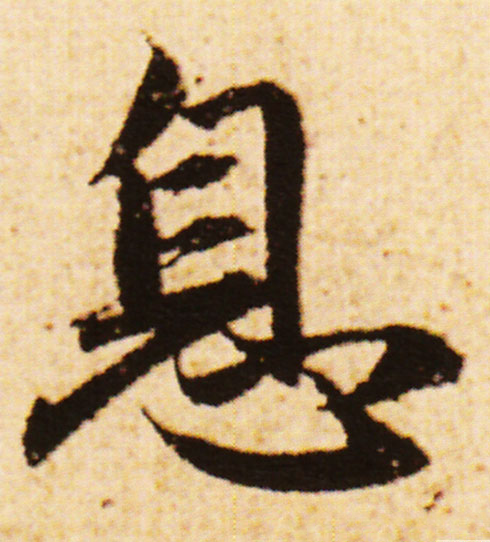
○ Chinese calligraphy - Clerical script (Write a declaration that says "I want to be heard")
The broad strokes of the clerical script allow you to naturally slow down your pace and steady your breathing while writing.
What you wrote was not just words, but the belief that "I still deserve to be understood after the outbreak."
- Sentence writing:
- Even after the outbreak, I still deserve to be heard.
- After the storm, my voice still deserves to be heard.
- Writing Tips:
- When writing, please pause for one second after each stroke.
During the pause, silently repeat to yourself: "I am not the problem, I am someone who is trying."“
Let words become an exercise in speaking again.







○ Post-outbreak connection: Art therapy practice
Painting allows you to "let the world hear" what you can't say aloud in another way.
I. Two Faces After the Outbreak
- Draw two faces: one is your outward appearance after an outburst, and the other is your true inner self.
- Write down what others see in your appearance (e.g., anger, indifference, stubbornness).
- Write down your true feelings in your mind at that moment (e.g., fear, shame, sadness, wishing to be hugged).
II. Reconstructed Bridge Drawings
- Draw two islands: one is "me after the outbreak," and the other is "the person who is willing to listen."
- Draw a small bridge and write down three sentences you hope to hear on it.
- This is your "mental map" for future communication.
Please log in before submitting your drawings and feelings.
○ 1329. The Need to Be Heard: Log-Guided Suggestions
① Write down the three things you are most afraid to face after your outburst.
② Write down one sentence you most hope others will say to you.
③ Complete the sentence: "After the outburst, it wasn't that I didn't want to communicate, it was that I..."“
④ Write a promise to yourself: "I will slowly learn to speak up, instead of remaining silent until the relationship ends."“
Please log in to use.
An outburst is not the end; silence is not punishment.
May you learn in this lesson that even after the storm has passed, you still deserve to be understood, listened to, and to re-enter relationships.
 EN
EN  ZH
ZH  ES
ES  FR
FR  JA
JA