

Lesson 133: Fear of fainting, loss of control, and inability to escape
Duration:70 minutes
Topic Introduction:
“"What if I suddenly faint?"”
“"Will I lose control and do something strange?"”
“"What if I don't manage to escape?"”
These are the three core fears of panic and high anxiety, which are not actually dangerous, but rather the brain's excessive amplification of "uncertainty".
This lesson will help you understand the psychological and physiological basis of these three fears and learn how to stabilize yourself before, during, and after an attack.
Why does the fear of "fainting - loss of control - inability to escape" occur?
- Overactive sympathetic nervous system:The body enters a state of high arousal under "false danger," leading to dizziness, rapid heartbeat, and weakness.
- Catastrophic associations:Minor physical discomfort is magnified into a terrifying image of "I'm going to collapse".
- Increased desire to escape:The feeling of being "trapped" in the brain triggers the survival system, making the scene appear more dangerous.
- Past traumatic experiences:If you feel uncomfortable in a public setting in the past, your brain will form a memory imprint.
Lesson 133: Fear of fainting, loss of control, inability to escape. Click to listen to the reading and view the content.
The fear of fainting, losing control, or being unable to escape is a very typical core fear of panic. It seems like worrying about physical problems, but the deeper fear is losing control when the body reacts strongly; being forced to expose yourself to others' gaze, forced to stay still, and forced to endure an uncontrollable shame and helplessness. Many people mentally rehearse the worst possible outcomes: I will collapse, I will go crazy, I will be carried away, I will embarrass myself. The brain treats these images as reality, activating its defense system before even entering the scene. Your heart rate increases, dizziness rises, and breathing becomes shallow. These reactions are not danger signals, but rather the physiological mechanism of "preparing to escape" at work. The problem is that you misinterpret this mechanism as a loss of control. The more you try to confirm that you won't faint, the more you scan your body; the more you scan, the more tense you become; the more tense you become, the more dizzy you feel. You think you are avoiding danger, but you are actually repeatedly training your brain to perceive normal fluctuations as a disaster. At this moment, you need to develop a new understanding: fainting is not a common outcome of panic. On the contrary, panic is more like hyperarousal, while fainting usually requires a significant drop in blood pressure. The mechanisms are different. Your current task is not to prove that you won't collapse, but to learn to remain present even when the "feeling like you're about to collapse" occurs. You can tell yourself that you're experiencing a strong adrenaline rush, that it will rise and fall, and that you don't need to leave immediately or suppress it. True freedom isn't the absence of reaction, but rather having choices even when you react. You can stand, you can sit, you can walk slowly, you can continue waiting in line. You're not trapped; you're just temporarily uncomfortable. When you stop equating discomfort with a loss of control, your nervous system learns a new lesson: I can safely exist in imperfection. This is more powerful than any confirmation.
▲ AI Interaction: Which kind of loss of control are you most worried about?
Fainting? Body not responding to your commands? Or a feeling of suffocation caused by being unable to escape?
Let's analyze the body's actual reactions together, rather than interpreting them catastrophically.
You're not collapsing; your body is just sending out an alarm.
Fear disrupts breathing rhythm, and music can help the body regain a "stable pace".
Use melody to reduce anticipatory tension before a potentially frightening situation.
○ Eastern Healing Tea - Genmaicha (Brown Rice Tea)
Recommended reasons:The aroma of genmaicha (brown rice tea) can reduce excessive alertness during panic and stabilize the stomach and breathing.
practice:Add 3g of tea leaves to 85–90℃ hot water, steep for 90 seconds, and drink slowly.
○ Stable Dietary Therapy: Heartwarming Spinach and Tofu Soup (ID133)
When you fear fainting or losing control, your body is often in a state of "over-awakening and energy depletion." What you need is gentle and stable support. Spinach provides magnesium and folic acid to help the nervous system return to a softer rhythm. Tofu's delicate texture provides a sense of security and fullness without creating a burden. This soup is suitable for drinking before or after going out, or as part of a stressful dinner. It's not about immediately eliminating symptoms, but about letting your body remember the message that you are being supported in a warm and gentle nourishing way, so you don't need to protect yourself with fear.
Warm support
Supplement magnesium
Open Recipe
◉ Dietary Therapy: Spinach and Tofu Soup
Spinach is rich in folic acid, iron, and various trace elements, which help improve fatigue and poor concentration; tofu provides high-quality plant protein and calcium, and has a refreshing, non-greasy taste. Combining the two in a light soup is suitable for people who overthink, have a heavy digestive burden, but still need some nutritional support, providing energy without overburdening the spleen and stomach.
Light and easy to digest Replenishing Qi and nourishing blood Relieve fatigue
I. Recommended Dietary Therapy and Reasons
Recommended dishes:Spinach and tofu soup (ID 19)
Recommended reasons:After periods of high stress or prolonged mental exertion, greasy foods often exacerbate feelings of fatigue, while a refreshing spinach and tofu soup can replenish the body with protein and minerals without adding to the digestive burden. This soup is suitable as a side dish, the main soup for a simple meal, or a comforting small bowl when you need some warmth at night but don't want to eat too much.
2. Recipe and Method
Recipe (1–2 servings):
- 80–100 g of spinach (washed and chopped)
- 120–150 g of soft tofu (cut into small cubes)
- 600 ml of water or light broth
- Add 2-3 slices of ginger (to remove fishy smell and warm the stomach).
- a pinch of salt
- A pinch of white pepper powder (optional)
- A few drops of sesame oil (optional)
practice:
- Remove the tough ends from the spinach, wash it thoroughly, and cut it into sections. Cut the soft tofu into small cubes, rinse gently, and drain.
- Add water or light broth to a pot, add ginger slices, bring to a boil over high heat, then reduce to medium-low heat.
- Gently add the tofu cubes and simmer for 3–5 minutes at a gentle boil to allow the tofu to fully heat up and absorb the flavor of the broth.
- Add the chopped spinach and cook for another 1–2 minutes until the spinach is just softened and bright green.
- Add a little salt and white pepper powder to taste, and drizzle a few drops of sesame oil before serving to enhance the aroma.
- After turning off the heat, let it sit for 1 minute to allow the flavors to meld slightly before serving in a bowl.
3. Small rituals for body and mind
While the soup is simmering, you can deliberately detach yourself from high-intensity information input and focus on doing something simple: watch the water gently boil, the tofu slowly float to the surface, and the spinach turn bright green.
When you pick up the soup bowl, don't rush to drink it. First, smell the aroma of the soup and notice if your body feels slightly relieved because the bowl is warm.
Slow down when drinking soup, allowing the warmth to slide from your mouth into your stomach, and imagine that you are pressing the "relaxation button" on your body that has been tense all day.
4. Dietary Therapy Experience Record
- Record the time of drinking (lunch/dinner/after working overtime) and the level of fatigue at that time.
- Observe whether there is any improvement in stomach comfort and mental clarity within 30–60 minutes after drinking the soup.
- If you replace some of the oily and heavily flavored dishes with light soups for several consecutive days, you can record your sleep quality, bloating, and mood swings.
5. Tutorial Video (approximately 3–6 minutes)
◉ Video Title:Spinach and tofu soup – a light yet comforting bowl of warm soup.
6. Precautions
- Those with kidney stones or who need to limit their oxalic acid intake should follow their doctor's advice regarding the amount of spinach they use, or blanch it before cooking it in soup.
- Tofu is a cold-natured food, so people with weak spleen and stomach or who are prone to diarrhea should not eat too much of it. They can reduce the amount they consume and eat it with ginger to warm their stomach.
- If you need to control your sodium intake, please reduce your salt intake or use lightly seasoned broth.
hint:This recipe is for daily light and nourishing purposes and does not replace professional medical advice. If you experience persistent indigestion, anemia, or severe fatigue, please seek medical evaluation promptly.
○ Suggestions for Chinese Calligraphy and Seal Carving Practice - Lesson 133: Fear of Fainting, Losing Control, and Being Unable to Escape
This lesson's seal carving practice revolves around a core ability: maintaining control even when discomfort arises. The urge to "escape" in fear is like a strong wind, while seal carving requires you to hold the knife steadily and advance inch by inch. It reminds you that true control is not about suppressing feelings, but about ensuring your movements aren't led astray by them.
- Introduction to the characteristics of seal carving:
This lesson corresponds to the "fixed cut and blank space" in seal carving. When you learn to pause at the turning point, the lines will be more stable and clear. This symbolizes that when you feel dizzy or fearful, you can give yourself a pause instead of running away immediately. - Written words (seal text):
The pen can supplement the creation of nature, but Heaven has no merit. - Psychological Intention:
Inscribing "The pen can supplement the creation, but Heaven has no merit" trains the brain to reclassify discomfort as a tolerable event, allowing you to remain present with the feeling instead of being driven away by it. - Knife skills:
Practice "slow entry and deep movement". Begin with a light cut, then steadily deepen the cut without rushing or force, allowing the knife path to have rhythm, symbolizing a shift of attention from scanning the body back to the rhythm of action. - Emotional transformation:
Transforming the impulse to "leave immediately" into the sense of autonomy that "I can slow down" allows fear to lose its control.
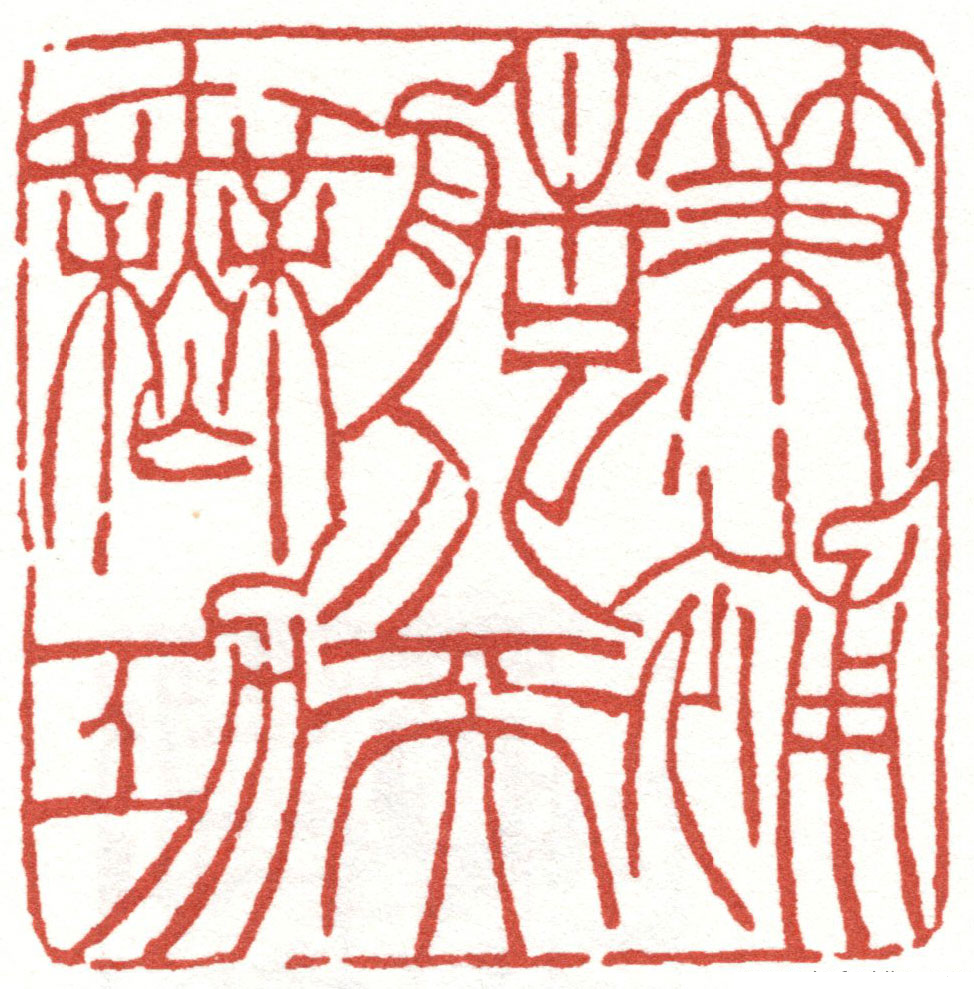
Image Healing: Guided Mandala Viewing - Lesson 133
Please look at a mandala with a clear center and stable boundaries. It's like a safe circle, telling you that even if the outside world is crowded, you still have your own space.
First, look at the outer circle and slowly walk around the boundary to confirm that there is a boundary and support. Then, move your gaze to the center and pause three times. Each time, gently feel the contact point between the soles of your feet and your ischial tuberosities.
If you experience dizziness or an urge to run away, don't try to shake it off; just treat it as a passing breeze. Continue observing the repetition and symmetry of the lines, letting the "repetition" help stabilize your nervous system.
Mandalas are not about drawing something, but about observing. You don't need to understand the meaning; you just need to let your gaze rest within the structure. When you can still observe even in discomfort, you are training a new ability: I can be present; I don't have to run away.
The mandala in this lesson, with its "stable outer circle and clear center," symbolizes that even when fear strikes, you still have boundaries and a core.
◉ One gaze is sufficient; no repetition is required.
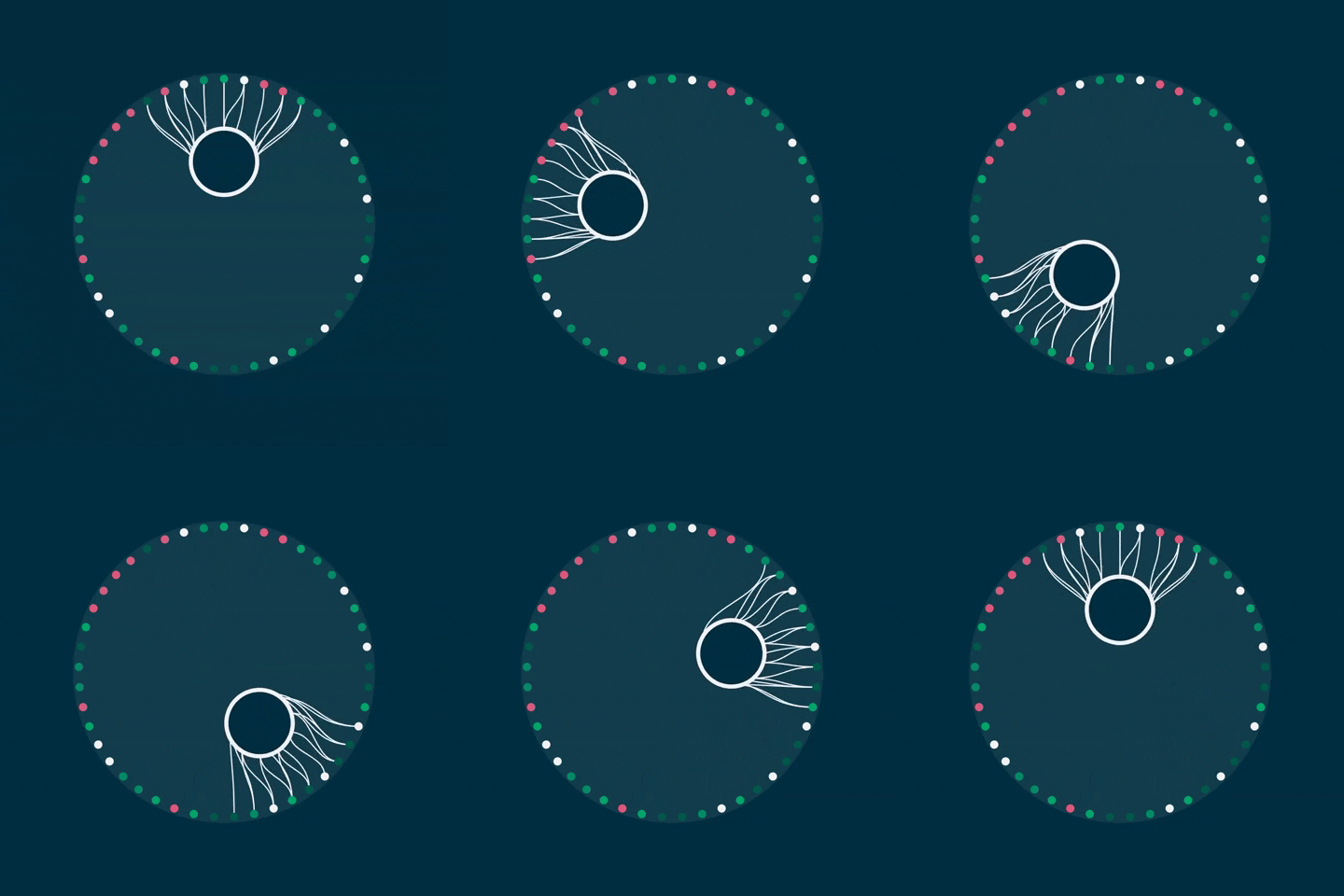
Lesson 133: Fear of Fainting - Guided Drawing
① Action guidance:Draw a very stable core circle, symbolizing your unyielding center, and gradually deepen the color tone while breathing naturally.
② Action guidance:Draw slightly wavy lines around the core to symbolize that fear is merely a peripheral phenomenon, not the main subject.
③ Action guidance:The radiating lines extending outward from the center of the painting symbolize "that even in fear, I can still expand outward."
Please log in before submitting your drawings and feelings.
○ 133. Fear of Fainting: Journaling Guidance Suggestions
① What kind of "loss of control" am I most worried about? What is the actual probability of it happening?
② Did you experience a moment today where "fear came but I didn't collapse"? Write it down.
③ When fear arises, what really happens to my body? What is being misinterpreted?
④ Write a new belief: "I can stand firm in fear."“
Please log in to use.
Fear may shake you, but it won't bring you down. You are more stable than it.
 EN
EN  ZH
ZH  ES
ES  FR
FR  JA
JA