

Lesson 1362: Sympathetic Hypersensitivity
Duration:60 minutes
Topic Introduction:This course focuses on the core mechanism hidden behind insomnia: "sympathetic hypersensitivity." The body is like being stuck in "alarm mode" for an extended period, with a rapid heartbeat, tense muscles, shallow breathing, and restless thoughts. Even in a quiet environment, the brain remains constantly prepared to "deal with danger." We will help you identify whether you are in an excessively "tense mode" through three clues: physiological arousal, psychological alertness, and behavioral habits. We will help you understand why your body feels like it's still running even after you've turned off the lights and lay down. Through awareness recording and fine-tuning exercises, we will lay the foundation for subsequent relaxation training, sleep reconstruction, and circadian rhythm adjustments, gradually guiding your body and mind from "continuous readiness" back to a state of "safe rest."
○ Common experiences of sympathetic hypersensitivity
- Increased heart rate before falling asleep:The more I tried to relax, the more nervous I became. After lying down, I suddenly noticed my heart pounding and worried that something might happen to me.
- The body remains tense:Stiff neck and shoulders, clenched jaw, tight chest; even when not working, the brain and body feel like they're about to sprint at any moment.
- Overly vigilant:Even the slightest sound, change in light, or physical sensation is amplified immediately, as if one is constantly on the verge of dealing with a sudden danger.
- A constant stream of "conscious dialogue" within the mind:The brain replays the details of the day repeatedly and rehearses tomorrow's scenarios, like a meeting that lingers on.
- I was immediately nervous upon waking up:The moment I open my eyes, I think of tasks, responsibilities, and risks. Before I even get out of bed, my mind and body are already in high-pressure mode.
▲ AI Interaction: Detecting Your "Tense Mode"“
A state of sympathetic hypersensitivity is like having a commander residing in the body who is always ready to fight or flee, making it difficult to press the pause button. This state is often intertwined with factors such as chronic stress, traumatic memories, perfectionism, and excessively high self-expectations.
Please describe your physical experiences three times before falling asleep or waking up during the night: how did your heartbeat, breathing, muscles, stomach, and head feel? What were they telling you?
Write down the three most prominent thoughts that were in your mind at that moment: Were you worried about failure, health, relationships, or blaming yourself for "not being able to control yourself again"?
In conclusion: You're not "deliberately not sleeping well," but rather your body is clumsily trying to protect you with excessive vigilance. Awareness is the first step from misunderstanding yourself to understanding yourself.
Click the button below to work with AI to create your "tense map," identify triggering situations that trigger sympathetic hypersensitivity, and get preliminary adjustment suggestions.
○ Sympathetic hypersensitivity state · Music therapy
When the sympathetic nervous system is highly sensitive, the body is accustomed to fast pace and high stimulation, and quiet can actually make people uneasy. The goal of this music therapy session is to gently pull the mind and body back from high frequencies to mid frequencies using a "gradually decreasing rhythm," and then slowly approach low frequencies, rather than demanding that you relax immediately.
Exercise 1: First, play a piece of instrumental music that is slightly rhythmic but not too intense, allowing your body to stabilize in a familiar "slightly fast" tempo; then switch to a slower piece with a longer ending note, and observe whether your breathing and heart rate can slow down slightly.
Exercise 2: Choose a "safe song" that you're willing to listen to repeatedly as a fixed "stop signal". Play this song 20 minutes before you go to sleep each time, allowing your brain to learn that "hearing it = gradually being able to stop safely".
In conclusion, a highly sensitive nervous system often needs to be "slowly soothed" rather than "commanded to shut down." Music is a gentle form of reprogramming.
○ Chinese Black Tea Healing Drink
Recommended drinks:Dianhong Evening Black Tea (a warming and sleep-inducing tea)
Recommended reasons:Chinese black tea is generally characterized by its mellow and sweet taste. When brewed properly, Yunnan black tea produces a mild and non-irritating tea soup that can warm the stomach and relax blood vessels throughout the body without further increasing tension like high-caffeine drinks. For people with a high level of sympathetic nervous system sensitivity who often experience palpitations and cold hands, a cup of warm but not strong black tea can help rebuild the basic feeling that "my body is warm and I am safe."
usage:Take 3–4 grams of Yunnan black tea and brew it with hot water at 85–90℃. The first infusion should be poured out quickly and discarded as a rinse. The second infusion should be steeped for 40–60 seconds before drinking, being careful not to make it too strong. It is recommended to drink it 60–90 minutes before bedtime, sipping it slowly while practicing slow breathing, treating "tea drinking" as a transitional ritual from work mode to rest mode.
○ Lily and Lotus Seed Soup
With lily bulbs, lotus seeds, and a small amount of white fungus in a warm and soothing soup base, this soup nourishes yin, calms the mind, and relieves restlessness. It is suitable for people with highly sensitive sympathetic nerves, who often feel "heat" rising in their hearts, and experience chest tightness before bed, helping the body to shift from restlessness to calmness.
🎨 Theme Mandala - Viewing Guide
In this lesson, the theme mandala uses "the transition from high frequency to low frequency" as its core imagery: the fine lines and varied directions in the central area symbolize the inner turmoil when the sympathetic nervous system is highly sensitive; towards the outer circle, the rhythm of the pattern gradually becomes more relaxed, repetitive, and predictable, symbolizing the body and mind slowly transitioning from a state of alertness to a state of rest.
Please just be quiet.WatchMandala: Focus your gaze on the most complex area in the center and acknowledge, "Yes, I am tense right now." Then slowly move your gaze clockwise to the outer circle, observing how the lines change from dense to relaxed, and feel yourself gradually moving from "full body tension" to "being able to relax."
Applicable issues:Symptoms include a rapid heartbeat before sleep, chest tightness, general tension, difficulty calming down after waking up suddenly at night, and difficulty tolerating quiet environments.

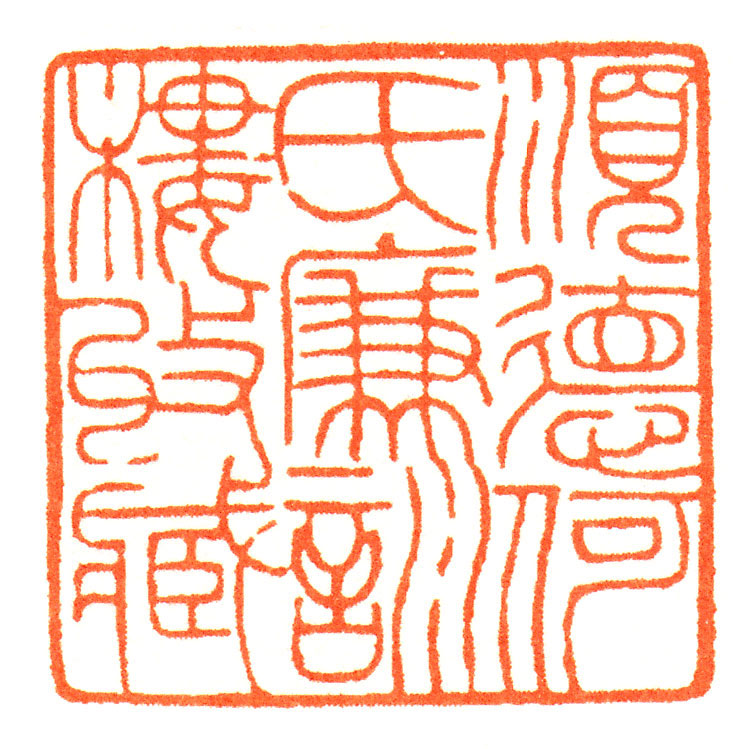
○ Chinese Calligraphy and Seal Carving Imagery Practice
Within the small space of seal carving, one must pay attention to the arrangement of structure and the balance of rhythm. Slowly copying and contemplating the layout of seal carving characters is itself a practice of transforming "internal chaos" into "orderly placement".
Practice sentences:
“"Rest can heal, and tranquility can help you fall asleep."”
Stillness repairs; stability brings sleep.
You can first use a fine pen to imitate the structure of seal carving on paper: place each character in an imaginary small square, deliberately slow down the strokes, and let each stroke be as if saying to your body: "You can stop here." If possible, you can also observe or copy real seal carvings and imagine that heavy, square, and calm power as a support for your overly tense nerves.
○ Sympathetic hypersensitivity state: Art therapy guidance suggestions
This page uses creative drawing to transform the abstract concept of "sympathetic hypersensitivity" into a visual mind-body map. People who are chronically in a hypersensitivity mode often feel like they're constantly on the gas pedal during the day, but at night they can't seem to get off the gas: a rapid heartbeat, muscle tension, gastrointestinal discomfort, and a whirlwind of thoughts. Through drawing, you can externalize this "can't stop" feeling, clearly seeing what you're actually reacting to, instead of just a vague "I'm tired, I can't sleep."
I. A Tight "Neural Circuit Diagram"“
- Draw a simple human figure on paper: head, neck, chest, abdomen, and limbs. Mark the parts that are most frequently tense recently with lines.
- Draw "neural circuits" in different colors: for example, a broken line extending from the brain to the heart represents "palpitations as soon as a thought appears".
- Write a keyword next to each line, such as "work pressure," "health concerns," or "fear of failure," so that tension is no longer just a vague discomfort, but a signal with a source.
II. From Red Alert to Soft Lights
- Draw a "red warning light" on one side of the paper: it could be a flashing light bulb, an alarm, or a bright area, symbolizing the continuous activation of the sympathetic nervous system.
- On the other side, draw a soft little lamp or a slightly glowing window, with the color changing from a strong red to orange and then to a soft golden yellow, representing the space you are looking forward to where you can "slowly let go".
- Finally, connect the "red alert" and "soft light" with a line, and write a reminder next to it: "Going from being unable to stop at all to slowing down a little is also a kind of progress."“
A gentle reminder: Painting isn't about making something "beautiful," but about connecting with what's happening in your body. If you feel overly uncomfortable or experience intense anxiety while creating, stop, take a few slow, deep breaths, or continue tomorrow. If symptoms are persistent or severe, consider seeking professional psychological or medical support.
Please log in before submitting your drawings and feelings.
○ 1362. Sympathetic Hypersensitivity State - Journal-Guided Suggestions
① Body Radar: Write down the three most common tensions or discomforts you experienced in your body during the past week (such as palpitations, chest tightness, and stiff neck and shoulders). In what situations did these occur? During the day, in the evening, or before going to bed?
② Triggering Points of Thought: Record the three most frequent "anxiety thoughts," such as "Will I not be able to hold on?", "I'm sure I'll make a mistake tomorrow," and "I can't relax." Try adding a gentle supplementary sentence after each thought.
③ Behavioral inertia: Review the three things you most often do when you feel overly tense: scrolling on your phone, continuing to work, pushing yourself to the limit, eating or drinking stimulating beverages, etc., and assess whether they truly relieve tension or prolong it.
④ Moments of Security: Identify a time today or in the last few days when you briefly felt "just a little bit relaxed." What happened during that moment? Where were you? Who were you with? What were you doing?
Please log in to use.
Gently shift yourself from a state of "high alertness" to one of "rest," so that sleep is no longer just a battle of willpower, but a process in which your body and mind relearn to trust in safety.
 EN
EN  ZH
ZH  ES
ES  FR
FR  JA
JA