

Lesson 1364: The Influence of Hormonal Rhythms on Sleep
Duration:60 minutes
Topic Introduction:This course focuses on the subtle relationship between "hormonal rhythms" and sleep: melatonin, cortisol, growth hormone, etc., are not abstract terms, but rather "internal tides" that fluctuate throughout the day and night, determining when you are most sleepy, when you experience a surge of energy, and when you wake up in the middle of the night and find it difficult to fall back asleep. We will take a practical approach to help you understand why long-term sleep deprivation, shift work, frequent time zone changes, strong light stimulation at night, and irregular eating habits can subtly disrupt the hormone secretion schedule, causing a misalignment between sleepiness and your actual sleep schedule, resulting in difficulty falling asleep, waking up early, or feeling unwell after sleep. Simultaneously, by recording the relationship between sleepiness peaks, energy troughs, mood swings, and meal times, we will help you begin to see your own "body clock," laying the foundation for subsequent rhythm reconstruction, lifestyle adjustments, and professional assessments, so that sleep is no longer just a matter of willpower, but rather follows the waves of your body's rhythms.
○ Common experiences of hormonal rhythm imbalance
- Suddenly feeling "sober and intoxicated" at night:I feel tired during the day, but my energy inexplicably increases as bedtime approaches, and my brain becomes excited and hard to control, as if "night mode" has just been activated.
- Waking up at fixed times:I often wake up naturally at three or four in the morning, feeling a slight tension in my heart and finding it difficult to fall back asleep. During the day, I feel tired and weak, like an alarm clock that has been malfunctioned.
- Emotions and sleep rise and fall together:Being particularly irritable, sensitive, or depressed on certain days, along with lighter sleep, may be related to periods of hormonal fluctuation.
- Light has a significant impact:The longer you are exposed to bright screens and lights, the longer it takes to fall asleep, and even after the lights are turned off, it is still difficult to fall asleep for a long time.
- Diet and sleepiness are intertwined:Overeating in the evening, frequent late-night snacks, or consuming high-sugar foods can easily lead to palpitations, alertness, and nighttime awakenings.
▲ AI Interaction: Sketch Your "Body Clock"
Hormonal rhythms are like an invisible internal clock, affected by light, diet, stress, and sleep patterns. When these rhythms are disrupted for a long time, sleep problems are not just about "not being able to fall asleep," but rather the entire system is malfunctioning.
Try to recall the past week: What time do you usually feel truly sleepy? What time do you start to "recharge" mentally? Is there a specific time of day when you are particularly prone to waking up? Is there any suspicious correlation between these times and work stress, mealtimes, or habits of using electronic devices?
Write down: What lifestyle habits might unknowingly push your body clock forward or backward? Have you ever had the experience of trying to go to bed early because you were sleepy, only to be interrupted by various things?
In conclusion: Your sleep isn't just a mess; your entire internal rhythm system is screaming, "I'm out of sync!" This lesson invites you to rediscover your body's clock.
Click the button below to work with AI to organize your "Daily Energy Curve," identify the connections between sleepiness, light, diet, and mood, and prepare for subsequent rhythm adjustments.
○ The Influence of Hormonal Rhythms on Sleep · Music Therapy
When hormonal rhythms are out of balance, the body often experiences a chaotic feeling of being neither sleepy nor awake. This music therapy session does not aim to immediately correct all rhythms, but rather to provide a reliable rhythmic background for the internal clock using stable, repetitive sounds.
Exercise 1: Choose a consistent "evening track" and play it at roughly the same time every day, regardless of your mood. Let the music become a stable signal for your body that "night is coming," helping to establish a bedtime ritual.
Exercise 2: During the most chaotic time of day (such as afternoon or evening), play gentle, slow-paced music and take a few deep breaths. This is not to make you sleepy immediately, but to help your hormones "sense" that this is a calming phase, not a high-pressure phase.
Exercise 3: Avoid using music with a strong rhythm and uplifting emotions before bed, especially when you're already feeling a bit overwhelmed. Preserve a gradually darkening soundscape for the night.
In conclusion, music cannot directly alter hormone levels, but it can provide the body with a long-term, repeatable "rhythmic framework," creating a stable environment for repair.
○ Chinese Black Tea Healing Drink
Recommended drinks:Lapsang Gentle Evening
Recommended reasons:Lapsang Souchong has a unique aroma of pine smoke and honey. When brewed in a light way, its mellow tea soup can bring a "slow scene transition" experience, helping the body transition from the tense work mode of the day to the more stable night mode. For people whose rhythms are lengthened or delayed, a cup of light, not-too-strong black tea is less about "refreshing" and more about giving the body and mind a signal that "I am transitioning from daytime."
usage:Take 2–3 grams of Lapsang Souchong and brew with hot water at 85–90℃. Steep the first infusion for 20–30 seconds, ensuring the tea soup is clear and not heavy. It is recommended to drink it 1.5–2 hours before your expected bedtime, rather than right before sleep. While drinking, consciously slow down your movements and speech to allow your body to perceive the "dimming of rhythm." If you are particularly sensitive to caffeine, you can drink it during the day, retaining only the symbolic meaning of this "transitional ritual."
○ Pumpkin and Lily Bulb Sleep-Aid Soup
This soup, made by simmering pumpkin, lily bulbs, and a small amount of oats or millet over low heat, is gentle on the stomach, provides energy, and has a calming and soothing effect. It is suitable for people who often experience fluctuating blood sugar levels in the evening, are easily hungry, and are afraid of eating heavily seasoned foods. It helps the body achieve a stable and warm feeling of fullness without overburdening it, providing a stable background for nighttime hormonal rhythms.
🎨 Theme Mandala - Viewing Guide
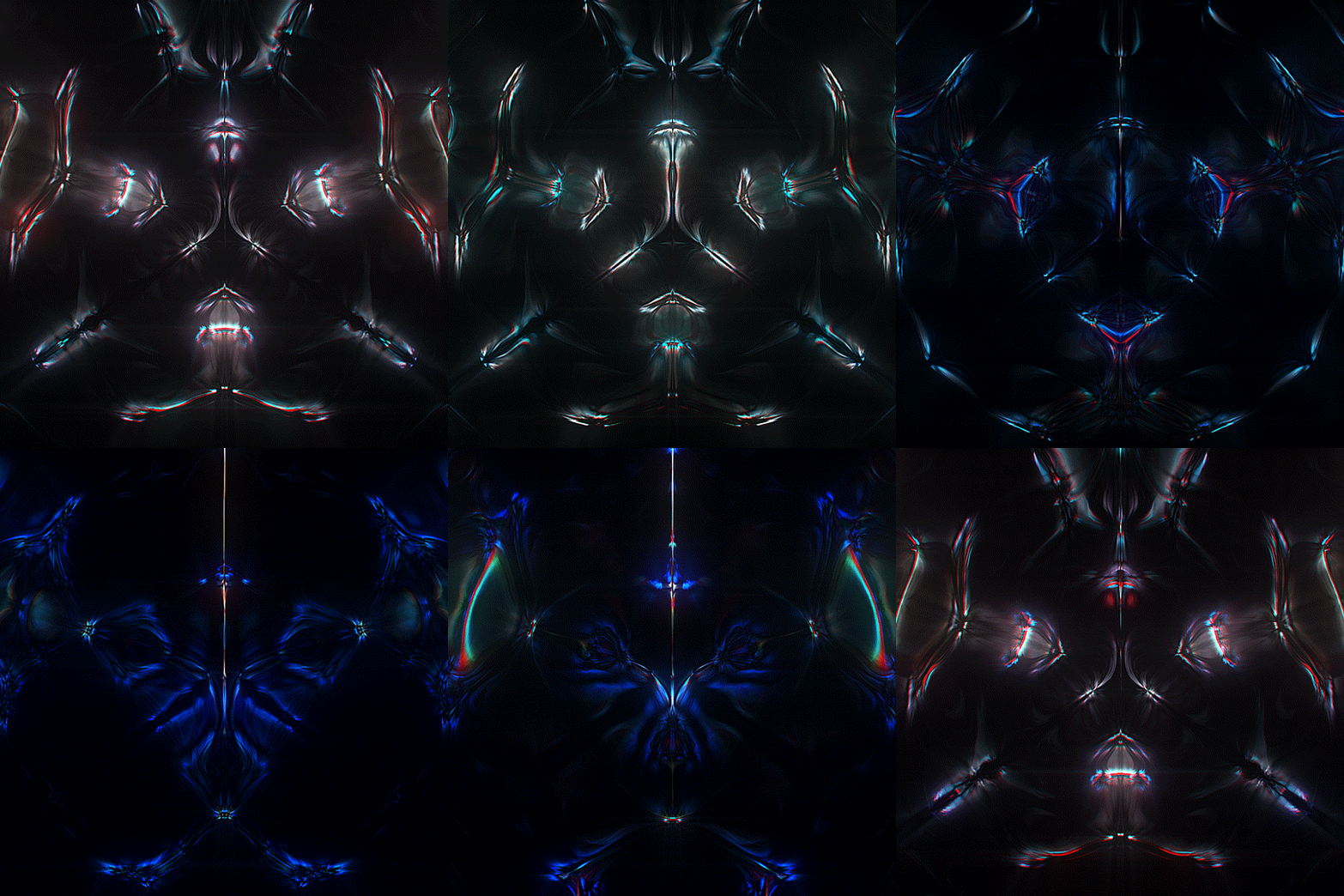
The theme of this lesson, the mandala, uses "day and night tides" as its core metaphor: the central area presents alternating light and dark rings, symbolizing the constant fluctuations of hormones throughout the 24 hours; the outward-spreading patterns change from chaotic to regular rhythm, as if slowly transitioning from turbulent waves to predictable tides.
Please justWatchFirst, focus your gaze on the most densely packed area of light and shadow in the mandala, acknowledging that you may currently be in a phase of disrupted rhythm. Then, slowly move your gaze outward along a line, observing how the pattern becomes more even and softer, imagining this as your body learning to recalibrate itself. You don't need to force yourself to understand everything; simply let your eyes wander slowly within the rhythm of the pattern, letting your body know that rhythm can be gradually readjusted.
Applicable issues:Disorders of day and night, late-night insomnia, being awake at fixed times, and being particularly sensitive to changes in light and sleep patterns.
○ Chinese Calligraphy and Seal Carving Imagery Practice
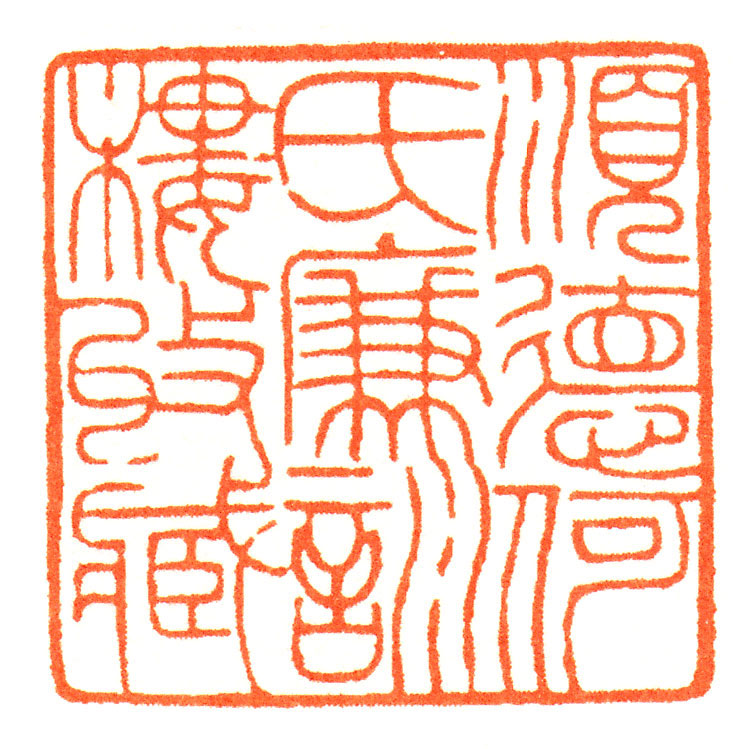
Seal carving emphasizes creating a rhythmic flow within a limited space, where strokes and space create a sense of breathing. Hormonal rhythms are also a distribution of "dots and spaces": sometimes secreted, sometimes resting. Through seal carving-style imitation and contemplation, you can practice cultivating a sense of rhythm within yourself that "fluctuations are okay."
Practice sentences:
“"Sleep with your natural rhythm, rather than forcing yourself to sleep."”
Following rhythm brings sleep, better than forcing it.
You can draw a square frame on paper, break the sentence down into several short phrases, and slowly fill them in. With each character you write, silently recite its meaning, aligning the rhythm of your hand movements with your breathing, rather than urging yourself to "finish quickly." You can also observe real seal carving works, noting the balance between density and thickness, and imagining this "tension and relaxation" experience as the ideal state of hormonal fluctuations in your body.
○ The Influence of Hormonal Rhythms on Sleep: Guiding Suggestions for Art Therapy
This page uses creative illustrations to concretize the abstract bodily process of "hormonal rhythms," allowing you to see for yourself why some nights are particularly difficult to fall asleep and some mornings are particularly easy to wake up in. It's not just a matter of weak willpower, but rather that your internal clock is out of sync with your physical sleep schedule. The purpose of the illustrations is not to diagnose diseases, but to help you build an intuitive understanding of your own rhythms, providing clues for subsequent adjustments and professional assessments.
1. Draw your "24-hour energy wheel"“
- Draw a circle on a piece of paper and divide the circumference into approximately 24 sections. You can use rough markings such as morning, noon, afternoon, evening, and late at night to indicate these sections; precision is not required.
- During the times when you feel most sleepy, most awake, most irritable, or most calm, mark the circumference with different colors and write a few words next to them, such as "sleepy," "too awake," "emotionally volatile," or "relax a bit."
- Connecting these points forms your personal "energy curve." Observe whether it deviates from the social routine, such as being particularly high at night and particularly low in the morning.
II. Draw the trajectory of the effects of "light and diet".
- On the same chart or another sheet of paper, use one line to represent the time you usually look at screens or are exposed to bright light, and another line to represent the time you eat dinner or have a late-night snack.
- Connect these time periods with moments of "particular alertness" or "particular fatigue" using arrows, for example, "bright light at night → delays drowsiness" or "late-night snack → heart palpitations before bed."
- Write a reminder in the blank space: "It's not that I can't sleep, but that my rhythm has been gently pushed by these habits." Let yourself see that change can perhaps begin in small ways.
Friendly reminder: If you suspect you have more complex endocrine or physiological issues (such as chronic severe insomnia, drastic weight fluctuations, extreme mood swings, etc.), your drawing record can be an important reference for communicating with your professional doctor or psychologist. The drawing itself doesn't need to be beautiful, as long as it's truthful.
Please log in before submitting your drawings and feelings.
○ 1364. The Influence of Hormonal Rhythms on Sleep: Journaling Guidance Suggestions
① Daily Energy Log: Review the past three days. Around what time each day did you feel particularly sleepy, particularly alert, particularly irritable, or particularly calm? Briefly jot it down in writing and indicate the approximate time period.
② Light exposure: Write down the main times you are exposed to strong light (including mobile phones, computers, bright lights) each day, especially the two hours before bedtime, and assess "strong/moderate/dim".
③ Eating rhythm: Record the approximate time, quantity, and nature (oily, sweet, or light) of dinner and any nighttime snacks, as well as their possible relationship with sleep quality that night.
Please log in to use.
By practicing Chinese black tea, small portions of soup, seal carving, and mandala visualization, you can gradually create a gentler environment for your inner clock, allowing sleep to occur naturally again in accordance with the body's rhythms.
 EN
EN  ZH
ZH  ES
ES  FR
FR  JA
JA