

Lesson 1368: Exercise and Sleep Recovery
Duration:60 minutes
Topic Introduction: This lesson focuses on the two-way relationship between exercise and sleep recovery: Appropriate amount, timing, and intensity of exercise can help the body burn excess stress energy, regulate the balance between the sympathetic and parasympathetic nervous systems, and increase the proportion of deep sleep at night. Conversely, exercising too late, too intensely, or with strong self-criticism can keep the brain continuously excited and the heart rate elevated, thus worsening difficulty falling asleep. This lesson will guide you to understand: the differences in exercise arrangements for different sleep problems (difficulty falling asleep, frequent awakenings, early awakenings, and feeling tired after waking up); how to shift from "exerting excessively to cure insomnia" to "gentle activity to maintain the body's rhythm"; and how to find a safe zone between fatigue and recovery. You will learn to design your own "daytime activation—nighttime repair" plan, making exercise a stable support for sleep rather than a new source of stress.
○ Common experiences during exercise and sleep recovery
- Prolonged sitting during the day leads to excessive brain activity at night:My body barely moved, yet I was chased by all sorts of thoughts before bed, making it hard to "shut down."
- Exercising too late:After get off work, I did high-intensity training, and my heart rate and body temperature were difficult to drop for a long time. Even when I was lying in bed, I felt like a "machine that was running."
- Punish yourself with exercise:Going into the game with the harsh expectation that "not exercising today means you're worthless" only increases anxiety, leading to self-blame before bed.
- Expecting too much from a one-time effect:I sometimes sleep well after exercising, so I hope it will be effective every time. But when I have insomnia, I feel like I've "failed".
- Neglecting recovery and stretching:Focusing only on exertion and neglecting relaxation leads to persistent muscle tension, making you prone to nighttime cramps or soreness that wake you up.
▲ AI Interaction: Driven by "Sleep Recovery," Not by "Perfect Performance"
Many people automatically associate exercise with "weight loss," "body shaping," "checking off," and "meeting goals," turning exercise into another task that is monitored and judged. For insomniacs, this pattern often further increases stress and alertness, diminishing the restorative effects that exercise can provide.
Please write down your exercise or activity status over the past week: including all physical activities such as walking, housework, stretching, climbing stairs, etc., not just "formal exercise". Observe when you are most active and when you are almost completely still.
Next, write down your three most common self-evaluations about exercise, such as "I'm too lazy," "I'm not disciplined," and "I haven't done enough." Then write a new sentence you'd like to try replacing it with, such as "Moving a little more today is progress."
In conclusion: Exercise is no longer a yardstick for judging you, but rather a way to help you rediscover your body's rhythm of being "tired enough to sleep".
Click the button below to design a lightweight exercise plan with AI focused on "sleep recovery," rather than "performance" or "perfection."
○ Exercise and Sleep Recovery · Music Therapy
There needs to be a "bridge" between exercise and sleep; otherwise, the active state of the daytime can easily carry over into the night. The music therapy section of this lesson will help you establish a gentle slowdown zone between exercise and bedtime.
Exercise 1 (After Exercise): After finishing light or moderate exercise, play a piece of music with a slightly slower tempo than the music you played during exercise. While listening, do slow stretching for 3–5 minutes to allow your heart rate and breathing to gradually decrease, instead of immediately engaging with screens or tasks.
Exercise 2 (Before Bed): 20–30 minutes before going to sleep, play some softer music with no obvious beat, and do simple movements such as gently swaying your shoulders and neck and walking slowly to help your body return from a "stiff sitting" state to "gentle activity" before going to bed.
Exercise 3 (Day of Exhaustion): On days when you are extremely tired and unable to exercise, simply play music and do "micro-exercises on a chair" (ankle circles, arm circles), acknowledging your current limitations without forcing yourself to "perform well."
In conclusion, music and movement together create a rhythm with a beginning and an end, letting the body know that it can move, and it can also stop sufficiently.
○ Chinese Black Tea Healing Drink
Recommended drinks:Qimen Black Tea - Soothing Finishing Cup (Qimen Evening Wind-down)
Recommended reasons:Keemun black tea has a delicate aroma and a smooth texture. When brewed in a light brew, it symbolizes "closing the day off." For those who exercise regularly or are preparing to rebuild their activity rhythm, a small cup of warm black tea can serve as a marker of the end of the day's activity phase, reminding them to transition from excitement to restorative and recovery phases.
usage:Take 1–1.5 grams of Qimen black tea, steep in 85℃ hot water for 15–20 seconds, aiming for a clear, reddish-yellow color. It is recommended to drink this tea 1 hour after exercise and at least 1.5 hours before bedtime, while briefly reflecting on what your body has done for you that day. Those highly sensitive to caffeine can drink it earlier, retaining only the ritualistic feeling of "ending and giving thanks."
○ Black Sesame and Walnut Revitalizing Soup
This smooth soup, made by slow-cooking black sesame seeds, walnuts, millet, and a small amount of red dates, is both nourishing and gently filling, making it ideal for replenishing the body's energy after regular activity. For those suffering from chronic fatigue, muscle soreness, and lack of stamina who want to rebuild their exercise rhythm, this soup symbolizes both "I am expending energy" and "I deserve to be replenished."
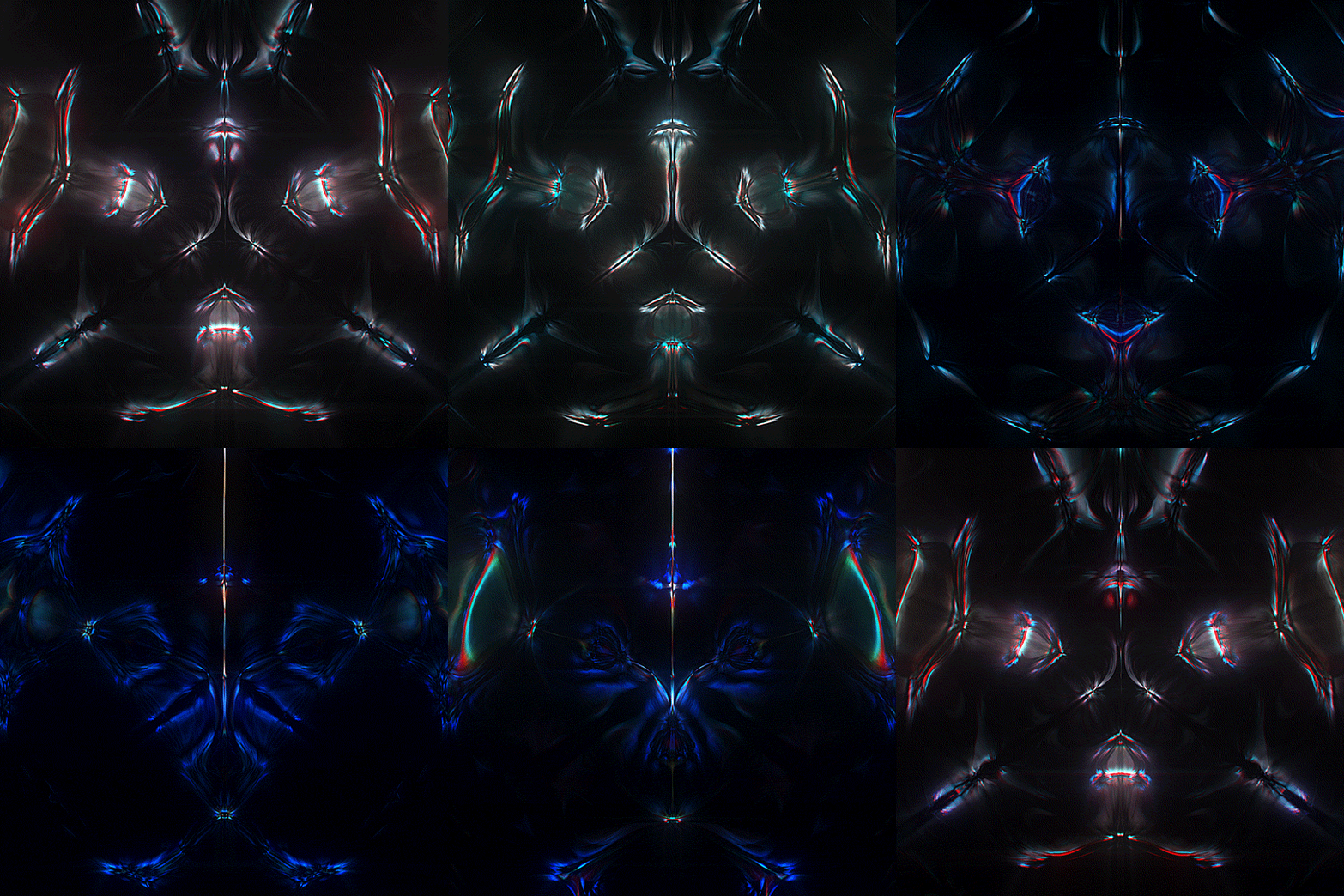
○ Theme Mandala - Viewing Guide
The theme of this lesson, the mandala, revolves around the concept of "alternation between movement and stillness": the outer circle features a rhythmic shape with slightly bouncy lines, symbolizing daytime activities and movement; the middle circle gradually transitions into regular wavy lines, representing breathing and pace slowly becoming even; and the center is an almost static but not rigid pattern, symbolizing deep rest at night.
Simply observe: Start from the outer circle, acknowledging the exertion and effort your body has put in throughout the day. Then, slowly guide your gaze towards the middle circle, feeling the rhythm shift from "jumping" to "swaying." Finally, rest at the center, experiencing the state of "being able to stop, but not being frozen." You don't need to explain it to yourself; just let your eyes follow this path repeatedly, as if saying to your nervous system, "I allow myself to move from movement to stillness."“
Applicable issues:People who sit for long periods during the day or are overly busy, have an imbalance between exercise and rest, or have difficulty falling asleep at night because they are "not tired or too tired during the day".
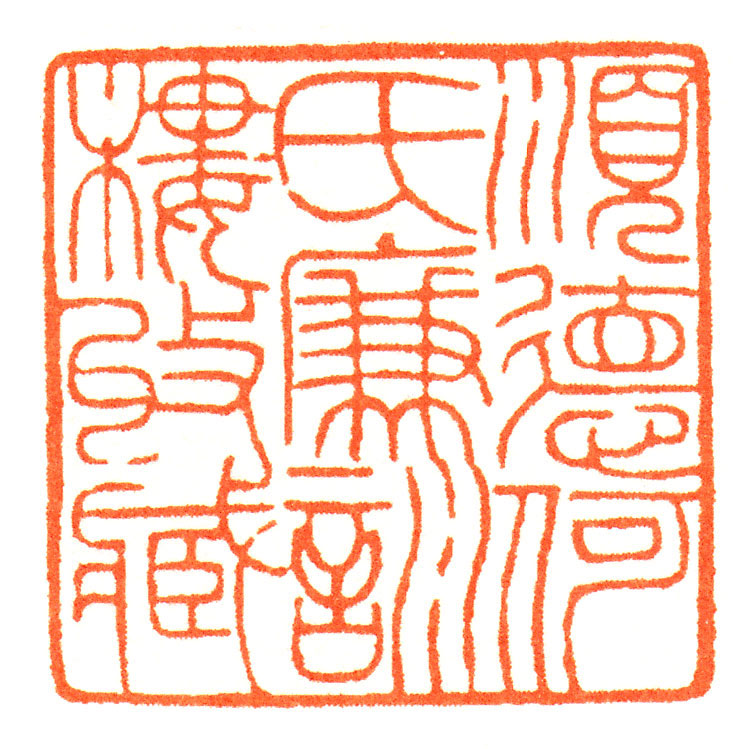
○ Chinese Calligraphy and Seal Carving Imagery Practice
Between exercise and sleep, we need a "steady finish." Seal carving, with its slow rhythm and heavy strokes, is suitable as a transitional exercise from an active state to a resting state.
Practice sentences:
“"With moderation in movement, the night can be peaceful."”
With measured movement, the night can be restful.
You can draw a small square frame on a piece of paper, break the sentence down into a few words, and slowly write them down while breathing. After writing each word, mentally recall a small thing your body accomplished today—even if it's just "walked a little further" or "consciously stretched." Let each stroke become an affirmation of your body, rather than another urging.
○ Exercise and Sleep Recovery: Guidance and Suggestions for Art Therapy
This page uses illustrations to visualize the cycle of "exercise-fatigue-restorative sleep," helping you see how you demand things of your body in your daily routine, and how (or haven't) yet scheduled real rest for it. We hope you see in the images not only "I need to be more active," but also "I also deserve to stop and rest."
1. Draw your "energy meter".“
- Draw a bar chart similar to a mobile phone battery level, from 0% to 100%.
- Use different colors to mark how you feel at several key times of the day, such as morning, afternoon, evening, and before bed.
- Next to the battery level, write down "When did I move too little/too much?" and "When could I have stopped but didn't?"
2. Draw the "dynamic-static channel".“
- Draw a small symbol representing "activity" on the left side of the paper, such as shoes, stairs, or outstretched arms.
- Draw a symbol of "sleep" on the right side, such as a blanket, pillow, and soft lighting.
- Connect the two with a line that goes from thick to thin and from dark to light, symbolizing the transition time from exercise to falling asleep.
- Write down two or three small things you'd like to add next to this line: stretching, taking a shower, drinking warm water, turning off the screen, etc.
A gentle reminder: If you currently have limited physical strength, body aches, or chronic illnesses, please approach your "exercise and sleep" issues with utmost gentleness. Painting is not about forcing yourself into an ideal state, but about acknowledging your current position and allowing for even the smallest adjustments.
Please log in before submitting your drawings and feelings.
○ 1368. Exercise and Sleep Recovery: Journal-Guided Suggestions
① Daily Review: Record how long you spent in each of the following periods from waking up to going to bed: "almost inactive", "lightly active", "moderately active", and "extremely tired".
② Physical sensations: Write down the three most noticeable physical sensations you experienced today, such as soreness, stiffness, relaxation, and drowsiness, and when they occurred.
③ Sleep-related: Looking back on the past week, on which day did you feel slightly better after "moving a little more"? On which day did you have more difficulty falling asleep if you moved too little or too vigorously? Briefly write down one or two observations.
④ Small step plan: Design a small activity goal for yourself that can be carried out for 7 days, such as "walking 5-10 minutes more each day" or "doing 3 minutes of stretching before going to bed each night".
Please log in to use.
You can gradually build a gentler and more practical "movement and sleep" cycle for yourself, allowing your body to find a night where it can truly recover between depletion and replenishment.
 EN
EN  ZH
ZH  ES
ES  FR
FR  JA
JA