

Lesson 137: The Sources of Anxiety About Fear of No One Helping Us
Duration:70 minutes
Topic Introduction:
“What if I have a seizure and no one helps me?”
“"What if I faint and no one finds me?"”
“"What if something happens and I can't handle it alone?"”
This fear is one of the most typical deep-seated causes of panic disorder.
It seems to be worried about the outside world, but it actually points to a more hidden psychological structure:
—I don't believe I can hold on.
This lesson will help you understand where this fear of "being afraid of no one helping you" comes from and help you rebuild the inner foundation of "I can take care of myself".
Why is the fear of being alone so intense?
- Distrust of bodily sensations:Fear of palpitations, dizziness, and chest tightness escalates into "danger" when no one is there to help.
- Doubts about self-regulation ability:The brain thinks, "I will lose control when I'm alone."
- Influence of early experiences:Memories of being ignored, isolated, and having no one to comfort you when you are afraid can be reawakened during a moment of panic.
- Relying on external security markers:Water, medicine, cell phones, and companions have become a "psychological lifeline"; without them, one dares not move forward.
Lesson 137: The Source of Anxiety About Fear of No One Helping You (Click to listen to the reading and view the content)
The anxiety of being alone isn't just an assessment of real-world risks; it's a deep-seated fear of attachment. When you think, "What if something happens to me? What if no one notices me? What if no one is willing to help me?" your body immediately goes into a state of isolation and helplessness. This fear often doesn't stem from the current situation but from past experiences of being ignored, misunderstood, or unresponsive at crucial moments. The nervous system equates "no response" with a survival threat, amplifying the signal prematurely to force you to stay within a safe zone. You might constantly check if someone is around, if it's convenient to ask for help, if the signal is good—these behaviors, ostensibly seeking safety, are actually reinforcing the belief that you can't be alone. The more you rely on readily available external help, the harder it is to build inner self-support. Healing isn't about denying the importance of others, but about gradually shifting the focus of your sense of security back to yourself. You can acknowledge that you crave being seen and helped—that's human—but at the same time, practice a new experience: even if no one responds immediately, you can get through the moment. Many anxious people overestimate the probability of "immediate intervention" while underestimating their ability to cope with discomfort. What you need to practice is continuing to exist, continuing to breathe, continuing to walk a few steps even without confirmation, instead of immediately retreating. When you repeatedly discover that things aren't out of control even without immediate help, your nervous system learns new lessons. Loneliness doesn't equal danger; I'm not that fragile. True safety isn't about having someone always by your side, but about knowing that even when you're temporarily alone, you have the ability to support yourself through discomfort.
▲ AI Interaction: In the situation of "no one helps me", what possibility are you most afraid of?
Is it "I can't hold on any longer"?
Is it "I'm incapable of saving myself"?
Or is it "I will be completely alone at that moment"?
Tell us your true feelings, and we'll work together to uncover the source of this fear.
This kind of fear is most likely to put the body into "high-intensity scanning mode": listening to the heartbeat, watching the breathing, and paying attention to the sensations in the head.
Music can temporarily draw attention away from the body and back to a gentle rhythm.
It is recommended to choose music with a steady beat, so that you can find a sense of "I can keep up with the rhythm" before going out or when you are alone.
○ Eastern Healing Tea: Polygala and Chrysanthemum Tea
Recommended reasons:Polygala tenuifolia calms the nerves, while chrysanthemum relieves tension in the head, making it suitable for those who are worried about not being able to hold on.
practice:Steep 1g of Polygala tenuifolia and 2–3 chrysanthemum flowers in 90℃ hot water for 3–5 minutes. It is gentle and has a calming effect.
○ Stable Dietary Therapy: Red Date and Longan Soothing Porridge (ID137)
In the anxiety of fearing being alone, the body often experiences palpitations and a sense of emptiness, requiring a gentle, comforting nourishment. The sweetness of red dates provides a familiar and safe taste memory, while the warmth and sweetness of longan help soothe the mind, giving the inner sense of being cared for. This porridge is suitable for eating when feeling lonely or down; it doesn't replace the company of others, but rather reminds you that you can still give yourself warmth and support when there is no external help.
Relieving loneliness
Warm support
Open Recipe
◉ Traditional Chinese Medicine Diet Therapy: Red Date and Longan Porridge
Red dates are sweet and warm, nourishing the blood, while longan pulp benefits the heart and spleen, calms the mind, and stabilizes the spirit. When cooked together with millet and rice, the resulting porridge is smooth, delicate, and naturally sweet. It's a classic combination for warming and nourishing the blood, relieving fatigue, and improving mental well-being. It's especially suitable for people with light sleep, palpitations, or low energy due to stress, providing gentle and lasting nourishment in the morning or evening.
Replenishing Qi and nourishing blood Soothes the mind and helps with sleep Warm stomach and relax
I. Recommended Dietary Therapy and Reasons
Recommended dishes:Red date and longan porridge (ID 17)
Recommended reasons:Red dates and longan are warming and nourishing without being drying, helping the heart and spleen to restore harmony; millet and rice can stabilize energy, maintain a feeling of fullness, and not cause any burden. Overall, it is warm and mild, making it very suitable as a nourishing porridge during recovery, after overwork, or when experiencing emotional fluctuations.
2. Recipe and Method
Recipe (1–2 servings):
- 6–8 red dates (pitted)
- 6–10 dried longans
- 2 tablespoons of rice
- 2 tablespoons of millet
- 600–700 ml of clean water
- A small amount of rock sugar or brown sugar (optional)
practice:
- Wash and pit the red dates, rinse the dried longan briefly, and wash the rice and millet.
- Add water, red dates, and longan to a pot, bring to a boil over high heat, then reduce to low heat and simmer for 10 minutes.
- Add rice and millet, and simmer over low heat for 25–35 minutes, stirring occasionally to prevent sticking to the bottom.
- Cook until the rice grains are soft and the porridge is smooth and thick; if you prefer a sweeter taste, you can add a small amount of rock sugar or brown sugar.
- After turning off the heat, let it simmer for 3–5 minutes to make the porridge smoother before serving.
3. Small rituals for body and mind
When cooking porridge, keep the heat on a steady low flame, allow yourself to temporarily detach from the tense pace, take a few deep breaths, and feel the state of "slowing down".
When eating, consciously feel the temperature of the porridge, the sweetness of the longan, and the delicate aroma of the red dates, allowing your attention to return from distractions to the taste itself, creating a gentle, grounding experience.
After eating, gently pat your abdomen for one minute to allow your body to shift from tension to relaxation. This is a small exercise that supports a sense of calm and groundedness.
4. Dietary Therapy Experience Record
- Record the time of consumption (breakfast/dinner/bedtime) and the stress level of the day.
- Observe your mental state 30–90 minutes after consumption: whether you are more stable or more relaxed.
- If consumed continuously for 3–5 days, sleep quality, fatigue recovery, and mood fluctuations can be recorded.
V. Instructional Videos (approximately 4–7 minutes)
◉ Video Title:Red Date and Longan Porridge: A classic nourishing porridge that warms and calms the mind.
6. Precautions
- People with diabetes or those who need to strictly control their blood sugar should be cautious about adding sugar and control the amount consumed at one time.
- Red dates are warm in nature, so those who are prone to getting overheated (such as mouth ulcers or dry and sore throat) should reduce the amount they consume.
- For those with weak stomachs or prone to bloating, the amount of longan can be reduced by half, and the simmering time can be extended to improve digestibility.
hint:This recipe is for daily health maintenance and should not replace clinical diagnosis and treatment. If you experience persistent palpitations, fatigue, or sleep disturbances, please seek medical attention promptly.
○ Suggestions for Chinese Calligraphy and Seal Carving Practice - Lesson 137: The Source of Anxiety About Fear of No One Helping Us
This lesson's seal carving practice points to "going it alone without feeling lonely." When you become accustomed to seeking safety in the affirmation of others, the knife becomes hesitant; but when you learn to trust your own rhythm, the lines will naturally extend. Seal carving reminds you that companionship doesn't always come from the outside world; it can also come from your own hand firmly holding the knife.
- Introduction to the characteristics of seal carving:
This lesson corresponds to the seal carving concept of "walking without looking back." The forward strokes of the knife without frequent pauses symbolize your ability to continue acting even without external feedback. - Written words (seal text):
Wandering the ends of the earth - Psychological Intention:
Writing "wandering the world" is telling yourself that even when you're alone, the world is still vast, and you're not being abandoned but rather on your journey. - Knife skills:
Practice "steady progress and deep understanding." Be firm in your initial cut, without repeated corrections along the way, allowing each cut to complete its own path—this symbolizes trust in your inner perseverance. - Emotional transformation:
Transform the fear of "What if no one helps me?" into the sense of security of "I can walk this path with myself".
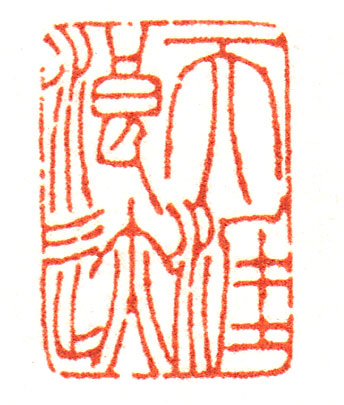
Image Healing: Guided Mandala Viewing - Lesson 137
Please observe a mandala with a warm center and gradually unfolding outer rings. It symbolizes stability at the center even when surrounded by emptiness.
First, focus your gaze on the center and feel a sense of being enveloped. Then, slowly move your gaze outwards. You don't need to seek a response; simply feel the existence of the space.
If you feel lonely or uneasy, don't look away. Instead, continue walking outside for a few seconds and let your body feel that even in an empty space, you are still here.
Mandalas are not about drawing something, but about observing. When you can continue to observe your nervous system in a space without response, you learn a new fact: solitude is not dangerous.
The mandala in this lesson, with its "warm center and wide outer circle," symbolizes the ability to find peace even when alone.
◉ One gaze is sufficient; no repetition is required.
Lesson 137: Guided Drawing Practice - Inner Support Exercise
① Action guidance:Draw a solid center point with thick color and clear boundaries to symbolize "my core strength".
② Action guidance:Several soft rings are drawn around the center, symbolizing that the outside world is not a threat, but an accessible space.
③ Action guidance:Write a sentence in the lower right corner of the image: "Even if I'm alone, I can hold on."“
Please log in before submitting your drawings and feelings.
○ 137. Fear of being alone - Journaling guidance suggestions
① What am I most afraid of today if I am left without help? Please describe a specific scenario.
② Am I interpreting "physical discomfort" as "danger"? Write down the differences between physical signals and actual risks.
③ Have you ever had an experience where "no one helped me, but I managed to get through it all by myself"? Write down the details to reinforce your memory.
④ Give yourself a powerful reminder today: "When I'm afraid, I can still rely on myself."“
Please log in to use.
Help is heartwarming, but the source of strength lies within yourself. You are never alone, nor are you powerless.
 EN
EN  ZH
ZH  ES
ES  FR
FR  JA
JA