

Lesson 1370: Sleep Characteristics at Different Age Stages
Duration:60 minutes
Topic Introduction: This course focuses on "Sleep Characteristics at Different Age Stages," helping you distinguish between which sleep changes are natural physiological adjustments that occur with age, and which may be signals of insomnia or other psychosomatic problems. Infants and toddlers sleep longer and wake more frequently; children and adolescents often experience delayed sleep onset due to schoolwork and electronic devices; adult sleep is disrupted by stress, role burdens, and lifestyle rhythms; and middle-aged and elderly people are more likely to experience light sleep, frequent awakenings, early awakenings, and increased daytime naps. Many people panic because they "don't sleep as well as they did when they were younger," or become anxious because their children's sleep patterns differ from their expectations. This course will analyze typical sleep characteristics at each stage from four dimensions: age, circadian rhythm, hormonal changes, and lifestyle structure, providing initial clues to determine when these are "normal changes" and when further evaluation and intervention should be considered. It aims to help you rebuild realistic and gentle expectations for sleep at different stages of life.
○ Typical sleep characteristics at different age stages
- Infancy and early childhood:The patient has a long total sleep duration, an unstable circadian rhythm, and wakes up frequently at night, which is closely related to feeding and soothing methods.
- Childhood:Sufficient sleep is needed to support growth and learning; going to bed late, waking up early, or being overly excited before bed often affects the quality of sleep.
- Adolescence:Their biological clock naturally shifts later, and they prefer to go to bed late and wake up late, but academic pressure and early morning classes can easily lead to "long-term sleep debt".
- Adulthood:The combined stress of work, childcare, social life, and emotions often leads to difficulty falling asleep, waking up in the middle of the night, and a feeling of "the mind not stopping."
- Middle and old age:The proportion of deep sleep decreases, making it easier to be awakened by noise, frequent urination, or physical discomfort, leading to more early awakenings. However, excessive worry itself can also worsen insomnia.
▲ AI Interaction: In your age group, what sleeping position is considered "reasonable"?
When people talk about sleep, they compare themselves to an "ideal standard": they must sleep for eight hours, sleep through the night, and have zero dreams, otherwise they are considered failures. However, the depth, continuity, and duration of sleep naturally vary at different ages.
Please first write down your age range (or a family member you care about, such as children or parents), then write down the sleep problem that is currently troubling you the most: Is your total sleep duration getting shorter? Are you waking up more often at night? Are you waking up too early in the morning? Or do you always want to catch up on sleep during the day?
Next, describe your ideal sleep in one or two sentences—is it too perfect? Does it ignore age, health conditions, and real-world pressures?
In conclusion: We are not asking you to lower your expectations, but rather to learn to reach a more sustainable agreement with sleep in real life stages.
Click the button below to reassess your "reasonable sleep range" for this stage with AI, and distinguish between natural changes and signals that may require further evaluation.
○ Sleep characteristics at different ages · Music therapy
The body's sensitivity to rhythm varies with age. Infants and toddlers are suited to the steady rhythm of lullabies, teenagers may be more easily soothed by music that is slightly rhythmic but not intense, while middle-aged and elderly people often need a simple, gentle, and unchanging soundscape.
Exercise 1: Based on your age and current state, choose a piece of music that is "slightly slower than your usual pace," rather than switching to extreme silence all at once, to help your nervous system gradually slow down.
Exercise 2: Try listening to the same piece of music at fixed times, such as at a fixed time every evening or before an afternoon nap, so that your body gradually develops a conditioned reflex that "hearing this music means I should slow down".
Exercise 3: If you are caring for children or the elderly, you can listen to music with them for a few minutes before bedtime. Don't rush to fall asleep; just enter a "quiet prelude" together.
In conclusion, music is not meant to induce sleep, but rather to help bodies of different ages find their own soothing rhythm.
○ Chinese Black Tea Healing Drink
Recommended drinks:Yunnan Black Tea: A Gentle Cup Through the Years
Recommended reasons:Yunnan black tea has a full-bodied flavor with fruity or honey aromas, symbolizing the layers and resilience accumulated with age. Drinking it lightly brewed is not for stimulating the mind, but rather as a symbol that "every stage of life deserves to be treated gently," allowing you to rediscover sleep, and also to rediscover your age and the present moment.
usage:Take 1–1.5 grams of Yunnan black tea and steep in 85℃ hot water for 15–20 seconds. It's perfect for a quiet moment at dusk or in the early morning, a time to reflect on the changes you've experienced at this stage of your life, of which sleep is just one part. Those sensitive to caffeine can choose to drink it earlier, retaining only the ritualistic aspect.
○ Nourishing Soup with Tremella and Goji Berries
White fungus moisturizes dryness, goji berries nourish the liver and kidneys, and when combined with a small amount of longan and rock sugar and simmered into a soup, it has a smooth texture and is suitable for people of all ages to enjoy in small portions in the evening. For those who feel physically and mentally dry due to aging or long-term fatigue, it is like a "comfortable drink," reminding them that even if they are not sleeping as well as before, they still deserve to be nourished and cared for.
○ Theme Mandala - Viewing Guide
The theme mandala of this lesson is presented with the imagery of "tree rings": the inner circle symbolizes childhood and adolescence, with soft lines but large undulations; the middle circle symbolizes adulthood, with densely interwoven lines and layers of color blocks; the outer circle is relatively simple, with more open blank space and slow lines to present the convergence and reflection of middle and old age.
Simply observe: let your gaze follow the rings of your sleep from the inside out, feeling the differences in rhythm, color, and density of each ring. You can silently repeat to yourself, "My sleep is different at different stages." Don't blame yourself for not sleeping as well as before; just acknowledge that your body and life are changing, and this is not a failure.
Applicable issues:People who are anxious about "how much sleep I should get at my age" and "how well I should sleep"; caregivers who take care of family members of different ages and worry about whether their sleep is "normal".

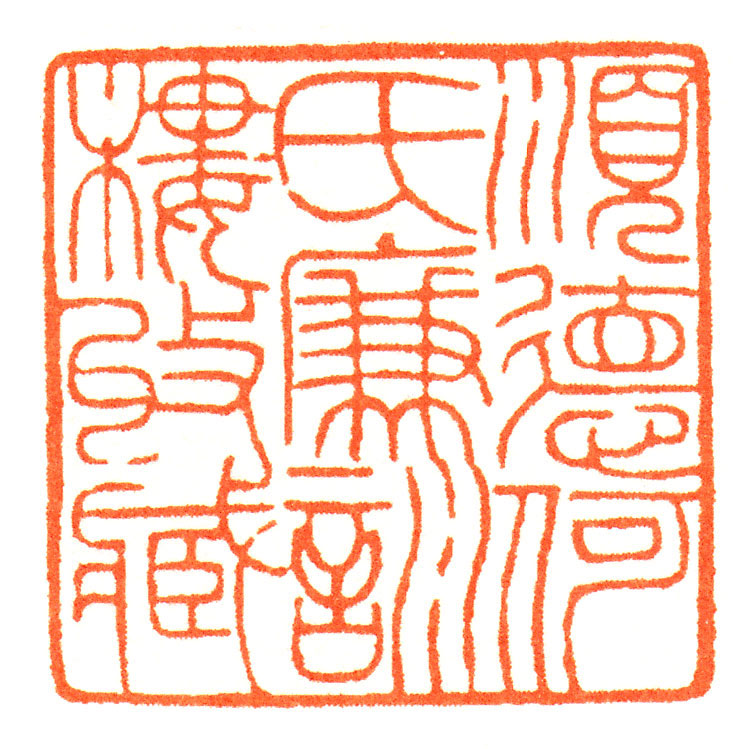
○ Chinese Calligraphy and Seal Carving Imagery Practice
Sleep patterns at different ages are like a seal etched into the fabric of time, varying in depth and width. Seal carving practice invites you, within a small space, to acknowledge this change, rather than fight against it.
Practice sentences:
“"Adjust your sleep schedule according to the years."”
As the years turn, my sleep finds a new rhythm.
Draw a small frame on a piece of paper, then slowly write down this sentence in several words. With each word, gently recall a stage of your life: childhood, youth, adulthood, and now. It's not about judging "which stage you slept best," but acknowledging that each stage has its own rhythm and challenges. Let the weight of each stroke remind you: you deserve to redesign your sleep expectations and care methods to suit your current age.
○ Sleep characteristics at different ages: Guidance and suggestions for art therapy
This page uses illustrations to transform the often-misunderstood fact that "sleep changes with age" into visible and understandable images. The goal is not to prove whether you sleep well or poorly, but to help you see on paper that each ring of life has its own unique pattern of sleep.
1. Draw your "sleep growth rings"“
- Draw a dot in the center of the paper, and then draw 3-5 concentric circles outwards, labeling each circle with a different age stage (such as childhood, youth, and present).
- In each circle, lines and color blocks symbolize the sleep state at that time: whether it is deep, shallow, broken, or occasionally peaceful.
- Write a short description next to each circle, such as "I used to fall asleep easily", "I used to stay up late often", or "I used to feel very burdened by responsibilities".
2. Draw the "sleep care circle for this current stage".“
- In addition to the current circle, add a "care circle" and use soft colors to represent one or two small things you are willing to do for yourself now (such as establishing a regular bedtime ritual or reducing late-night stimulation).
- Write down a sentence for yourself at this stage, such as: "I will no longer hold myself to the same sleep standards I had at twenty."“
Friendly reminder: If you find that your sleep changes far exceed the reasonable range of "age differences" (such as extreme reduction, severe early awakening accompanied by a significant decline in daytime function), please bring this chart with you as a starting point for communicating with your doctor or professional, rather than as evidence of your own worry.
Please log in before submitting your drawings and feelings.
○ 1370. Sleep characteristics at different ages: Journaling guidance suggestions
① Age positioning: Write down your current age group (or the group you care about most), and your existing ideas about "how this age should sleep".
② Real-world comparison: Record the actual sleep status over the past week (duration, number of times you wake up, daytime mental state), without making judgments, only descriptions.
③ Difference awareness: Write down 1-2 gaps between the "ideal image" and the "real state" that cause you the most anxiety, such as "I used to sleep through the night when I was a child, but now I wake up at the slightest sound".
④ Natural Changes vs. Need for Help: Based on the content of this lesson, try to determine which changes may be age-related and which may indicate the need for further consultation with a doctor or professional.
Please log in to use.
You can gradually reconcile with yourself at this stage, leaving a soft and real space for sleep between reality and ideals.
 EN
EN  ZH
ZH  ES
ES  FR
FR  JA
JA