

Lesson 1376: A Four-Week Sleep Improvement Plan
Duration:60 minutes
Topic Introduction:
This course will provide you with a four-week sleep improvement plan, suitable for those who suffer from long-term difficulty falling asleep, interrupted sleep maintenance, early morning awakening, or fatigue after waking up. The four-week plan is designed as follows: Week 1 "Stabilizing Sleep Schedule", Week 2 "Adjusting Cognitive Expectations", Week 3 "Relieving Mental and Physical Tension", and Week 4 "Establishing Positive Sleep Experiences". We will combine behavioral training (such as wake-up anchors and in-bed wakefulness management), emotional adjustment (such as writing and AI guidance), circadian rhythm care (tea ritual, warm soup nourishment), visual visualization (mandala viewing), and mental imagery (seal carving and commitment) to help you gradually rebuild your sleep physiological structure and psychological sense of security without relying on medication. You don't need to achieve perfection all at once; just proceed gradually, building a little bit of your body's memory each day that "I can gradually sleep better".
○ Four-Week Improvement Plan - Key Phase Points
- Week 1:Synchronize your routine with your environment, such as having a fixed wake-up time, avoiding stimulants in the afternoon, and keeping your bedroom quiet and dark.
- Week 2:Be aware of and transform pre-sleep cognitions, such as changing "I will have insomnia again tonight" to "I don't force myself to fall asleep, but I am willing to create the conditions for falling asleep."
- Week 3:Incorporate body relaxation mechanisms: breathing exercises, foot baths, music therapy, and a bedtime black tea transition ritual.
- Week 4:Establish a "positive sleep connection" by recording good sleep for more than 3 consecutive days to strengthen your confidence that "I am getting better".
▲ AI Interaction: Create a four-week sleep improvement goal map
Please review your sleep patterns over the past month and write down the core issues you encountered in a few sentences (e.g., delayed sleep onset, nighttime awakenings, fatigue upon waking).
Next, set goals for the four-week plan, such as: "Week 1: Get up at a fixed time and don't stay in bed too long", "Week 2: Reduce anxiety and anticipation", "Week 3: Do relaxation exercises only before bed", and "Week 4: Record three consecutive nights of good sleep".
Finally, write down a sentence expressing your expectations and commitments for the next four weeks, such as: "I am willing to take one more step every day and no longer expect things to change overnight."“
Click the button below, and AI will help you generate a personalized "Four-Week Sleep Improvement Plan" which can be used as a reference for daily tracking and adjustments.
○ Sleep Improvement & Music Therapy Recommendations
In this four-week plan, it is recommended to use the same piece of music as a sleep-inducing rhythm each week to avoid frequently changing tracks. The music is not intended to help you fall asleep immediately, but rather to serve as a signal for rhythm transition and a sense of security.
- Week 1:Choose a natural background (such as the sound of wind, water, or insects) to create a transitional environment before bedtime.
- Week 2:Use low-frequency repetitive rhythms to help stabilize brainwaves (such as slow-paced guzheng or bass piano).
- Week 3:Add a light string or vibrato to guide the body into a synchronized breathing rhythm.
- Week 4:Continuously play the same track to establish a conditional association that "hearing this track = getting ready to fall asleep".
○ Chinese Black Tea Healing Drink
Recommended drinks:Bailin Gongfu Black Tea - Daily Reset Tea
Recommended reasons:Bailin Gongfu tea has a gentle floral and honey aroma that is not easily stimulating to the nerves, making it a suitable type of black tea for long-term consumption. As a daily beverage in a four-week plan, it can help you define the transition signal of "the end of the day," and is especially suitable for drinking after dinner, marking the end of the pre-sleep routine.
usage:Brew 1–1.5 grams of tea one hour after dinner each day, using water at 85–90℃. Drink quickly; do not brew too strong. It can be enjoyed while taking a walk or reading.
○ Albizia and Lily Soup for Calming the Mind
Cooking mimosa flowers, lily bulbs, lotus seeds, and millet together into a porridge-like soup can help relieve emotional tension, depression, and irritability, and enhance relaxation at night. It is recommended to consume it after dinner in the second or third week to help stabilize emotions and enter a state of sleep.
Emotional Regulation
Suitable for long-term conditioning
○ Theme Mandala - Viewing Guide
The mandala design for this lesson is a four-ring structure, symbolizing the gradual advancement of the four-dimensional plan. The outer ring is brighter, representing the tension and instability of the initial stage; the two middle rings gradually turn to softer tones; the innermost ring is dark purple and deep blue, representing the stability of the sleep rhythm and the return of a sense of security.
Please watch this every day after drinking black tea or before going to bed. Slowly rotate your gaze along the outer circle to the center, and silently repeat in your mind: "This is a process, I am recovering."“
Applicable scenarios:People who need to rebuild their sleep in the medium to long term, especially those who have had insomnia for more than a month.

○ Chinese Calligraphy and Seal Carving Imagery Practice
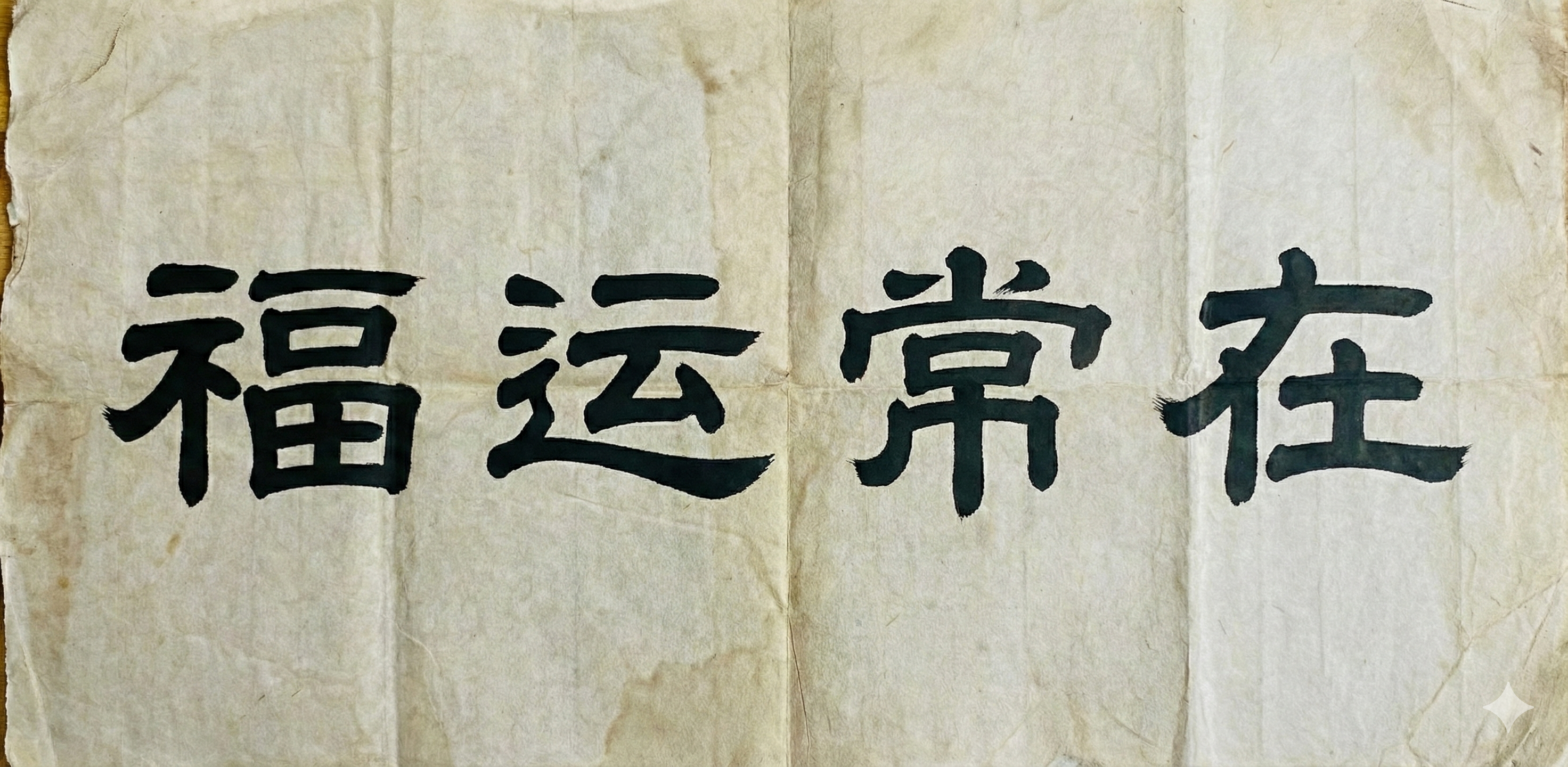
The spirit of the four-week plan is "steady progress," and the structure of the seal carving symbolizes the "intentional" actions of each stroke.
Practice sentences:
“"A journey of four weeks, slow but not retreating."”
Four weeks, one journey — slow but steady.
Please draw a stamp on a piece of paper and write this sentence. With each stroke, write down one promise you most want to stick to in the process of improving your sleep (such as no longer looking at your phone before going to bed, waking up at the same time every day, etc.), and engrave it into your rhythm.
○ Four-week rhythm chart and art therapy guidance suggestions
This page uses images to help you visualize your four-week plan, allowing you to better understand rhythm changes and your effort trajectory. Drawing can also serve as a nonverbal release before bed, reducing anxiety-inducing thought processes in your brain.
I. Drawing a "Rhythm Spiral Diagram"“
- Draw a spiral line from the outside in, divided into 4 loops, each loop representing 1 revolution.
- Mark the weekly goals for each cycle (e.g., "fixed wake-up time", "reduce expectations", "relax physical tension", "positive reinforcement").
- In the innermost circle, it was written: "Sleep is not an escape, but a restoration."“
II. Drawing a "Sleep Hope Tree"“
- Draw a tree with the trunk representing "sleep recovery" and each week representing a layer of branches and leaves.
- Write down the small improvements you observe each day on a leaf, such as "I only woke up once tonight" or "It was easier to get up early today."
Tip: Visualizing abstract rhythms is the first step in overcoming the "sleeplessness dilemma." Your hands can help you prove that you are not static.
Please log in before submitting your drawings and feelings.
○ 1376. Sleep Improvement in Four Weeks: Journal-Guided Suggestions
① Daily Log: Did I wake up as planned? Did I drink tea on time? Did I perform relaxation exercises?
② Emotional response: Record whether you have thoughts such as "it didn't work" or "it failed again", and write down the corresponding response.
③ Observe minor improvements: Record even the smallest improvement (e.g., falling asleep faster, waking up less at night, no more morning panic).
④ Weekly summary: Summarize the most helpful aspects and the most difficult parts to stick to during the week, and make minor adjustments for the following week.
Please log in to use.
Sleep is not a goal, but a process. You are gradually rediscovering it, not by forcing yourself to fall asleep, but by slowly regaining the ability to sleep.
 EN
EN  ZH
ZH  ES
ES  FR
FR  JA
JA