

Lesson 1378: Travel and Jet Lag Sleep Adjustment
Duration:60 minutes
Topic Introduction:
This course focuses on "Travel and Jet Lag Sleep Adjustment." Cross-time zone travel often disrupts our circadian rhythms, causing our "biological clock" to be out of sync with "destination time," leading to insomnia, early awakenings, or daytime drowsiness. This is especially true for those who frequently travel between different time zones, such as international workers or travelers visiting relatives, who often experience "arriving at their destination but unable to fall asleep" and "returning home with their sleep schedule reversed." This course will introduce how to predict sleep disturbance patterns based on flight direction (east or west) and utilize rhythm resetting tools (such as light exposure, melatonin, and meal control), combined with methods like using Chinese black tea for daytime alertness, small doses of nourishing soups for nighttime rest, and viewing mandalas for emotional calm, to build a rhythm adjustment system that allows for "no sleep loss during travel." Furthermore, we will explore the concept of "psychological jet lag"—how emotional unease, culture anxiety, and a sense of spatial disorientation in unfamiliar environments affect nighttime rest. Through Chinese calligraphy practice of "following the flow of time" and AI-assisted rhythm mapping, we will help you gradually adapt to self-soothing under different rhythms.
○ Common manifestations of rhythm disturbance
- Physiological diurnal inconsistency:Night had fallen at the destination, but my internal clock was still in daytime mode.
- Difficulty falling asleep:Lying in bed, I feel like it's "not time to sleep yet," and even though I'm physically exhausted, I find it hard to fall asleep.
- Waking up early or at night:My body's circadian rhythm is ahead of schedule, and I wake up in the middle of the night, making it difficult to fall back asleep.
- Daytime fatigue:Although I have fallen asleep, the quality of sleep is poor, and I feel drowsy and have difficulty concentrating during the day.
- Delayed rhythm recovery:Even after returning to China for several days, I still feel that my sleep schedule is disrupted and my recovery is slow.
▲ AI Interaction: Build Your "Rhythm Adaptation Map"“
Please recall your most recent cross-time zone trip and fill in the following:
- What is the time difference between the departure point and the destination?
- In the week leading up to your departure, what time did you typically go to sleep and wake up?
- What time did you fall asleep during the first three days after your trip? Did you wake up very early or stay awake all night?
- What coping strategies did you try? (e.g., adjusting meal times, using an eye mask, sunbathing, drinking tea or avoiding coffee, etc.)
Based on this data, AI will help you create a "circadian rhythm disruption map" and provide personalized circadian rhythm adjustment suggestions to help you cope with jet lag more easily on your next trip.
○ Music Therapy: Gentle Sounds on the Map
Playing calming, soothing music during your trip and on your first night in the city can help your body resonate with the unfamiliar environment.
Suggested music genres: ocean wave rhythms, low-frequency pulsations, piano nocturnes, etc.
Use 1: Play it on a plane or train, and use it with an eye mask and neck pillow to try to create a sense of "steady rhythm".
Method 2: After arriving at your destination, play the music for 3–5 days before going to sleep to provide your body with a consistent “night signal”.
○ Chinese Black Tea: A Rhythmic Marker of Time Zone Change
Recommended drinks:Dianhong (Yunnan large-leaf black tea) - Perfect for morning and midday sunlight.
reason:Yunnan black tea has a rich and mellow aroma and a mild, invigorating effect, making it suitable as a daytime "wake-up agent" for the body's rhythms.
Usage recommendations:For the first two days after landing, drink a small cup of Yunnan black tea in the morning or at noon (avoid drinking it in the evening), and expose yourself to sunlight for 30 minutes to accelerate the reset of your endogenous biological clock.
White fungus and longan soup
This soup, made by simmering white fungus, longan, lotus seeds, and red dates, nourishes yin and calms the mind, relieving internal heat and restlessness caused by travel and insomnia. It is best consumed warm two hours before bedtime to help the body and mind smoothly adjust to jet lag.
replenish Qi
Suitable for travel
○ Theme Mandala: An Inner Vision of Time Zone Integration
The mandala in this lesson is a spiral interlaced design, with a stable dot at the center, extending outwards to form wave patterns symbolizing different time rhythms.
Please gaze slowly at the center of the mandala, keep your breathing steady, and bring your attention back to the here and now, without being distracted by the rhythms of "past" or "coming" during the flight.
Applicable issues:Those who are still thinking about the rhythm of the previous time zone at night, or who feel "floating" or "unable to land".

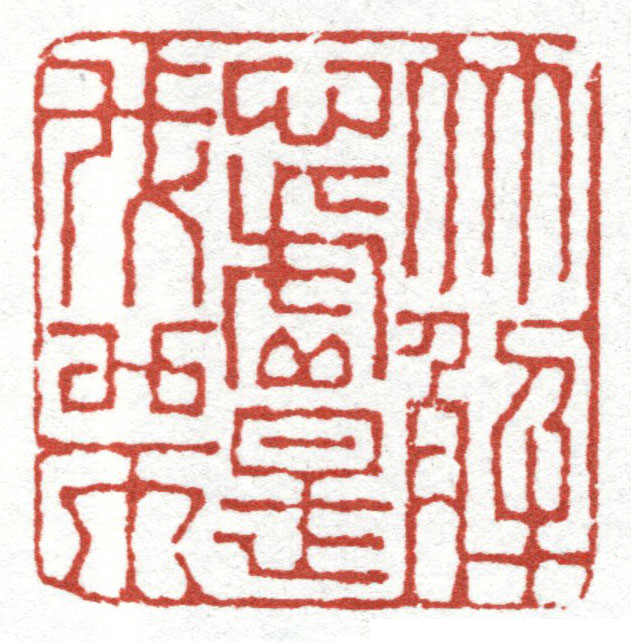
○ Chinese calligraphy and seal carving: moving with the times
Jet lag often gives us the urge to "fight against time," but this seal carving exercise emphasizes "adapting to the situation."
Practice words and phrases:“"Go with the flow"”
Please write the characters “顺时” in regular script or seal script, and simulate the outline of the seal, symbolizing finding a path to dance with different rhythms.
○ Art Therapy: The Wheel of Time
Imagine a circular clock face representing the sense of time, using colors to separate "departure time", "state on the plane", "destination rhythm", "nighttime", and "time when the body truly feels sleepy".
Color gradients (such as blue → gray → dark purple) can be used to express the rhythmic change from excitement to calmness.
The gap between "I should sleep" and "I can sleep" is transformed into a visual rhythmic ripple.
Drawing is not an assessment tool, but rather a way to help you organize your chaotic state and see with your eyes the actual effects of jet lag on your body.
○ Log Guidance: Daily Records During Jet Lag Adaptation
① Write before bed: "What time was I most tired today? What time did I actually fall asleep?"“
② Write in the early morning: "What time did I wake up? How did I feel when I woke up?"“
③ Behavior tracking: Did I sunbathe today? Did I drink coffee/tea? Did I take a nap? Record each item.
④ Mood Notes: Do you feel a sense of "belonging" or "floating"? Do you have concerns about sleep?
Please log in to use.
You can't control time zone differences, but you can practice giving your body some time and rhythm to "re-embrace" itself, no matter which time zone you're in.
 EN
EN  ZH
ZH  ES
ES  FR
FR  JA
JA