

Lesson 138: The Fear Amplification Mechanism of Drugs and Diseases
Duration:70 minutes
Topic Introduction:
Panic and anxiety often amplify "medication," "illness," and "physical symptoms" into dangerous signals:
Will taking medication have any side effects?
Is this symptom very serious?
Is he seriously ill? Is something bad about to happen?
This lesson will help you understand why your brain amplifies these risks and help you put your worries back in reality, thereby restoring trust in your body.
Why am I so afraid of drugs and diseases?
- Anxiety amplification effect:When under stress, the brain interprets any bodily sensation as "abnormal".
- Fear of unknown side effects:It's not the medicine itself, but the fear of feeling "out of control".
- The connection between disease fear and imagination:Minor discomfort is associated with extreme situations, such as serious illness or emergencies.
- Influence of early medical experiences or other people's stories:Unsettling memories from the past can amplify current fears.
Lesson 138: The Fear Amplification Mechanism of Drugs and Diseases (Click to listen to the reading and view the content)
Fear of medication and illness often stems not from actual risk, but from the brain's catastrophic amplification of "uncertain consequences." When you see a list of side effects on the instruction manual or repeatedly search for symptoms online, the brain pieces together fragmented information to create the worst possible outcome. The body then begins to react prematurely—a rapid heartbeat, stomach cramps, dizziness, nausea—these reactions are then taken as "evidence" that the medication or illness is harming you, thus reinforcing your fear. The core of this amplification mechanism lies in treating probability as certainty and possibility as reality. The more you try to eliminate uncertainty through verification, the more ambiguous information you encounter, expanding your vigilance. It's important to understand that most drug reactions and disease progression do not follow a linear narrative in your mind but are influenced by dosage, time, individual differences, and overall condition. Healing is not about blindly ignoring risks, but about stopping interpreting every bodily fluctuation as a catastrophic signal. You can shift your attention from "outcome deduction" back to "present observation"—for example, whether you are experiencing any new, definite changes right now, rather than simply amplifying feelings. Practice setting boundaries for your fear, only checking necessary information once at fixed times and not continuing to search at other times. More importantly, maintaining continuity in life amidst uncertainty—eating, walking, communicating, and sleeping—provides stable input to the nervous system, counteracting over-interpretation. When you allow uncertainty to exist and stop filling the void with fear, the amplification mechanism loses its fuel. You will gradually find that even with worry, you can still follow medical advice and take care of your body without being led astray by fear.
▲ AI Interaction: What part of the medication or disease are you most afraid of?
Is it a side effect?
Is it a sense of uncertainty?
Do you immediately imagine the worst-case scenario whenever you feel even the slightest discomfort in your body?
Speak out, and together we'll move from "exaggerated fear" back to "the truth".
Fear of illness or medication often puts the body into a "sympathetic nervous system fully activated" mode, causing tightness in the chest and stomach.
Music can provide a stable rhythm, reminding your body that you don't need to constantly scan for danger.
It is recommended to choose gentle music with long sustains to help the body return from "monitoring" to "stability".
○ Eastern Healing Tea: Jasmine and Tangerine Peel Soothing Tea
Recommended reasons:Jasmine soothes tense emotions, while dried tangerine peel calms the stomach and regulates Qi, making it suitable for situations where physical discomfort is amplified.
practice:Steep 2g of jasmine flowers and a little dried tangerine peel in 85℃ hot water for 3–4 minutes. The aroma can help relax your mind and heart.
○ Stable Dietary Therapy - Purple Sweet Potato and Yam Puree (ID138)
When fear of medication or illness is amplified, the body is often in a state of tension and digestive suppression, requiring a gentle, stable, and non-stimulating nourishment. The mildness and natural sweetness of purple sweet potato bring a sense of security, while the delicate texture of yam helps the digestive system return to a stable rhythm. This smooth puree is suitable for consumption before or after periods of emotional stress or when medication is needed. Its gentle taste conveys a message to the nervous system that the body is currently able to cope and is being properly cared for.
stable rhythm
Lowering vigilance
Open Recipe
◉ Dietary Therapy: Purple Sweet Potato and Yam Mash
Purple sweet potatoes are rich in anthocyanins, which have antioxidant properties, strengthen the spleen and stomach, and promote bowel movements; yams strengthen the spleen and replenish qi, nourish the lungs and kidneys, and nourish yin and moisten dryness. When steamed together into a smooth and delicate puree, this snack is nutritionally mild and easily absorbed, making it suitable for people with weak digestion, insufficient physical strength, those who experience fatigue from prolonged sitting, and those who need a stable energy supply.
Strengthen the spleen and replenish qi Antioxidant and energy booster Moisturizes dryness and soothes the stomach
I. Recommended Dietary Therapy and Reasons
Recommended dietary therapy:Purple sweet potato and yam puree (ID 33)
Recommended reasons:Purple sweet potatoes provide stable energy and polyphenols; yams nourish the spleen and aid digestion, making them suitable as a breakfast, afternoon snack, or light energy boost before exercise.
2. Recipe and Method
Recipe (Serves 2):
- 200g purple sweet potato (peeled and diced)
- 150g of Chinese yam (peeled and cut into sections)
- 30–50 ml of milk or soy milk (optional, adjust the consistency).
- 1–2 teaspoons of honey (optional)
- A few chopped nuts (optional, to enhance aroma and texture)
practice:
- Peel and dice the purple sweet potatoes and yams, then place them in a steamer and steam for 15–20 minutes to ensure they are fully cooked.
- Place the steamed purple sweet potatoes and yams in a bowl and mash them into a smooth paste using the back of a spoon or a masher.
- Depending on personal taste, you can add a small amount of warm milk or soy milk and stir to make the texture smoother.
- If you prefer a slightly sweet flavor, you can add a little honey for seasoning.
- After plating, sprinkle with a small amount of chopped nuts or black sesame seeds to add a sense of depth.
3. Small rituals for body and mind
Consider purple sweet potato and yam puree as a "slow-paced energy snack." Take three deep breaths before eating to help your body return to the present moment from a tense state.
Each bite allows you to experience the warmth and delicate texture of the food, bringing peace and tranquility to your mind and helping to relieve the effects of prolonged sitting, fatigue, and low energy.
It is especially suitable for replenishing energy during periods of mild fatigue in the afternoon without causing drastic fluctuations in blood sugar.
4. Dietary Therapy Experience Record
- Observe energy changes: Do you feel more alert and energetic 30–60 minutes after consumption?
- Record satiety and comfort: Is it lighter and less bloating than other desserts?
- Mood tracking: Do you feel more stable and less anxious?
5. Tutorial Video (approximately 4–6 minutes)
◉ Video Title:Purple sweet potato and yam puree: Antioxidant and gentle energy boost
6. Precautions
- Purple sweet potatoes are high in fiber, so those prone to bloating are advised to eat them in small amounts and frequently.
- Yam is prone to oxidation and turns black, so it should be steamed or soaked in water immediately after peeling.
- People with diabetes should use honey with caution, or omit sweeteners altogether.
hint:This dietary therapy is a supplementary method of conditioning. If you experience persistent fatigue or poor appetite, please consult a professional physician.
○ Suggestions for Chinese Calligraphy and Seal Carving Practice - Lesson 138: The Mechanism of Amplifying Fear of Drugs and Diseases
This lesson's seal carving practice emphasizes "contraction and completeness." When fear amplifies information, lines tend to scatter outwards, while seal carving requires you to bring your strength back into the circle to maintain the integrity of the form. It reminds you to shift your attention from external deduction to the controllable present moment.
- Introduction to the characteristics of seal carving:
This lesson corresponds to the concept of "embracing the circle to form a seal" in seal carving. The lines enclose the space without spilling out, symbolizing setting boundaries for information and defining the scope of attention. - Written words (seal text):
Embracing the Heaven - Psychological Intention:
Inscribing "Embracing the Heaven" is a reminder to gather scattered worries into one place and let completeness replace excessive speculation. - Knife skills:
Practice "inward and steady movement." The inward encirclement of the blade, maintaining a uniform speed without haste or dispersion, symbolizes transforming fear from diffusion into acceptance. - Emotional transformation:
Transform the outward anxiety of "what if" into the inner peace of "I am whole in this moment".
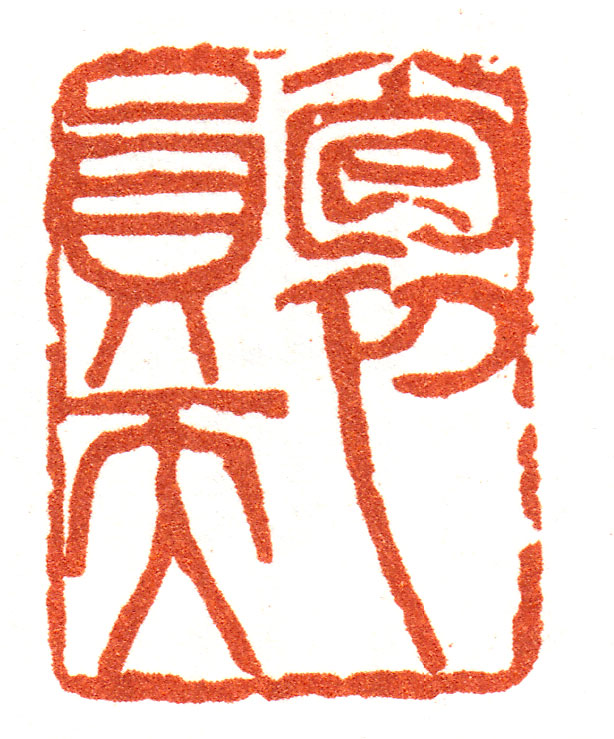
Image Healing: Guided Mandala Viewing - Lesson 138
Please observe a mandala with a full center and a soft outer circle. First, focus your gaze on the center to feel the completeness and weight of the circle.
Then let your gaze slowly move around the circumference, not chasing details but simply feeling the continuity.
When the thought of deduction arises in your mind, gently bring your gaze back to the center of the circle and repeat it once, allowing the sense of completeness to overshadow the sense of dispersion.
Mandalas are not about drawing something, but about observing it. When you can linger within the continuity of the circle, the amplification of fear will naturally diminish.
The mandala in this lesson, with its "full center and soft outer circle," symbolizes bringing uncertainty back into a manageable whole.
◉ One gaze is sufficient; no repetition is required.

Lesson 138: Guided Drawing Exercises - Fear Minimization
① Action guidance:Draw a clear, warm central circle to symbolize the "true state of the body".
② Action guidance:Draw some light, irregular shadows on the outer layer to represent fear, and make them light, loose, and transparent.
③ Action guidance:A reminder was written below the image: "Fear is amplified, but the body is not in danger."“
Please log in before submitting your drawings and feelings.
○ 138. Fear of Drugs and Illness: Journal-Guided Suggestions
① Which bodily sensation did I amplify today? Write down its actual risks.
② Where do my worries about medication or illness come from? Past experiences? Imagination? Online information?
③ Are there any small pieces of evidence today that suggest "it's not actually that serious"? Write them down to reinforce the sense of reality.
④ Write a sentence to reassure yourself: "I feel uncomfortable, but that doesn't mean I'm in danger."“
Please log in to use.
Fear may be exaggerated, but the body tells the truth. Return to reality, and you can regain peace and judgment.
 EN
EN  ZH
ZH  ES
ES  FR
FR  JA
JA