

Lesson 1409: Fear and Misunderstandings about Disease
Duration:60 minutes
Topic Introduction: This lesson focuses on how the fear of illness makes symptoms more difficult to understand and control. Many clients, when experiencing physical discomfort, immediately associate it with the most serious illness scenarios: mild tingling is mistaken for organ damage, brief chest tightness is seen as a precursor to heart disease, and brief dizziness is assumed to be a serious neurological problem. This "catastrophic interpretation" keeps the body in a state of constant high alert, thereby amplifying the symptoms.
Fear stems from three misconceptions:
① Mistaking normal bodily changes for danger; ② Underestimating the body's ability to recover; ③ Over-reliance on worst-case scenario reasoning.
Fear makes you constantly monitor your body and focuses your brain on "where things are most likely to go wrong," further increasing discomfort. This lesson will help you identify how fear of illness forms, how it is misunderstood and reinforced, and how to reframe your bodily experiences within a rational and realistic framework of understanding.
[arttao_Healing_Course_tts_group1406_1410]
▲ AI Interaction: What are the body signals you most often misunderstand?
Write down your most recent experience of feeling unwell and worrying that it was an "illness".
Write down three milder, more reasonable explanations (e.g., fatigue, stress, lack of sleep).
Finally, I'll write a quote to support myself: "Not every feeling means illness."“
○ Emotional Stabilization: Music as a Way to Counter Disaster
Exercise 1: Choose slow and steady music to switch your brain from "threat scanning" to "rhythm perception".
Exercise 2: Focus on the low frequencies in the music and gradually relax your tense chest.
Exercise 3: When you are worried about your body, close your eyes and listen for 60 seconds, bringing your attention back to the present moment from the image of illness.
○ Herbal tea healing drink
Recommended drinks:Verbena and Rose Gentle Stress-Relieving Tea
Recommended reasons:Reduce emotional tension and physical alertness to prevent "disease fear" from being easily triggered.
usage:Suitable for drinking when feeling anxious, flustered, or sensitive to symptoms.
○ Christian Fasting Diet Therapy: A Simple and Cleansing Approach
Christian fasting and dietary therapy, through a simplified approach to eating, helps the body's energy levels stabilize, reducing energy fluctuations caused by high-sugar, high-fat, and high-stimulation foods, thus lowering the intensity of physical discomfort. The more stable the energy levels, the less likely the brain is to mistake minor discomfort for illness, allowing sensations to return to their true magnitude.
Calm Rhythm
Reduce body sensitivity
○ Themed Mandala - Guided Viewing: From Fear to Reality
The outer circle of the mandala is filled with dense lines, symbolizing fear and overinterpretation; towards the center, the lines gradually become smoother and the spacing increases, symbolizing "the feeling returning to its original size".
Please simply watch, moving your gaze from the outer circle to the center, to train your brain to distinguish between "real feelings" and "fearful imaginations".
Target:Teach your brain not to interpret every bodily signal as a danger.
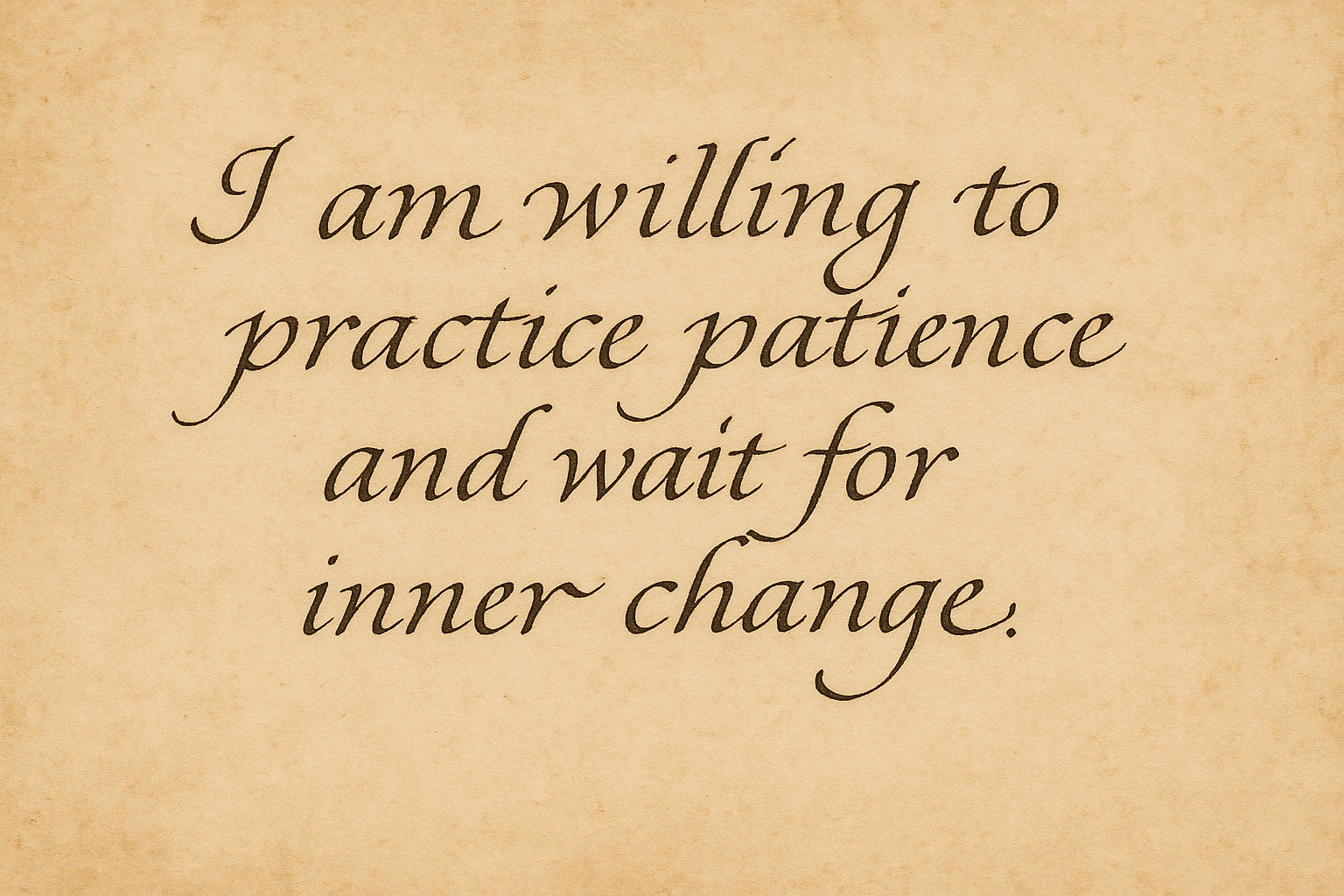
○ Medieval Gothic calligraphy practice
The solid structure of Gothic architecture symbolizes "fact" itself, helping you return from the imagined fear to the real ground.
Practice sentences:
“"Feelings are not the same as illnesses."”
This feeling is not a disease.
In writing, you will experience that a sense of stability is more powerful than imagined fear.
○ Fear and Misunderstanding of Illness: Guided Art Therapy
Use drawings to "distinguish": which are the real physical sensations and which are shadows created by fear.
1. "Reality vs. Fear" Two-Column Chart
- Draw two columns: on the left, write down your actual physical sensations (e.g., "a little heavy").
- The right side provides explanations for the fear it creates (such as "Is it organ failure?").
- Let the visual differences between the two remind you that fear is often more frightening than the facts.
II. Fear of Shrinking Images
- Draw a large circle to represent fear and a small circle to represent the reality.
- Gradually shrink the large circle until the real circle is fully visible.
Drawing can help you distinguish: it's not your body that's deteriorating, but your fear that's growing.
Please log in before submitting your drawings and feelings.
○ 1409. Fear of Illness: Journal-Guided Approach
① What physical sensations worried you today?
② What are the possible true explanations? Write three.
③ Write a sentence to support yourself: "I am learning to distinguish between sensation and illness."“
Please log in to use.
When you see the "misunderstanding" itself, it loses its power.
 EN
EN  ZH
ZH  ES
ES  FR
FR  JA
JA