

Lesson 141: Muscle Relaxation Training and Autonomic Nervous System Regulation
Duration:70 minutes
Topic Introduction:
Muscle tension is one of the most direct physiological manifestations of anxiety. Stiff neck and shoulders, clenched jaw, and chest contraction can further stimulate the autonomic nervous system, causing the body to enter a cycle of "more tension".
This lesson will teach you one of the most basic and effective relaxation techniques: Progressive Muscle Relaxation (PMR), which helps the body relearn to "relax" and allows the nervous system to return from alertness to balance.
○ Key points of muscle relaxation training
- Contrast training from tight to loose:First, gently tighten, then relax, allowing your body to truly feel the sensation of "relaxation".
- Sequential training is more effective:Perform the procedure from top to bottom and from center to extremities, following the body parts to avoid confusion.
- Relaxation is the entry point for regulating the autonomic nervous system:When muscles relax, the parasympathetic nervous system is naturally activated, and heart rate and breathing will stabilize accordingly.
Lesson 141: Muscle Relaxation Training and Autonomic Nervous System Regulation (Click to listen to the reading and view the content)
When anxiety persists, the body often enters a state of continuous contraction before consciousness. The shoulders, neck, jaw, abdomen, and thighs unconsciously tense up. This chronic tension constantly signals to the brain that danger has not yet passed, making it difficult for the autonomic nervous system to truly switch to recovery mode. The core of muscle relaxation training is not "successful relaxation," but rather re-establishing the sensory channel between you and your body. When you consciously perceive a muscle tensing and allow it to relax, the nervous system receives a clear signal that it is safe. Through repeated contraction and release, the body learns to distinguish between tension and relaxation, and the brain gradually stops treating constant alertness as the default state. It is important to emphasize that relaxation is not a one-time event but a rhythmic training. You don't need to pursue complete relaxation; just relax a little more than before. When the body senses this controllable change, the parasympathetic nervous system gradually participates in regulating heart rate, breathing, and internal rhythm. As practice progresses, you will find that emotions are not "suppressed" but naturally subside as the body relaxes. True stability is not maintained by willpower but by the body remembering how to return to balance.
▲ AI Interaction: Where is the part of your body most prone to tension?
Some people feel uncomfortable all day long when their shoulders are tense.
Some people experience clenched jaws, tingling scalp, and a back as stiff as a board.
Tell me which part of your body most often "warns" and we'll do a set of targeted relaxation steps together.
I will create a customized PMR training audio for you based on your description.
Gentle, repetitive music can act as an external "metronome" for muscle relaxation.
It makes it easier for you to find your body's rhythm during the transition from tension to relaxation.
○ Eastern Healing Tea: Sweet Wheat and Jujube Tea
Recommended reasons:The combination of licorice, wheat bran, and jujube is often used to relieve physical and mental tension, and is especially suitable for those who experience significant muscle tension.
practice:Simmer 3g of licorice root, 10g of wheat bran, and 3 jujubes over low heat for 12 minutes. Drinking this warm beverage can help muscles relax more quickly.
○ Stable Dietary Therapy: Lotus Seed, Lily Bulb, and Tremella Sweet Soup (ID141)
During muscle relaxation and autonomic nervous system regulation training, the body needs a gentle and soothing nourishment to solidify recovery signals. The soft texture of lotus seeds and the sweetness of lily bulbs help calm the mind, while the delicate texture of white fungus provides continuous and gentle support to the body. This sweet soup is suitable for consumption after relaxation exercises or at night. It is neither stimulating nor hasty, but rather helps the body maintain its relaxed state, allowing recovery to become a natural outcome.
Support recovery
Warm and smooth
Open Recipe
◉ Dietary Therapy: Lotus Seed, Lily Bulb, and Tremella Soup
Lotus seeds nourish the spleen and heart, calming the mind and stabilizing the spirit; lily bulbs moisten the lungs, calm the nerves, and alleviate anxiety; white fungus nourishes yin, moistens dryness, and soothes the stomach and intestines. When cooked together, these three ingredients create a delicate and smooth soup, especially suitable for those with poor sleep quality, emotional tension, accumulated fatigue, or those experiencing significant dryness and heat in autumn and winter. Overall, it is sweet, moistening, and gently nourishing, offering a gentle sustenance that both body and mind can accept.
Nourishes the lungs and calms the mind Nourishing Yin and Softening Dryness Tonify the spleen and harmonize the middle jiao
I. Recommended Dietary Therapy and Reasons
Recommended dishes:Lotus Seed, Lily Bulb, and Tremella Soup (ID 18)
Recommended reasons:The natural gelatinous substance in white fungus can moisturize the respiratory and digestive systems; lily bulbs soothe the nerves and nourish the lungs; lotus seeds can enhance mental and physical stability and alleviate excessive thinking. This soup is sweet but not cloying, with a gentle taste, making it perfect as a nutritious porridge for stressful periods, rest mornings, before bed, or during recovery.
2. Recipe and Method
Recipe (1–2 servings):
- 8–10 g of dried white fungus (soaked in advance)
- Lotus seeds 20–25 g (remove the core for gentler results)
- 10–15 g of dried lily bulbs
- 10–15 g of rock sugar (optional)
- 700–900 ml of clean water
practice:
- Soak the white fungus for 2–3 hours in advance, remove the yellow hard stem, and tear it into small pieces; rinse the lotus seeds and remove the core if necessary; wash the lily bulbs slightly.
- Add water and lotus seeds to a pot, bring to a boil over high heat, then reduce to low heat and simmer for 10 minutes.
- Add the white fungus and lily bulbs, and continue to simmer over low heat for 30–40 minutes, until the white fungus becomes gelatinous and soft.
- Add an appropriate amount of rock sugar and continue cooking for 5 minutes before turning off the heat.
- Let it sit for 3 minutes to make the soup thicker and the flavor milder.
3. Small rituals for body and mind
The 40 minutes of simmering the soup is a natural time to "slow down." You can use this quiet time over a low flame to take five deep breaths and allow your body to return to a stable rhythm.
When consuming, be sure to use a small spoon to drink slowly, letting the sweetness and warmth remind your body that you are being gently cared for.
After drinking it, you can do a simple 30-second "palm to heart" motion, which can help improve your sense of security and relaxation before bed.
4. Dietary Therapy Experience Record
- Mental state 1 hour after consumption: Are you calmer and more relaxed?
- Observe whether the moisturization of the throat, skin, or stomach has improved.
- Record sleep quality and morning energy changes after consuming the product for 3–5 consecutive days.
V. Instructional Videos (approximately 4–7 minutes)
◉ Video Title:Lotus Seed, Lily Bulb, and Tremella Soup: A nourishing and calming small bowl
6. Precautions
- Those with weak spleen and stomach, or severe cold intolerance, can appropriately reduce the amount of white fungus used or shorten the soaking time.
- For diabetic patients, it is recommended not to add sugar, or to use a small amount of erythritol instead.
- Lotus seeds are mild in nature, but if constipation is severe, the dosage can be reduced appropriately.
hint:This soup is for mild daily conditioning. If you experience symptoms such as shortness of breath, fatigue, stomach pain, or insomnia for an extended period, please consult a professional physician.
○ Humanist Script of the Italian Renaissance Period · Lesson 141 Writing Exercises
Today's healing phrase:
grounded in right mindfulness
In-depth analysis:
The essence of muscle relaxation training is "returning to the present moment of the body".
Humanist Script emphasizes that clear proportions and a stable rhythm correspond to the regulatory logic of the autonomic nervous system.
When writing is no longer hurried and the lines are no longer compressed, you are sending a signal to your body that there is no need to defend yourself at this moment.
grounded in right mindfulness It's not about pursuing perfect awareness, but about standing firmly in the present moment.
Writing Skills (Advanced Version):
- Stable baseline:The consistent bottom edges of all letters symbolize that the body is supported.
- Mid-section relaxation:Avoid excessive tightening in the middle of the letters to prevent the inertia of "continuous force".
- Line spacing:Allow space for both breathing and vision.
- The writing begins gently:The muscles should be gradually relaxed without sudden exertion.
- Repeat the writing:It helps the nervous system remember steady rhythms.
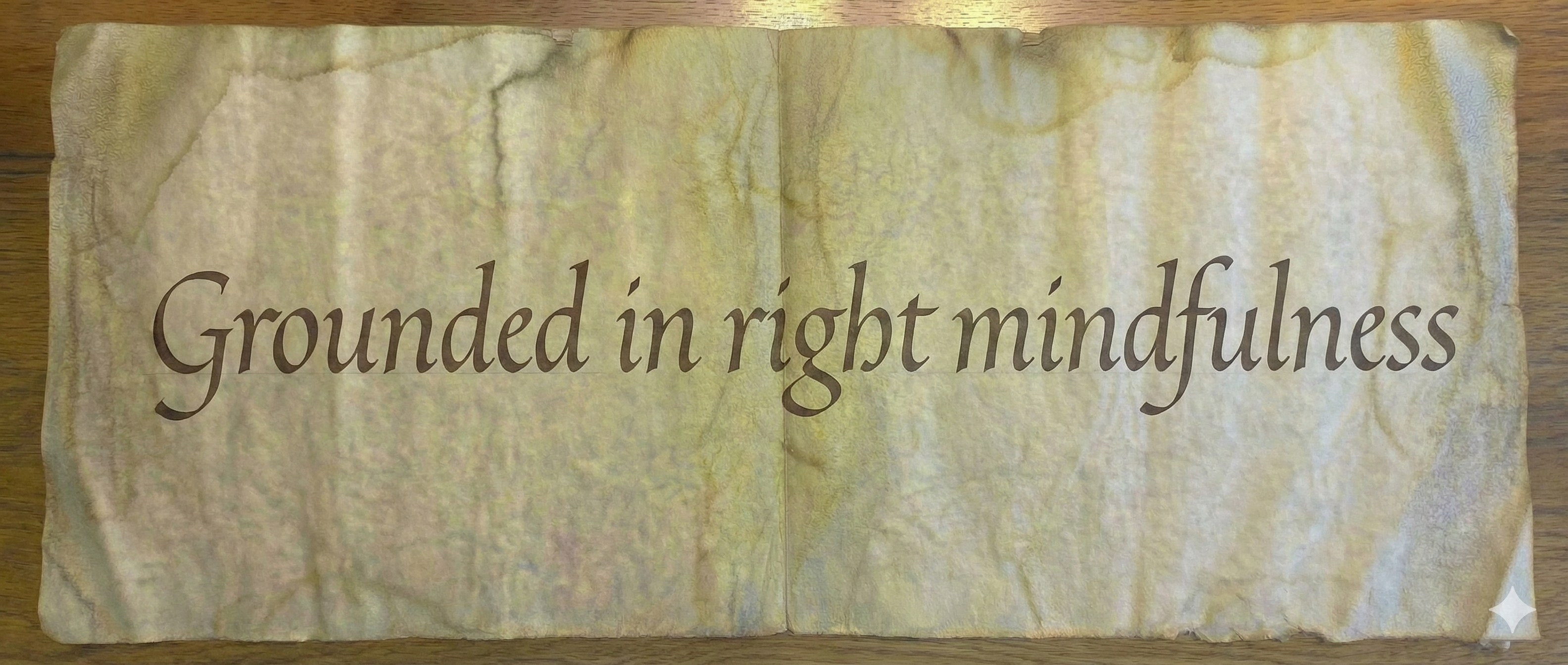
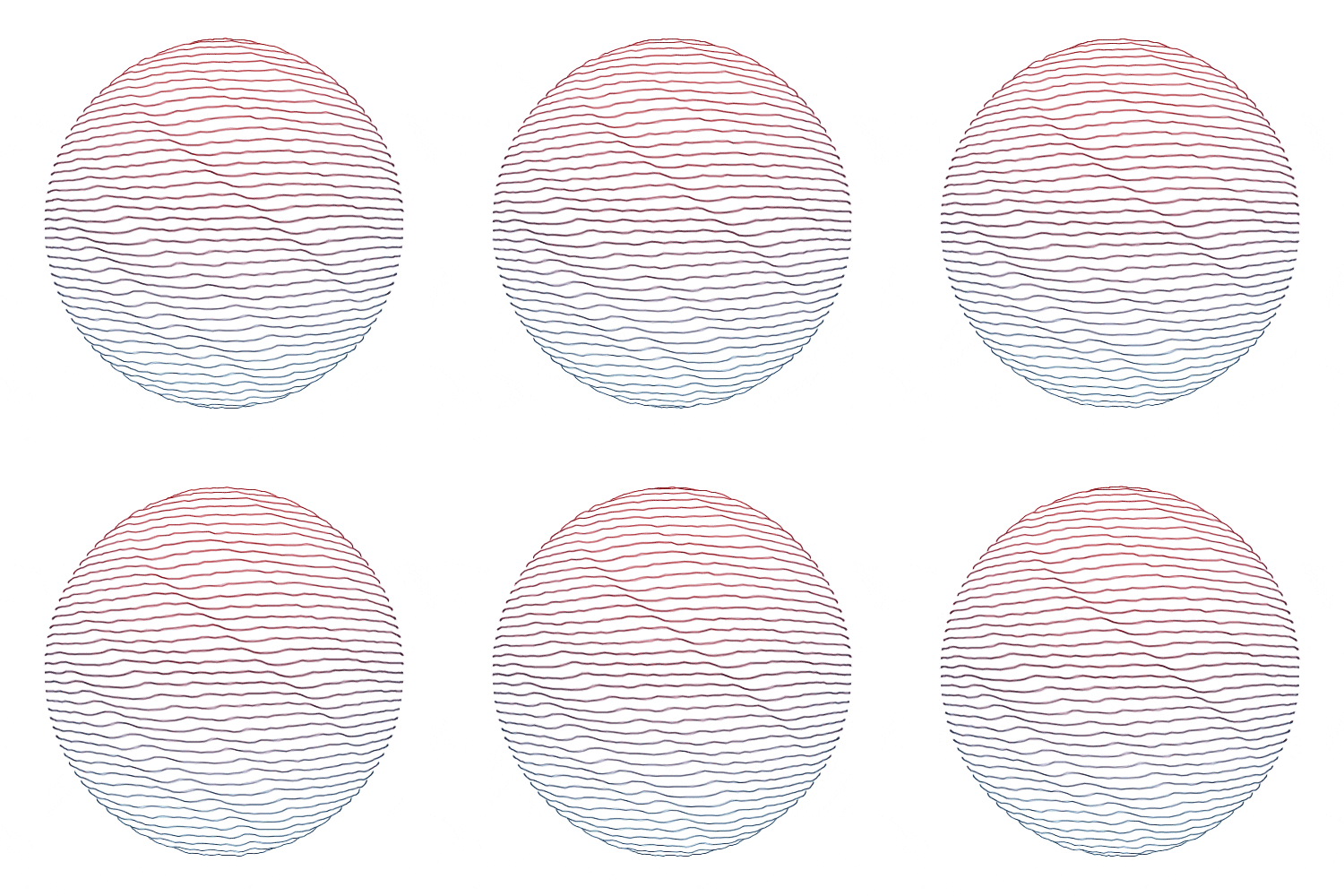
Image Healing: Guided Mandala Viewing - Lesson 141
Please observe a mandala with a balanced structure and soft lines. It does not emphasize a sharp center but rather overall stability.
Slowly scan the various areas of the graphic with your eyes. When you notice a dense area of lines, observe whether your body unconsciously tenses up.
Whenever you feel tension, simply relax that area while watching; there's no need to consciously change your breathing.
Mandala drawing is not about what you draw, but about what you observe. When both vision and body are relaxed, the autonomic nervous system naturally returns to a state of regulation.
The mandala in this lesson primarily symbolizes the re-coordination of the body and nervous system through "symmetry, stability, and gentle transition."
◉ One gaze is sufficient; no repetition is required.
Lesson 141: Drawing Guidance - Muscle Tension and Relaxation
① Action guidance:Draw two lines—a taut straight line and a relaxed arc—to contrast the feeling of "tight" and "loose" in the body.
② Action guidance:Draw radiating lines from the center outwards on the paper to symbolize the muscles gradually relaxing from tension.
③ Action guidance:Write a reminder next to it: "Loosening up is not weakness, but the return of strength to the body."“
Please log in before submitting your drawings and feelings.
○ 141. Muscle Relaxation Training: Journal-Guided Suggestions
① Which part of your body most noticeably changed from "tight" to "loose" today? Describe the process.
② Did you experience any physical resistance or discomfort during the relaxation process? What did it feel like?
③ What changes occurred in my breathing rhythm after completing PMR?
④ Write a self-comforting phrase: "I allow my body to relax slowly."“
Please log in to use.
Muscle relaxation is the gentlest yet most powerful entry point for anxiety healing. When the body is willing to relax, the mind will gradually follow.
Every time you relax, you bring yourself back into control.
 EN
EN  ZH
ZH  ES
ES  FR
FR  JA
JA