

Lesson 1411: Medical Seeking Behavior and Over-Medication
Duration:60 minutes
Topic Introduction: This lesson focuses on the maintenance mechanism of "over-medicalization" in somatic symptom disorder. Many clients repeatedly seek medical attention, undergo examinations, and visit different departments for minor discomfort. Although the results are often normal, the anxiety is reinforced by the temporary relief. Over time, the brain develops a dependence on "only through examinations can one feel at ease," leading to more frequent and persistent worries about the body. Over-medicalization is not because of "actual illness," but because the brain seeks "certainty" and is unwilling to tolerate the body's natural fluctuations. This lesson will help you understand that "security comes not from examinations, but from a stable understanding and coping mechanism," and teach you how to reduce the impulse to over-medicalize, preventing your body from being constantly amplified by worry.
○ Analysis of the Behavioral Cycle of Medical Seeking and Over-treatment
- Symptoms appear:Mild fatigue, discomfort, or a feeling of heaviness in the head.
- Threat Analysis:It evokes thoughts of serious illnesses or systemic problems.
- Repeat check:Seeking to reduce anxiety through medical means, but the effects are short-lived.
- Magnified symptoms:The more you concentrate, the more pronounced the symptoms become.
- Continued medical care:This leads to a cycle of "worrying - checking - temporary relief - worrying again".
[arttao_Healing_Course_tts_group1406_1410]
▲ AI Interaction: Why can't I stop?
Write down three moments in the past month when you thought you should "check them again".
Write down what you truly want to get from the checkup: certainty? peace of mind? escape from uncertainty?
Finally, I'll write a sentence to support myself: "I can find security in other ways."“
○ Relaxing the Rhythm of Medical Anxiety: Musical Relaxation Exercises
Exercise 1: When anxiety rises and you feel the urge to get a physical checkup again, play music with a steady rhythm to slow down the impulse to act.
Exercise 2: Focus your attention on the background sounds in the music, rather than the symptoms.
Exercise 3: Focus on the highs and lows of the melody and observe your body gradually relaxing.
○ Herbal tea healing drink
Recommended drinks:Chamomile & Orange Peel Relaxing Tea
Recommended reasons:It provides a gentle relief from the tension of "wanting to confirm immediately," allowing the brain to slow down.
usage:Suitable for drinking when anxiety makes you want to see a doctor again or search for symptoms.
○ Christian fasting diet therapy: A simplified way to stabilize energy.
A simplified fasting diet emphasizes "rhythm, simplicity, and focus," reducing the burden on the body and allowing you to detach yourself from excessive monitoring of your physical state. The clarity of the eating rhythm helps the brain gradually return to stability, no longer relying on "constant checking" as its primary source of calm.
Stable rhythm
Support emotional stability
○ Theme Mandala - Viewing Guide: From External Seeking to Internal Stability
The outer circle of the mandala is brighter in color and has denser lines, symbolizing the anxiety and unease of over-seeking medical help; towards the inner circle, the lines become softer and the colors darker, symbolizing a shift from seeking external validation to inner stability.
Please simply observe: allow your attention to gradually shift from the outer circle to the inner circle, without providing any explanation.
Target:Learning allows "stability" to originate from within, rather than relying on constant checks.

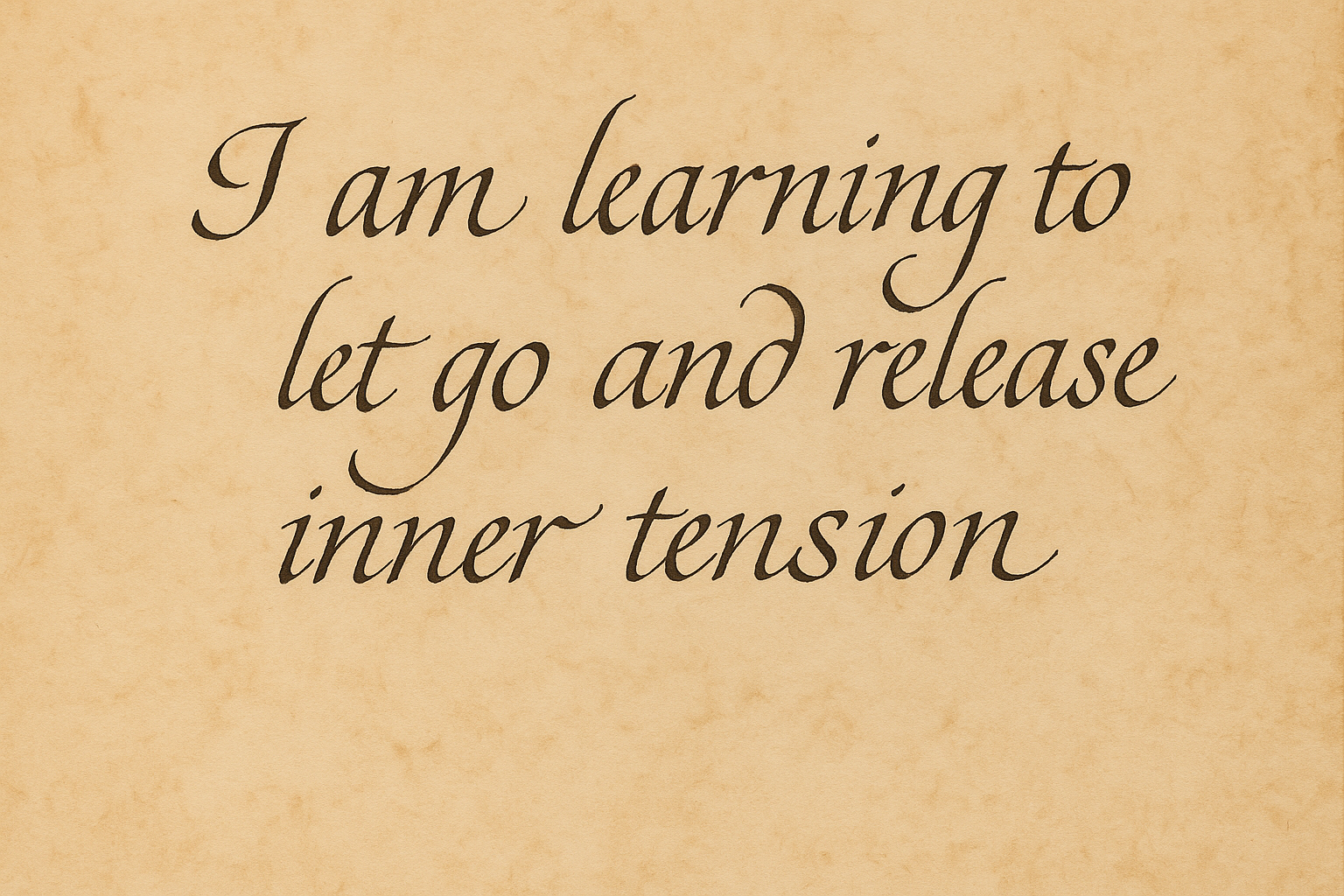
○ Medieval Gothic calligraphy practice
Writing allows the brain to escape the cycle of anxiety and refocus its energy on rhythm and lines.
Practice sentences:
“"I don't need to prove safety through inspections."”
I do not need tests to be safe.
The structure of Gothic bodies helps you stabilize your emotions and reduce the urge to seek excessive medical attention.
○ The Cycle of Medical Anxiety: Guided Art Therapy
Drawing can help you see the "cycle of over-medicalization" more clearly and reduce the feeling of being driven.
I. Over-medicalization cycle diagram
- Draw a four-cycle pattern: discomfort → worry → check-up → temporary relief → worry again.
- Write down your real-life example, such as "chest tightness → ECG check → normal → repeat check the next day".
II. Trust Building Diagram
- Draw three parallel curves to symbolize emotions, the body, and behavior.
- Write down the new rhythm you want to establish at the intersection of the curves, such as "delay action by 10 minutes".
Understanding the cycle is the first step in moving away from the pattern of over-medicalization.
Please log in before submitting your drawings and feelings.
○ 1411. Medical Seeking Behavior: Log Guidance
① How many times today did you think of "going to get it checked again"? What triggered these thoughts?
② Write down the three hidden costs of repeated checks (such as anxiety, time, and physical effort).
③ Write a sentence that supports yourself: "I am learning to reclaim my sense of security."“
Please log in to use.
True peace of mind comes from rhythm and understanding, not from endless checks.
 EN
EN  ZH
ZH  ES
ES  FR
FR  JA
JA