

Lesson 143: Deconstructing the Thought "I Can't Hold On"
Duration:70 minutes
Topic Introduction:
During panic and high anxiety episodes, the feeling of "I can't take it anymore" is often more painful than the physical reaction.
This statement is not a fact, but a kind of "catastrophic prediction," an automatic escape mechanism from the brain.
This lesson will guide you to break down the structure of this thought, so that it no longer controls your behavior, and teach you how to build "inner support".
○ “I can’t hold on any longer” is not a sign of real danger.
- This is the language of fear, not the truth:The body is still functioning, but the brain has prematurely failed.
- From catastrophic expectations:The brain tends to protect you from the unknown by using the worst possible assumptions.
- Ignoring evidence of competence:You've endured it countless times, but your brain only remembers the painful moments.
Lesson 143: Deconstructing the thought "I can't hold on any longer" (Click to listen to the reading and view the content)
“"I can't take it anymore" isn't a factual judgment, but a conclusive thought that automatically jumps out under high pressure. When physical discomfort rises, emotions intensify, or external stimuli accumulate, the brain quickly searches for the language that best explains the pain, and this thought arises and is treated as a warning signal. What needs to be dissected is that this thought doesn't explain what's happening to you right now; it simply projects the intensity of the present directly into the future. In fact, you are already holding on; you are breathing, you are listening, you are reading; you are not collapsing at this moment. The brain shouts "I can't take it anymore" because it mistakenly equates discomfort with unbearable pain. The first step in dissecting is to separate the thought from the facts: for example, "I am feeling very uncomfortable, but that doesn't mean I can't continue to exist." The second step is to break down the imagined "total collapse" into specific feelings: a rapid heartbeat, a heavy head, fatigue, or low mood. When feelings are concretized, they no longer need a catastrophic summary. The third step is to bring time back to the present moment, not asking if I can hold on, but asking if I can get through this minute. The nervous system only needs to process the present unit, not the entire future. When you repeatedly find that even when this thought arises, things don't immediately spiral out of control, the brain gradually reduces its credibility. "I can't hold on" will change from a command to background noise, and you will regain the space for choice.
▲ AI Interaction: When you think "I can't take it anymore," what are you most afraid of?
What you fear is not the "present moment," but the "unknown future."
Tell me which version you're most worried about, and I'll work with you step by step to dismantle its logic.
We can find out together: what you really need is not to run away, but support.
You weren't unable to hold on, you were just terrified.
When your heart is screaming "I can't hold on anymore," music can provide an "external support line."
Let the rhythm guide your breathing, let the melody establish a steady beat for your nervous system.
○ Eastern Healing Tea: Ginger and Red Date Tea
Recommended reasons:Warmth can help blood flow back to the core of the body, reducing the feeling of weakness that feels like the blood is about to stop flowing.
practice:Add 2-3 slices of ginger and 1 red date to taste, cook for 5 minutes, and let the warmth provide you with a sense of support.
○ Stable Dietary Therapy: Nourishing Chicken and Vegetable Soup (ID143)
When the thought "I can't hold on any longer" repeatedly crosses your mind, your body often feels both weak and tense, needing a nourishing remedy that replenishes energy without burdening you. The light, moist chicken provides basic support, while the diverse vegetables add layers of flavor and balance. This soup is perfect for when you feel physically and mentally exhausted; it's not meant to instantly invigorate you, but rather to help your body slowly regain strength, allowing you to reaffirm through a genuine feeling of fullness that you are still alive and can continue.
Restore physical strength
Stable support
Open Recipe
◉ Dietary Therapy: Light Chicken and Vegetable Soup (Small Pot)
Skinless chicken breast or thigh meat provides high-quality protein. Combined with a variety of vegetables such as carrots, onions, and broccoli, it's simmered in a small pot of clear broth to create a mild, light, everyday soup. Suitable for those with a poor appetite, needing to replenish energy but not wanting something too oily, it's also a good warming dish for those recovering from illness or experiencing stress.
Supplementing with high-quality protein Light and low-fat Stomach warming and body warming
1. Recommended soups and reasons
Recommended soups:Light Chicken and Vegetable Soup (ID 36)
Recommended reasons:By simmering the chicken and vegetables in a small pot, their natural sweetness is slowly extracted. This method avoids heavy seasoning and is suitable as a basic, nourishing soup for daily consumption. It provides protein and trace elements without putting too much strain on the digestive system.
2. Recipe and Method
Recipe (1–2 servings):
- 120–150 g of skinless chicken breast or thigh meat (cut into small pieces)
- 40–50 g of carrots (sliced or cut into chunks)
- A quarter of an onion (sliced or diced).
- 50g broccoli (break into small florets, blanch briefly if desired)
- 50g potatoes (cut into chunks, optional)
- 600–700 ml of clean water
- 2-3 slices of ginger
- A pinch of salt and white pepper
- 1 teaspoon of olive oil or a small amount of vegetable oil (optional, for a light moisturizing effect)
practice:
- Wash the chicken and cut it into small pieces. You can soak it briefly in water to remove the blood, then pat it dry and set it aside.
- Put a small amount of water in a small pot, add ginger slices and chicken, bring to a boil over high heat and skim off the foam to ensure a clear soup.
- Add the remaining water, carrots, onions, and potatoes, and simmer over low heat for about 15–20 minutes, until the vegetables are soft and the chicken is cooked through.
- Finally, add the broccoli florets and cook for another 3–5 minutes to ensure they remain bright green but not overcooked.
- Before turning off the heat, add a small amount of salt and white pepper to taste. If you want it to taste better, you can add 1 teaspoon of olive oil and stir gently.
- Let it cool slightly to serving temperature before serving.
3. Small rituals for body and mind
While making soup, try to keep the environment simple, clean, and the pace slow. Stand by the small pot for a minute or two, smell the aroma of the soup, and let your sense of smell tell your body in advance: "Now is the time to relax and replenish."
When drinking soup, deliberately slow down your movements, sip it slowly, and feel the warmth flowing from your mouth to your esophagus and then to your stomach. Imagine your tense muscles and chaotic thoughts slowly relaxing.
You can record your state in a sentence before and after drinking soup, such as "I'm a little tired" or "I feel a little calmer," as a small clue to observe the relationship between diet and emotions later.
4. Dietary Therapy Experience Record
- Record the time of consumption (breakfast, lunch, or dinner) and the overall diet for the day.
- Observe your mental state 1–2 hours after eating: Do you feel more stable in terms of energy, and do you not feel overly full or burdened?
- If you are recovering from an illness or in a period of high-pressure work, you can record changes in your physical strength, sleep quality, and concentration after drinking it for several consecutive days.
5. Tutorial Video (approximately 5–8 minutes)
◉ Video Title:Light Chicken and Vegetable Soup in a Small Pot: Daily Nourishment and Energy Supplement
6. Precautions
- Those with high uric acid, severe hyperlipidemia, or kidney problems should control their intake of animal protein according to their doctor's advice.
- It is not recommended to use a lot of strong-flavored seasonings (such as too much salt, MSG, and chili), so as not to lose the mild original intention of "small pot clear soup".
- People who are allergic to certain vegetables can switch to vegetables that they are more tolerant of, such as cauliflower or bok choy.
hint:This soup is suitable as a daily light and nourishing dish and supplement, but it cannot replace proper medical treatment. If you experience persistent fever, significant fatigue, or sudden weight loss, please seek medical attention immediately.
○ Humanist Script of the Italian Renaissance Period · Lesson 143 Writing Exercises
Today's healing phrase:
Blessings follow the heart
In-depth analysis:
“The phrase "I can't take it anymore" often stems from a misunderstanding of the need for sustained endurance.
Humanist Script's rational proportions and clear segmentation help you break down overall stress into manageable parts.
Blessings follow the heart It reminds you that support doesn't always come from the outside world, but from your ability to continuously respond to the present moment.
When your attention returns to what is happening step by step, blessings will naturally follow.
Writing Skills (Advanced Version):
- Segmented writing:Splitting a sentence into two lines symbolizes breaking down pressure into smaller parts.
- Strokes should not be connected:Avoid letting emotions surge all at once.
- Clear line spacing:Give your thinking time a buffer.
- The brush dips downwards at the end:Let the energy return to your body.
- Repeat the entire sentence:Weaken the impact of catastrophic language.
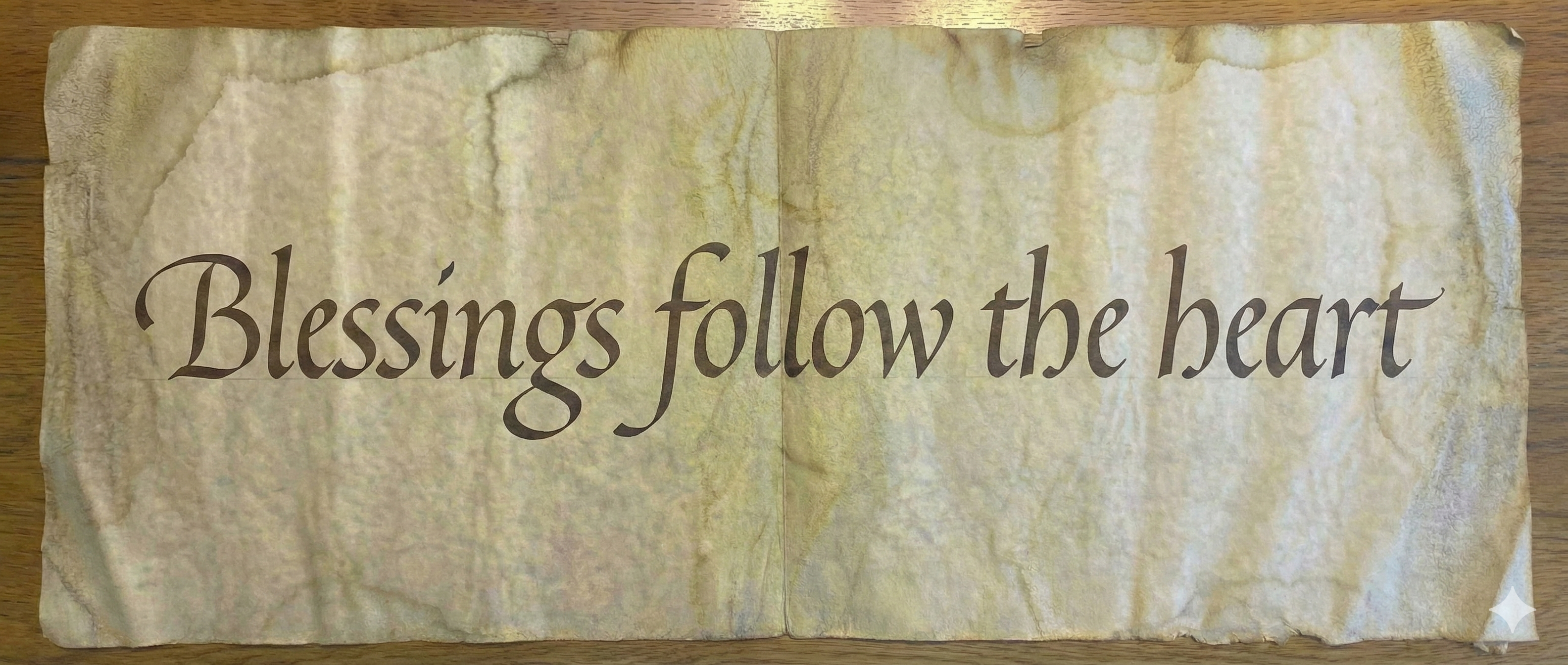
Image Healing: Guided Mandala Viewing - Lesson 143
Please observe a mandala with distinct layers that gradually unfold from the center outwards. It emphasizes continuity rather than explosion.
Let your gaze move outwards in circles from the center, pausing briefly on each circle to feel, "I have arrived here."
If the thought "I can't hold on" pops into your head again, don't try to banish it; just keep going to the next lap.
Mandala drawing is not about drawing something, but about observing. As you observe and complete small-scale continuations one after another, your body learns a new experience: I can continue without having to finish it all at once.
The mandala in this lesson primarily symbolizes the gradual expansion and stable center, representing the breaking down of the rhythm into a sustainable one.
◉ One gaze is sufficient; no repetition is required.

Lesson 143: Guided Drawing - Recreating the Sense of Support
① Action guidance:Apply a thicker block of color to the bottom of the image to symbolize "the support beneath my feet".
② Action guidance:Draw a few upward-extending but stable lines above the color block to symbolize "I can hold on".
③ Action guidance:I wrote a reminder next to it: "I am being supported."“
Please log in before submitting your drawings and feelings.
○ 143. Support Training - Log-Guided Suggestions
① At what moment today did the thought "I can't hold on any longer" arise? What happened?
② At that moment, what parts of my body did I actually support? (Breathing? Posture? Movement?)
③ Which self-talk can help me change my fear from "I can't hold on" to "I am being supported"?
④ Write down a small support movement that I am willing to practice (such as pressing the soles of my feet, gripping an object, or inhaling slowly).
Please log in to use.
“"I can't hold on" is a fearful phrase, not your own. When you learn to dismantle it, you can regain control of your body and mind.
You are more resilient and persistent than that thought.
 EN
EN  ZH
ZH  ES
ES  FR
FR  JA
JA