

Lesson 1444: Diagnosis and Assessment of Illness Anxiety Disorders
Duration:60 minutes
Topic Introduction:This course will explain how to diagnose illness anxiety disorder using psychological criteria, medical exclusion methods, and self-awareness tools. Through video explanations and interactive AI assessments, participants will understand whether their health concerns have reached clinical levels and learn how to conduct preliminary self-assessments in their daily lives.
○ Diagnostic criteria for illness anxiety
- DSM-5 criteria:Excessive worry about health or illness that lasts for more than 6 months.
- PHQ-15 scale:Used to assess the extent to which physical symptoms affect your mood.
- Health Anxiety Questionnaire:Quantify the degree, frequency and degree of impairment of worrying.
- Exclude organic diseases:After medical examinations show no obvious abnormalities, consider anxiety factors.
▲ AI interaction: Do you meet the characteristics of disease anxiety?
Diagnosis and assessment are not denial, but rather a way to scientifically identify your predicament. They are a bridge that helps you find support.
Keep track of the frequency, duration, and intensity of your worries for two weeks and let the data speak for itself.
Write down three ways worrying affects your life, being specific rather than general "always" or "never."
Prepare three questions you'd like to ask a professional to help focus the conversation, such as "How do I differentiate between common discomfort and a red flag?"
Conclusion: When you prepare the information, you are also preparing a secure future for yourself.
Click the button below to complete a preliminary assessment with AI to understand whether your health anxiety has reached a level that requires attention.
○ Diagnosis and assessment of disease anxiety disorder · Music therapy
Play some steady music to make the recording less jarring. Write down the frequency, duration, and intensity of your worries over the past two weeks in a small table.
Add three specific examples of how life is affected: changes in learning concentration, work efficiency, and interactions with family and friends.
List three questions you would like to ask the professional and practice reading them out loud to music to make your expression more confident.
Prepare a "calming kit" for the day of your appointment: headphones, deep breathing cards, and short self-soothing phrases.
Finally, write down the next post-meeting reward: walk in the sunshine, drink a cup of warm drink, and let your efforts be seen.
○ Warm milk therapy drink
Recommended drinks:Golden Milk with Cinnamon
Recommended reasons:Traditional golden milk with cinnamon not only has antioxidant and anti-inflammatory properties, but also helps relax the nervous system, relieving the anxiety and tension that often accompanies the assessment process.
usage:Add 1/2 teaspoon turmeric powder and 1/4 teaspoon cinnamon powder to 200ml of warm milk, stir, and drink after heating. This is suitable for use at night or before a medical examination.
Coconut milk stewed turkey
Low-fat, high-protein, and medium-chain fatty acids provide a steady energy supply and a smooth taste. Mildly filling and light, it's ideal for recovery and a light evening meal, helping to relax and maintain energy levels.
Healing Recipes
/home2/lzxwhemy/public_html/arttao_org/wp-content/uploads/cookbook/ye-nai-dun-huo-ji-rou.html(Please confirm that the following has been uploaded: ye-nai-dun-huo-ji-rou.html)🎨 Themed Mandala
Draw a mandala themed around "Understanding and Trust" to help stabilize any feelings of insecurity that may arise during the diagnostic assessment process. For structure, choose a radially balanced pattern to reinforce "inner stability."
Applicable issues:Those who are worried about being diagnosed with a disease or are afraid of physical examinations or diagnostic procedures.

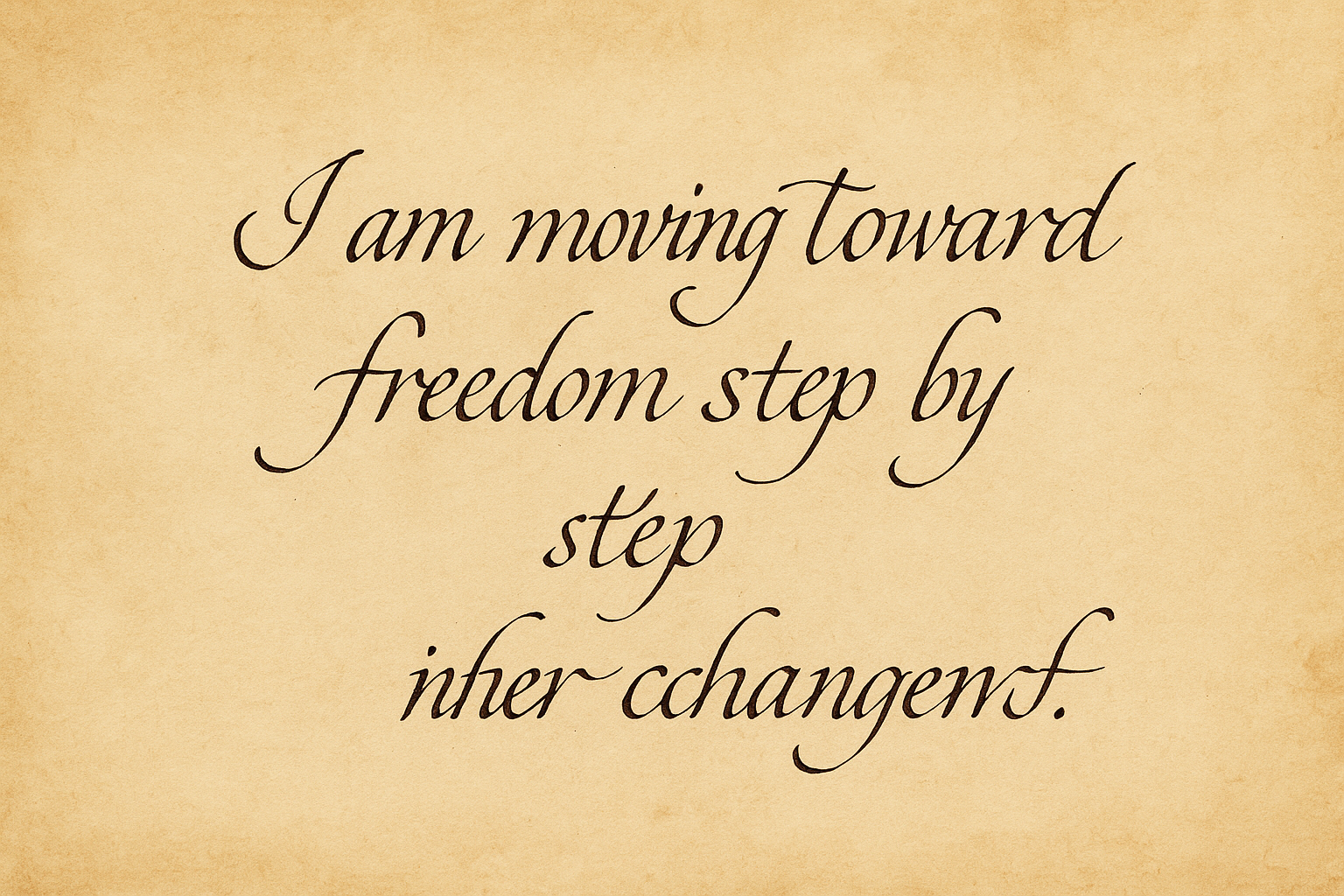
○ Medieval Gothic calligraphy practice
Through the practice of a steady rhythm, calligraphy can help us establish an inner anchor amidst uncertainty.
Practice sentences:
“I am willing to face the uncertainty of my body and understand it gently.”
I choose to face bodily uncertainty and respond with gentle understanding.
It is recommended to write this sentence every time before facing a diagnosis, assessment or uncertain information, as a psychological preparation and reassurance ritual.
○ Diagnosis and assessment of disease anxiety disorder: guidance and suggestions for painting therapy
This page provides a visual record of the key points of diagnosis and assessment to help describe them clearlySymptom characteristics, functional impairment, cognitive bias, and medical communicationDrawing is used for self-awareness and information organization, and does not replace medical diagnosis and treatment.
1. Symptom Evidence Board (Timeline × Intensity × Trigger/Relief)
- Draw a timeline of the last two weeks on a piece of paper, marking the physical sensations that occurred (palpitations, tingling, dizziness, etc.), and write down the intensity of each attack on a scale of 0-10 and the duration.
- Next to each marker is a column: triggers (coffee, sitting, arguments, sleep deprivation) and mitigating factors (rest, heat, stretching, breathing). Write only observable facts.
- List "Completed examinations and results" (such as normal electrocardiogram) and "Unverified hypotheses" below the timeline to distinguish between evidence and speculation.
2. Functions Affecting Four Grids (Work/Study, Sleep, Social, Hobbies)
- Draw four squares, write down the specific scene and duration of the most recent impact, and score the degree of impact from 0 to 10.
- At the bottom of each box, write a restorable micro-action (e.g., “Turn off your screen 20 minutes early tonight,” “Complete a 10-minute walk,” “Talk to a friend for 5 minutes”).
- Update once a week and compare with last week's score to see if it is trending towards alleviation and stabilization.
Tip: Continuous recording can help distinguish between transient fluctuations and sustained deterioration, improving the efficiency of medical treatment. Seek medical attention immediately if an acute red flag appears.
Please log in before submitting your drawings and feelings.
○ 1444. Diagnosis and Assessment of Illness Anxiety Disorders: Journal-Guided Suggestions
① The significance of assessment: to allow concerns to be seen more scientifically and to obtain appropriate help, rather than labeling.
② Record the frequency, duration, and intensity of your worries for two consecutive weeks, and try to mark them with scores.
③ List three impacts of worry on learning, work, and relationships so that they can be understood by professionals.
④ Record the relief methods you have used and their effectiveness ratings (1–5 points).
Please log in to use.
Assessment is a door to self-understanding, not a prison of fear. May you move toward deeper peace and freedom through awareness.
 EN
EN  ZH
ZH  ES
ES  FR
FR  JA
JA