

Lesson 145: The Difference Between Panic and Generalized Anxiety
Duration:70 minutes
Topic Introduction:
Panic disorder and generalized anxiety disorder (GAD) are often confused, but their core mechanisms, triggering methods, and physical reactions are completely different.
Panic is like being "suddenly struck by lightning," an acute, explosive physical storm;
Generalized anxiety is like "a day of fog and rain," constantly, slightly, and repeatedly keeping you on edge.
This lesson will help you distinguish between the two, allowing you to understand your own state more clearly and use the most suitable methods to adjust it.
Panic vs. Generalized Anxiety: The Brains Work Completely Different Ways
- Panic is an "acute alarm":Within minutes, the body is pushed to extremes: heart rate spikes, breathing becomes rapid, sweating occurs, and a sense of impending death arises.
- Generalized anxiety disorder is a form of "chronic tension":Long-term worry, repeatedly anticipating the worst-case scenario, and remaining tense without erupting.
- Different triggers:Panic is a sudden physical false alarm; generalized anxiety is a cycle of tension caused by long-term thought habits.
Lesson 145: The Difference Between Panic and Generalized Anxiety, Click to listen to the reading, view the content.
Many people confuse "panic attacks" with "generalized anxiety disorder" after experiencing intense anxiety, believing they are simply the same state with varying degrees of intensity. However, from a psychological and neurological perspective, the two are fundamentally different. Panic attacks are more like a sudden physiological storm, typically escalating rapidly within a short period, accompanied by obvious physical reactions such as rapid heartbeat, shortness of breath, dizziness, a feeling of impending death, or loss of control. The core of a panic attack is not persistent worry, but rather the brain's misinterpretation of an imminent threat, triggering a highly concentrated "escape mode." It comes on quickly and subsides relatively quickly, often gradually declining after its peak. Generalized anxiety disorder, on the other hand, is more like a continuous background noise. The focus is not on a single momentary danger, but on the long-term "what if" mentality. This anxiety is more manifested at the cognitive level, characterized by recurring worries, unstoppable predictions, uncertainty about the future, and constant tension. The physical reactions may not be as intense as panic attacks, but the nervous system remains in a state of alert for an extended period, making it difficult to truly relax. Understanding this distinction is crucial because the coping mechanisms are different. Panic attacks require help for the body to recover after the attack, allowing the nervous system to relearn that "peaks can subside on their own." Generalized anxiety, on the other hand, requires a gradual adjustment of thought patterns and daily rhythms to reduce continuous psychological strain. Many people feel like they "can't get better" precisely because they treat generalized anxiety in the same way they treat panic attacks, or vice versa. When you can distinguish between them, you stop treating all discomfort as the same danger and begin to establish a more precise and gentler self-care path.
▲ AI Interaction: Is your tension more like a "sudden outburst" or a "constant lingering feeling"?
Tell me about your physical experience, and I'll help you determine whether it's closer to panic or generalized anxiety.
Different types of anxiety require different coping methods.
You are not chaotic, you are understandable.
Let's work together to make it clearer.
Panic requires a sense of grounding; generalized anxiety requires a sense of relaxation.
Let the music guide you to find your own rhythm, and let your body relax first.
○ Eastern Healing Tea: Calming Jujube Seed Tea
Recommended reasons:It helps to calm an overexcited nervous system and is suitable for both acute and chronic anxiety.
practice:Simmer 3g of jujube seeds and 1g of licorice root over low heat for 5 minutes.
○ Stable Dietary Therapy: Celery and Lentil Warming Soup (ID145)
During the process of distinguishing between panic and generalized anxiety, the body needs daily nourishment that supports nerve recovery without adding burden. The soothing properties of celery help alleviate the inner dryness caused by prolonged tension, while lentils provide stable and sustained energy. This warm soup is suitable for a regular dinner or during the recovery phase; it symbolizes continuous and gentle support, reminding the body that it doesn't need to constantly enter emergency mode.
Relieve tension
Daily support
Open Recipe
◉ Warming and Balancing: Celery and Lentil Soup
Lentils are rich in plant protein and soluble fiber, which can stabilize blood sugar and prolong the feeling of fullness; celery has a refreshing aroma and trace minerals, which help balance the overall flavor. This warm soup is made by sautéing vegetables in a little olive oil, then adding lentils and simmering slowly to allow the soup to thicken naturally. It is not only warm and easy to digest, but also perfect for times of stress, poor appetite, or when you need to eat a lighter diet.
Easy to digest Low-fat High in fiber
1. Recommended soups and reasons
Recommended soups:Celery and Lentil Soup (ID 39)
Recommended reasons:Lentils, as a source of plant protein, offer stable energy, are low in fat, and high in fiber. Adding celery, onions, and carrots makes the flavor even milder and the soup smoother, making it a suitable main soup for muscle recovery, visceral fatigue, warming the stomach in winter, and light meals.
2. Recipe and Method
Recipe (Serves 2–3):
- 100g red lentils (washed)
- 60–80 g of celery (chopped into small pieces)
- Half an onion (chopped)
- One small carrot (cut into small cubes)
- 1 clove of garlic (minced)
- 1 tablespoon olive oil
- 600–700 ml of water or vegetable broth
- A small amount of sea salt (to be added later).
- A pinch of black pepper
- 1 bay leaf (optional)
- Add a little lemon juice (optional, to taste after cooking).
practice:
- Rinse the red lentils quickly with cold water 2–3 times, then drain and set aside.
- Pour olive oil into a pan and sauté the chopped onions and minced garlic over low heat until slightly translucent.
- Add diced carrots and celery, and continue to stir-fry for 2 minutes to allow the aromas to meld.
- Pour in the lentils and water (or vegetable broth). If using bay leaves, add them at this point.
- Bring to a boil over high heat, then reduce to a simmer and cook for 18–22 minutes. The lentils will soften naturally and the soup will thicken.
- After turning off the heat, season with salt and black pepper; if you prefer a lighter taste, you can add a few drops of lemon juice to enhance the flavor.
- Serve hot in a bowl and enjoy with whole wheat bread or brown rice, or as a standalone light meal.
3. Small rituals for body and mind
For the first 3 minutes of simmering the soup, try to focus solely on the sounds coming from the pot: the subtle sizzling of the oil, the sizzling of the vegetables softening, and the gentle rustling of the soup as it boils. This will help you gradually relax.
Before serving the soup, sit quietly at the table for a moment, take two deep breaths with prolonged exhalation, and feel the subtle changes of "warmth entering and tension dissipating".
When you scoop up the first spoonful, pay attention to the temperature of the soup, the aroma of the celery, and the tenderness of the green beans, and whisper to yourself, "You've worked hard today too."
4. Dietary Therapy Experience Record
- Note whether the warming sensation in the body lasts for 15–30 minutes after drinking the soup.
- Is tracking satiety easier but longer-lasting than with refined staple foods?
- If consumed 2–3 times a week, changes in sleep, mental stability, and digestion can be observed.
5. Tutorial Video (approximately 5–7 minutes)
◉ Video Title:Celery and Lentil Warming Soup: A Gentle and Warming Soup for Winter
6. Precautions
- Green beans are easy to overcook; to maintain their texture, you can shorten the cooking time.
- Those with weak digestive systems can reduce the amount of celery and extend the simmering time of lentils to make the soup smoother.
- Those who need to control their sodium intake can omit the salt and adjust the flavor with pepper and lemon.
hint:This dietary therapy is suitable as a warm soup for "light meals", "stress days" or "early stages of stomach discomfort", and is not a substitute for medication or professional treatment.
○ Humanist Script of the Italian Renaissance Period · Lesson 145 Writing Exercises
Today's healing phrase:
favorable times endure
In-depth analysis:
Panic makes people mistakenly believe that danger will come immediately, while generalized anxiety makes people believe that tension will last forever.
The rational proportions and sustained rhythms of Humanist Script train you to pull your attention back from "immediate disaster" and "endless worries" to real time.
favorable times endure It reminds you that stability is not a fleeting stroke of luck, but a state that can be experienced repeatedly and sustained.
Writing Skills (Advanced Version):
- Balanced letter ratio:It symbolizes a return to the middle ground in emotions.
- Stable line spacing:Avoid sudden changes in your mental pace.
- Do not write too many consecutive characters:Prevent your thoughts from slipping into habitual worries.
- The brush dips downwards at the end:Shift your focus back to your body.
- Repeat the entire sentence:Reinforce the intrinsic experience that "stability can be sustained".
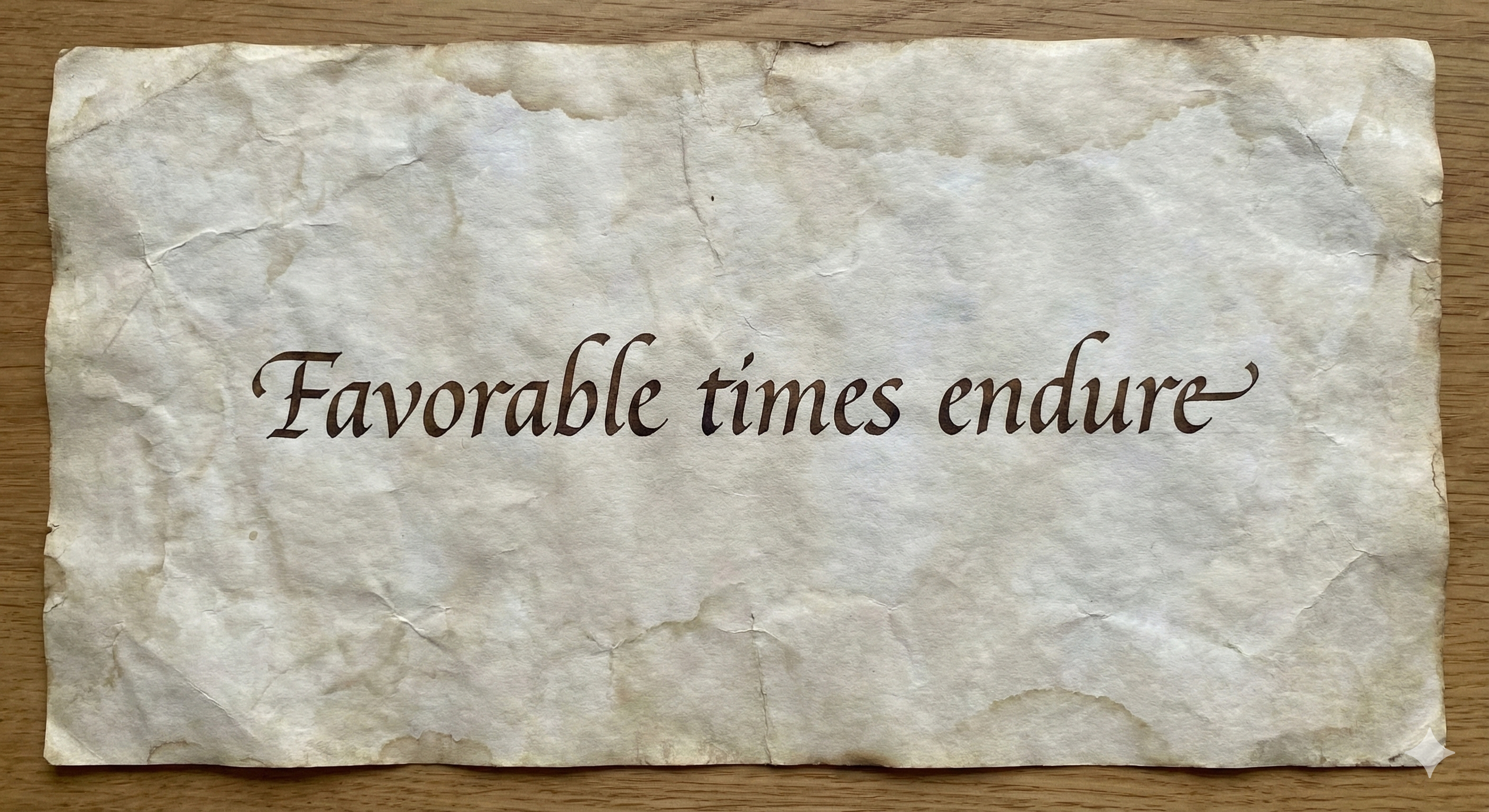
Image Healing: Guided Mandala Viewing - Lesson 145
Please observe a mandala with a stable center and a uniformly rhythmic outer circle. It has neither sudden, sharp changes nor infinite expansion.
Let your gaze linger on the center for a moment, then slowly move it to the outer circle, feeling the natural transition from focus to expansion.
If you feel tense or worried, please return to the center and reconfirm that "the situation is stable at this moment".
Mandalas are not about drawing something, but about seeing it. When you experience rhythm and continuity in your vision, your nervous system relearns that stability is not a transient event.
The mandala in this lesson focuses on "a stable center and uniform expansion," symbolizing the inner clarity that comes from distinguishing different anxiety patterns.
◉ One gaze is sufficient; no need to repeat.

Lesson 145: Guided Drawing - The Dividing Line Between Two Types of Anxiety
① Draw a small dot (representing fear), and then make the lines burst outwards quickly.
② Draw a large, light patch of color (representing generalized anxiety), continuous and not intense.
③ Draw a horizontal line between the two: tell yourself, "They are different, I can tell them apart."
Please log in before submitting your drawings and feelings.
○ 145. Panic and Generalized Anxiety: Journal-Based Guidance Suggestions
① Is today's anxiety more like an "outburst" or a "hanging threat"?
② What physical clues can I use to determine which category it belongs to?
③ What is the corresponding adjustment method? Write one.
④ At what moment did I feel that "I have begun to distinguish them"?
Please log in to use.
When you can't distinguish your type of anxiety, you feel more helpless; when you can say "this is panic" or "this is GAD," you've already gained half the sense of control.
The act of distinguishing itself is healing.
 EN
EN  ZH
ZH  ES
ES  FR
FR  JA
JA