

Lesson 155: Managing the anticipation of the "next episode"
Duration:70 minutes
Topic Introduction:
For panic disorder, the question of "Will it happen again next time?" is more agonizing than the attack itself.
The brain constantly scans the body, environment, and subtle clues, like a radar always ready to detect danger.
This lesson helps you build stronger mental expectations amidst the uncertainty of "possible recurrence":
Fear may come, but I can prepare, adjust, and have the ability to get through it.
How to manage the psychological expectation of "the next attack"
- Expectation does not equal danger:The scenarios the brain anticipates are merely warnings, not actual occurrences.
- Preparing in advance can reduce uncertainty:The more proficient you are with your physical skills, the harder it is for fear to completely control you.
- Repeated successes will correct predictions:The moments you've experienced and overcome are the strongest "evidence against fear."
Lesson 155: Managing Expectations of the Next Attack (Click to listen to the reading and view the content)
After experiencing panic or intense anxiety, many people are truly trapped not by the current symptoms, but by the persistent expectation of "whether it will happen again." This expectation doesn't stem from the danger itself, but from the brain's attempt to preemptively defend against the unknown. It repeatedly replays the worst-case scenario, putting the body on alert as if the threat has already occurred. Over time, life no longer revolves around the present, but is instead driven by the future that hasn't yet happened. The key to expectation management is not eliminating this thought, but stopping treating it as a warning signal to obey. You need to understand that expectation is merely a simulation function of the brain, not the same as reality. When you repeatedly try to solve future problems in advance, the brain reinforces the "must be constantly vigilant" pattern, making it difficult for the body to truly relax. The truly effective shift is to move your attention from "whether it will happen" to "if it happens, how can I experience it?" You are not facing discomfort for the first time, nor are you inexperienced. You have experienced rapid heartbeat, shortness of breath, and intense anxiety, and you have overcome them time and time again. Expectation management does not require you to make guarantees about the future, but rather to confirm that you have the capacity to cope with uncertainty. When the thought "What will I do next time?" arises, there's no need to argue or reassure; simply respond softly to yourself: I already know how to experience it. Let the thought linger in the background, and return to your ongoing life. At the same time, avoid using "complete cessation of recurrence" as the standard for recovery. Recovery means that even when fluctuations occur, you can still maintain direction and rhythm. You no longer prematurely shrink your life because of expectations, nor do you give up action because of possibilities. When the brain realizes you are no longer adjusting everything around expectations, it will gradually lower its alertness. The future doesn't need to be solved in advance; it will be experienced when it arrives. When you allow this, expectations themselves will slowly loosen, and life will return to the present.
▲ AI Interaction: When are you most worried about when the next one will come?
Tell me your most feared scenario, and we'll break it down together.
Expectations do not guarantee that something will happen.
Together, we can transform the future from "uncontrollable" to "preparable".
You are not waiting for danger; you are practicing control.
Slow-paced, gradually unfolding music is suitable for "returning from anticipated anxiety to the present moment".
Let music act as a safe cushion, absorbing your worries about the future.
○ Eastern Healing Tea - Fragrant Green Tea (Gyokuro or Longjing)
Recommended reasons:The refreshing aroma of green tea can enhance focus, allowing you to shift your focus from "anticipating the future" to "experiencing the present moment."
practice:Use water at 75–80℃ and steep for 10–20 seconds to experience the immediate and stable fragrance spreading in your mouth.
○ Stable Dietary Therapy: Bean Curd Sheet and Lettuce Soup (ID155)
During the period of managing expectations, the body needs a light, stable, and non-burdensome nourishment. Bean curd skin provides gentle and sustained energy, while the refreshing properties of lettuce help relieve the inner tension caused by prolonged alertness. This clear soup does not emphasize stimulation or satiety, but rather allows the body to regain a sense of security in a light state, making it suitable for consumption during periods of recurring anxiety about the future.
Nerve relaxation
Mild and stable
Open Recipe
◉ Japanese Dietary Therapy: Tofu Skin and Lettuce Soup (ID 34)
This is an extremely simple and almost digestible "comforting soup." In Japanese home cooking, lettuce is not only used in salads but is also often quickly cooked in hot soups to retain its unique crispness. Paired with soft tofu skin (yuba or yuba shabu-shabu), the contrast between the crisp and soft textures brings a gentle chewing pleasure. When the body feels heavy due to indigestion, or when there is a bitter taste in the mouth and irritability due to internal heat, this clear soup can soothe the folds of the stomach and emotions like a gentle hand.
Light burden, warm heart Aid digestion Relieve heart fire
I. Recommended Dietary Therapy and Reasons
Recommended dishes:Bean curd and lettuce soup (ID 34)
Recommended reasons:Lettuce contains a compound called lactucin, which has mild sedative and sleep-inducing effects. Traditional Chinese medicine also believes it can "clear the meridians and relieve heart fire." Bean curd sheets are a high-quality plant protein, neutral in nature and sweet in taste, and can nourish the stomach. This soup contains little to no oil and is extremely low in calories, allowing the overworked digestive system to rest while the warm liquid helps to remove excess heat from the body.
2. Recipe and Method
Recipe (1–2 servings):
- 1–2 sheets of fresh bean curd sheets (or dried bean curd sheets/oil-fried bean curd sheets)
- 2-3 large heads of head lettuce (crab lettuce)
- 400ml kelp broth (or water)
- 1 slice of ginger (shredded)
- 1/2 teaspoon light soy sauce
- a pinch of salt
- A very small amount of white pepper powder (warms the stomach).
practice:
- Preparing the ingredients:Cut the bean curd sheets into wide strips that are easy to eat; wash the lettuce and tear it into large pieces by hand (tearing by hand keeps the cells intact and tastes better than cutting with a knife).
- To make the soup base:Add chicken broth and shredded ginger to a pot and bring to a boil over high heat. The shredded ginger helps to neutralize the cold nature of the lettuce and also enhances its flavor.
- Add bean curd sheets:Add the bean curd sheets and cook over medium heat for 1–2 minutes to allow them to absorb the broth and soften.
- Add lettuce (key):Add the torn lettuce.Turn off the fire immediatelyOr cook for only 10–20 seconds. The lettuce will be cooked perfectly by the residual heat and will remain bright green and crisp; do not overcook it.
- Seasoning:Season with soy sauce, salt, and white pepper, stir well, and it's ready to serve.
3. Small rituals for body and mind
As you tear lettuce by hand, listen to the crisp cracking sound and imagine that you are breaking down the rigid rules and regulations in your heart.
Watching the lettuce leaves instantly turn bright green in the hot soup, you can feel this "instant vitality".
While drinking the soup, experience the crispness of the lettuce and the softness of the bean curd sheets intertwining in your mouth, and tell yourself: "Life can be both gentle and principled."“
4. Dietary Therapy Experience Record
- Record whether your stomach feels warm and relaxed (without a feeling of blockage) after consuming it.
- Observe whether this light flavor reduces your initial irritability.
- Pay attention to whether you fall asleep more easily at night than usual (thanks to the calming properties of lettuce).
V. Instructional Videos (approximately 3–5 minutes)
◉ Video Title:Bean curd and lettuce soup - a quick and heartwarming soup in 1 minute
6. Precautions
- Ingredient selection:Iceberg lettuce is recommended as it has the highest water content and the crispest texture. Loose-leaf lettuce is not recommended as it tends to become soft, mushy, and bitter when heated.
- Bean curd skin preparation:If using dried bean curd sticks, soak them in advance; if using deep-fried "Abura-age" (fried tofu skin), it is recommended to rinse them with hot water to remove the oil and keep the soup light in color.
- When to eat:It is perfect as a "gastrointestinal repair meal" after overeating, or a low-calorie late-night snack when working overtime late at night.
hint:This dietary therapy emphasizes "minimalism" and "zero burden," making it suitable for consumption when both body and mind need to simplify.
○ Chinese Calligraphy: Suggestions for Practicing Running Script - Lesson 155
Written words:
Peace brings happiness
In-depth analysis:
The essence of expectation management is not to eliminate anxiety, but to stop the internal struggle against the experience.
“"Harmony Brings Blessings" reminds you that when your attitude becomes gentle and relaxed, there is room for blessings to enter.
The fluidity of running script symbolizes continuing forward amidst uncertainty, rather than stopping to wait for confirmation of safety.
Writing Skills (Advanced Version):
- Coherent writing:Reducing pauses symbolizes an uninterrupted rhythm of life.
- The brushstrokes are fluid and graceful:Avoid excessive force and practice internal relaxation.
- Stable center of gravity:It does not lose its balance due to changes in strokes.
- Slow speed:We should not be overly proactive in preparing for the future.
- Practice repeatedly:Let attitude be remembered through the body.
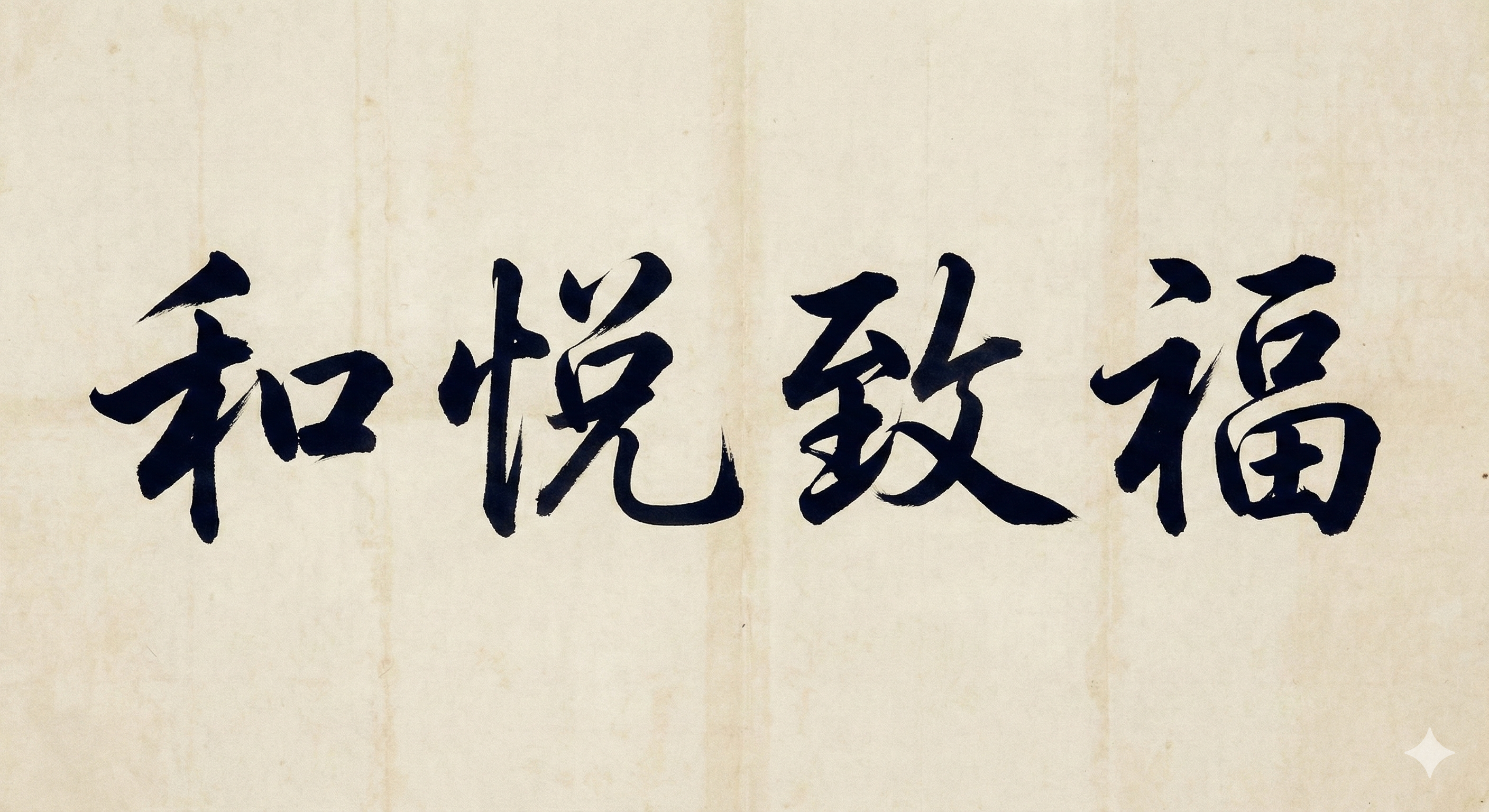
Image Healing: Guided Mandala Viewing - Lesson 155
Please select a mandala image with a clear center and stable structure.
Let your gaze naturally rest on the center of the graphic, then slowly move it outwards.
When thoughts about the future arise, there's no need to process them; just keep observing.
A mandala is not about drawing something, but about observing. When you return to your vision and the present moment, expectations gradually lose their pull.
The theme of this mandala is "Bearing in the Present Moment," symbolizing that you don't need to solve the future in advance.
◉ Watch it once; no need to watch it repeatedly.

Lesson 155: Guided Drawing - From the Future to the Present
① A large outer circle represents "uncertainty about the future," while several rings gradually emerge inward, symbolizing the gradual reduction of anxiety.
② Draw a stable point in the center to represent "my current stability".
③ The use of soft colors that gradually transition from the outside in symbolizes "the expected anxiety returning to a controllable range".
Please log in before submitting your drawings and feelings.
○ 155. Expectation Management: Log-Guided Suggestions
① Do I have worries about the "next attack" today? Where does this worry come from?
② Did it actually happen in reality? Did I overestimate the danger?
③ What did I do today to make myself more stable and better prepared?
④ What is one "small expectation management action" that I am willing to practice tomorrow?
Please log in to use.
The fear of the future won't disappear, but you'll become increasingly stronger to face it. You're not waiting for the next episode; you're learning how to handle it.
 EN
EN  ZH
ZH  ES
ES  FR
FR  JA
JA