

Lesson 1551: Opioid Use Disorders: Overview of Methadone/Buprenorphine/Naltrexone
Duration:75 minutes
Topic Introduction: This course provides an overview of three common drug treatment pathways for opioid use disorder: methadone, buprenorphine, and naltrexone. The focus is not on teaching you how to self-medicate, but rather on helping you understand why medication-assisted treatment (MAT) is needed, the differences in their mechanisms of action, goals of use, appropriate stages, and precautions, and the overall approach of "harm reduction, stabilization, and relapse prevention." We will explain in simple terms how they alleviate withdrawal symptoms, reduce cravings, and help maintain daily functioning. It is particularly important to emphasize that opioid treatment must be evaluated and prescribed by a professional team; any dosage adjustments, combination therapy, or discontinuation should not be decided by yourself. This course aims to help you view drug treatment from a more realistic and gentle perspective—neither overly mystifying nor overly stigmatizing it—and to strive for more recovery possibilities within a safe framework.
○ Opioid Use Disorder Medications - Core Overview
- Overall goal:Reduce illicit or high-risk opioid use, alleviate withdrawal and cravings, stabilize sleep, mood and daily functioning, and reduce the risk of overdose and death.
- Methadone:Long-acting opioid agonists, when used in strictly regulated outpatient clinics or institutions, reduce withdrawal fluctuations and cravings by stabilizing blood drug concentrations, but the risks of cardiac rhythm and drug interactions must be noted.
- Buprenorphine/Buprenorphine:Some agonists have relatively low risks of addiction and respiratory depression, and are often used in combination with naloxone to reduce the risk of abuse. They are suitable for maintenance therapy under standardized follow-up.
- naltrexone:Opioid receptor antagonists are used for maintenance after complete withdrawal. They can block the pleasurable effects of opioids and help prevent the vicious cycle of "relapse and continued use".
- It must be emphasized that:The above-mentioned medications should only be used under the assessment and monitoring of qualified professionals. Do not purchase, dispense, or discontinue the medications on your own. If you have any questions, be sure to consult a doctor, pharmacist, or addiction specialist team.
▲ AI Interaction: An Honest Conversation with Your "Medication Attitude"
Many people have both hope and strong concerns about medication treatment for opioid use disorder: fear of "switching to another form of dependence," fear of being labeled, and fear of not being able to stop once they start. This section is not advice on alternative medicine, but rather to help you sort out your true thoughts.
Please write down three concerns and three potential benefits you have about "treating opioid dependence with medication". These can be very subjective and you don't need to "reason" with it.
Next, recall what you've heard about methadone, buprenorphine, or naltrexone: Which came from professional sources? Which were just rumors or fragmented stories? Write down the three things you most want to know.
Finally, write yourself a sentence that "allows for contradictions," such as, "I'm not ready to make a decision right now, but I'm willing to learn more." Let AI help you organize these contradictions into a list of questions you can take to a professional.
Click the button below to share your concerns, expectations, and questions with the AI, and practice a discussion style that is not overly critical of yourself but takes safety seriously. This is not a prescription decision, but rather preparation for safer decisions.
○ Opioid use disorder medication, music therapy combined with thoughtful consideration
Choose music with a steady rhythm and a sense of "moving forward," and treat this time as a quiet moment to "gather information for yourself" rather than a stressful period of "being forced to make decisions."
In the music, you can meditate in three sections: First, review your history of relationship with opioids, from your initial contact to your current state; second, imagine what the three everyday things you would most like to resume if your body could gradually stabilize with proper medication (such as going to work normally, getting a good night's sleep, and spending time with family); third, focus your worries on one sentence: "What I least want to happen is..." and allow this worry to be seen.
Before the music ends, jot down your feelings in a few short sentences, without judgment, just being honest.
In conclusion: Being lucid, taking medication, or stopping medication should not be labels for self-worth. What you are doing is striving to create more possible paths for your life.
○ Oriental healing tea
Recommended drinks:Astragalus & Ophiopogon Balancing Tea
Recommended reasons:Astragalus helps to invigorate qi and strengthen the exterior, while Ophiopogon japonicus nourishes yin and moistens dryness. The combination of these two provides a gentle sense of nourishment after prolonged exhaustion, sleep disturbances, or emotional fluctuations. It's suitable as a companion drink when "understanding medication choices," reminding oneself that in addition to drug treatment, daily care can be gradually accumulated.
usage:Soak 10 grams of Astragalus membranaceus and 6 grams of Ophiopogon japonicus in water for a short while, then simmer over low heat for 15 minutes. Strain the liquid and drink it warm in divided doses. If you have a chronic illness or are taking other medications, please consult a professional to confirm suitability before drinking this product in large quantities or for a long period of time.
○ Japanese-style therapeutic dish: Tofu & Seaweed Nabe
Made with kelp broth as a base, and incorporating ingredients such as tofu, kelp, cabbage, and carrots, this dish keeps sodium levels low through light seasoning, resulting in a light yet filling meal. It's suitable for consumption before or after a doctor's appointment, or on days when considering medication, as it provides a sense of calm to the stomach and reduces the extremes of overeating or complete loss of appetite caused by stress.
Healing Recipes
/home2/lzxwhemy/public_html/arttao_org/wp-content/uploads/cookbook/asari-miso-shiru.html(Please confirm that asari-miso-shiru.html has been uploaded)🎨 Freedom Mandala Healing
Image Healing: Free Mandala Stability Guidance 13
Focus your gaze on the area slightly above the center of the mandala, observing how the color blocks and lines connect with each other. Then, slowly expand your gaze outwards, as if viewing the entire scene from a single "deterministic point."
Drug treatment is often seen as an "all or nothing" decision. Mandalas, however, remind us that a mandala is not about drawing something, but about observation—you can start from one point, but there's always the opportunity to step back and see the whole picture again. When observing, don't rush to judge "right or wrong," just try to feel: When I think "I might need medication," how do my body and expression change?
If you experience intense shame or self-blame, shift your gaze to the gentler, softer side of the mandala, giving yourself a visual "place to lean on temporarily." You don't need to make a decision immediately; just allow yourself to look at it a few more times.

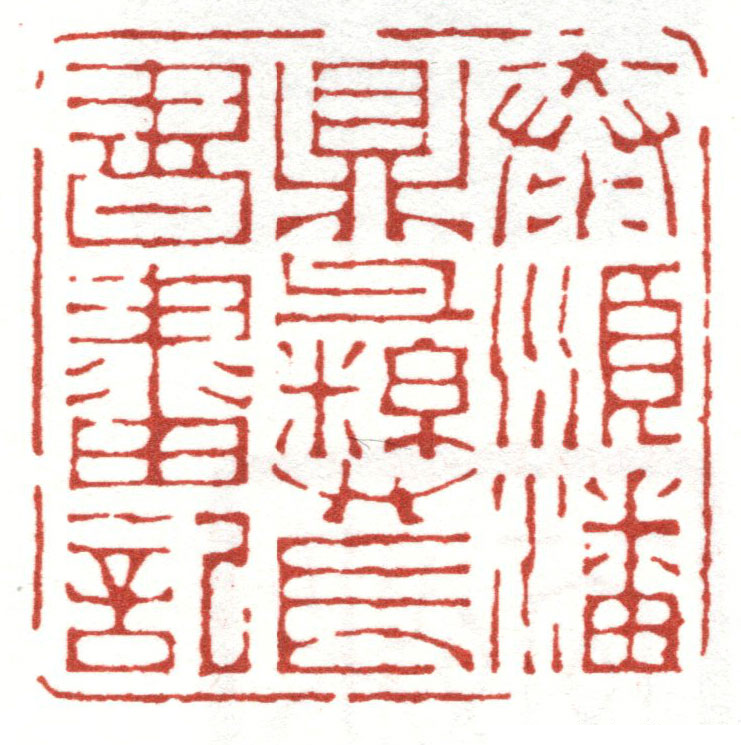
○ Suggestions for seal carving calligraphy practice
When facing drug choices for opioid use disorder, seal engraving can help you experience the rhythm of "slow down, think it through before you make a cut," reminding yourself that decisions can be made cautiously, but should not be completely frozen by fear.
- Introduction to the characteristics of seal carving:
Seal carving emphasizes layout, blank space, and overall harmony, much like finding the most suitable arrangement within a limited space. This is similar to finding a suitable medication path among personal medical history, family circumstances, and medical resources. - Written words:
Act according to the measure
Measured Steps Forward - Psychological Intention:
When deciding to "act prudently," imagine yourself sitting on the same side as the professional team, weighing the risks and benefits together, rather than passively accepting arrangements from the opposite side. You have the right to ask questions, hesitate, and demand explanations, and you also have the right to say, "I need more time to consider," after understanding the situation. - Knife skills:
It is recommended to use fewer but more consistent cuts: try to complete each stroke in one go, avoiding frequent revisions, and let the carving knife guide you to experience the rhythm of "just enough." Before carving, silently recite the course theme in your mind, allowing your mind and body to focus on the present moment. - Emotional transformation:
If you have a strong sense of shame or inner conflict about taking medication, you can carve a small border around the edge to symbolize a "safe boundary": on this stone, all contradictions can be accommodated without being immediately judged as right or wrong.
○ Overview of Opioid Use Disorders: Art Therapy Guidance Suggestions
This page uses visual aids to help you organize your impressions, questions, and expectations regarding methadone, buprenorphine, and naltrexone. The drawings are for self-awareness and communication preparation only and do not replace professional diagnosis and prescription; any medication decisions must be evaluated and followed up by a qualified physician.
I. Impression of the medication use in the "Three Rivers"
- Draw three parallel rivers on a piece of paper from left to right, and write "methadone," "buprenorphine," and "naltrexone" on them respectively. The color, flow rate, and width of each river can be different.
- Above each river, write down three sentences you have heard or thought of: these could be advantages, concerns, rumors, or personal feelings, such as "I need to go to the clinic every day," "I'm afraid I won't be able to stop," or "I heard it can be more stable."
- Below the river, write down the two questions you most want to confirm with a professional, such as "Is this suitable for my medical history?", "What examinations and follow-ups are required?", and "Will it affect my work?"“
- Once finished, draw a small figure standing on the riverbank and write down his/her feelings at that moment, such as "wanting to get closer, but also being afraid." This is your current true position and doesn't need to be judged.
II. "Security Framework" and Supporting Resource Map
- Draw a large rectangle to represent the "safety framework," and draw several smaller squares inside, each labeled with a specific item: professional doctor/clinic, pharmacy/dispensing system, family or partner, peer support groups, self-care (sleep, diet, exercise), crisis response resources, etc.
- Write a sentence in each box about a resource you already have or can try to obtain, such as "There are specialized addiction clinics in the city", "You can talk to a family member", or "You can consult online first".
- If there are any cells that are temporarily missing, mark them with a dashed box and write "Assistance needed to find" next to them to remind yourself that you are not alone in completing all the steps.
- Finally, write the sentence you most want to be remembered outside the rectangle, such as: "I am entitled to slowly figure out what is best for me within a safe framework, rather than being driven by fear or stigma."“
Tip: Bringing these images to discuss with a professional team can help them understand your concerns and expectations more quickly. If you experience intense feelings of despair, self-harm/suicidal thoughts, or a risk of overdose during the process, please contact your local emergency room or crisis intervention resources immediately. Safety is always the top priority.
Please log in before submitting your drawings and feelings.
○ 1551. Opioid Use Disorder Medication Overview - Journal-Guided Suggestions
① Write down your three strongest concerns about "Medication-Assisted Therapy (MAT)" and three potential benefits that you vaguely feel it might bring. It doesn't have to be perfect; just be honest.
② Reflect on your relationship with opioids: From the initial use to the present, what impact has it had on your body, work, relationships, and psychology? Please summarize in a few sentences.
③ Write down the three questions you most want to ask the professional (e.g., applicability, follow-up frequency, side effect monitoring, and interactions with other drugs). This will help you defend the issues that are important to you in future talks.
④ At the end of your journal entry, write down an attitude you are willing to temporarily accept, such as: "I can start by understanding, rather than immediately deciding whether to want it or not." Let this sentence serve as your buffer when the next conflict arises.
Please log in to use.
Medication is not proof of weakness, but rather a form of support you find for yourself in a complex reality. May you navigate the process of understanding and making choices without being bound by fear or rushed, gradually moving towards a safer and freer life.
 EN
EN  ZH
ZH  ES
ES  FR
FR  JA
JA