

Lesson 1555: Comorbidity Management: Depression/Anxiety/Bipolar/PTSD and Suicide Risk
Duration:75 minutes
Topic Introduction: This course focuses on the comorbid relationship between substance use disorders and depression, anxiety, bipolar disorder, and post-traumatic stress disorder (PTSD), and the resulting suicide risk. In reality, many users are not simply facing "addiction," but rather using medication as one way to "barely get by" under multiple pressures such as chronic stress, traumatic memories, intense mood swings, and a collapse of self-worth. If these comorbid issues are ignored, suicide risk is often underestimated, and interventions become one-sided. This course will help you understand your state from the perspective of "symptom stacking," recognize the emotional and behavioral signals of suicide risk, learn how to discuss comorbid assessment and integrated treatment with a professional team, and consider how to build a multi-layered safety net for yourself: including channels for help in crisis, supportive relationships, environmental adjustments, and harm reduction strategies. The goal is not to make you "symptom-free" immediately, but to help you grasp a few ropes that can truly support you amidst the chaos.
○ Comorbidity and Suicide Risk: Key Understandings
- High comorbidity is the norm, not an indication that "you're terrible": Substance use disorder often occurs simultaneously with depression, anxiety, bipolar disorder, and PTSD, amplifying each other's symptoms. This does not mean you are "weak-willed," but rather that you are indeed carrying a heavy burden.
- Emotional symptoms and medication behavior feed on each other:Depression brings self-blame and despair, anxiety creates constant tension and avoidance, bipolar fluctuations can easily trigger impulsive behavior, and PTSD flashbacks and alertness make it difficult to sleep. All of these can increase medication use and suicidal ideation.
- Suicide risk signals need to be taken seriously:Recurring thoughts of "life is meaningless," obvious withdrawal of behavior, sudden requests for funeral arrangements, and a sudden escalation in material use are all signs that require immediate discussion with professionals or crisis resources.
- Integrative therapy is more important than simply "firefighting" at individual points:Comorbidity management means coordinating material use, emotional stabilization, trauma management, and interpersonal support within a team and a holistic approach, rather than addressing just one of these aspects.
- Safety first, not perfection:At any time, if you experience a strong urge to self-harm or commit suicide, you should prioritize contacting the local emergency number, crisis intervention hotline, or emergency services. Make "survival first" your primary goal, rather than examining whether you have "done enough."
▲ AI Interaction: Analyzing "Comorbidity Maps" and Personal Safety Signals
When depression, anxiety, mood swings, traumatic memories, and substance use become intertwined, it's easy to develop a feeling of utter despair, as if "I'm completely ruined." The goal of this interactive session is to help you see that this isn't a label, but a map that can be pieced together.
Please write four columns in the text first:Depression、anxiety、Mood swings (or bipolar-related experiences)、Trauma and PTSDBelow each column, write down 2-3 of your most prominent experiences from the past two weeks.
The second step is to add a column next to each column titled "How Substance Use/Craving Changes," and record how your urge to take medication, the dosage, or the frequency changes when these emotions or memories occur.
The third step is to write down three protective factors that you currently have—even if it's just "someone who is willing to listen to you," "someone you have sought help from a mental health professional once," or "someone you know an emergency number to call."
Submit the above content to AI, and we will work together to compile it into a clearer "Comorbidity and Safety Signals Sketch" so that you can share it with professionals or trusted individuals in the future.
Comorbidity Management & Music Therapy
When dealing with comorbidities and suicide risks, people often oscillate between extremes: one moment filled with guilt, the next feeling "it doesn't matter." The role of music therapy here is to help you find a relatively neutral rhythm, allowing your mind to settle in the "transition zone" between these two extremes.
You can choose a gentle piece of music that is neither too sad nor too passionate. While listening, gently tap the table with your fingers, in sync with your breathing: inhale for four counts and exhale for six counts. With each exhale, mentally say, "For now, I'm bringing my attention back to my body."“
After the music ends, please write down one small sign that you felt was still alive today (for example: you could feel that a certain note in the music was quite nice, you noticed a little light outside the window, you were willing to write a few lines). This is not denying the pain, but acknowledging that there is still a faint hope for life amidst the pain.
In conclusion: When you can pause for a moment between an emotional flood and the urge to take medication, you are already practicing a new rhythm of life.
○ Oriental healing tea
Recommended drinks:Chrysanthemum & Goji Harmony Tea
Recommended reasons:Chrysanthemums are refreshing and soothing, while goji berries are mild, symbolizing the dual meaning of "clearing the mind and protecting vitality." For those who struggle with insomnia, mood swings, and physical fatigue, a cup of warm tea is neither a strong stimulus nor a complete numbness, but rather a reminder to the body that it can pause and relax a little.
usage:Take a small amount of dried chrysanthemum flowers and an appropriate amount of goji berries, steep them in hot water for a few minutes, and sip slowly when the tea is lukewarm. While drinking, you can take a few deep breaths to draw your attention away from self-blame and fear and back to the warmth and aroma of the moment.
○ Japanese dietary therapy, miso vegetable soup (Yasai Miso Soup)
Made with miso as a base, this soup incorporates carrots, onions, tofu, kelp, and a small amount of potatoes, creating a savory and comforting home-style soup. The warm broth helps soothe a tense stomach and chest, providing easy-to-eat and relatively light nutritional support for those who often forget to eat after emotional upheavals.
Healing Recipes
/home2/lzxwhemy/public_html/arttao_org/wp-content/uploads/cookbook/tako-daikon.html(Please confirm that tako-daikon.html has been uploaded)🎨 Freedom Mandala Healing
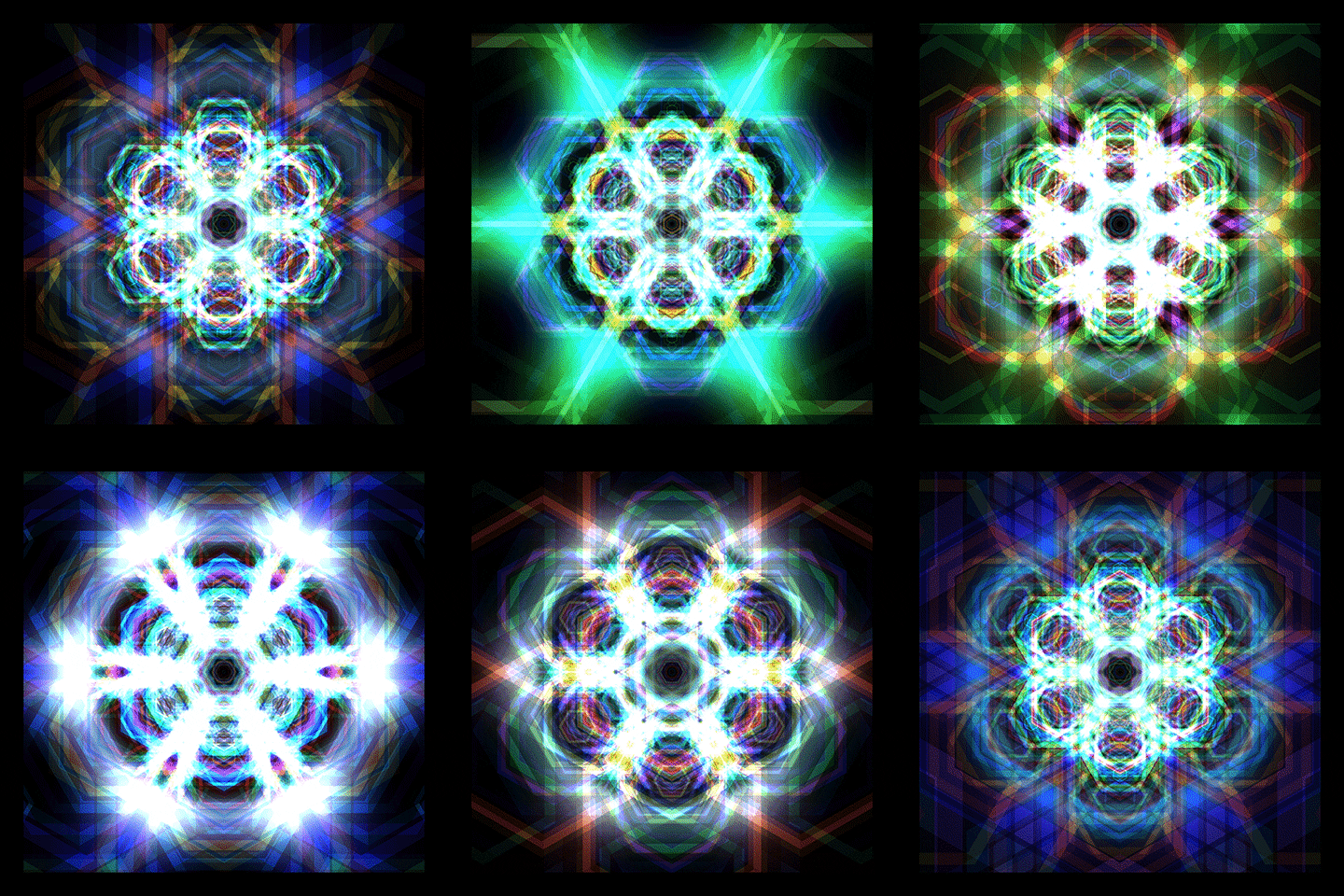
Image Healing: Free Mandala Stability Guidance 17
When viewing a mandala, pay special attention to the areas where "dark" and "light" colors meet. Don't rush to judge which part is beautiful or ugly; simply let your gaze slowly move along the edges, as if groping for a thin line that is neither completely dark nor completely bright.
Comorbidities and suicide risks are like overlapping patches of color in a mandala: there are both shadows and glimmers of light. A mandala is not about drawing something, but about observing. When you practice staying on the "transitional color bands," you are actually training your brain to get used to a new experience: between extreme despair and extreme euphoria, there are many unseen middle grounds.
If you're feeling particularly down today, allow yourself to do just one thing: quietly look at the mandala for one minute, focus your attention on the blurred boundary line, and tell yourself, "I'm still above this line." We can discuss the rest later.
○ Suggestions for seal carving calligraphy practice
Under the theme of "Comorbidity Management and Suicide Risk", seal engraving and calligraphy can be an exercise that allows the heart and hand to have a new dialogue: condensing unspeakable fears and struggles into a few short but weighty characters.
- Introduction to the characteristics of seal carving:
The seal carving features continuous lines and a compact structure, yet it retains a sense of breathing space. It's as if it's saying: even when difficulties pile up, you can still leave yourself some breathing room. This is similar to the spirit of coping with illness—we cannot immediately eliminate all symptoms, but we can gradually open windows for life. - Written words:
The light of the heart never goes out
The Heart's Light Remains - Psychological Intention:
When carving "The Light of the Heart Never Dies," you can reflect on: what moments helped you persevere through extreme pain? Perhaps it was a word from someone, the companionship of an animal, or a plea for help that you never gave up on. These experiences are not denying your darkness, but rather proving that, even if faint, the light did exist. - Knife skills:
When carving, it is recommended to intentionally make the vertical strokes slightly longer and the horizontal strokes slightly shorter, symbolizing the imagery of "still extending upwards". Inhale before each cut and exhale slowly when finishing, letting your breath act as an invisible thread, connecting the entire piece of stone into a whole. - Emotional transformation:
If suicidal thoughts or a strong sense of despair arise during the carving process, please do not suppress them. After stopping the carving, you can write these thoughts down next to the paper and add a response, such as: "Right now I really want to end everything, but I'm willing to finish carving this seal first before making a decision." This response is not a promise to never give up, but rather to give yourself more time in the present moment.

Comorbidity and Suicide Risk: Guiding Suggestions for Art Therapy
This page uses simple image exercises to help you visualize the relationship between depression, anxiety, bipolar-related experiences, PTSD, and substance use, while also marking the "intersection points" that increase suicide risk. All content is for self-awareness and communication with professionals only and does not replace medical and crisis intervention; in case of strong self-harm or suicidal impulses, please contact your local emergency number, crisis hotline, or the nearest emergency room first.
1. Four overlapping rings: Draw your comorbidity "weather map"“
- Draw four overlapping circles on a piece of paper and label them "Depression," "Anxiety," "Mood Swings/Bipolar Experience," and "Trauma/PTSD." Write down 2-3 of your most frequent experiences in each circle.
- In the overlapping area of the circle, write down what changes occur in your substance use when multiple symptoms occur simultaneously (e.g., increased dosage, increased frequency, impulsive use, mixed use, etc.).
- In the overlapping area where you believe the "highest risk of suicide" is located, lightly color it in a striking color and write down: What signals will your body show when you enter this area (e.g., worsening insomnia, loss of appetite, chest tightness, headache, complete lack of energy, etc.)
- Draw a "protective band" around the outside of the diagram and write down the protective factors you currently have or can seek: the names of people who support you, organizations you can seek help from, trusted professionals, and coping strategies that have helped you in the past.
II. Personal Safety Card: A message to prepare for the "darkest hour".
- Write the title on a small piece of paper or in the corner of a drawing: "When I want to end everything, please look here first."
- The following should be listed in order: ① People I can contact immediately (at least one); ② Help resources I can call or go to immediately (such as emergency rooms, local crisis services, etc., you can leave this blank and add it later with professionals); ③ Three small things that helped me get through a difficult time in the past.
- Finally, write a sentence for your future self who may be in extreme darkness. For example: "I know you will be in great pain then, but please give me a few more minutes for this little effort I'm making now, and let's find help together one more time."“
Note: If you experience significant emotional fluctuations or strong urges to self-harm or commit suicide during the drawing process, please stop practicing immediately and prioritize contacting offline emergency support and professional resources, rather than continuing to immerse yourself in the images and thoughts alone.
Please log in before submitting your drawings and feelings.
○ 1555. Comorbidity Management and Suicide Risk: Journal-Based Guidance Suggestions
① Write down the three symptoms that are currently bothering you the most (which may come from depression, anxiety, mood swings, traumatic memories, or substance use), and describe how they often “interact” with each other.
② Reflect on the past year and recall the experience that brought you closest to despair or self-harm/suicidal thoughts: What happened at that time? What warning signs actually appeared, but you didn't have time to see them at the time?
③ List at least three safety actions you can realistically take, such as: "Write down emergency numbers and post them in a visible place", "Let a trusted person know that you sometimes have dangerous thoughts", "Write a few lines before deciding on the next step before losing control of your emotions", etc.
④ Finally, respond to the part of yourself that "just wants to end it all" with a short message—no need to persuade, just express that you understand that despair and are willing to buy him/her a little more time and help.
Please log in to use.
Being comorbid doesn't mean you've failed; it means you've carried too much burden along the way. May this lesson help you see more threads leading to safety and support amidst complex storms, and let "living well first" become the starting point for all change.
 EN
EN  ZH
ZH  ES
ES  FR
FR  JA
JA