

Lesson 1569: Gambling Behavior and Avoidant Emotional Coping Patterns
Duration:60 minutes
Topic Introduction: This course focuses on the avoidance-based emotional coping mechanisms behind gambling behavior, rather than just the surface-level effects of winning and losing. Many people who start gambling frequently don't simply want to "get rich quick," but are afraid to face certain realities: loneliness and disappointment in romantic relationships, setbacks at work or school, shame stemming from persistently low self-esteem, and an unspeakable emptiness in daily life. The gambling arena provides a quick, intense, and predictable stimulus, allowing people to temporarily "avoid thinking about these things." But avoidance doesn't make the problems disappear; instead, they resurface exponentially with post-gambling bills, arguments, insomnia, and self-blame. This course will help you identify: which emotions, memories, and stresses in your personal experience are frequently "interrupted" or covered up by gambling; what ways you habitually avoid feeling and facing them; and how to gradually shift from "avoidance-based coping" to "confrontational, self-care-based coping." The goal is not blame, but understanding: you were once using whatever methods you could find to survive; now you can begin practicing safer and more sustainable paths.
○ Key points regarding the link between avoidance coping and gambling behavior
- Temporary numbness:By focusing on the odds and the game, you can "go offline" from your pain points and experience a short-term sense of relief.
- Learned avoidance:When faced with conflict, assessment, bills, or work tasks, they subconsciously open gambling websites or enter gambling venues.
- Self-narrative distortion:They use the idea of "trying again to turn things around" to avoid facing real losses and relationship risks.
- Difficulty in emotion recognition:Relying on gambling to "mask one's emotions" for a long time can lead to a lack of clarity about whether one is truly sad, angry, or afraid.
- Correction direction:Learn to distinguish between "needing rest" and "escaping," and practice gentler, less self-destructive ways of regulating emotions.
▲ AI Interaction: Identifying "What am I running away from?"“
Please recall your three most recent strong urges or actions to gamble, and write down what you should or could have faced at the time (e.g., work reports, family conversations, health checkups, debt negotiations, etc.).
Write down: When you turn to gambling, is there a thought echoing in your mind? For example, "Don't think about it now," "I don't want to face it," "I'll deal with the wins and losses later."
Finally, add a sentence to each experience: "If I weren't gambling, what I would need most is...", even if you only write down vague needs for now, such as "to be understood," "to be affirmed," or "to have a little breathing room."
Click the button below to let AI help you organize these fragments into an "escape map," assisting you in realizing "I am escaping" earlier in the future, rather than waiting until you have already placed your bets.
○ Escape from Impulsive Moments: Music Therapy
When you feel like "taking a gamble right away to calm your mind," you can try using a 5-10 minute instrumental piece as a "buffer."
In the first half of the music, do only one thing: write down the jumbled thoughts in your mind into a list, without requiring them to be in any particular order, just let them "land".
In the second half, circle two of the issues you are willing to confront a little, such as "tomorrow's work feedback" or "a conversation with family," and write down a small step you can take for each issue.
○ Oriental healing tea
Recommended drinks:Roasted Oolong Comfort Tea
Recommended reasons:Roasted oolong tea has a mellow aroma and a long-lasting sweet aftertaste, making it suitable for slowing down the senses during uneasy moments when you "want to escape the present moment immediately," helping you transition from a state of high arousal to a more stable state of awareness.
usage:Take 3-4 grams of oolong tea and brew it with hot water at around 90℃. The first few infusions should be shorter to allow you to savor the layers of aroma. While drinking the tea, you can silently count your breaths and observe, "What thoughts am I trying to avoid right now?"
○ Japanese Dietary Therapy: Yam Chazuke (rice with tea)
Served with rice, grated yam, a small amount of seaweed, and a light tea broth, this dish has a soft and smooth texture, is easy to digest, and is suitable as a simple meal at night or when feeling emotionally exhausted. This simple, light meal helps to transition from a "high-stimulation gambling atmosphere" to a "peaceful way to sit down and eat a bowl of rice" lifestyle, symbolizing a return from escapism to daily care.
Healing Recipes
/home2/lzxwhemy/public_html/arttao_org/wp-content/uploads/cookbook/tako-su.html(Please confirm that tako-su.html has been uploaded)Free Mandala Healing (Watch)
Image Therapy: From "Turning Away" to "Stopping to Look" 01
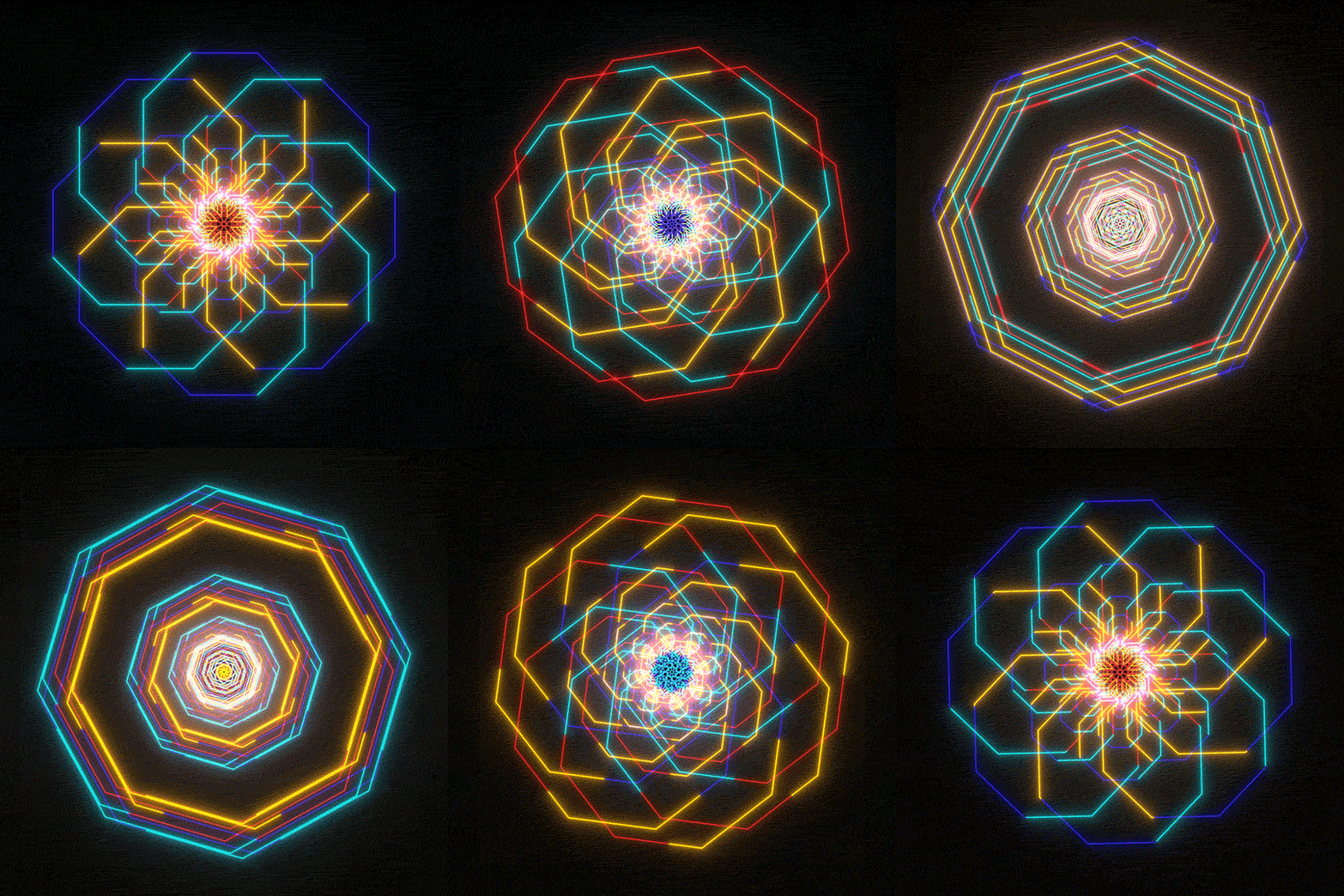
A mandala is not about drawing something, but about observing. Imagine a mandala where one side has blurry, rapidly flowing lines, representing the various ways you usually escape; the other side has detailed, clear textures, representing the emotions and responsibilities that need to be seen but are always skipped. You don't need to make a decision immediately, just quietly observe these two sides coexisting in the same image.
When watching, you can practice this small step: when you find your gaze always lingering on the "blurry side," deliberately and slowly shift your gaze to a clearer area, while taking a deeper breath. This action symbolizes: I'm not going to change everything for now, but I'm willing to take another look at my true self.
○ Suggestions for practicing regular script calligraphy
Under the theme of "coping with avoidant emotions", regular script can be a gentle "pause exercise": allowing you to practice not turning away immediately, but pausing for a few more seconds in each stroke.
- Introduction to the characteristics of regular script:
Regular script emphasizes the central stroke and clear beginning and ending points, with each character "taking its own place" within the grid. This contrasts with avoidance: when we always want to avoid discomfort, we need a sense of stability that makes us "willing to sit in the grid and slowly finish writing." - Written words:
Do not escape, observe yourself
Staying to Truly See - Psychological Intention:
When writing "Don't Escape, Reflect on Yourself," you can recall the last time you used gambling to escape your emotions, and silently repeat to yourself: "I was scared at that time, not because I was bad." Shift your focus from self-blame to understanding, allow yourself to admit that "that was the only way to cope at the time," and at the same time make some room for new choices. - Penmanship techniques:
Slow down deliberately at the end of each stroke, making the subtle pause a ritual of practicing "looking for one more second"; make the horizontal strokes slightly longer, symbolizing giving yourself more room to linger, rather than rushing to the next stroke. - Emotional transformation:
If the thought "I can't do it well again" arises while practicing calligraphy, you can add a small note next to it: "Imperfection is allowed in practice." Let regular script become a practice ground for emotions, rather than a performance ground.

○ Gambling Behavior and Avoidance Coping Patterns: Guidance and Suggestions for Art Therapy
This page uses simple images to help you see that gambling is not just about "playing," but is intricately intertwined with "what I don't want to face." The drawings are for self-reflection and do not replace any legal, financial, or psychological professional services.
1. "Escape Radar Chart": The Five Types of Situations I Most Often Avoid
- Draw a circular radar chart and divide it into five sectors: money-related, relationship conflict, work/study, health issues, and self-evaluation.
- In each sector, write down specific situations in the last three months in which you considered gambling to "escape" and rate the degree of your urge to escape on a scale of 0–10.
- Circle the "three most dangerous things" (those that, if avoided, easily lead to entering a casino or opening a gambling app) with one color as high-risk signals to be prioritized for future attention.
II. The Fork in the Road: The Path of Gambling vs. The Path of Facing
- Draw two forked paths from the same starting point: the left path is "continue to escape and head towards gambling," while the right path is "stop for a moment and try to face things a little bit."
- Write the following on the left: brief numbness → fluctuations in wins and losses → bills and conflicts → self-blame and exhaustion → a greater desire to escape; write the following on the right: admit fear → talk to someone or write it down → take a step back and adjust the plan → gain a sense of reality.
- Finally, mark a small node on the graph that you currently think is "most likely to try," such as "next time, write for 5 minutes before deciding whether to bet," as a specific action you can take with you.
Tip: You don't need to move yourself from the left to the right all at once. Just a small pause and choice at a key fork in the road is enough to rewrite the old pattern.
Please log in before submitting your drawings and feelings.
○ 1569. Gambling Behavior and Avoidant Emotional Coping Patterns: Journal-Guided Suggestions
① Write down the last time you "really wanted to take a gamble right away." What was the last thing you wanted to face in reality at that time?
② Divide the paper into two columns: on the left, write "the short-term benefits I gained from choosing to gamble," and on the right, write "the long-term costs I will have to pay as a result."
③ Make a list of three "short breaks" that can replace gambling, even if they are small, such as taking a 10-minute walk, taking a shower, or calling a trusted person.
④ Finally, write a sentence for yourself: "Next time I want to run away, I hope I can at least try first..." Copy it down and stick it in a conspicuous place.
Please log in to use.
When you begin to see "what I am running away from" and are willing to take a step further for yourself, you are no longer just a player in the game, but are slowly becoming an observer and caregiver of your own life.
 EN
EN  ZH
ZH  ES
ES  FR
FR  JA
JA