

Lesson 1571: Overview of Treatment for Gambling Disorder (Cognitive Behavioral Therapy, CBT)
Duration:70 minutes
Topic Introduction: This course will systematically outline a framework for treating gambling disorder centered on cognitive behavioral therapy (CBT), helping you understand that "behavior doesn't form overnight, nor does it disappear overnight." We will start from four stages: triggering situations, automatic thoughts, emotional reactions, and behavioral consequences. We will learn how to record your internal dialogue before and after gambling, identifying typical cognitive biases such as "I can win back my losses if I gamble again" and "It's even more painful not to gamble." The course will introduce common CBT techniques: triggering situations and high-risk lists, impulse curve observation, delayed betting, alternative behavior practice, setting money and time boundaries, and relapse warning and coping plans. You will see that the goal is not to "suppress desires," but to gradually learn to see, break down, and rewrite your own choice path, finding a sustainable rhythm between realistic limitations and self-care.
○ A treatment framework for gambling disorder (CBT perspective)
- Triggering awareness:Record when and in what situations you most want to gamble, such as when you are lonely, stressed, on payday, or after an argument.
- Cognitive recognition:Capture typical automatic thoughts such as "If I buy it again, my luck will turn around," "I can control myself," and "The money will come back eventually."
- Emotional and physical reactions:Pay attention to the peak impulse processes such as tension, excitement, rapid heartbeat, and sweaty palms, rather than just looking at the result.
- Behavioral experiments and alternative exercises:Experience the real consequences of "not gambling" by delaying betting, leaving early, setting money limits, and participating in companion activities.
- Long-term maintenance:Establish a list of early warning signals for relapse and design multiple backup scripts for "what I can do when I want to gamble".
▲ AI Interaction: Breaking down the entire process from "wanting to gamble" to "choosing not to gamble"
CBT believes that the series of thoughts that flash through your mind before and after an impulse often determines whether you go to the gambling table or to take care of yourself.
Please recall a recent experience of gambling or a strong urge to gamble, and write down the scene, your inner monologue, and emotional changes at the time, such as: "I'm so tired, at least something good should happen today."
Next, try letting the AI break down these automated thoughts: Which are facts, and which are inferences or fantasies? Are there any new, more moderate, and realistic explanations?
Finally, write yourself a "temporary alternative" sentence, such as: "I am feeling very unwell right now, but I can get better slowly without gambling."
Click the button below to tell the AI a real-life scenario and practice the experience of going from "uncontrolled autopilot" back to "consciously holding the steering wheel".
○ Overview of Gambling Disorder Treatment (CBT) · Music Therapy
Choose a slow and rhythmic instrumental piece, such as a piano or strings, and let the music act like a steady line, gently pulling you back to the present moment from the peak of your impulse.
Recall the moment you almost gambled or were already gambling while listening to music, and write down the process in four steps: triggering situation, automatic thoughts, emotions, behavior, and results.
Then, accompanied by music, add a "possible new option" for each step, such as calling a friend, writing three lines in a diary, or only taking a small amount of cash with you when triggered.
In conclusion: When you practice small rewrites in music time and time again, your brain will slowly remember that "besides gambling, I have other paths to take."
○ Oriental healing tea
Recommended drinks:Linden Blossom Tea
Recommended reasons:Linden blossoms are often used in traditional Eastern and European herbs to relieve tension, reduce anxiety and palpitations, and can help provide a buffer for the mind and body during moments when you want to gamble but are trying to press the pause button.
usage:Take 3-5g of dried linden flowers, steep in hot water at 80-90℃, let stand for 5-7 minutes before drinking. It is recommended to drink slowly in the evening or after intense excitement, accompanied by deep breathing exercises.
○ Greek-Mediterranean Diet: Olive Oil, Vegetable, and Lentil Soup
Lentils and vegetables provide a stable source of complex carbohydrates and dietary fiber, while the monounsaturated fats and polyphenols in olive oil contribute to cardiovascular protection and mood stability. A slow-cooked soup made with tomatoes, onions, celery, and a touch of herbs is filling yet light, helping to balance blood sugar and energy fluctuations and reduce impulsive spending and gambling caused by hunger or fatigue.
○ Free Mandala Healing: Practice "Pressing the Pause Button" While Watching“
Image Healing: Free Mandala Stability Guidance
Find a mandala image that you are familiar with, sit down quietly, and simply observe it, letting your gaze flow naturally between the blocks of color and lines, without rushing to interpret its meaning.
The Free Mandala isn't about drawing any particular shape, but about practicing the ability to "stay in the moment" through observation. When you're pulled by the urge to gamble, first shift your gaze back to the mandala, coordinate with slow breathing, and feel your heartbeat gradually calm down, as if a small, safe, and peaceful space awaits you outside of the noisy reality.
You don't need to analyze the symbolism of the image. Just allow yourself to be surrounded by color and rhythm for a few minutes, allowing your brain to transition from the tension of "do something right now" to "I can stop for a while and then decide on the next step."

○ Suggestions for practicing Roman script
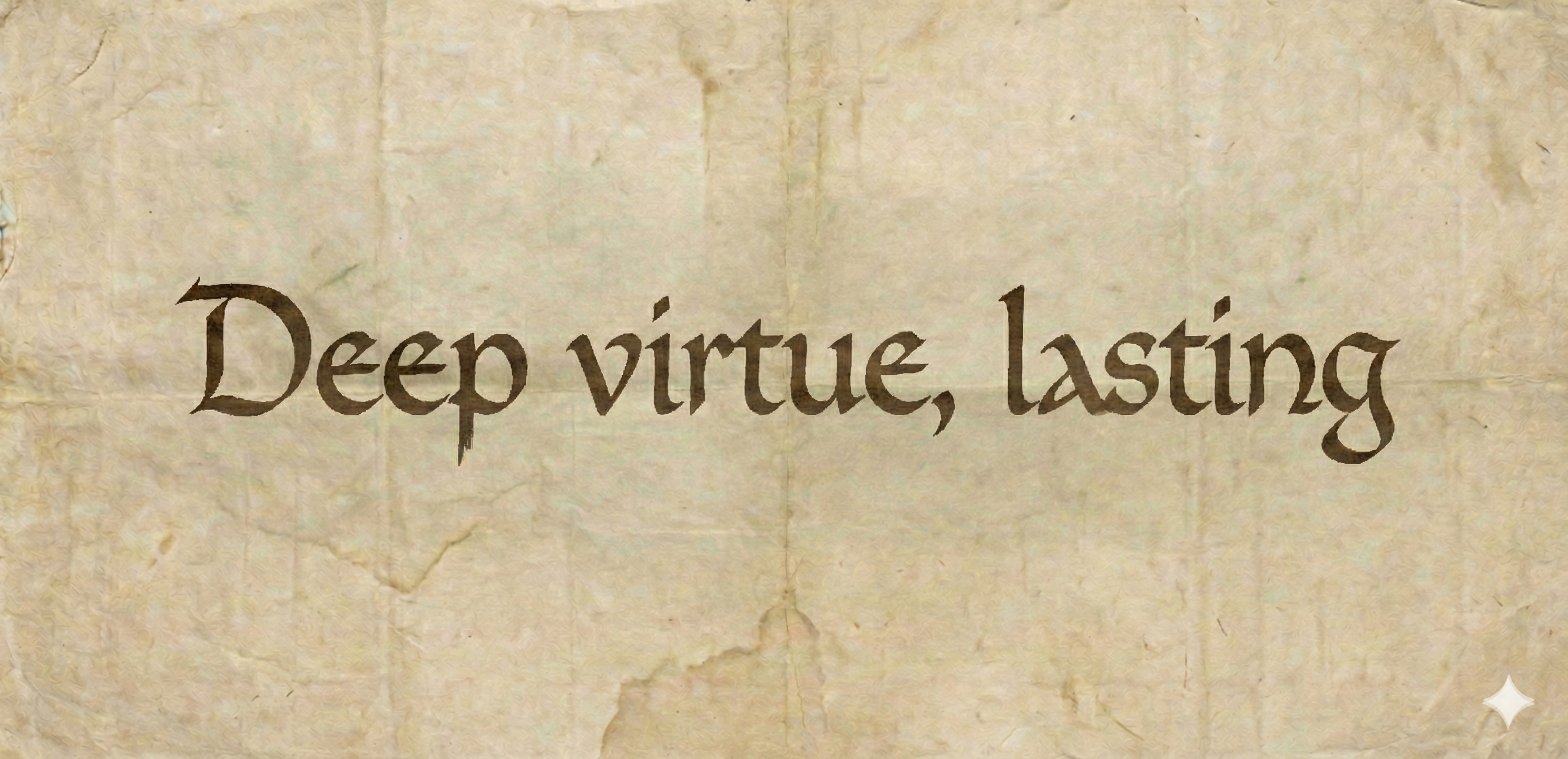
In this course, practicing ancient Roman calligraphy is seen as a training in "steady rhythm and rationality." By meticulously attending to the proportions and spacing of each letter, you are not only practicing writing, but also developing the ability to "buffer and organize" impulses.
- Writing words:
Latin:Moderatio(control)
Meaning in Chinese: Moderation, restraint, leaving room for maneuver. - Psychological Intention:
The gambling impulse often leads to an "all or nothing" mentality. As you write "Moderatio" stroke by stroke, remind yourself: true strength lies not in extremes, but in finding a sustainable middle ground between desire and reality. - Writing method:
Using a stiffer pen, practice steady vertical strokes and slightly curved horizontal strokes on lined paper, maintaining consistent spacing between each letter. Intentionally slow down your writing pace, allowing the rhythm of your hand to guide the rhythm of your mind. - Emotional transformation:
Whenever the urge to "take another gamble" arises in your mind, you can stop, write "Moderatio" three times, and add a Chinese reminder next to it, such as "I choose to leave my strength for tomorrow's self".
○ Overview of Gambling Disorder Treatment (CBT): Guided Suggestions for Art Therapy
This page uses illustrations to depict the CBT perspective.“"From trigger to selection" pathVisualization helps you see how you are gradually drawn to the gambling table, and it can also lead you in other directions. Painting is merely an externalization and process of organizing your thoughts; it does not replace professional therapy or legal/financial assistance.
I. Two Paths: Towards the Gambling Table VS Towards Care
- Draw two parallel "path lines" on a piece of paper: write "automatic response" on the top line and "conscious choice" on the bottom line.
- Write the following in order on the "Automatic Response" line: Triggering Situation → Automatic Thought → Emotional Peak → Gambling Behavior → Consequence Disappointment.
- Write the following in order on the “Conscious Choice” line: Triggering situation → Be aware of the thought → Adjust the wording → Alternative action (walk, write in a journal, contact a supporter) → Reassess later.
- Connect the same "trigger" with different colors to show yourself that the same starting point can lead to different endings.
II. My Personal "CBT Toolbox"“
- Draw a small box on one side of the paper and write "Toolbox" on it. Draw several lines from the box, connecting: alternative behaviors, reassuring statements, a list of supporters, and emergency response steps.
- Under each branch, write down at least two specific actions that are feasible for you, such as "make yourself a cup of linden tea" or "write down automatic thoughts and question their rationality."
- Finally, give this picture a name, such as "I am no longer fighting impulses alone," and put it where you are prone to impulses, making it a visible reminder.
Note: CBT emphasizes small, repeatable actions. If you are experiencing severe debt, legal risks, or intense despair, seek professional support from psychiatrists, addiction specialists, and legal or financial professionals as soon as possible, rather than relying solely on self-help exercises.
Please log in before submitting your drawings and feelings.
○ 1571. Overview of Treatment for Gambling Disorder (CBT) · Journal-Guided Recommendations
① Today, please record an experience of "wanting to gamble but trying to use the toolbox": What situation happened? What alternative behaviors did you use? What were the results?
② Write down an automatic thought that still makes you feel particularly bad, such as "I just can't control myself," and then try to write a milder version.
③ Looking back on the past week, was there a moment when you successfully delayed or reduced gambling? Please write three affirmations for yourself for that moment.
④ Write down a realistic and specific micro-goal at the end of your diary, such as "Arrange a non-gambling activity with family or friends this week" and set a date.
Please log in to use.
Every shift from automatic impulses to even a one-second pause is part of the therapy. Treat this as training, not an exam; gradually build new options through repeated practice.
 EN
EN  ZH
ZH  ES
ES  FR
FR  JA
JA