

Lesson 1582: Psychological Mechanisms and Symptoms of Internet Addiction
Duration:70 minutes
Topic Introduction:This course will delve into the psychological mechanisms behind internet addiction, including reward pathway activation, dependence on instant gratification, avoidance motivations, and the resulting physical and mental symptoms. It will help participants understand their own behavioral patterns and take the first steps toward awareness and management.
○ The mechanisms and manifestations of Internet addiction
- Reward system dysfunction:Overstimulation of the brain's dopamine system creates a high-sensitivity/low-tolerance cycle.
- Avoidance of sexual behavior:Use the Internet to escape from real-life stress, emptiness, or social anxiety.
- Cognitive distortions:Such as self-deception such as "I'm just watching it for a while" or "This video can relax me".
- Common symptoms:Decreased concentration, mood swings, irregular work and rest schedules, dry eyes and neck pain, loneliness and dependence.
▲ AI interaction: Is your online behavior relaxing or escaping?
Symptoms of internet addiction may include uncontrolled use, increased anxiety, and decreased real-world functioning.
Please write down your three most typical impulses to go online today, and your emotional reactions at that time.
Give these urges gentle names, like "virtual calling," to help you stay aware.
Write about a time you successfully delayed use and give yourself a pat on the back.
Conclusion: When symptoms are recorded, they lose their exclusive power.
Click the button below to discuss your online motivations and hidden emotional needs with AI and build self-awareness.
○ Psychological mechanisms and symptoms of Internet addiction · Music therapy
Choose a steady string music piece and let your mind slowly settle. Internet addiction often manifests as uncontrolled use, anxiety, and decreased daily functioning.
Write down three of your most typical urges to go online today, along with your emotional responses.
Giving these urges gentle names, like "virtual calling," can help you distance yourself from them.
Conclusion: When symptoms are gently recorded, they gradually lose their power.
○ Oriental healing tea
Recommended drinks:Lemon & Mint Tea
Recommended reasons:Refresh the mind, relieve mental fatigue and dullness after Internet addiction, and help restore clarity.
usage:1 slice of fresh lemon, a few mint leaves, brew with warm water, it is recommended to drink in the morning or afternoon.
○ Japanese Food Therapy, Tako Daikon
Octopus chunks and white radish are stewed together for a delicious broth. Octopus is rich in taurine, which strengthens the heart and body, while radish aids digestion and dissolves stagnation. The combination is gentle, nourishing, and helps with digestion.
Healing Recipes
/home2/lzxwhemy/public_html/arttao_org/wp-content/uploads/cookbook/tako-daikon.html(Please confirm that tako-daikon.html has been uploaded)🎨 Freedom Mandala Healing
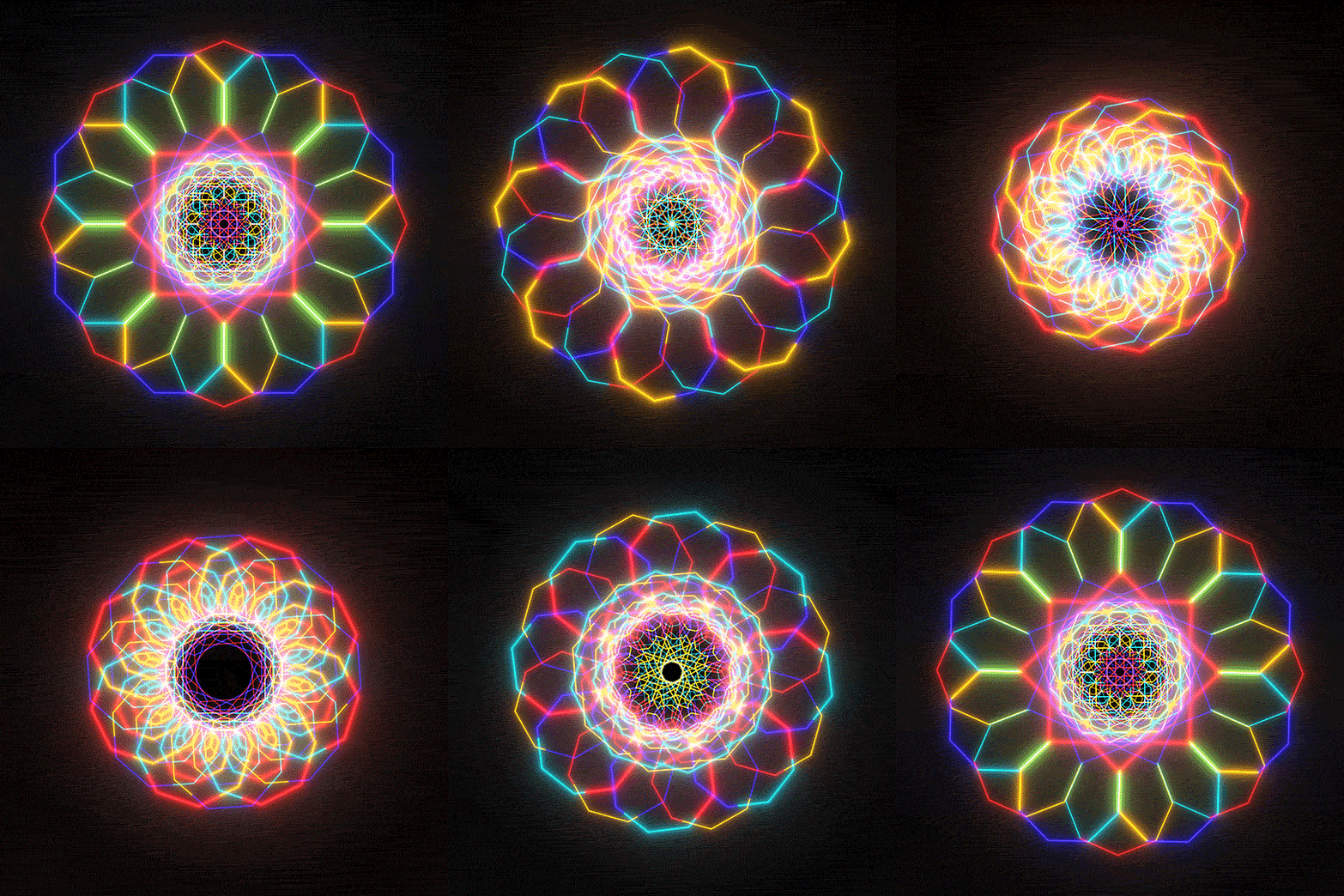
Image Healing: Free Mandala Stability Guidance 16
Please pay attention to the "emptiness" in the image. Emptiness is rest, a place to breathe. Learning to see emptiness allows you to reserve space for yourself in life.
Viewing emptiness is the art of being with oneself. Emptiness can accommodate emotions and also reorganize energy.
Free mandalas have no fixed form, allowing the artist to express themselves freely based on their emotions. There are no rules for drawing free mandalas, encouraging individuals to express their inner world, and they are often used to help with emotional release and self-awareness.
○ Suggestions for seal carving calligraphy practice
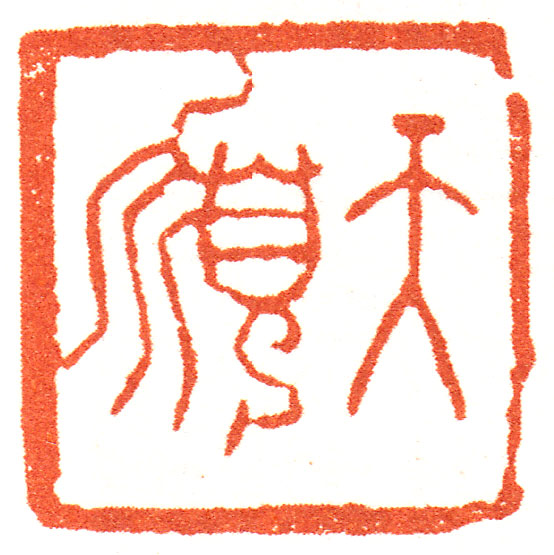
The purpose of this course is to help you enhance your sense of self-control and focus through careful, focused carving. It can also help you understand the psychological mechanisms behind internet addiction and help you rebuild your patience, emotional balance, and sense of reality. Depending on your needs, you can try the following methods:
- Introduction to the characteristics of seal carving:
Seal carving emphasizes synchronizing rhythm with breathing, requiring intense focus and a strong sense of inner rhythm. For internet addicts, who are chronically driven by high-frequency stimulation, seal carving training can effectively help regulate the brain's reward system, reducing the need for immediate gratification, enhancing the ability to delay gratification, and promoting attention recovery. - Written words:
The water flows without competing, and the clouds are all slow in my mind.
Let the Water Flow without Striving · Let the Clouds Drift with Unhurried Mind - Psychological Intention:
Internet addicts are often emotionally swayed by rapidly changing content and lack a sense of internal rhythm. When writing the phrase "Water flows, my heart does not compete; Clouds hover, my mind is all slow," seal carving allows one to experience a natural, slow, and steady inner state, cultivating an appreciation for "slow living" and the present moment, and reducing dependence on high-frequency stimulation. - Knife skills:
During the carving process, keep breathing slowly and steadily, coordinate each cut with an inhalation and an exhalation, pay attention to the smoothness of the movement and the blank space, and through carving, train your mind to be calm, promote the establishment of your own sense of rhythm, and reduce the impulse to be pulled by external information. - Emotional transformation:
Transform the anxiety, excitement, and fatigue accumulated from using the Internet into the real touch of **every stroke of a knife**, experience the sense of security brought by slow work, help the brain's nervous system "cool down" from a high-frequency state, and enhance patience and emotional self-regulation ability.
○ The psychological mechanism and symptoms of Internet addiction: Suggestions for guidance on painting therapy
This page is externalized through paintingPsychological MechanismandSymptoms, helping to identify the cycles behind internet addiction. Core mechanisms often include overactivation of the reward system, avoidance/compensation, tolerance, and withdrawal reactions. Common symptoms involve emotional, physical, cognitive, and social functioning. Drawing can crystallize implicit patterns, providing a tool for self-adjustment and communication.
1. Three-Circle Diagram of Psychological Mechanism (Reward-Escape-Tolerance)
- Draw a three-ring circle: the inner circle is "reward system" (immediate stimulation, likes/victory feedback), the middle circle is "escape/compensation" (relieving loneliness, escaping reality, and diverting stress), and the outer circle is "tolerance and withdrawal" (needing more time to be satisfied, anxiety/insomnia when stopping).
- Draw arrows between rings to indicate mutually amplifying loops.
- Draw "alternative outlets" next to it: healthy social interaction, exercise, and artistic expression.
2. Symptom Quadrants (Emotional-Physical-Cognitive-Social)
- Draw a box and divide it into four sections: ① Emotion (anxiety, anger, depression, guilt), ② Physical (neck and shoulder pain, dry eyes, fatigue from staying up late), ③ Cognitive (lack of concentration, memory loss, the idea of "having to be online"), and ④ Social (estranged relationships, damaged studies/work).
- In each box, write down the most obvious example from the past two weeks and score it from 0 to 10.
- At the bottom of each box, write a "repair micro-action," such as "turn off your phone 30 minutes early tonight" or "have a face-to-face conversation with a friend."
3. Addiction Signal Radar (Frequency – Duration – Craving – Consequences)
- Draw a four-axis radar: ① Frequency of use, ② Duration of a single session, ③ Intensity of craving, and ④ Negative consequences. Draw a curve for this week and compare it to the "ideal goal curve."
- Write “adjustment points” next to the radar, such as reducing nighttime use and increasing offline alternative activities.
Tip: The psychological mechanisms of internet addiction often reinforce the urge to use, accompanied by physical and mental damage. Drawing can help identify patterns and symptoms, but if functioning is severely impacted or there is a risk of depression or self-harm, seek professional help promptly.
Please log in before submitting your drawings and feelings.
○ 1582. Psychological Mechanisms and Symptom Manifestations • Journal-Guided Suggestions
① Cycle breakdown: trigger → desire → use → temporary relief → more desire. Please write down the most typical cycle today.
② Physical and mental signals: Record common discomforts after long-term use (headache, dry eyes, anxiety), and write down two small actions that can provide immediate relief.
③ Naming emotions: Rewrite “It’s terrible” as “I’m very tired/lonely at the moment” to accurately capture the emotion.
④ Pay attention to anchoring: prepare for the "60-second reset" - put down the device → breathe for four beats → look at three things outside the window.
Please log in to use.
Seeing the mechanism of addiction is the starting point for you to break free from the internet dilemma. You are not trapped by the internet, but learning to make new choices.
 EN
EN  ZH
ZH  ES
ES  FR
FR  JA
JA