

Lesson 1587: The Reward Mechanisms and Psychological Traps of Gaming Addiction
Duration:70 minutes
Topic Introduction: This course focuses on the inner workings of "gaming addiction," particularly how mechanisms such as level progression, random drops, consecutive login rewards, leaderboards, and skin collection weave a complex psychological cycle that's difficult to break free from. We will dissect the dopamine reward structure, task chains, and the illusion of "almost there" in game design, helping you understand why, even knowing "it'll be late if I play one more game," you always procrastinate on sleep, homework, and real-life responsibilities. This course doesn't simply categorize games as "bad," but rather helps you identify when it's healthy entertainment and when it has evolved into a trap for escaping stress, numbing emotions, and sacrificing real-life functions. Through specific situational analysis, reward substitution exercises, and self-monitoring tools, you will learn to build a more flexible balance between enjoying gaming and protecting your life's boundaries.
[arttao_Healing_Course_tts_group1587_1591]▲ AI Interaction: Why can't we stop playing "one more game"?
Many people are not simply "weak-willed," but are firmly held by the game's reward structure: level-up prompts, treasure chest drops, teammates' calls, and ranking fluctuations all stimulate you to continue investing time and attention.
Think back to the three most recent times you originally planned to "play for just a little while": What time did you finally finish that night? What did you miss or postpone? Did you gain a sense of accomplishment, belonging, or a numb emptiness from the game?
Please write down three game scenarios where you find it hardest to say "stop" (such as after a winning streak, after a losing streak, on the eve of a gacha pull, or near the end of an event), and analyze them with the AI below: What truly keeps you in front of the screen is the reward itself, or an escape from failure, loneliness, and powerlessness.
Click the button below and let's dismantle these "carefully designed traps" together, turning you from a passive player back into someone with decision-making power over your time and life.
○ Game reward loop · Music therapy
Choose a piece of instrumental music that starts slow, gradually speeds up, and then slows down again, and use it as a transitional bridge to "exit the game." Before the music starts, close the game and notifications, leaving only the player running.
During the first half of the music, allow yourself to recall the tension, excitement, or frustration you felt in the game; as the tempo gradually slows down, consciously shift your attention from the game screen to your physical sensations—heartbeat, breathing, tension in your shoulders and neck, etc.
When the music ends, write a simple closing remark, such as: "This game is over. I can take the experience with me and leave the time for reality." Let the melody be a gentle closing gesture that connects the virtual and the real.
In conclusion: When you have a repeatable "exit ritual," the game is no longer the only world, but a small part of life.
○ Oriental healing tea
Recommended drinks:Osmanthus Oolong Tea
Recommended reasons:The osmanthus fragrance is gentle and slightly sweet, which can relieve the mental and physical tension after staring at a screen for a long time. Oolong tea helps to refresh the mind without being overly exciting, making it a suitable transitional drink "after quitting the game," letting the taste buds remind you: it's time to slowly log off.
usage:Take 3g of oolong tea and a few dried osmanthus flowers, steep in 85℃ hot water for about 2 minutes, smell the aroma first, then sip slowly. Before finishing this cup of tea, temporarily refrain from reopening games or social media apps, allowing your body to remember that "tea is a signal to rest."
○ Greek-Mediterranean Diet: Olive Oil and Chickpea Vegetable Bowl
Featuring cooked chickpeas, this dish is accompanied by tomatoes, cucumbers, purple onions, and a touch of feta cheese, drizzled with extra virgin olive oil and lemon juice. This light meal is rich in high-quality protein, dietary fiber, and healthy fats, helping to stabilize blood sugar and energy levels, reduce mood swings caused by hunger, overeating, or sugary snacks, and thus lessen the urge to "rely on games to stay alert and relieve boredom," allowing the body and attention to return more smoothly to real-world tasks.
○ Free Mandala Healing
Image Healing: Returning to Inner Rhythm from the "Upgrade Bar"
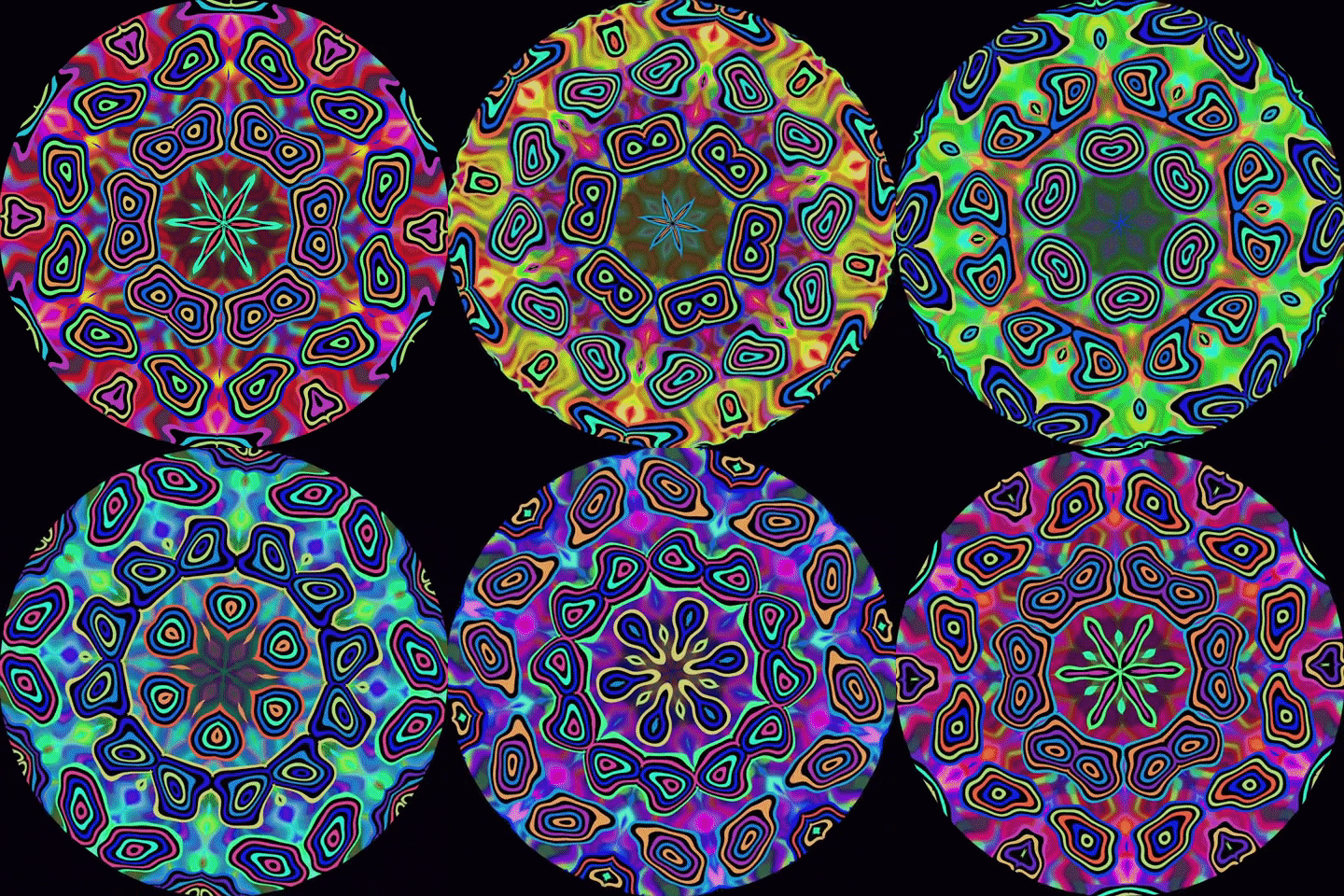
When you quietly observe the layers and textures of the mandala, pay attention to whether you can make connections to progress bars, experience bars, or flashing reward icons in a game. You don't need to banish these images; just whisper to yourself, "I see them, and I see myself watching them."“
Mandala drawing isn't about drawing something; it's about observation—through continuous observation, you practice shifting your focus from immediate rewards back to your breath and body. Let these few minutes be a transition, a "leaving the game system and returning to the self system," slowly repairing the inner rhythm disrupted by frequent stimulation.
○ Suggestions for practicing Roman script
In this lesson, the ancient Roman script serves as an exercise in "moderation and choice." Its steady, clear form reminds us that true power lies not in always winning, but in knowing when to stop.
- Writing words:
Latin:Moderatio(control)
Meaning in Chinese: Know when to stop, know your limits. - Psychological Intention:
As you type "Moderatio" over and over again, you can silently tell yourself: "I can enjoy the game, but I won't give up all my time and energy." Let each letter become a decision—not being pushed to continue to the next game, but deciding for yourself when to pause and when to leave. - Writing method:
Using a thicker ballpoint pen or Roman numeral pen, slowly trace the height and width of the letters on lined paper, keeping the strokes even and deliberately slowing down. Pay attention to leaving even spacing between the letters, just as you would reserve space for rest, eating, sleeping, and real-life relationships. - Emotional transformation:
When you experience emotional ups and downs due to winning or losing, or feel empty after a game, you can stop and write "Moderatio" three to five times, and write down next to it: "What time did I actively press the end button today?" Let writing become a small affirmation of self-control, rather than a new source of self-blame.
○ The reward mechanisms and psychological traps of gaming addiction: Guidance and suggestions for art therapy
This page uses illustrations to organize the game.Reward Cycles and Psychological TrapsFrom tasks, achievements, and drops to event time limits, how do these processes gradually encroach on your sleep, study, and social connections? Drawing these processes helps you see clearly: am I playing the game, or is the game "playing me"? This drawing is for self-awareness and communication purposes only and does not replace medical, legal, or emergency safety intervention.
I. Reward Cycle Chart: From login to being unable to log off
- Draw a circle of arrows on a piece of paper and write them in sequence: "Log in to claim rewards" → "Complete daily tasks" → "Want to complete events/climb the rankings" → "Time exceeds the original plan" → "Real-world tasks are squeezed out or delayed" → "Increased guilt/escapism" → "Continue to numb yourself with games".
- Write down your most common feeling next to each step, such as "excitement", "unwillingness", "anxiety", "emptiness", or "guilt", and circle the step you most want to change with a color.
- Finally, draw two or three "exits" outside the loop and write down the breakpoints you are willing to try, such as "finish your homework before going online", "set an alarm before playing", and "only participate in one activity".
II. Character Stats vs. True Self-Worth
- Draw two side-by-side images: the left side is the information box for your game character (level, combat power, equipment, skins, etc.), and the right side is your real-world information box (interests, skills, relationships, physical condition, daily achievements).
- Write down the three values you care about most on the left, and write down three small things you have recently accomplished in real life on the right, even if they seem ordinary, such as "getting up on time", "finishing a class", or "having a meal with your family".
- Draw a few connecting lines between the two columns and think: "If I could shift some of my energy from improving combat power to improving my quality of life, which item would I most like to light up right now?" Write a sentence at the bottom of the screen, such as: "Characters can level up, and I in real life also deserve to level up slowly."“
Note: Game design inherently leverages the human need for achievement, belonging, and stimulation. Instead of blaming yourself for being "uncompetent," first understand how this system affects you, and then gradually regain control over your time, body, and relationships. If you experience severe depression, suicidal thoughts, or safety risks, please seek professional help or emergency resources immediately.
Please log in before submitting your drawings and feelings.
○ 1587. Reward Mechanisms and Psychological Traps in Gaming Addiction: Log Guidance Suggestions
① Time Review: Record the total time you actually played games today (or yesterday), as well as how long you originally planned to play. Just keep an honest record and don't blame yourself.
② Critical Moments: Write down two or three moments when it was hardest for you to say "stop" (such as when you were about to level up, when an event was about to end, or when your teammates asked you to play one more game), and describe your feelings and the lines that came to mind at that time.
③ Reward substitution: Try to write down three ways that can give you a similar feeling in real life, such as getting a sense of accomplishment or relaxation through exercise, learning a new skill, or completing a small task.
④ Mini-experiment: Design a specific and feasible small experiment for tomorrow, such as "quitting after completing a level" or "not playing games for an hour before bedtime," and review it in your next journal entry: what difficulties and surprises did this experiment bring?
Please log in to use.
When you begin to understand how games "design" your emotions and time, you are also learning to redesign the rhythm of your life. May you enjoy the fun of games while also safeguarding the territory of your real life and inner growth.
 EN
EN  ZH
ZH  ES
ES  FR
FR  JA
JA