

Lesson 159: Long-term maintenance and relapse management
Duration:70 minutes
Topic Introduction:
Both panic disorder and anxiety disorder are characterized by "fluctuation".
Even if recovery is good, minor relapses may occasionally occur due to stress, fatigue, or life changes.
This course will help you establish a long-term maintenance mechanism and learn how to deal with "occasional relapses" without being dragged back into a cycle of fear.
○ Key points for long-term maintenance and relapse management
- Relapse is not failure:It is a natural fluctuation of the body and mind system, and does not mean that you have returned to the starting point.
- Stability comes from rhythm:Regular sleep, exercise, diet, and breathing exercises can maintain long-term balance.
- The speed of response to relapse is more important than the intensity:The faster you stabilize yourself, the less likely you are to be drawn into a cycle of panic.
Lesson 159: Long-Term Maintenance and Relapse Management, Click to listen to the audio recording, watch the content.
When panic disorder and chronic anxiety reach a relatively stable stage, many people mistakenly believe that the problem is over once the symptoms disappear. However, from a clinical and long-term recovery perspective, the truly crucial stage is precisely "after improvement." Long-term maintenance is not about continuing to focus on the symptoms, but about learning how to cope with fluctuations in life. Relapse is not equivalent to failure; it's more like a warning signal from the nervous system under accumulated stress. If you interpret every discomfort as "going back to square one," the brain will restart the fear cycle; but if you can see it as a process that can be understood and managed, the relapse itself loses its destructive power. The core of long-term maintenance lies in establishing a stable life framework, including predictable routines, limited but continuous responsibilities, and clear psychological boundaries. When a life rhythm exists, the nervous system gradually forms a sense of security, rather than relying on constant vigilance. You also need to re-understand the difference between "vigilance" and "awareness." Vigilance is a tense scanning state, while awareness is gently perceiving changes without rushing to judgment. Coping with relapse is not about immediately eliminating discomfort, but about allowing the body to complete a self-regulation process. The more eager you are to suppress it, the more easily the symptoms are amplified. At this stage, the important thing is not to increase practice, but to reduce excessive intervention and give the system room. At the same time, you need to set a realistic long-term goal for yourself: not to never be anxious again, but to still be able to live your life when anxiety arises. People who have experienced panic disorder often have strong self-observation abilities; the key is to transform this ability from a "defense tool" into a "care ability." When you learn to stop when you're tired and adjust your pace when stress increases, instead of forcing yourself to stay normal, relapse will transform from a threat into a regulatory signal. Long-term maintenance is not about rigidly guarding achievements, but about coexisting with your body and life in a more tolerant and stable way.
▲ AI Interaction: What are you most worried about when it recurs?
Do you ever think, "Oh no, it's happening again" the first time you experience a physiological reaction?
This anticipatory fear is more distressing than the symptoms themselves.
Tell me what you fear most about a relapse, and we'll work together to design your stabilization plan.
You're not starting over; you're enhancing your abilities.
During a relapse, the body re-enters a state of alertness, and gentle, rhythmic music can help the sympathetic nervous system slow down.
It is recommended to listen for 3–5 minutes every 3 hours during the first 24 hours of a relapse.
○ Eastern Healing Tea - Genmaicha (Brown Rice Tea)
Recommended reasons:The combination of caramel and fresh aromas has a dual effect of "soothing and calming," making it suitable for maintenance and early relapse stages.
practice:Steep in 90℃ hot water for 1–2 minutes; the aroma can alleviate shortness of breath.
○ Stable Dietary Therapy - Mint Tofu Clear Soup (ID159)
During the long-term maintenance and relapse management phase, the body needs a refreshing and less burdensome way to nourish itself. Tofu provides stable and gentle foundational support, while mint helps relieve the inner suffocation caused by accumulated stress. This clear soup is suitable for drinking when mental burden increases or mild discomfort occurs, reminding the body to return to a refreshed and balanced state.
Pressure buffer
Clear and stable
Open Recipe
◉ Japanese Dietary Therapy: Mint Tofu Soup (ID 159)
This is an unconventional "wake-up soup" that delivers an instant sense of clarity. While mint is typically used in cold drinks, adding fresh mint to warm tofu broth creates a unique herbal aroma. The heat of the soup accelerates the volatilization of menthol, and as you sip the soup, the cool steam rushes into your nasal cavity, quickly dispelling dizziness and facial flushing caused by anxiety, instantly "rebooting" your chaotic mind.
Refreshing Reduce heat sensation Stabilize emotions
I. Recommended Dietary Therapy and Reasons
Recommended dishes:Mint Tofu Soup (ID 37)
Recommended reasons:During anxiety attacks, people often experience hot flashes (a sensation of blood rushing to the head). Peppermint is a natural coolant; its aroma stimulates the trigeminal nerve, transmitting a "cooling" signal and tricking the brain into lowering its temperature perception. Tofu is cool in nature and sweet in taste, clearing heat, moisturizing dryness, and soothing the stomach. This soup, through the sensory contrast of "hot soup" and "coolness," forcibly interrupts the brain's rumination circuits, pulling attention back to the present moment.
2. Recipe and Method
Recipe (1 serving):
- 100g of silken tofu (silk tofu)
- 300ml kelp broth (or water)
- A small handful of fresh mint leaves (about 6–8 leaves)
- a pinch of salt
- A few drops of light soy sauce (for color only)
- 1/2 teaspoon ginger juice (optional, to balance the cooling properties)
practice:
- Prepare the soup base:Add kombu broth to a pot and bring to a boil.
- Boiled tofu:Cut the soft tofu into small cubes and gently place them into the soup. Simmer over low heat for 2–3 minutes to allow the tofu to heat through.
- Seasoning:Add a pinch of salt and a few drops of soy sauce. The soup should remain clear and transparent.
- Processing mint (key):Wash the mint leaves and pat them with your palm to release their aroma.
- combination:Turn off the heat. Pour the hot soup and tofu into a bowl.
- Incense:Sprinkle mint leaves on the soup at the last second before eating.Never put mint in the pot to boil.Otherwise, it will turn black and bitter and lose its cooling sensation. Simply steam the mint with the heat of the soup.
3. Small rituals for body and mind
The moment the mint leaves touch the hot soup, close your eyes and take a deep breath of the cool aroma rising with the steam.
Feel how this "cool steam" penetrates your sinuses and clears the fog from your brain.
Take a sip of the soup and experience the wonderful balance of the warm liquid flowing into your stomach while leaving a cool aftertaste in your mouth.
4. Dietary Therapy Experience Record
- Record whether your tense temples feel relaxed when you smell this soup.
- Observe whether the symptoms of facial flushing or dizziness are relieved after consumption.
- Pay attention to whether this unique taste sensation allows you to briefly escape from a bad mood.
V. Instructional Videos (approximately 3–5 minutes)
◉ Video Title:Mint and Tofu Clear Soup: A refreshing soup to cool down your brain.
6. Precautions
- Mint varieties:It is recommended to use "Spearmint" or "Peppermint" for a stronger aroma.
- People with sensitive stomachs:While peppermint can soothe gastrointestinal spasms, it may relax the esophageal sphincter and worsen symptoms in cases of severe gastroesophageal reflux (heartburn), so please consume it with caution.
- Alternative solution:If you don't like adding mint to soup, you can use perilla leaves or cilantro instead. Although the effects are different, they can also have the effect of refreshing the mind.
hint:This dietary therapy utilizes olfactory stimulation, making it ideal for those experiencing afternoon drowsiness, pre-exam tension, or headaches due to anxiety.
○ Chinese Calligraphy: Suggestions for Practicing Running Script - Lesson 159
Written words:
A righteous heart brings blessings.
In-depth analysis:
“"A righteous heart brings good fortune" is not a prayer for external luck, but rather an emphasis on the stability of one's inner orientation.
If you don't let fear control you, life will naturally return to normal.
The continuity and naturalness of running script symbolize the continuity and flexibility maintained over a long period.
Writing Skills (Advanced Version):
- The strokes are steady:Calm and composed, symbolizing a clear stance.
- Smooth flow of Qi:Maintain continuity and avoid breaks.
- The structure is upright:It avoids deliberate exaggeration and embodies "positive" principles.
- The ending strokes are restrained:Do not flaunt your talents.
- Continue practicing writing:Reinforce the sense of stability repeatedly.
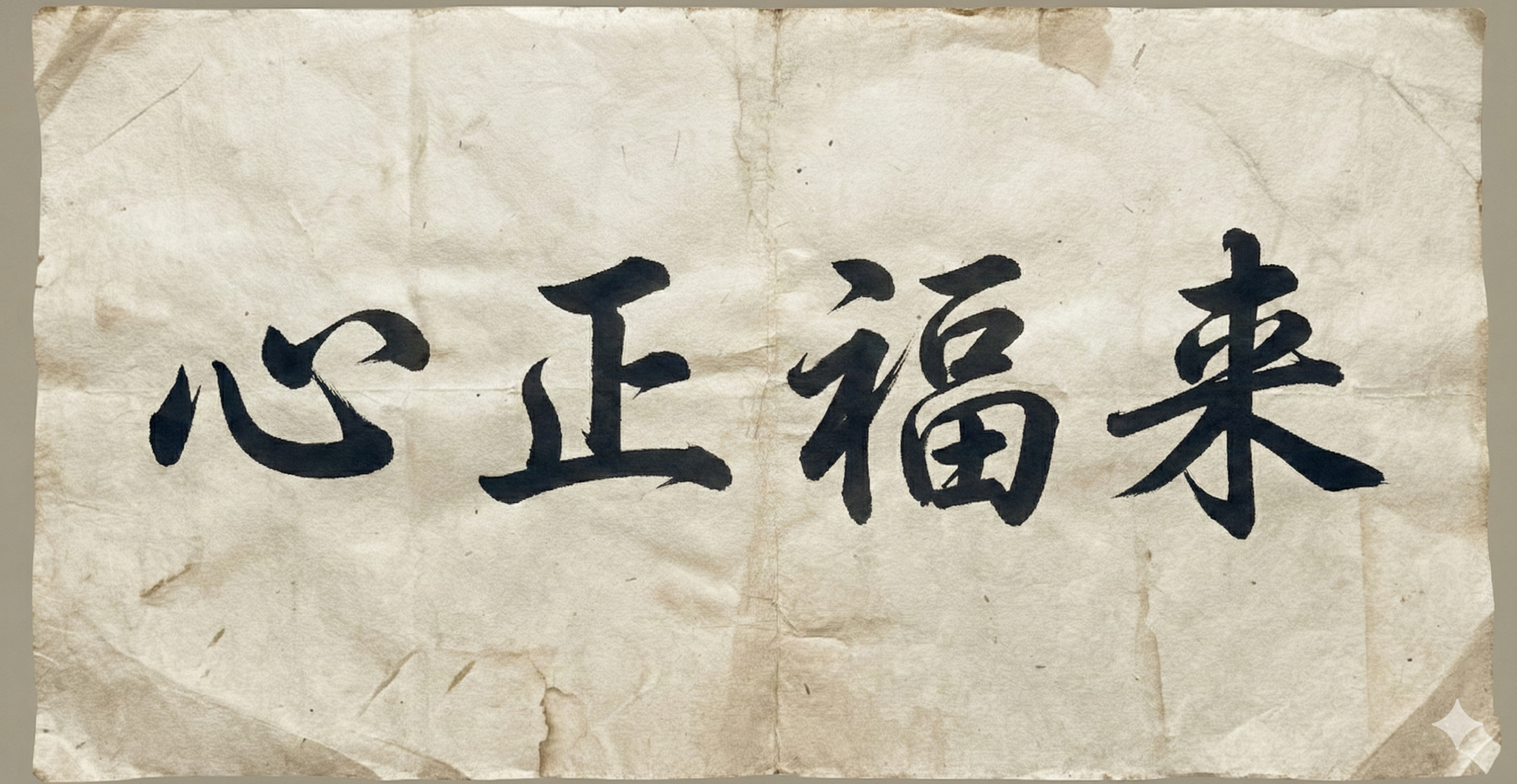
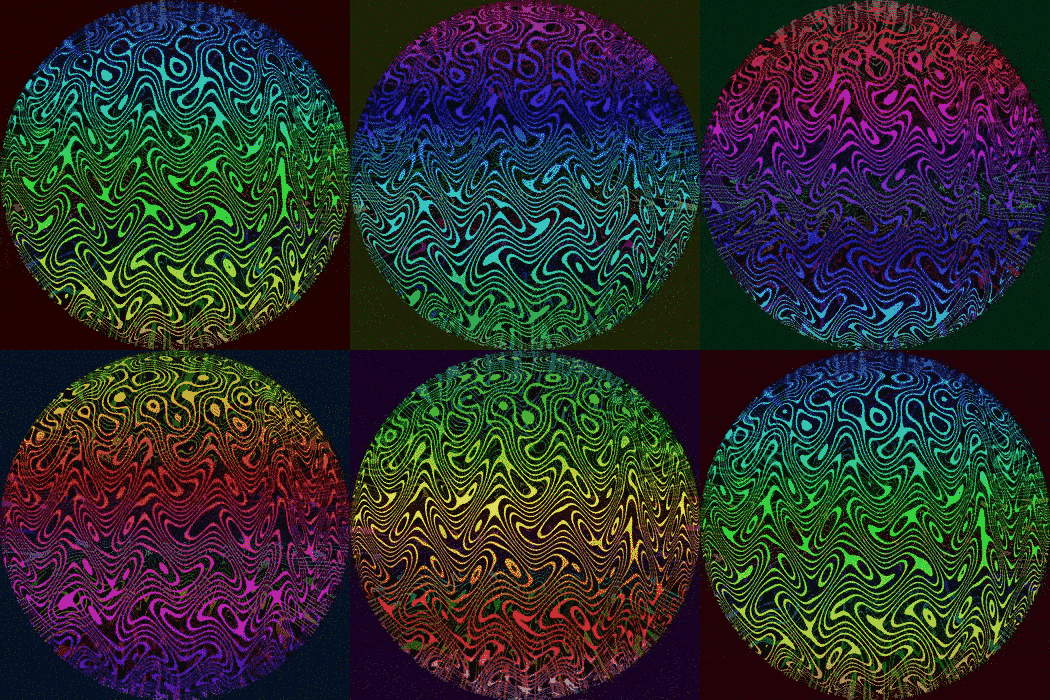
Image Healing: Guided Mandala Viewing - Lesson 159
Please select a mandala with a balanced structure and no prominent center.
Let your gaze wander slowly across the whole, rather than focusing on a single point.
Feel your body relax as your attention naturally wanders and then returns.
A mandala is not about drawing something, but about observing. When you stop focusing on change, stability will naturally emerge.
The theme of this mandala is "Resilience within Stability," symbolizing a psychological posture maintained over the long term.
◉ One gaze is sufficient; no need to repeat.
Lesson 159: Guided Drawing - A Sense of Stability During Relapse
① Draw a stable shape (square or circle) in the center of the paper to symbolize your "core stability".
② Irregular lines are drawn around the perimeter to represent the fluctuations during a relapse.
③ Connecting the core and the outer ring with color symbolizes that even with fluctuations, I can still return to the center.
Please log in before submitting your drawings and feelings.
○ 159. Long-term maintenance · Log-guided recommendations
① What signals today remind me that I need to rest or adjust?
② What are the three physical reactions that occur when a relapse occurs? Are they milder than before?
③ What maintenance exercises did I do today? How did they help me?
④ What is one small step toward stability that I am willing to take tomorrow?
Please log in to use.
A relapse is not a regression, but part of the journey. You know better than ever how to take care of yourself, and that is the most precious strength for long-term sustainability.
 EN
EN  ZH
ZH  ES
ES  FR
FR  JA
JA