

Lesson 1604: The Avoidance Function in the Online World: From Emotional Numbness to a Cycle of Dependence
Duration:70 minutes
Topic Introduction: This lesson focuses on the "avoidance function of the online world," that is, how we gradually slip into the habit of "numbing our emotions" by watching videos, playing games, or aimlessly scrolling through information when we find it difficult to confront loneliness, shame, stress, and emptiness in reality. Initially, the internet is just a temporary distraction tool, allowing the brain to escape from pain for a moment; however, if every instance of discomfort, embarrassment, or frustration is immediately filled with online distraction, real emotions and unresolved problems accumulate, forming a dependent cycle of "escalating emotions—online anesthesia—procrastination in reality—problem worsening—further desire to escape." This lesson will help you identify your commonly used avoidance paths, understand how the brain mistakenly learns "temporary relaxation" as the "only available coping mechanism," and establish new emotional regulation channels through small exercises, allowing the internet to return to its role as a tool, rather than the only outlet.
○ A key link in the cycle from emotional anesthesia to dependence
- Emotional triggers:Feelings of failure, conflict, pressure to evaluate, or emptiness in real life become an invisible switch to go online.
- Immediate anesthesia:Short videos, games, and news feeds quickly capture attention, temporarily silencing the pain.
- Real-world procrastination:As assignments, work, and interpersonal communication were repeatedly postponed, feelings of guilt and helplessness accumulated.
- Dependency cycle:The worse the mood, the more one wants to escape; the more one escapes, the worse reality becomes, creating a closed loop of "the more one needs, the more addicted one becomes."
▲ AI Interaction: What are you running away from, and in which cycle are you trapped?
Please recall your most recent experience of being unable to stop surfing the internet or playing games: What had you just experienced before that? Was it being criticized, arguing, having tasks delayed, or a vague sense of emptiness? Please tell the AI about this situation, your feelings at the time (e.g., shame, anxiety, helplessness), and the "anesthesia" you ultimately chose.
Next, you can ask AI to draw a personalized "dependency loop diagram": from emotional triggers, clicking to enter the network, brief relief, to real-world consequences and subsequent emotions, making the hidden patterns clear.
You can also work with AI to design "breakpoints," such as taking three deep breaths before opening an app, or writing a sentence to record your true feelings at that moment.
The goal of this lesson is not to completely distance you from the internet, but to help you gradually distinguish between when you are using the internet and when you are being led by it.
Click the button below to share your most typical experience of "emotion → online anesthesia" with AI, and let us find the small parts that can be gently interrupted and adjusted.
○ Music therapy after emotional anesthesia: Let the body return from "stiffness" to "feeling".“
When you frequently use the internet to numb your emotions, your body is often in a state of tension and numbness: you feel pain in your shoulders and neck but are unaware of it, and you feel a pressure in your chest but just want to keep scrolling. This section suggests choosing slow-paced, gradually building instrumental music to give you a few minutes to bring your attention back to your body.
One to two minutes before the music starts, do just one thing: observe if any part of your body feels particularly tight, such as your forehead, jawline, stomach, or shoulders; don't rush to relax, just honestly pay attention. The realization that "I feel so uncomfortable" is itself the first step out of the anesthesia cycle.
As the music begins, imagine yourself taking a small step back from the screen, leaving yourself a tiny bit of space so your brain knows that there are other options besides continuing to scroll.
○ Western Herbal Healing Tea: Chamomile & Lemon Balm Balance Tea
Recommended reasons:Chamomile helps soothe tense nerves and stomach discomfort, while lemon balm is often used to relieve anxiety and mild mood swings. When you're caught in a cycle of "feeling bad—escaping online—feeling even worse," this formula helps your body gradually settle from an overactive state, making room for subsequent real-world coping.
Usage suggestions:Add 1.5g of chamomile and 1.5g of lemon balm to about 250ml of hot water and steep for 5-7 minutes. It is recommended to drink this when you are most likely to "grab your phone when you feel upset," and combine it with a short screen-free exercise (such as 3 minutes of meditation or stretching).
Awareness Tips:While drinking, gently ask yourself: "If I weren't constantly scrolling through social media, what would I truly need? Rest, to be understood, or simply to be seen?"“
Ancient Roman Natural Dietary Therapy: Olive Oil Chickpea Roasted Vegetable Platter
Chickpeas are tossed with carrots, bell peppers, onions, and other vegetables, then roasted after being seasoned with olive oil, herbs, and a pinch of sea salt. This embodies the ancient Roman principles of natural diet therapy: "simple, filling, and non-stimulating." The stable plant protein and complex carbohydrates help reduce mood swings and impulsive online behavior caused by blood sugar fluctuations.
Healing Recipes
/home2/lzxwhemy/public_html/arttao_org/wp-content/uploads/cookbook/roman-natural-09(Alternatively, you could try relaxed="1" or use an existing filename.)○ Mandala Viewing Healing: Pause for thirty seconds before “escaping”.
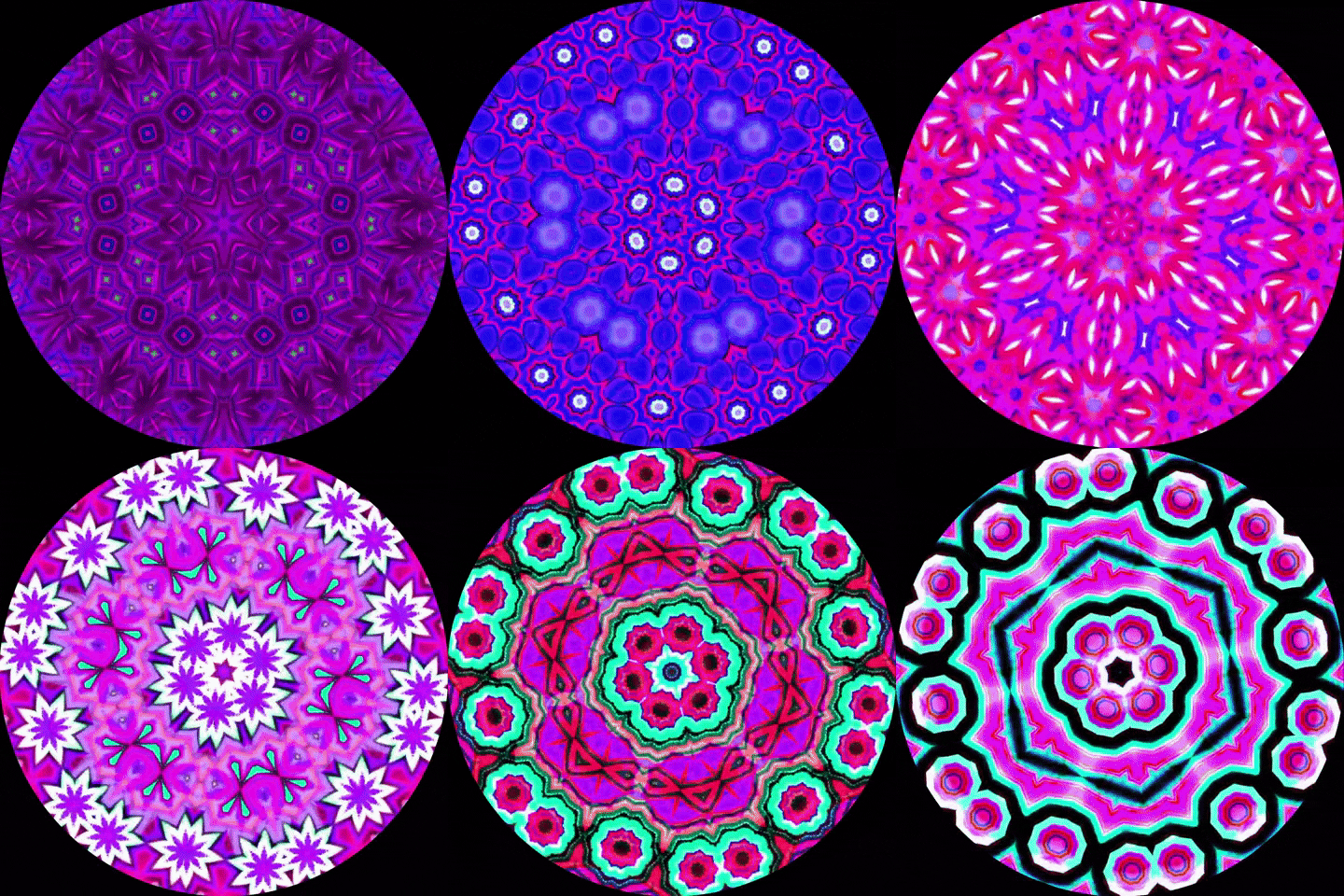
This lesson continues to emphasize that mandalas are not about drawing something, but about viewing. The "avoidance function" in internet addiction often occurs before you even have time to process the emotions you feel, after you've already opened the screen. The mandala viewing exercise invites you to pause for thirty seconds before trying to escape.
Please select a mandala image. In the few minutes before you are ready to “start brushing or begin”, set your screen to a static image or print it out and do only one thing: slowly move your gaze along the lines of the mandala, from the center to the outer circle and then back to the center.
In this process, there's no need to judge whether the image is aesthetically pleasing; simply pay attention to: what are you feeling in your chest, throat, and abdomen right now? Before the habit of avoidance kicks in, can you tell yourself, "I see that I'm feeling unwell right now"?“
○ Suggestions for practicing medieval Gothic script
In this lesson, Gothic calligraphy embodies the intention of "facing rather than escaping." The strong, vertical strokes symbolize your willingness to gradually return to the ground of reality, rather than completely hiding yourself in a virtual world.
- Writing words:
Latin:Confrontare Leniter
Meaning in Chinese: To face things gently. - Psychological Intention:
It's not about forcing yourself to "solve everything immediately," but about allowing yourself to stay in reality a little longer. Every time I write "Confrontare Leniter," I'm practicing: I can choose to face today's small matter gently yet firmly, instead of just continuing to escape to the screen. - Writing method:
Using a square-tipped pen or a thick-tipped ballpoint pen, write slowly on lined paper. Pay attention to the stability of each vertical stroke and the spacing between letters, allowing the rhythm of the writing to become a conscious, natural part of your body. - Emotional transformation:
When you really want to numb yourself by going online, you can first write "Confrontare Leniter" three times, and then write down a small, realistic task that you are willing to face today, such as "reply to a message", "tidy up your desktop", or "complete five minutes of study".

○ Visualization of Internet Avoidance Pathways: Guiding Suggestions for Art Therapy
This page uses drawings to depict your journey from "elevated emotions" to "online numbing" and then to "reality becoming more difficult," transforming the abstract cycle into visible images. The drawings are solely for self-awareness and do not constitute any artistic judgment.
I. Four-Step Avoidance Cycle Diagram
- Draw a clockwise circle and divide it into four sections: A. Emotional triggers, B. Internet anesthesia, C. Real-world procrastination, and D. Guilt and helplessness.
- Write down your most frequent phrase or feeling in each block, such as "It's embarrassing to be scolded", "I'll talk to you later", "I've procrastinated again tonight", "I'm hopeless".
- Draw a small branch arrow between A and B, and write down the alternative actions you would like to insert, such as "take a sip of water first," "take three deep breaths first," or "write a sentence about your feelings first."
II. "What do I really need?" (Central image)
- Draw a small circle in the center of the paper and write "What I really need".
- Draw several lines outward from the center, and write down at the ends what you often indirectly seek online, such as "being understood," "being recognized," "relaxing," and "temporarily forgetting the pressure."
- Next to each line, draw a small icon or write a feasible alternative in reality, such as "send a voice message to a reliable friend," "go for a ten-minute walk," or "do a stretch," to remind yourself that you have more than one path to these needs.
Tip: You don't need to stop all "escapes" immediately. Instead, start by understanding this path and gradually give yourself more options between escaping and staying.
Please log in before submitting your drawings and feelings.
○ 1604. The Avoidance Function in the Online World: From Emotional Numbness to a Cycle of Dependence – Journaling Guidance Suggestions
① Write down your most recent experience where you clearly "escaped reality through the internet": What happened? How did you feel at the time?
② Review this experience and mark the four stages: “emotional triggering – online anesthesia – real-world consequences – subsequent emotions”. Describe each stage in one or two sentences.
③ Try designing a "gentle break point" for this cycle, such as "write down a sentence first, then decide whether to continue scrolling", and write down your concerns and expectations about this break point.
④ At the end of your journal, write a statement of affirmation for yourself, such as: "I have begun to see my own avoidance patterns, and that in itself is a kind of courage."“
Please log in to use.
When you're willing to admit that "I'm running away," the cycle of dependency has already loosened a little. May you slowly regain the strength to face reality and take care of yourself through gentle pauses.
 EN
EN  ZH
ZH  ES
ES  FR
FR  JA
JA