

Lesson 161: Understanding Spatial Phobia
Duration:70 minutes
Topic Introduction:Spasophobia (often associated with agoraphobia) is not a fear of space itself, but rather an heightened aversion to the feeling of being unable to leave or get help. This lesson will help you identify typical manifestations, understand the underlying mechanisms, and build a basic coping framework.
○ Common manifestations of spatial fear
- Avoidance of specific places:Subways, shopping malls, elevators, theaters, bridges, highways, etc.
- Dependence on companionship:They have difficulty going out alone and are strongly dependent on specific companions.
- Panic Attack Connections:After experiencing severe discomfort in a certain place, one continues to avoid the same or similar scenarios.
Listen to healing courses:
Fear of space is a hypervigilant response of the nervous system, not a sign of weak willpower. When the thought of "nowhere to escape" arises, take a deep breath and tell yourself, "I am safe at this moment." Anxiety is a temporary physiological fluctuation that will subside with reassurance. Treat it gently and create a "feasible step-by-step map" for yourself.
Lesson 161: Understanding Spasophobia (Click to listen to the reading, view the content)
Space phobia is not simply "being afraid of a place"; its deeper experience is a loss of trust in one's own state within a specific space. Many people experience sudden shortness of breath, dizziness, and rapid heartbeat in elevators, subways, shopping malls, long corridors, or open spaces. This is not followed by a rational assessment of the space itself, but rather a strong sense of loss of control. The core of space phobia is not how dangerous the space is, but rather the brain's erroneous prediction in these environments that "escape is impossible" or "help is unavailable." When this prediction is activated, the nervous system quickly enters a high-alert mode, the body's reaction is amplified, and ultimately, an avoidance of the space develops. Over time, the radius of one's life shrinks, and you may begin to plan escape routes in advance, repeatedly check exits, or even completely avoid certain places. It's important to understand that this fear does not mean you are truly weak; rather, it means your body has, in a past experience, associated "space" with "the experience of loss of control." Space phobia often overlaps with panic disorder and agoraphobia, but it is not the same as simple cowardice or insufficient psychological resilience. What truly perpetuates fear is how you interpret your body's reactions. When you interpret a racing heart as escalating danger, and dizziness as an impending fainting spell, your brain reinforces this circuitry. The first step in understanding spatial phobia is shifting your focus from "Can I stay here?" to "What is my body experiencing?" The space itself doesn't harm you; what truly needs to be re-understood is your body's alarm mechanisms. By gradually building up your tolerance for your body's reactions, you can stay in spaces instead of rushing to escape. Overcoming spatial phobia isn't about forcing yourself to be brave, but about learning to maintain connection even in discomfort, reassuring your body that even in these spaces, you are still safe.
AI Interaction:
Click the interactive card below to answer three questions:
“What places am I avoiding?”
“What is your biggest fear regarding the consequences?”
“"What can I do if I have to stay for 1-2 minutes?"”
The system will then generate a "preliminary understanding map" and "feasible steps" based on this.
○ Understanding Agoraphobia· Music Guide
When the outside world seems too vast, music can help you create an inner sense of peace. Choose pieces with a steady rhythm and simple melody, and coordinate with slow breathing.
When the notes sound, the soul begins to whisper in response.
○ Herbal Tea· Dianhong Tea
Recommended drinks:Dianhong Tea
Recommended reasons:It gently invigorates and stabilizes nerve tension, making it suitable as a pre-workout drink before outdoor or outdoor practice.
practice:3g of Yunnan black tea; steep in 95℃ hot water for 3 minutes; can be steeped with a small amount of rose.
○ Stable Dietary Therapy: Spinach and Blueberry Balancing Salad (ID161)
When faced with space anxiety and external stimuli, the body needs a refreshing and nourishing experience without adding burden. Spinach provides stable basic energy, while the natural sweetness of blueberries helps relieve tension. This salad is suitable for consumption before and after entering public spaces or engaging in outdoor activities, helping the body maintain lightness and balance.
refreshing and stable
Sensory balance
Open Recipe
◉ Mediterranean-DASH Fusion Diet Therapy: Spinach Blueberry Salad
This salad combines the plant-based fats (olive oil, nuts) of the Mediterranean diet with the low-sodium, anti-inflammatory principles of the DASH diet. Fresh spinach, blueberries, olive oil, and nuts create a high-antioxidant combination that helps protect the cardiovascular system, boost brain function, and reduce inflammation and oxidative stress. It's suitable as an appetizer for lunch or dinner, and also as a nutritional supplement on intermittent fasting days.
Antioxidant Cardiovascular protection Brain vitality enhancement MIND Diet
I. Recommended Salads and Reasons
Recommended dishes:Spinach and Blueberry Salad (ID MIND-01)
Recommended reasons:Blueberries are rich in anthocyanins, which, when combined with the folic acid and vitamin K from spinach, can work synergistically to support brain anti-inflammation and blood vessel elasticity; olive oil and nuts provide healthy fats, making the overall combination more suitable for long-term brain health maintenance.
2. Recipe and Method
Recipe (Serves 2):
- 120g fresh spinach leaves (remove hard stems)
- 80g blueberries (fresh is best)
- 20 g of walnuts or almonds (lightly roasted)
- 1.5 tablespoons of olive oil
- 1 tablespoon lemon juice
- 1 teaspoon honey (optional)
- Black pepper to taste
- Sea salt should be added sparingly or not at all (DASH principle)
practice:
- Wash and drain the spinach, then spread it out loosely in a large bowl.
- Rinse the blueberries, pat them dry, and sprinkle them evenly over the spinach.
- Roast the nuts for 3–5 minutes, then let them cool and coarsely chop them for later use.
- In a small bowl, combine olive oil, lemon juice, honey, and black pepper, stirring to create a light dressing.
- Before serving, drizzle over the spinach and blueberries and mix gently.
3. Small rituals for body and mind
Before enjoying, take a deep breath for 4 seconds and exhale slowly for 6 seconds, relaxing your head and neck.
Savor the sweet and sour taste of blueberries and the aroma of nuts, experiencing the layers of flavor and the sensations on your body.
It can be used as a light boost during the afternoon or work breaks to maintain stable energy and clarity.
4. Dietary Therapy Experience Record
- Feelings (light/refreshing/energized).
- Mood (pleasure/calm/increased focus).
- Record today's intake of fruits and vegetables and salt consumption.
V. Instructional Videos (approximately 3–5 minutes)
◉ Video Title:Spinach and Blueberry Salad: Antioxidants and Brain Boost
6. Precautions
- Those with nut allergies can substitute pumpkin seeds or sunflower seeds.
- If you need to control your blood sugar, you can omit the honey and increase the proportion of lemon juice.
- People with iron-deficiency anemia should wait one hour after eating spinach before drinking tea to avoid affecting absorption.
hint:Dietary therapy is one of the daily ways to maintain health. If you have chronic diseases or need medication, please follow your doctor's advice and combine it with a dietary plan.
○ Suggestions for Modern Calligraphy Writing Practice
The topic of this lesson:Regaining a sense of trust in the body within a space.
In-depth analysis:
The essence of space phobia is that the body loses the feeling of "I can stay" in certain environments.
Modern calligraphy emphasizes fluidity, flexibility, and continuity, making it ideal for reconstructing this sense of security.
When you allow the strokes to extend freely, yet still return to the baseline, the brain gradually learns: the environment is changing, but I still have a fulcrum.
The writing process itself is a safety exercise completed in a state of "not being fully controllable".
Writing Techniques (Space-Adaptive Version):
- Extended Stroke:Intentionally elongate horizontal or diagonal lines to simulate the feeling of entering a spacious space, and maintain steady breathing while extending them.
- Baseline Return:Regardless of how the shape of the character changes, the last stroke always falls steadily back to the baseline, reinforcing the body's memory of "I can come back".
- Rhythmic Pause:Pause briefly between words, feel the contact between your hand and the paper, and train yourself to stay in the space without escaping.
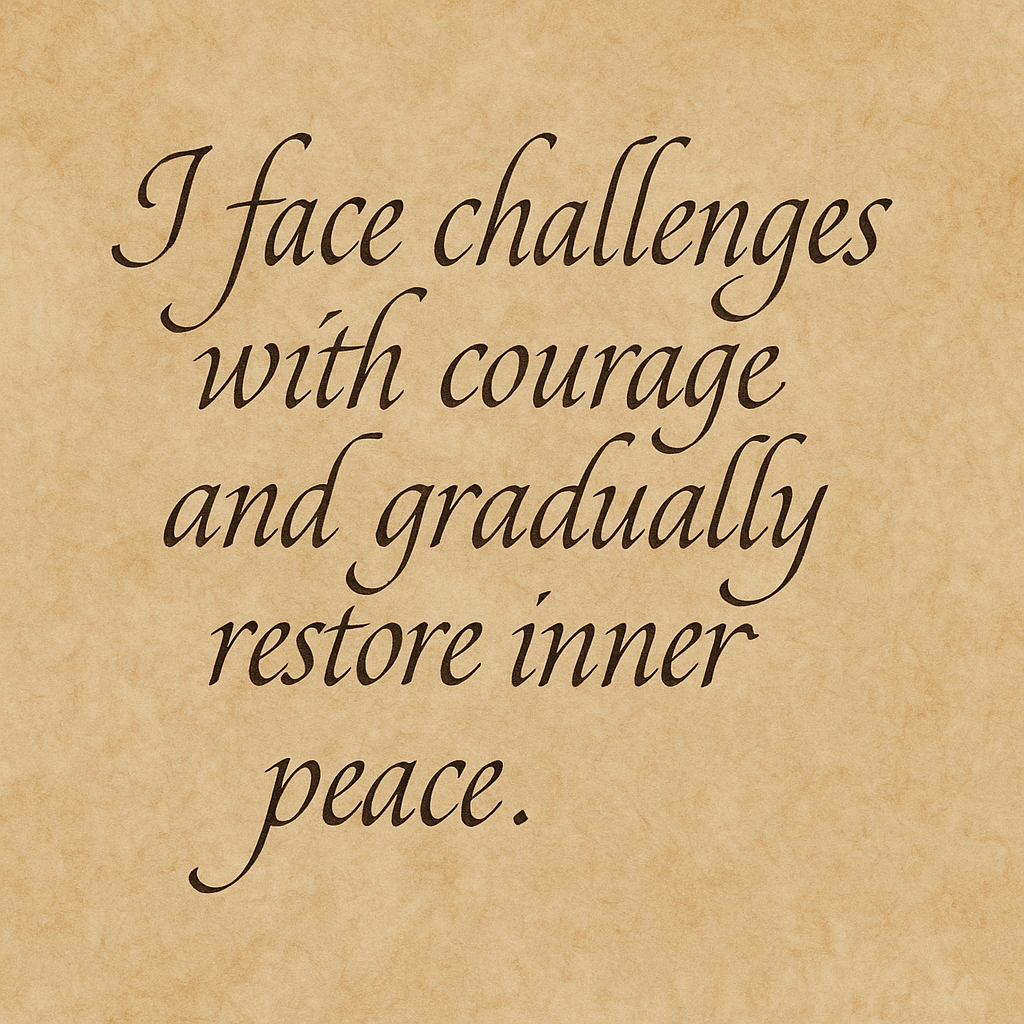
Image Healing: Guided Mandala Viewing - Lesson 161
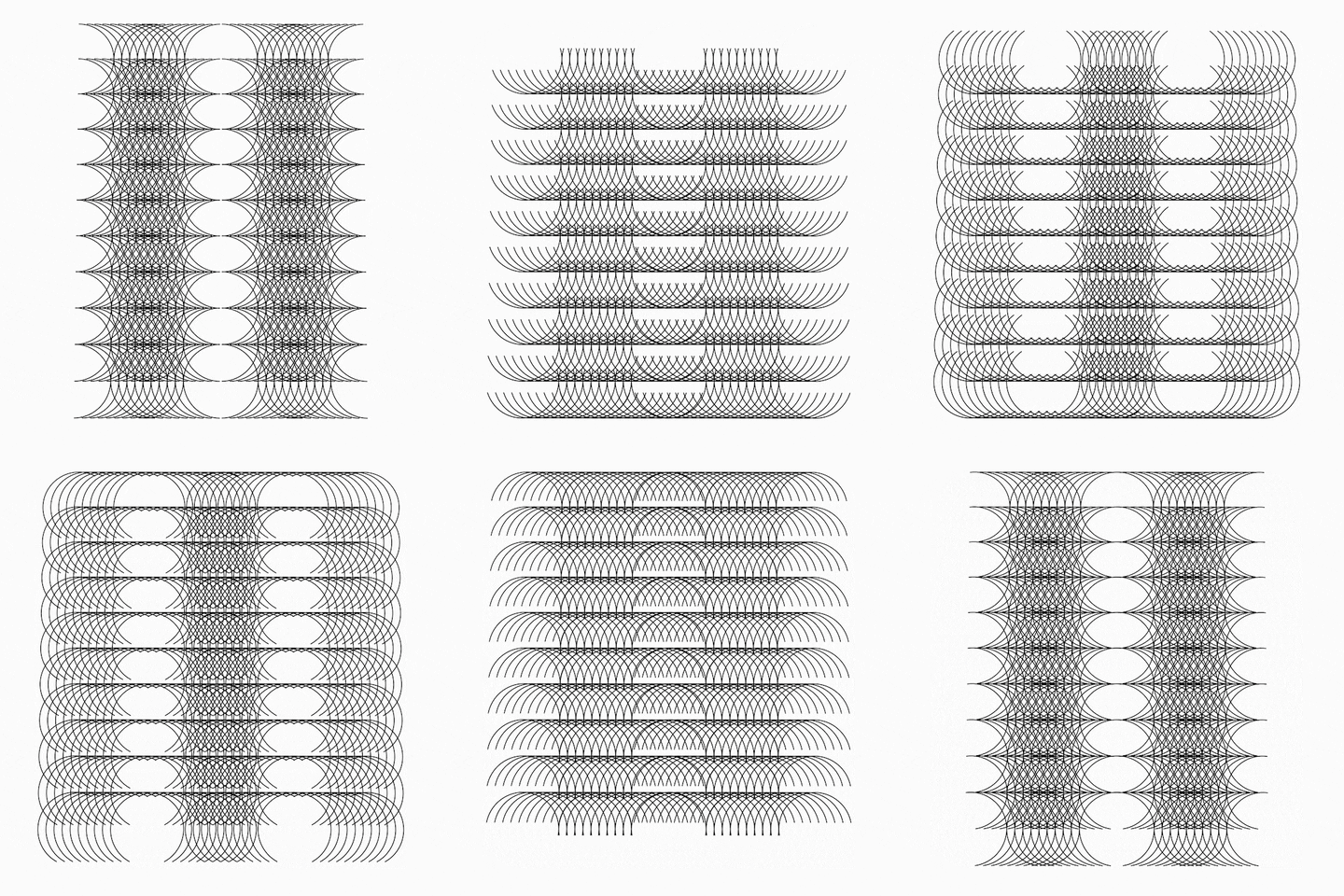
Please select a mandala with an open structure and ample white space.
First, take a look at the whole space to get a feel for its unfolding.
Then slowly shift your gaze back to the center, experiencing a return to focus.
A mandala is not about drawing something, but about observing it. When you can both unfold and retract it in a space, fear will gradually dissipate.
The theme of this mandala is "a sense of safe space," symbolizing the rebuilding of trust in the environment.
◉ One gaze is sufficient; no need to repeat.
Lesson 161: Understanding Spatial Phobia (Guided Drawing)
Purpose:Understanding that the source of fear is not the space itself, but the false alarm of "being unable to leave"; establishing the minimum feasible steps for subsequent exposure exercises.
step:Draw a "spatial map" and mark safe and unsafe areas with warm and cool colors; write down your small goals for the week next to the least accessible area (such as lingering at the door for 2 minutes).
Upload your "spatial map" or practice screenshots:
Please log in before submitting your drawings and feelings.
○ 25. Understanding Spasophobia - Journaling Guidance
- After three slow breaths, record the scene you most want to avoid today and your first automatic thought.
- Body signal scale: heart rate, chest tightness, dizziness, sweating, stomach discomfort, each scored from 0 to 10; Note: These are "over-alarms" and do not equate to actual danger.
- A list of safe behaviors (staying close to exits, frequent check-ins, carrying personal protective items, etc.) should be compiled, and their short-term effects and long-term impacts assessed.
- Write down a small, replicable success (such as staying an extra 30 seconds or completing a short ride).
- Restate positively: for example, "I can experience this moment with unease." Record the change in tension scores before and after the exercise.
- Develop 1–2 minute micro-actions: take a short break or walk slowly in a safer area, and write down the completion criteria and self-reward.
Please log in to use.
Where fear arises, that's where you can redraw your map. Step by step, you can turn it back into a habitable place.
 EN
EN  ZH
ZH  ES
ES  FR
FR  JA
JA