

Lesson 164: Phase One: Exposure and Execution
Duration:70 minutes
Topic Introduction:Translating your exposure plan from paper to practice is a crucial step. This course will help you conduct the first level of exposure exercises, learning to record your emotional reactions, set time limits, and use breathing and cognitive strategies to buffer discomfort, establishing the experience of "I can approach without running away."
○ Key points exposed in the first phase
- Set exposure time:Keep each session to no more than 20 minutes, and ensure there is an exit mechanism.
- Anxiety Record:The intensity of anxiety was recorded on a 1-10 scale before, during, and after exposure.
- Subsequent fixes:Follow the practice with music or imagery therapy to help restore rhythm.
Lesson 164: Phase One: Exposure and Implementation (Click to listen to the reading, view the content)
In the recovery process from panic disorder and chronic anxiety, the core task of the first stage of exposure is not to make symptoms disappear, but to allow the body to relearn how to remain safe in low-intensity discomfort. Many people are eager to see results when they start exposure, as if the method is ineffective if symptoms persist. However, the goal of the first stage is simply to break the pattern of complete avoidance and establish the most basic ability to remain still. The situations chosen in this stage should be the mildest but real discomfort, such as short periods of solitude, mild physical sensations, or limited time spent outdoors. The focus is not on the challenge but on the entry. The most important thing during the process is to maintain a stable process rather than frequently adjusting it based on how you feel each day. You need to know clearly before the exposure when to start, how to end, and the range of acceptable reactions. Once you enter the situation, you should no longer repeatedly assess whether it is safe. In the early stages, the body often automatically amplifies signals, such as a faster heartbeat, changes in breathing, and increased tension. These do not necessarily indicate danger but are inertial reactions of the old alarm system. The practice in the first stage requires you not to suppress these reactions or rush to alleviate them, but to accompany them as they rise and fall naturally from the perspective of an observer. As you complete this low-intensity stay time and time again, the brain will gradually learn a new conclusion: these feelings themselves will not escalate into a disaster. It is particularly important to note that the first stage does not pursue long stays but rather repeatability. Short, frequent successes are more valuable than occasional, forced persistence. If a practice session is interrupted, it doesn't signify failure; it simply provides information about your current capacity. Instead of self-blame, you should fine-tune the intensity based on experience. As the number of repetitions increases, you'll find that the anticipation of entering the situation decreases, while recovery after leaving gradually accelerates. This is a sign that the first stage of exposure is working.
▲ AI Interaction: Have you completed the first level exposure exercise?
It's natural to be nervous when you first step out.
Don't demand perfection from yourself, just try to complete a small attempt.
Even if you only stay for a short time, you have taken a brave step.
Gently tell yourself: "It wasn't easy, but I did it."
Click the button below to report your execution status to AI and get support suggestions for the next step.
The first stage of exposure is often accompanied by tension and hesitation.
Put on your headphones and let the familiar melodies become the background of your steps.
With every step, you gain strength from the beat and are no longer fighting alone.
Remember: music will always remind you that you are moving forward bravely.
○ Herbal Tea· Dianhong Tea
Recommended drinks:Dianhong Tea
Recommended reasons:It helps to calm the mind and relieve tension after practice.
practice:3g of Dianhong tea, brew with hot water for 3 minutes, and drink while taking deep breaths.
○ An Ding Food Therapy Oatmeal Fruit Yogurt Bowl (ID164)
During the first phase of exposure training, the body needs gentle, consistent, and easily digestible energy support. Oatmeal provides a stable carbohydrate base, helping the nervous system maintain a steady rhythm; the natural sweetness of fruit brings a mild sense of pleasure; and the fermented components of yogurt help the body return to a gentle and safe state. This nourishing meal is suitable for consumption after exposure training to help the body complete the natural transition from tension to calm.
Gentle nourishing
Initial exposure support
Open Recipe
Mediterranean Diet Therapy: Oatmeal, Fruit, and Yogurt Bowl
Oatmeal provides abundant soluble fiber and slow-release carbohydrates, helping to prolong satiety and stabilize blood sugar. Paired with seasonal fresh fruit, it replenishes vitamins and natural sweetness, and a base of sugar-free or low-sugar yogurt provides probiotic support for the gut. This bowl is suitable as a light breakfast or afternoon snack, helping to establish a more stable and lighter eating rhythm.
High fiber and fullness Gut-friendly Refreshing and light burden
I. Recommended Combinations and Reasons
Recommended dishes:Oatmeal Fruit Yogurt Bowl (ID 40)
Recommended reasons:Combining whole grains, dairy (or soy) protein, probiotics, and colorful fruits in one bowl provides a well-balanced, refreshing, and non-greasy energy source for mornings or busy days without requiring complicated cooking.
2. Recipe and Method
Recipe (1 serving):
- 30–40 g of instant or flattened oatmeal
- 150–180 g of plain or low-sugar yogurt (Greek yogurt or unsweetened soy yogurt can be substituted).
- Half a banana (sliced)
- 50–80 g of seasonal small fruits (such as blueberries, strawberries, diced kiwi, etc., any combination)
- 5–10 g of chopped nuts (such as walnuts, almonds, cashews, lightly roasted for better flavor)
- A small amount of chia seeds or flaxseed powder (optional)
- Up to 1 teaspoon of honey or maple syrup (optional)
practice:
- Pour the yogurt into a clean bowl as a base and gently spread it out with a spoon.
- Sprinkle the oatmeal evenly on the surface of the yogurt, pressing some down gently to allow it to partially soak into the yogurt.
- Arrange banana slices and other small pieces of fruit on the oatmeal in sections, creating a visually appealing "fruit strip".
- Sprinkle a small amount of chopped nuts and chia seeds (or flaxseed powder) on top to add texture and a healthy source of fats.
- If you prefer a slightly sweeter taste, you can drizzle a small amount of honey or maple syrup on the surface in thin strands before serving.
3. Small rituals for body and mind
When making an oatmeal fruit yogurt bowl, try spending 3–5 minutes carefully arranging the fruit and nuts, treating it as a “little painting for myself today,” allowing the visual experience to be pleasing and cared for.
Before you start eating, sit down, take two slow, deep breaths, observe your current level of hunger and mood, and then begin eating. Train yourself to "see your true needs" rather than eat automatically.
After eating, give yourself a short pause, don't immediately turn on your phone or start doing anything, and give your body a chance to clearly receive the signal that "you have eaten".
4. Dietary Therapy Experience Record
- Record your state within one hour after eating: Do you feel mentally clear and physically light and energetic?
- Observe whether there are differences in satiety time and mental stability compared to traditional fried or high-sugar breakfasts.
- If you replace some of your high-sugar snacks or late-night meals with this combination for a week, you can record changes in your weight, sleep, and mood.
5. Tutorial Video (approximately 3–6 minutes)
◉ Video Title:Oatmeal, Fruit, and Yogurt Bowl: A Light and High-Fiber Morning Energy
6. Precautions
- People with lactose intolerance can choose lactose-free yogurt or soy yogurt, and should pay attention to whether there is any added sugar in the ingredient list.
- Those who need to control their blood sugar can reduce the proportion of high-sugar fruits (such as bananas and grapes), replace them with more berries and a small amount of nuts, and omit additional sweeteners such as honey.
- Those with weak gastrointestinal tracts and prone to bloating can reduce the amount of raw or cold fruits in the initial stage, or let them sit at room temperature for 5–10 minutes before eating.
hint:This bowl is suitable as part of a long-term dietary adjustment and does not replace any medical advice. If you have specific chronic diseases or digestive problems, it is recommended to discuss with a professional doctor or nutritionist to develop a personalized plan.
○ Suggestions for Modern Calligraphy Writing Practice
The topic of this lesson:Low-intensity stay – establishing an initial sense of security
In-depth analysis:
The first stage of exposure emphasizes maintaining continuity amidst mild discomfort, and modern art calligraphy provides precisely this kind of practice space. During the writing process, the lines do not strive for perfection but emphasize continuous progress; even if the strokes tremble slightly, the overall rhythm remains forward. This experience unconsciously trains the brain to understand that discomfort does not interrupt the process.
Writing skills (initial exposure version):
- Start writing slowly:At the beginning of each line, deliberately slow down to allow your hands to adapt to the paper, corresponding to a slow start into the exposure situation.
- The principle of no interruption:Try to complete a line of text without stopping, and continue even if you feel unstable. This will help you train your ability to withstand discomfort.
- Fixed length:Setting a fixed number of lines for each writing session, corresponding to a fixed duration of exposure, helps the brain build a sense of predictability.
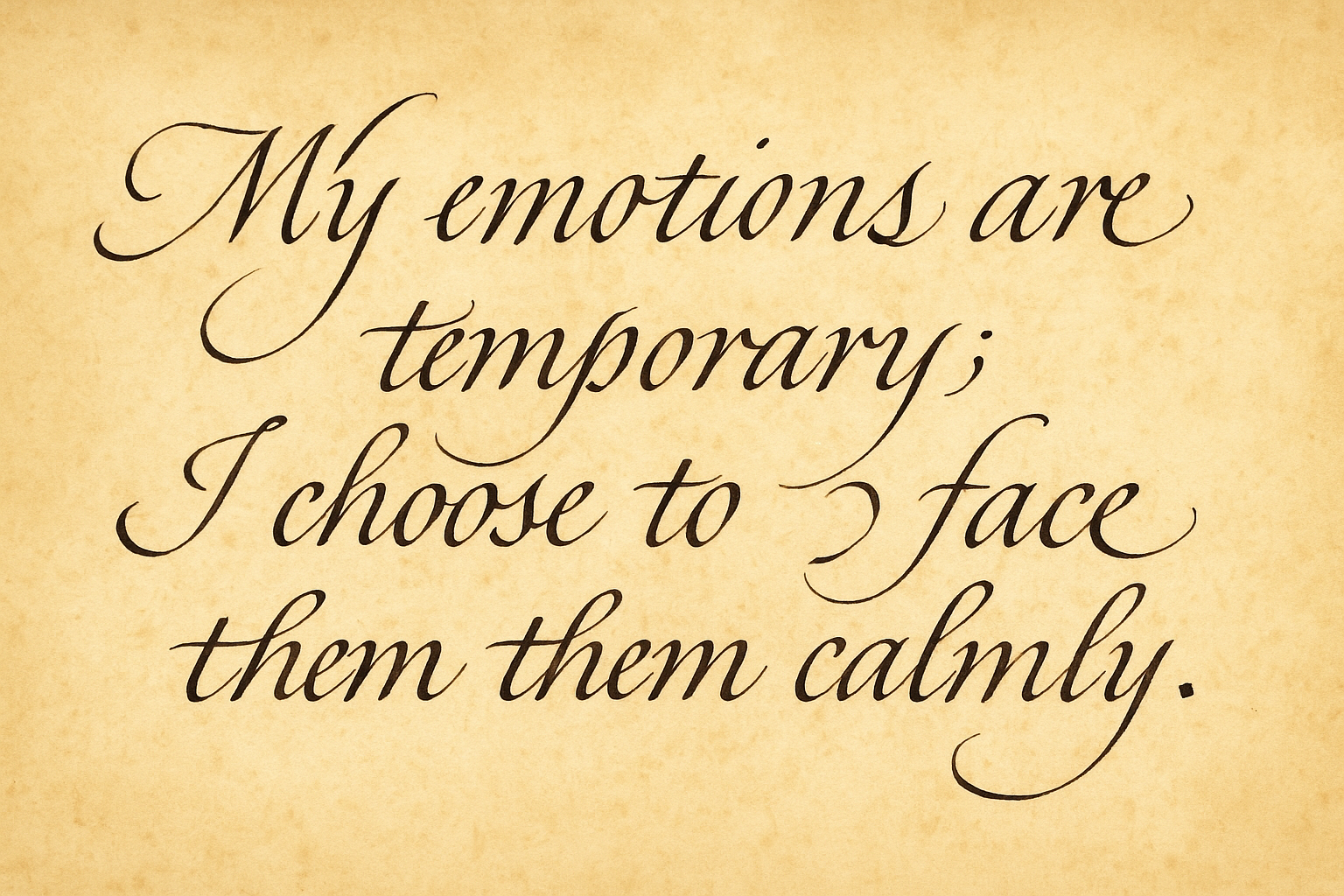
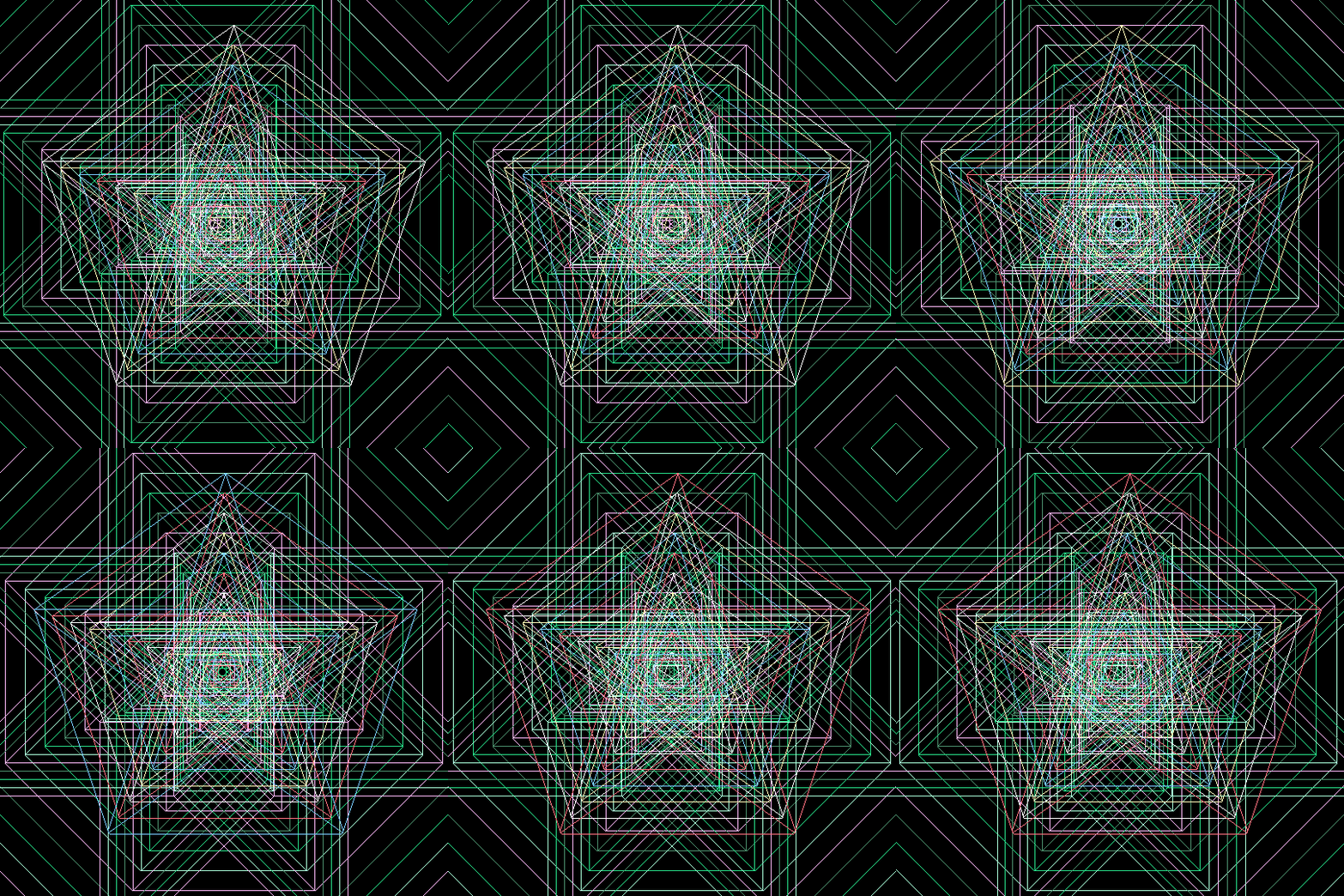
Image Healing: Guided Mandala Viewing - Lesson 164
Choose a mandala with a simple structure and a stable center.
First, gaze at the center and hold for several breaths.
Observe the outer ring slowly, allowing it to slightly disperse before returning to the center.
Mandala is not about drawing something, but about observing; it's about practicing the initial ability to pause and reflect while observing.
The theme of this mandala is "Initial Bearing," symbolizing the safe entry into the first stage of exposure.
◉ One gaze is sufficient; no repetition is required.
Lesson 164: Phase One: Exposure and Execution
Objective: To begin actual practice within safe boundaries and experience the body gradually adapting to the external space.
Steps: Draw five circles to represent five short exposures, and write the practice location and duration inside each circle; color the circle after each exposure is completed.
Please log in before submitting your drawings and feelings.
○ 164. First Phase Exposure Execution Log Guidance Recommendations
① Take three slow breaths before you begin and record the start of SUDS. Remind yourself: the goal is to work with the discomfort, not to reduce it to zero.
② Execution record: location/time/whether there are companions; what actions were completed (enter - stay - move - leave).
③ Peak and Fallback: What is the highest SUDS? How long does it stay there? How low can it naturally fall to if safe behaviors are used less frequently?
④ Inventory of new evidence: Which catastrophic predictions didn’t come true? What actually happened? Write down the facts, like adding bricks to your mental map.
⑤ Be kind to yourself: What was the most difficult moment? How would I take care of it next time (go slower, bring water, practice my lines first).
⑥ Gentle Ending: Give yourself a small reward and agree on a repeat or a slight upgrade (+5–10 SUDS) next time.
Please log in to use.
Every time I get closer, I am telling myself: I can stay, I can turn around and face it, instead of running away.
 EN
EN  ZH
ZH  ES
ES  FR
FR  JA
JA