

Lesson 168: Why "Inescapable" is More Terrifying than "Danger"
Duration:70 minutes
Topic Introduction:
Most people with spatial phobia are not actually afraid of the "dangerous object itself".
Instead“What will happen if I want to leave but can't?”
This feeling of being "trapped" is more likely to trigger extreme anxiety than "potential danger".
This course will delve into the psychological mechanisms and evolutionary basis of the "inability to escape fear," and why it quickly puts your body on high alert, teaching you how to rebuild a sense of control and exit.
Why is "inability to escape" a stronger threat signal?
- Evolutionary instinct: escape = survival.Danger itself isn't scary; what's scary is being unable to run. The brain naturally perceives being trapped as the highest level of threat.
- Enclosed space + dense crowds = loss of the right to move.Subways, tunnels, queues, and deep inside shopping malls can all easily trigger a feeling of being "trapped".
- What you fear is not the location, but the inability to escape.This causes the body to automatically release a large amount of adrenaline, similar to the trigger mechanism of a panic attack.
- Uncertainty amplifies fear:“Predictions like "What if I feel uncomfortable here?" can amplify feelings of threat.
- Past experience is reinforcing:When you feel uncomfortable in a particular place, your brain quickly labels it as "inescapable".
Lesson 168: Why the inability to escape is more terrifying than danger itself. Click to listen to the reading and view the content.
In panic disorder and space-related phobias, many people gradually discover that what truly triggers a strong reaction is not the specific danger, but the feeling of being unable to escape. When the brain assesses a situation, the danger itself is often vague, but the limitation of escape is a clear and definite signal. Elevators, airplanes, highways, long queues, or crowded spaces are frightening not because they are inherently more dangerous, but because once the body reacts, you cannot leave immediately. The nervous system is extremely sensitive to the inability to escape because, in human evolution, losing an escape route often meant a survival threat. Even in modern society, where this threat no longer truly exists, the brain still uses old models to prioritize amplifying the feeling of limitation rather than the objective risk. The core of the inability to escape is not the physical limitation, but the psychological expectation of losing control. You are not worried about the symptoms themselves, but about being trapped in them and unable to escape. This expectation causes the body to become alert before even entering the situation, creating a vicious cycle. Understanding this is crucial because it means you are not afraid of danger, but afraid of losing your choice. As you practice and constantly confirm that even if you cannot leave immediately, the symptoms can still change naturally, the brain will gradually update its assessment system. What truly weakens fear is not proving that the environment is safe, but experiencing that you can bear it even without escaping. With the accumulation of this experience, the inescapable situation will slowly lose its threatening significance and return to a neutral state.
▲ AI Interaction: In which scenarios do you most likely feel "trapped"?
Tell the AI: What places make you feel "unable to leave"? (e.g., elevators, crowded stores, tunnels, waiting in line)
AI will help you break down the "out-of-control points" in these scenarios and regain the sense of style one by one.
You can also describe a past experience of intense discomfort, and we will work together to reconstruct that situation so that it no longer becomes a trigger point.
“The fear of being trapped is essentially an experience of disrupted rhythm: erratic breathing, rapid heartbeat, and the inability to find a way out.
Music can provide an "external anchor point of rhythm," helping you maintain inner stability in enclosed or inescapable environments.
It is recommended to listen to the same melody before and after practicing difficult scenarios to form a conditioned reflex of "psychological outlet".
○ Eastern Healing Tea: Mint + Chrysanthemum Infusion
Recommended drinks:Peppermint Chrysanthemum Tea
Recommended reasons:The coolness of mint brings a sense of openness and breathing, while chrysanthemum can relax tense visual anxiety, making it suitable for adjusting after a feeling of "spatial oppression".
practice:Steep in hot water for 90 seconds; do not soak for too long to maintain a refreshing and mild taste.
○ Stable Dietary Therapy - Yam and Green Tea Thick Soup (ID168)
During the phase of dealing with inescapable feelings, the body needs nourishment that provides both stability and clarity. Yam provides a robust and secure foundation, helping the nervous system establish inner stability, while the soothing properties of green tea bring awareness and clarity without overstimulation. This thick soup is suitable for consumption after confined space exercises, helping the body find a balance between support and alertness.
Awareness Support
Space adaptation period
Open Recipe
◉ Japanese Dietary Therapy: Yam and Green Tea Soup (ID 38)
This is a nourishing dish that perfectly blends the "roots of the earth" with the "leaf of tranquility." In Japanese cuisine, mashed yam (Tororo) is often used as a topping, but here it is combined with fragrant green tea broth to create a smooth and gentle soup. The sticky texture of the yam nourishes the internal organs, which are dry due to anxiety, while the bittersweet taste of the green tea clears away cluttered thoughts. This combination of "moistening" and "clearing" is the perfect balance for treating the "heat" and "unease" caused by mild anxiety.
Nourishing and calming Suitable for mild anxiety Repairing mucous membranes
I. Recommended Dietary Therapy and Reasons
Recommended dishes:Yam and Green Tea Soup (ID 38)
Recommended reasons:Traditional Chinese medicine believes that yam, being white in color, enters the lungs, and its sweet taste enters the spleen, thus simultaneously nourishing the spleen, stomach, and lung qi, and repairing the gastric mucosa damaged by stress gastritis. Green tea primarily "ascends the clear and descends the turbid," enhancing mental clarity. When anxiety causes a feeling of "upper heat and lower cold" (a hot head but cold hands and feet, and a weak stomach), this soup can provide a two-way regulatory effect of "cooling the upper body and nourishing the lower body."
2. Recipe and Method
Recipe (1 serving):
- Japanese yam (100–150g)
- Strong green tea infusion (sencha or matcha powder) 200ml
- 50ml kelp broth (or water)
- a pinch of salt
- 1/2 teaspoon light soy sauce
- A small amount of wasabi or shredded seaweed (for garnish)
- A small amount of brown rice or Bubu Arare (optional, for added texture).
practice:
- Prepare tea:Brew a strong cup of green tea (or mix with matcha powder), add a little kombu broth, season with salt and soy sauce, and keep it simmering.
- Grinding clay:Peel the taro and grind it into a fine paste (Tororo) using a mortar and pestle or grater. The yam paste will be snow-white and elastic.
- Preparation (key):Place the mashed yam into a large bowl. Slowly pour in boiling green tea with one hand, while quickly stirring with chopsticks with the other.
- Fusion:Hot tea will make the yam puree slightly semi-cooked, making its texture more fluffy and smooth, and its color turn into a light jade color.
- Decoration:Sprinkle a little wasabi on top, and then sprinkle with seaweed strips or crispy brown rice before serving.
3. Small rituals for body and mind
While grinding yam, coordinate your breathing with the rhythm of your breath and feel the circular motion of your arms; this is a dynamic form of meditation.
Watching green tea being poured into snow-white yam puree, instantly turning it into a warm, light green, one can feel the healing sensation of that "fusion".
Take a sip and experience the contradictory taste that is both thick and refreshing, and tell yourself: "My heart can be both fulfilled and clear."“
4. Dietary Therapy Experience Record
- Record the comfort level in the stomach and the relief of hunger after consumption.
- Does observing the aroma of green tea help you clear a clear path from a jumble of thoughts?
- Notice if this smooth texture relieves your "dry throat" symptoms caused by anxiety.
V. Instructional Videos (approximately 3–5 minutes)
◉ Video Title:Yam and Green Tea Soup: A gentle, warm, jade-colored soup that nourishes silently.
6. Precautions
- Yam varieties:You must use Japanese taro or Chinese yam, which have high moisture content and are suitable for eating raw. Ordinary yams are too dry and cannot be mashed into this fluid paste.
- Skin protection:Always wear gloves when handling raw yams to avoid skin irritation caused by the sap.
- Tea temperature:The tea should be hot enough to bring out the aroma of the yam and make it smoother, but don't use boiling water to brew the tea, otherwise the tea will taste sour.
hint:This dietary therapy is an excellent "light evening meal" or "breakfast" that provides lasting energy and tranquility without burdening the digestive system.
○ Suggestions for Modern Calligraphy Writing Practice
The topic of this lesson:Maintaining a sense of choice within constraints
In-depth analysis:
The fear of being unable to escape is essentially a loss of choice. Modern calligraphy, by creating multiple possible paths within the limited space of paper, helps the brain rediscover that even with limited space, one can still choose rhythm, direction, and intensity. This experience gradually weakens the instinctive resistance to confinement and restriction.
Writing Techniques (Responding to the Sense of Constraint):
- Limited range writing:Training to complete an entire line of text within a confined space allows for sustained expression within limitations.
- Rhythm variation:Changing the speed within the same row allows the body to still have the power to perceive choice.
- A smooth ending:Regardless of how the process changes, ensure each line ends completely to enhance the sense of accomplishment.
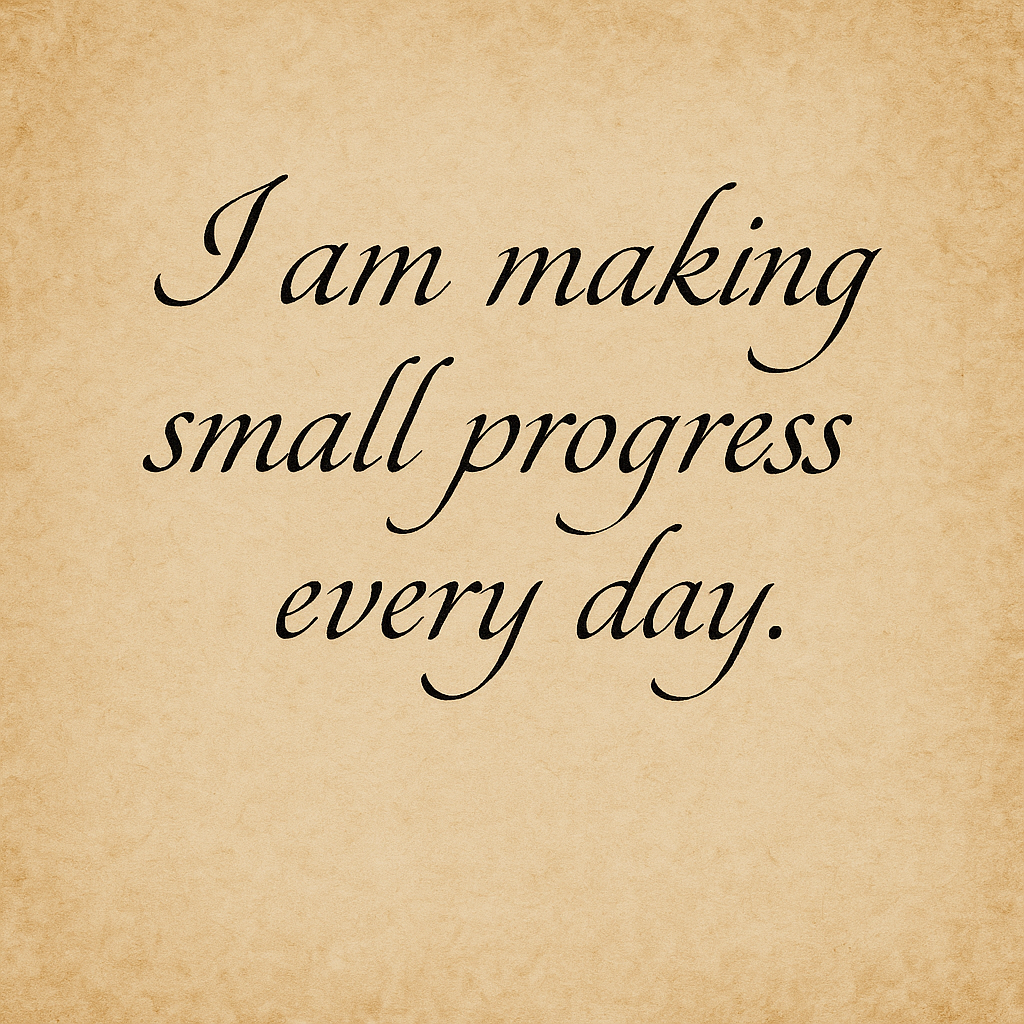
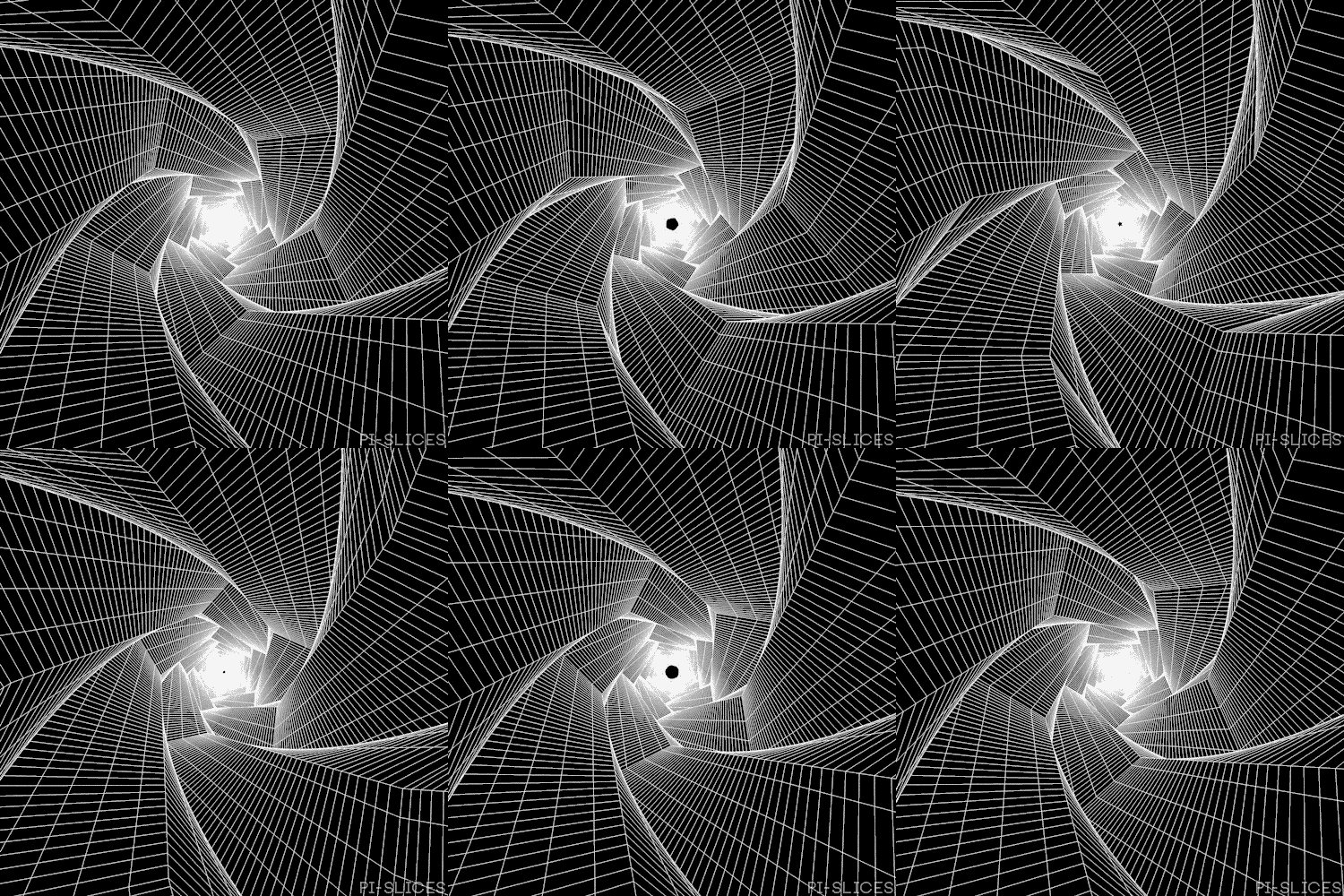
Image Healing: Guided Mandala Viewing - Lesson 168
Choose a mandala with a stable center and a converging outer circle.
Move your gaze slowly within a limited area.
The feeling remains complete even without expansion.
A mandala is not about drawing something, but about observing what you experience while observing it—the feeling of being safe even in limitations.
The theme of this mandala is "Bearing in Limitation," symbolizing how the feeling of being unable to escape is gradually replaced by inner security.
◉ One gaze is sufficient; no repetition is required.
Lesson 168: Draw your "exit path"“
① Guiding drawing actions:Draw a scene where you have felt trapped, using light-colored lines to depict the spatial structure (such as a subway car, passageway, or room).
② Guiding drawing actions:Then add an "exit path" that you hope to take from the image, symbolizing the existence of choice and control.
Please log in before submitting your drawings and feelings.
○ 168. "Inescapable" Anxiety: Journaling Guidance Suggestions
① In which scenarios am I most likely to feel the fear of "not being able to escape"? What do they have in common?
② What physical signs did you experience at that time? (Breathing, chest tightness, leg weakness, feeling trapped)
③ If I could offer my past self a word of comfort, what would it be?
④ What are the "small points of control" that I would be willing to try next time I face a similar situation?
Please log in to use.
“"Danger" often comes from the outside world, but the "inability to escape" comes from the imagination within. Once you learn to establish a sense of exit, many scenes that were once feared will become accessible again.
You are not trapped; your body simply needs a reminder:
—You always have a choice.
 EN
EN  ZH
ZH  ES
ES  FR
FR  JA
JA