

Lesson 171: Early Exposure and Rehearsal Strategies
Duration:70 minutes
Topic Introduction:
Pre-exposure and mental rehearsal allow the brain and body to adapt to the rhythm before entering a real-life scenario, reducing sudden tension and increasing a sense of control. This course helps you establish a simple, stable, and repeatable rehearsal framework.
Why is advance rehearsal effective?
- Reduce the sense of unknown:Familiarity with the environment can reduce the brain's threat assessment.
- Adapt to the rhythm in advance:The body practices in the rehearsal before entering the real scene.
- Establish "Successful Prediction":The more you rehearse, the more your brain believes "I can do it".
Lesson 171: Early Exposure and Rehearsal Strategies, Click to listen to the reading, View the content
In the recovery process from panic disorder and agoraphobia, many people find that what truly exacerbates fear is not the event itself, but rather the repeated imaginings and uncontrollable expectations beforehand. Lesson 171 focuses on pre-exposure and rehearsal strategies. Its core is not about constantly replaying the worst-case scenario in your mind, but about consciously reshaping your expectations. The brain naturally fills in the gaps in the unknown, and in a state of anxiety, this filling often automatically points to a disastrous outcome. The purpose of pre-exposure is not to create pressure, but to transform vague fear into concrete, bearable information. You need to rehearse the upcoming situation in a structured way in a safe environment, including the entry process, the pauses, and the ending, but the focus is not on the outcome but on the experience of the process. When you deliberately include pauses and periods of relaxation in your rehearsal—for example, the tension gradually decreasing after it arises and the body returning to its rhythm—the brain begins to receive a new script different from the old patterns. Unlike catastrophic imagination, this rehearsal is controllable and limited; it doesn't extend indefinitely but has a clear beginning and end. Pre-exposure can also help you identify which aspects truly trigger tension, thus avoiding being overwhelmed by overall fear in the real situation. It's important to note that rehearsing is not the same as constant worry. If you find yourself caught in endless deductions, it means your strategy has deviated from its goal. Correct pre-exposure should be completed within emotionally controllable limits and conclude with a sense of closure. With practice, the brain gradually learns a new coping mechanism: when faced with the unknown, it no longer automatically jumps to the worst-case scenario but retains multiple possibilities and believes in its ability to cope. This belief doesn't come from self-comfort but from repeatedly validated rehearsal experiences. When expectations are no longer dominated by fear, the difficulty of actual exposure will significantly decrease.
▲ AI Interaction: Let's do a mini rehearsal together.
You can tell the AI:
- The scenarios you are about to encounter (such as shopping malls, train stations, and hospitals).
- The most stressful parts (entrance, escalators, crowds, queuing areas).
- The "segment" you want to practice first.
The AI will break down controllable tasks based on your description and guide you through the 1% rehearsal process.
The more stable the rhythm of mental rehearsal, the faster the brain enters "controllable mode".
A fixed piece of music can serve as a "pre-practice anchor," helping the body find a familiar sense of stability before and after each practice session.
○ Eastern Healing Tea - Chamomile Tea
Recommended reasons:Suitable for use after rehearsals, allowing the body to relax from tension.
practice:Steep 1–2 teaspoons of chamomile flowers for 8 minutes; best enjoyed warm.
○ Stable Dietary Therapy: Perilla Vinegar Salad with Ice Plant (ID171)
During the pre-exposure and mental rehearsal training phase, the body needs refreshing and invigorating nourishment without being overly stimulating. The aroma of perilla helps stabilize emotional rhythms, rice vinegar provides a mild awakening, and the crisp texture of ice plant helps restore awareness of the present moment. This refreshing salad is suitable for consumption after rehearsal exercises to help the body return from imagination to reality.
Awareness
Early exposure of support
Open Recipe
◉ Japanese Food Therapy: Perilla Vinegar Ice Plant (ID 41)
This is a refreshingly unique sensory cold dish. Ice plant is covered with natural, transparent, water-drop-like vesicles; biting into it produces a "pop" sensation, like a miniature firework display in your mouth. Paired with fragrant perilla leaves and a mild balsamic vinegar sauce, this dish not only offers a refreshing and cleansing taste but also provides a novel sensory experience. When feeling uneasy, anxious, or with a jumbled mind, this unique crisp texture can quickly distract you, bringing a moment of peace and tranquility.
Gentle and stable Cooling and reducing internal heat Soothe anxiety
I. Recommended Dietary Therapy and Reasons
Recommended dishes:Perilla Vinegar Ice Plant (ID 41)
Recommended reasons:Ice plant is rich in inositol, a substance that aids in neurotransmission and fat metabolism, often referred to as the "anti-anxiety vitamin." It has a naturally slightly salty taste and contains a balanced amount of minerals. The aroma of perilla can soothe the chest and relieve chest tightness. The organic acids in balsamic vinegar can soften blood vessels and eliminate fatigue. This dish helps cool down an overheated brain through the dual effects of "taste stimulation" and "aroma soothing."
2. Recipe and Method
Recipe (1–2 servings):
- Fresh ice plant (150g)
- 3–4 fresh perilla leaves (large leaves)
- 2-3 cherry tomatoes (halved, for color)
- Perilla vinegar sauce:
- 1 tablespoon of black vinegar (or balsamic vinegar)
- 1/2 teaspoon of honey or sugar
- 1/2 teaspoon light soy sauce
- 1 teaspoon of olive oil or sesame oil
- An appropriate amount of roasted white sesame seeds
practice:
- Preparing ice plant:Ice plant has a delicate texture and should be gently rinsed under running water. Do not rub it vigorously to avoid damaging the water droplets and vesicles on the surface. After washing, break it into small florets.
- Ultimate Draining:Pat dry with paper towels or gently spin-dry. Refrigerate for 10 minutes, and it will become crisp and glassy.
- Processing perilla:Wash and dry the perilla leaves, roll them up, and cut them into thin strips.
- Sauce preparation:In a bowl, combine balsamic vinegar, soy sauce, honey, and olive oil, and stir until emulsified.
- combination:Place the chilled ice plant and cherry tomatoes into a large bowl.
- Mix well:Just before serving, drizzle in the sauce, sprinkle with shredded perilla leaves and white sesame seeds, and quickly and gently mix (tossing for too long will cause it to release water and soften).
3. Small rituals for body and mind
While cleaning the ice plant, observe the crystal-clear "ice beads" on its surface and marvel at the exquisite structure of nature.
Inhaling the tangy aroma of perilla mixed with vinegar, take a deep breath and feel the refreshing airflow cleanse your nasal passages.
While chewing, focus on the moment when the ice plant bursts between your teeth, letting this small, pleasurable sensation replace any unease in your heart.
4. Dietary Therapy Experience Record
- Record whether you experience a cool and refreshing sensation in your mouth and esophagus after consuming it.
- Does the unique popping sensation make you feel a little lighter?
- Pay attention to whether the feeling of heat in your body subsides after eating this cold dish.
V. Instructional Videos (approximately 3–5 minutes)
◉ Video Title:Perilla Vinegar Ice Plant: A delightful and therapeutic taste experience.
6. Precautions
- Salty taste reminder:Ice plant contains natural plant salts, giving it a slightly salty taste, so when making sauces...Soy sauce and salt should be used sparingly.To avoid making it too salty.
- When to eat:Ice plant is cooling in nature, making it suitable for summer consumption or as a palate cleanser after eating greasy or spicy foods.
- Those with a cold stomach:If you are prone to stomach coldness, it is recommended to add more minced ginger to the sauce and eat it with warm water.
hint:This dietary therapy uses the unique taste of novel ingredients to block anxious thoughts, making it suitable for consumption when feeling bored or depressed.
○·Chinese Calligraphy·Regular Script·Lesson 171 Writing Practice
The topic of this lesson:Establishing a stable order as expected
In-depth analysis:
The key to early exposure lies in allowing the brain to perceive structure and order before entering the context. The power of regular script lies in its stability and predictability. Each stroke is clear, and each structural boundary is distinct, which corresponds to the clear definition of the beginning and end in the pre-reading strategy. When you write regular script, your internal rhythm naturally slows down, preventing expectations from spreading out of control.
Writing Instructions:
This lesson focuses on practicing the certainty of the beginning and ending strokes. Before each stroke, pause briefly to confirm the direction and position before making a steady, firm cut. Focus on clarity, not speed. After completing a stroke, finish it completely before moving on to the next stroke, rehearsing step-by-step without jumping to the final result.
Written words:
A generous heart brings abundant blessings
Motivational words:
When the future is clearly defined, fear loses its space to spread.
Writing Tips:
When writing the radical for "heart," pay attention to the connection between the three dots, ensuring they firmly support the structure above. Feel this supportive relationship and gently place your anxieties about the future, stroke by stroke.
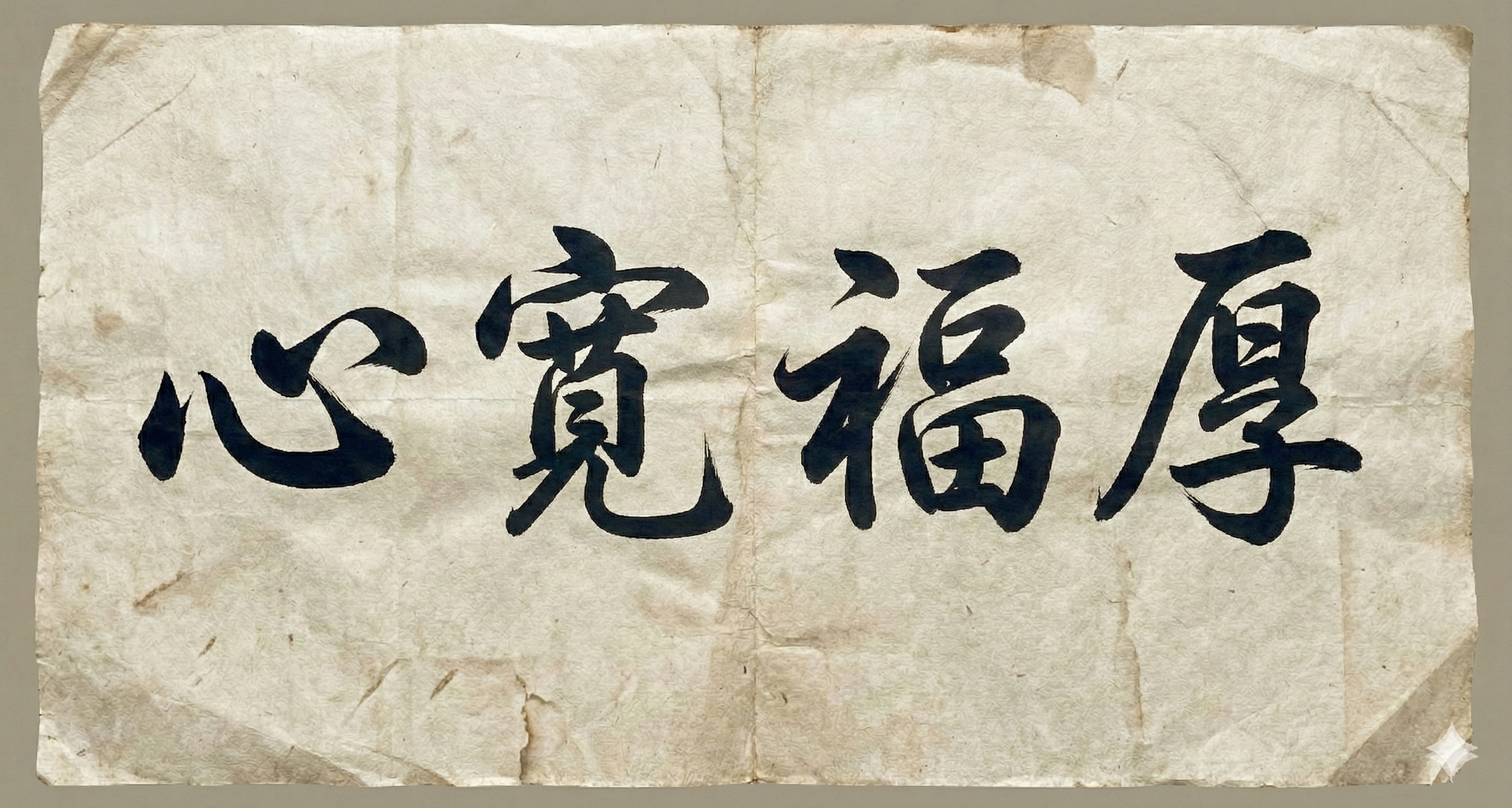
Image Healing: Guided Mandala Viewing - Lesson 171
Choose a mandala with a symmetrical structure and clear layers.
First observe the overall framework before delving into the details.
Move your gaze slowly and sequentially.
Mandala is not about drawing something, but about observing. What you practice in observing is establishing order and boundaries for what you expect.
The theme of this mandala is "orderly expectation," symbolizing the early exposure of the shift from chaotic anxiety to a sustainable structure.
◉ One gaze is sufficient; no repetition is required.

Lesson 171: Draw Your "Rehearsal Script Diagram"“
①First, draw the outline of the place, such as the entrance, corridor, and direction of people flow, to give the picture a basic sense of space.
②Mark 1 to 3 micropaths you are willing to try on the screen, like planning a small map.
③Write a "small goal word" at the end of each path, such as: steady, take a breath, stop for a moment.
④Finally, write your rehearsal affirmation in a corner, such as: I can move forward with rhythm.
Please log in before submitting your drawings and feelings.
○ 171. Early Exposure & Log-Guided Recommendations
① Which scene am I rehearsing today?
② Which segment made me most tense?
③ Which method helps me stabilize most? (Music, breathing, visuals)
④ How can I make the next rehearsal more realistic?
Please log in to use.
Rehearsing in advance allows the brain to become familiar with the movement, the body to stabilize, and the mind to develop a better rhythm. You are not practicing a sprint, but a controlled and gentle approach.
 EN
EN  ZH
ZH  ES
ES  FR
FR  JA
JA