

Lesson 174: Spatial Memory and the Brain's Navigation System
Duration:70 minutes
Topic Introduction:
The brain never passively "sees space," but actively builds internal maps of paths, directions, and a sense of security.
When a feeling of discomfort, fear, or disorientation occurs in a certain location, spatial memory is automatically marked as an "unsafe area."
This lesson will help you understand how the hippocampus, prefrontal cortex, and spatial perception work together, why some areas tense up when approached, and how the brain's spatial map is gradually updated.
How does the brain construct "spatial maps"?
- Hippocampus records positional sense:It is responsible for "where I am" and stores spatial clues such as paths, corners, and openness.
- Mesh cell architecture:The brain organizes your sense of direction and positioning ability in the environment in a way similar to a "coordinate grid".
- Prefrontal cortex management "predictability":If a space makes you feel lost or out of control, your prefrontal cortex will issue an early warning.
- Negative experiences can alter spatial memory:A single frightening or intensely unpleasant event can mark an entire area as a "high-risk zone".
Lesson 174: Spatial Memory and the Brain's Navigation System (Click to listen to the reading and view the content)
Spatial anxiety and disorientation are often not due to fear of the environment itself, but rather related to the overactivation of the brain's internal navigation system. The system in the human brain responsible for spatial orientation and pathfinding continuously records location changes, directional cues, and past experiences. When this system operates under high alert, neutral spatial information can be misinterpreted as potential threats. The core of Lesson 174 is understanding that spatial memory is not static storage but a dynamic process constantly modified by emotions. When you experience fear or intense discomfort in a location, the brain packages the spatial cues—pathways, turns, light, sound, and bodily reactions—into memory. Subsequently, whenever the navigation system recognizes similar cues, even if the actual environment is safe, alarms may be automatically triggered. This reaction does not indicate a lack of directionality, but rather the navigation system attempting to overprotect you. The problem is that when you repeatedly avoid these paths, spatial memory becomes increasingly solidified as danger labels, making the brain rely more on internal predictions than actual perception. Understanding this mechanism is crucial because it shows that you are not unable to adapt to space, but rather need to provide the navigation system with new, neutral experiences. Through slow, repetitive, predictable movements, the brain gradually updates its spatial map, remarking previously feared nodes as passable areas. True recovery isn't about forcibly trusting directions, but about allowing the brain to recalibrate its navigation signals through repeated walking and stopping. When spatial memory is no longer dominated by fear, you'll find that trust in directions, paths, and locations naturally returns.
AI Interaction:
Tell the AI: "Which areas do I know are not dangerous, but my body is still tense?"“
“Have I ever experienced suddenly not being able to find my way out or feeling disoriented in a certain place?”
The system will help you draw your "spatial memory map" and point out a small path that you can adjust first.
○ Voice navigation: Music guidance restores the "internal sense of direction"
Spatial anxiety often stems from "I don't know where to go".
Choosing music with a stable rhythm and clear melody can help the brain rebuild its "sense of direction," like lighting up a route in your mind.
Listening for 2-3 minutes before entering a space where you might easily get lost can help the hippocampus switch from a state of chaos to one of organization.
Let music be your first step in renavigating your interior space.
○ Eastern Tea Drinking: Lemongrass and Mint Warm Tea
Recommended drinks:Lemongrass + a small amount of mint
Recommended reasons:The aroma of lemongrass can help you feel a sense of direction, while mint brings a feeling of lightness. It is suitable to drink before practicing "spatial stability" to help the brain regain clarity.
practice:Tie two lemongrass stalks into a knot, add two to three mint leaves, steep in hot water for four minutes, and slowly sip, letting the refreshing aroma guide your attention inward.
○ Stable Nutrition - Agar Matcha Jelly (ID174)
During the phase of spatial memory reconstruction and navigation system adjustment, the body needs refreshing and stable nourishment. The light and refreshing texture of agar helps reduce the burden on the body, while matcha brings a gentle and clear sense of awareness without overstimulating the nervous system. This dessert is suitable for consumption after spatial awareness exercises to help the body return to the present moment from a state of tense positioning.
Navigation Reconstruction
Neural Regulation
Open Recipe
◉ Japanese Food Therapy: Agar-agar Matcha Jelly (ID 44)
This is a traditional Japanese dessert with a Zen-like feel. Unlike the chewy texture of jelly, this tea jelly, made with kanten (a type of jelly), has a crisp and clean texture, with distinct edges when cut. The deep, dark green cubes exude the unique bitterness and sweet aftertaste of matcha. When anxiety makes your mind feel chaotic and you can't concentrate, or when stress makes you feel hot and bothered, this zero-fat, fiber-rich, refreshing dessert can dispel the fog in your heart like a cool breeze.
Stable anxiety Improve focus Reduce fatigue
I. Recommended Dietary Therapy and Reasons
Recommended dishes:Agar-agar Matcha Jelly (ID 44)
Recommended reasons:Matcha is rich in theanine, which can induce alpha waves in the brain, bringing a sense of "relaxed alertness," making it a natural remedy for improving focus and stabilizing anxiety. Agar-agar (red algae extract) is almost calorie-free, rich in water-soluble dietary fiber, which can cleanse the intestines, and its cooling properties can physically reduce internal heat. This dessert allows you to enjoy its deliciousness without feeling guilty.
2. Recipe and Method
Recipe (Serves 2–3):
- 2 teaspoons (about 4–5g) of high-quality matcha powder
- Kanten Powder 4g
- 500ml of clean water
- Sugar (or erythritol) 30–50g (adjust to taste)
- 2 tablespoons of warm water (for dissolving matcha)
- Condiments (optional): red bean paste, condensed milk, or brown sugar molasses
practice:
- Premixed matcha:Place the matcha powder in a small bowl, add 2 tablespoons of warm water, and whisk with a bamboo whisk or small whisk until it becomes a thick tea paste without any lumps.
- Boil agar jelly (key point):Put water and agar powder into a pot and bring to a boil over medium heat.Notice:After boiling, reduce the heat to low and continue cooking for 1–2 minutes to ensure the agar-agar is completely dissolved; otherwise, it will not solidify.
- Melting sugar:Add sugar and stir until completely dissolved.
- mix:Turn off the heat, pour the prepared strong matcha paste into the pot, and stir quickly until well mixed.
- Molding:Pour the mixture into a square container. If there are air bubbles, pop them with a toothpick or skim them off with a spoon.
- cool down:It will begin to solidify at room temperature in cold weather, and will taste even better if refrigerated for 1–2 hours. After removing from the refrigerator, cut into neat cubes.
3. Small rituals for body and mind
As you stir the matcha, focus on the emerald green swirl and imagine it absorbing all your distracting thoughts.
When cutting through the cold, the crisp, clean feel of the blade cutting through the ice symbolizes the determination to cut away troubles.
When eating, first hold it in your mouth to feel its edges and corners, then gently bite it off to experience the refreshing sensation of its crisp cracking.
4. Dietary Therapy Experience Record
- Record whether the feeling of "restlessness and anxiety" subsided after consuming the product.
- Observe whether the slightly bitter aftertaste of matcha makes your mind clearer and sharper.
- Pay attention to the sense of order and control that neatly cut squares give you visually.
V. Instructional Videos (approximately 3–5 minutes)
◉ Video Title:Agar-agar Matcha Jelly: Cut out a refreshing, Zen-like square.
6. Precautions
- Agar-agar vs. Gelatin:Agar-agar sets at room temperature (below approximately 40°C) and has a "crisp" texture; gelatin needs to be refrigerated to set and has a "bouncy" texture. Agar-agar is a must for cooling down and cutting through greasiness.
- Matcha sedimentation:Matcha powder is a suspended particle that is insoluble in water. During the solidification process, it may sink to the bottom and separate into layers. This is a normal phenomenon and actually creates a beautiful gradient color.
- caffeine:Matcha contains caffeine, so it is recommended to consume it before 4 p.m. to avoid affecting sleep at night.
hint:This dietary therapy utilizes color psychology (green has a calming effect) and the physiological effects of theanine, making it suitable as a "recharging dessert" when the brain is fatigued during work breaks.
○·Chinese Calligraphy·Regular Script·Lesson 174 Writing Practice
The topic of this lesson:Rebuilding a sense of direction within order
In-depth analysis:
The brain's navigation system relies on a clear and stable structure. Regular script, known for its rigorous layout and distinct strokes, provides the nervous system with a strong sense of direction and order. When you focus on the structural relationships of regular script, your internal orientation system naturally quiets down and rebuilds trust.
Writing Instructions:
This lesson focuses on practicing horizontal and vertical strokes aligned with the central axis. Each stroke should unfold precisely around the center. While writing, move your gaze in sync with the strokes to experience the sense of security that comes with clear direction.
Written words:
Walking with Mindfulness
Motivational words:
When the direction returns to the present moment, every step will become a source of support for those around us.
Writing Tips:
When writing the character "行" (xing), pay attention to the sense of movement in the "双人旁" (shuangrenpang) radical, making the strokes move steadily like footsteps, and feel your inner navigation being gently awakened.
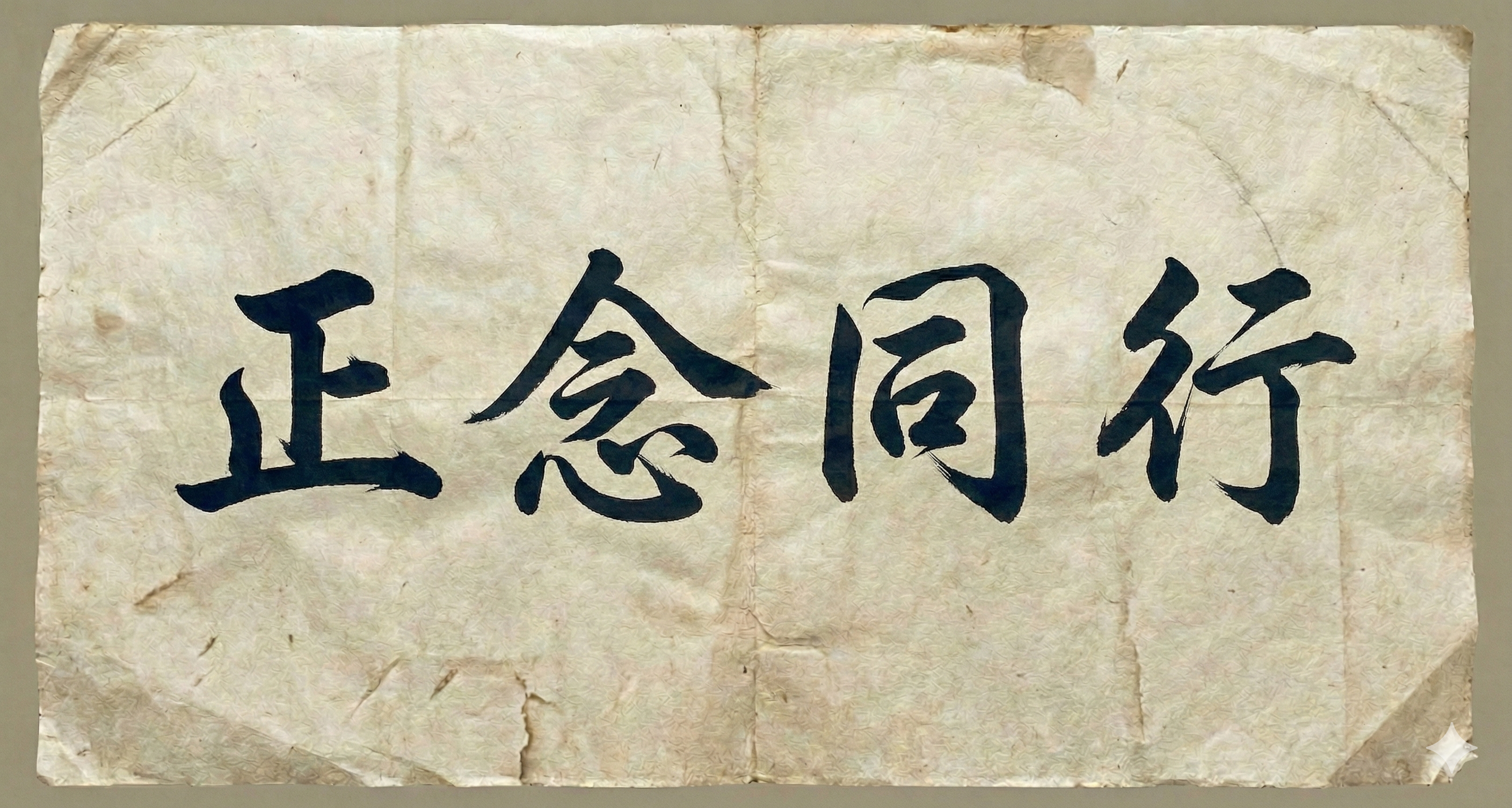
Image Healing: Guided Mandala Viewing - Lesson 174
Choose a mandala with a clear path and a well-defined center.
Let your gaze move naturally along the structure.
Don't rush to finish; focus on the current path.
A mandala is not about drawing something, but about observing. It's about practicing trusting your inner navigation while observing.
The theme of this mandala is "Path Reconstruction," symbolizing the shift in spatial memory from fear-based markers to clear pathways.
◉ One gaze is sufficient; no repetition is required.
Lesson 174: Spatial Memory and Navigation Systems (Drawing Guidance)
Purpose:Let the brain see how its "spatial memory system" is marked, confused, and then updated.
step:
Draw a simple diagram: entrance, exit, corner, open area, using only the simplest lines.
Mark the points on the map where you feel the most tension (such as corners, entrances/exits, narrow areas).
Then use another color to draw "a short stretch of road that I'm willing to practice first" to make the map more user-friendly.
Write a sentence as the new navigation instruction, for example: "I can redefine this route."“
Please log in before submitting your drawings and feelings.
○ 174. Spatial Memory and Navigation System - Log Guidance
- In which spaces did I feel disoriented today? Was it due to lighting, the structure, or the crowds?
- Have I ever experienced the tension of "not being able to find the exit" or "losing my way"? What was my physical reaction at that time?
- Reflect on a positive experience: Did I successfully complete a certain route? What was my mental state like that time?
- Which memory space would I like to update today? Even if it's just walking 3 meters from the doorway.
- Write a gentle summary, such as: "My brain can relearn location and orientation."“
Please log in to use.
Spatial memory can be updated, and navigation systems can be restarted; you are not lost, but rather rediscovering your coordinates.
 EN
EN  ZH
ZH  ES
ES  FR
FR  JA
JA