

Lesson 176: Reconstructing the Psychological Boundaries Between the Safe Zone and the Danger Zone
Duration:70 minutes
Topic Introduction:
After experiencing spatial anxiety or a panic attack, the brain mislabels many originally neutral places as "danger zones," while shrinking the range of activity to form an increasingly narrow "safe zone."
This lesson won't ask you to immediately expand your scope of action, but rather help you to re-understand:
Safety is not a place, but a sense of control; danger is not a space, but the loss of choice.
When you can redraw your mental boundaries from "I can enter → I can stop → I can retreat", your safe zone will naturally expand, and your danger zone will gradually retreat back to its actual range.
- The diffusion effect of fear-based learning:One instance of discomfort → Similar scenarios are all marked as dangerous, and the boundaries rapidly expand outward.
- Reinforcement of avoidance behavior:As soon as you escape, you breathe a sigh of relief, and your brain mistakenly believes that "it's not safe outside."
- Physical reactions were misjudged as dangerous:Chest tightness and dizziness are not dangerous, but they are often mistaken for external threats.
- Reduced sense of control:If someone feels "I may not be able to leave," they will mistakenly perceive a place that is actually safe as dangerous.
Lesson 176: Reconstructing the Psychological Boundaries Between the Safe Zone and the Danger Zone (Click to listen to the reading and view the content)
In the development of panic disorder and spatial anxiety, many people unconsciously divide their living space into absolutely safe zones and absolutely dangerous zones. The safe zone is usually a familiar room or fixed location at home, while the dangerous zone is constantly expanded to include unfamiliar areas outside the home and even previously neutral environments. This division initially serves as self-protection, but over time it can conversely restrict one's living space. Lesson 176 focuses on helping you understand that safe and dangerous zones are not objectively existing entities, but rather the result of an oversimplified classification by the brain under fear. The brain tends to use dichotomy to reduce uncertainty, thus cutting complex and continuous spatial experiences into black-and-white labels. Once these labels are fixed, the nervous system will sound an alarm before approaching the so-called dangerous zone, even if the actual risk does not exist. The first step in rebuilding psychological boundaries is to recognize these labels rather than rushing to cross them. When you begin to realize that safety and danger are not attributes of the place itself, but rather projections of your current state, the boundaries have already begun to loosen. The second step is to introduce buffer zones, deliberately creating intermediate areas between the safe and dangerous zones, such as transitional spaces for short stays or controlled areas outside the home. These areas do not require complete relaxation nor are they equivalent to high-pressure exposure, but rather are used to practice bearing and returning to normalcy. The third step is to repeatedly verify the mobility of boundaries through experience. When you discover that the same location evokes different feelings in different states, your brain will gradually abandon rigid categorization. The real goal is not to eliminate the safety zone, but to prevent the sense of security from being locked in a specific location. When psychological boundaries become fluid again, you will find that the world is no longer divided into places to hide and places to escape, but a continuous and adjustable space.
○·AI Interaction
Answer three questions to help the system reconstruct the true boundaries of the safe/dangerous areas:
1) What are the "safe zones" that I currently recognize?
2) Which of these are actually "psychological safety" rather than spatial safety?
3) What is my basis for judging danger: real danger? Or just "feeling uncomfortable"?
The system will generate an "adjustable mental boundary map" based on your answers, helping you see which areas can be re-marked and revisited.
When distinguishing between safe and dangerous zones, the brain needs a "sense of rhythm" most.
Allow your body to recover to a speed where you can think, rather than a rapid defensive pace.
Play the course audio track, synchronizing your breathing with a steady rhythm.
Returning to the "dangerous scenario" in your mind, you'll find that the boundaries aren't so rigid or absolute.
Recommended drinks:Chamomile and Peppermint Soothing Tea
Recommended reasons:Chamomile relaxes the nerves, while peppermint refreshes and invigorates; the combination of the two can reduce chest tightness and mental contraction caused by "tight psychological boundaries."
practice:Steep 1.5 teaspoons of chamomile and a few mint leaves for 6 minutes, then inhale the aroma deeply through your nose, symbolizing the ability to breathe anew at the edge of boundaries.
○ Stable Dietary Therapy: Sesame and Lemon Tofu Salad (ID176)
During the phase of rebuilding psychological boundaries, the body needs stable and non-overstimulating nourishment. Tofu provides gentle and reliable foundational support, the rich aroma of sesame brings inner satisfaction, and the freshness of lemon helps maintain awareness and fluidity. This nourishing dish is suitable for consumption after safe zone exercises to help the body confirm that boundaries can be gentle rather than rigid.
Safety Reconstruction
Space adaptation
Open Recipe
◉ Japanese Dietary Therapy: Sesame Lemon Tofu (ID 46)
This is a cold dish that perfectly blends richness and freshness. It uses smooth tofu as a base, drizzled with a rich sesame sauce, and finally garnished with freshly squeezed lemon juice and fragrant lemon zest. The oily aroma of sesame provides a sense of solidity and security, while the tangy fragrance of lemon instantly breaks the monotony. As these two contrasting flavors intertwine in the mouth, even tense nerves relax and unwind.
The aroma is soothing Harmonize emotions Reduce tension
I. Recommended Dietary Therapy and Reasons
Recommended dishes:Sesame Lemon Tofu (ID 46)
Recommended reasons:Sesame seeds are rich in magnesium and calcium, two minerals that effectively inhibit nerve excitation and relieve muscle tension and anxiety. The plant protein in tofu provides stable blood sugar support. Limonene in lemon peel has aromatherapy-level antidepressant effects. This dish, with its "rich sesame" grounding and "refreshing lemon" uplifting properties, helps balance emotions between extremes.
2. Recipe and Method
Recipe (1–2 servings):
- Silken tofu (soft tofu) 1 block (about 150–200g)
- Special Lemon Sesame Sauce:
- 1.5 tablespoons white sesame paste (or Japanese sesame paste)
- 1/2 teaspoon light soy sauce
- 1 teaspoon of honey (or sugar)
- 1 tablespoon of warm water (to adjust the consistency)
- 1 teaspoon of fresh lemon juice (drizzle in at the end)
- A small amount of lemon zest (key for aroma)
- Toasted white sesame seeds and chopped green onions (as needed)
practice:
- Draining:Wrap the tofu in kitchen paper and gently press or let it sit for 10 minutes to remove excess moisture. This step prevents the tofu from releasing water and diluting the sauce, resulting in a richer flavor.
- Emulsification of sauces:In a bowl, combine sesame paste, soy sauce, and honey. Gradually add warm water while stirring until the sauce becomes smooth and creamy (emulsified).
- Plating:Place the drained tofu on a plate. You can scoop it into large pieces (for a more natural texture) or cut it into cubes.
- Sauce:Pour the prepared sesame sauce evenly over the tofu.
- Key Point:Squeeze lemon juice over the sauce and sprinkle with freshly grated lemon zest and white sesame seeds.
3. Small rituals for body and mind
As you grate the lemon zest, let the invigorating citrus aroma fill your nostrils and imagine it "cleansing" your mind.
Watching the milky white sesame paste cover the tofu, you can feel the visual suggestion of being wrapped and protected.
After taking a bite, discern how the rich sesame flavor blends with the sharp sourness of lemon, and tell yourself: "Contradictions in life can coexist harmoniously like this."“
4. Dietary Therapy Experience Record
- Record whether there is physical relaxation of tension in the shoulders, neck, and jaw after consumption.
- Observe whether this fragrance "neutralizes" your originally low or anxious mood.
- Notice how this dish, which requires no chewing, makes you feel particularly relaxed and comforted.
V. Instructional Videos (approximately 3–5 minutes)
◉ Video Title:Sesame Lemon Tofu: A rich yet refreshing double comfort.
6. Precautions
- Sauce order:It is recommended to drizzle the sesame paste first, then the lemon juice. If the lemon juice is mixed into the sesame paste beforehand, the sauce may separate or become mushy (due to protein denaturation).
- Tofu temperature:In summer, it can be eaten chilled (for a more refreshing taste), while in winter, it can be warmed in the microwave before drizzling with sauce (for a warmer taste), both methods yielding equally good results.
- Source of aroma:Lemon zest is the heart of the aroma, so try not to omit it. Be careful to only grate the yellow peel and not the white, bitter pith.
hint:This dietary therapy is suitable for consumption during contradictory moments when one feels "psychologically empty" yet "mentally tense," providing both satisfaction and stress relief.
○·Chinese Calligraphy·Regular Script·Lesson 176 Writing Practice
The topic of this lesson:Reconstructing intrinsic boundaries within the structure
In-depth analysis:
The psychological division between safe and dangerous zones often stems from overly rigid boundaries. Regular script (楷书) is renowned for its clear structure and stable central axis; each part is in its proper place yet resonates with the others. This writing experience helps the brain relearn that boundaries are not isolated but rather orderly connections.
Writing Instructions:
This lesson focuses on practicing the spacing relationships within the characters. Pay attention to the balance of white space between strokes, avoiding both compression and dispersion, and strive to achieve a sense of boundaries that do not create obstruction.
Written words:
Heart and Blessing
Motivational words:
When the inner harmony and boundaries are established, they will naturally find peace.
Writing Tips:
When writing characters, pay attention to the coordination of the left and right structures, allowing the strength to converge towards the center. Feel a sense of security from integration rather than separation.
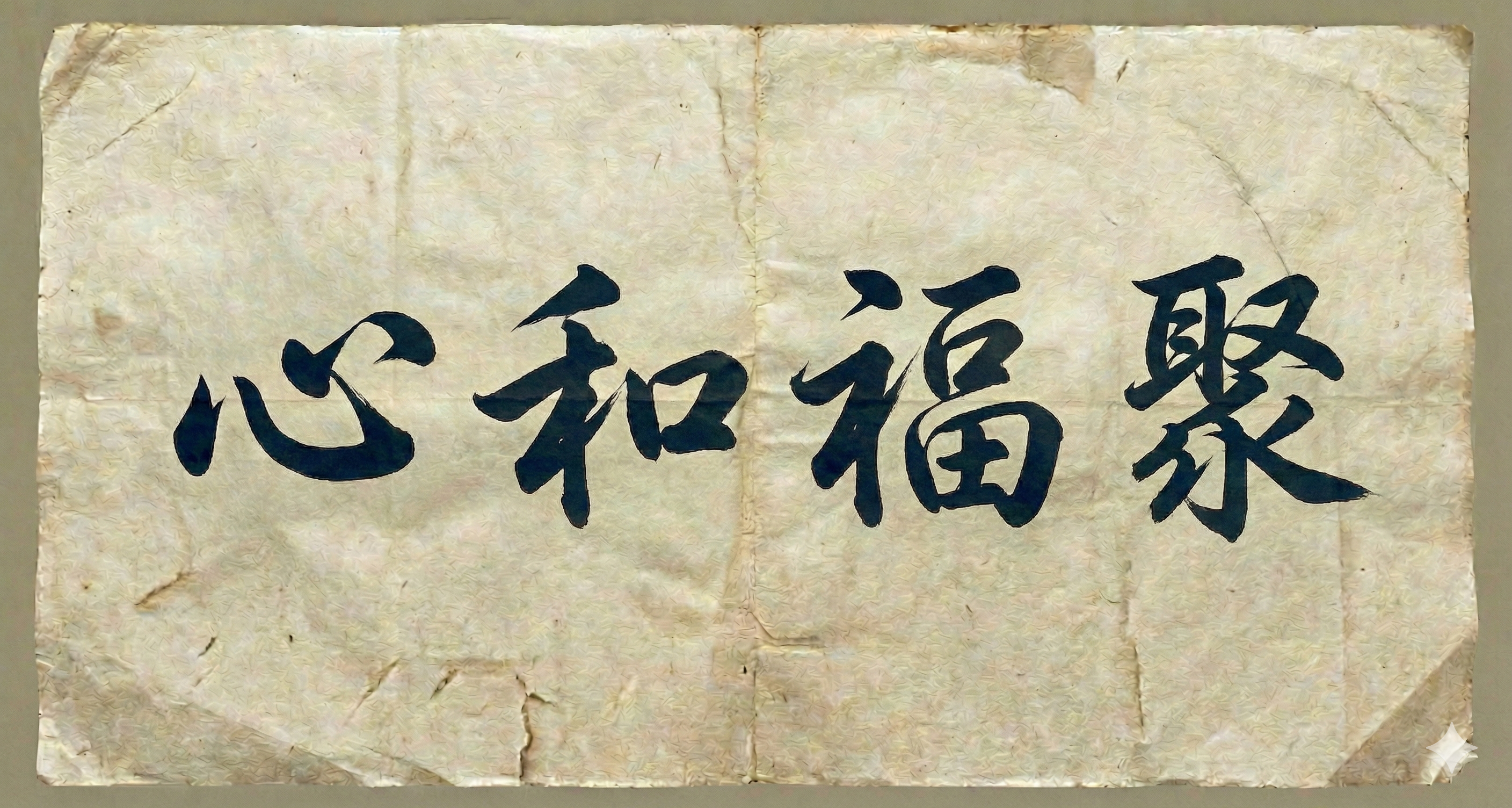
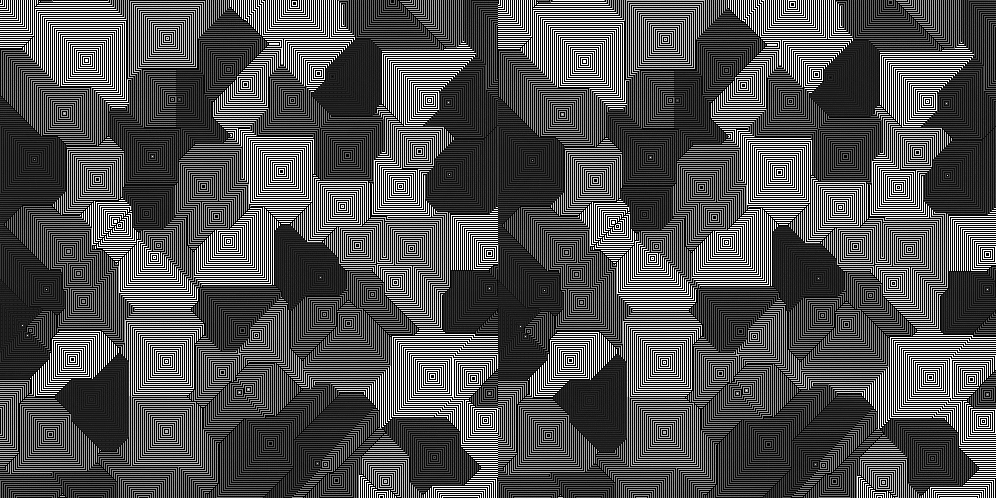
Image Healing: Guided Mandala Viewing - Lesson 176
Choose a mandala with a stable center and soft edges.
First observe the center, then feel the boundaries.
Experience the natural transition between the inside and outside.
Mandala is not about drawing something, but about observing. In observing, you practice the existence of boundaries without creating fear.
The theme of this lesson's mandala is "Flowing Boundaries," symbolizing that safety and danger are no longer opposed but rather an adjustable and continuous experience.
◉ One gaze is sufficient; no repetition is required.
Lesson 176: Redraw Your Psychological Safety Boundaries
① Safety core:Draw a small circle in the center of the paper and write "The part I can control".
② Inner circle (returnable area):Draw a second circle and write "The place where I can stay".
③ Middle circle (area that can be reserved):Write down the spaces you would be willing to approach, such as: shopping mall entrance, outside of bus stop.
④ Outer ring (misjudged danger zone):Write about places that you feel uncomfortable about now, but are not actually dangerous.
Once completed, you'll see for the first time that your "security" is actually much greater than you thought.
Please log in before submitting your drawings and feelings.
○ 176. Reconstructing Psychological Boundaries: Journaling Guidance
- Today, which areas do I automatically consider "danger zones"? Where is the real danger? Where are the misjudgments?
- Write down what you consider to be "absolutely safe zones," and what they have in common. Where does the sense of control come from?
- Find a place where danger is "misjudged" and write a sentence: What would happen if I could stay here for 30 seconds?
- Design a "micro-expansion action" for yourself, such as: taking an extra step from the doorway; or taking half a step from outside to inside.
- Finally, here's a statement to solidify personal boundaries: "Safety comes from my choices, not from the space itself."“
Please log in to use.
Safety comes from the freedom to retreat, stay, or advance. When you regain control of the boundaries, many dangers will quietly disappear.
 EN
EN  ZH
ZH  ES
ES  FR
FR  JA
JA