

Lesson 177: Short-duration exposure training: the 5-minute rest method
Duration:70 minutes
Topic Introduction:
“The "5-minute stay method" is the most commonly used and safest short-term exposure training for spatial anxiety and panic recovery.
It doesn't require you to stay in a high-pressure environment for a long time; you only need to make a stable, structured, short stay within a "tolerable timeframe."
The goal is not to overcome fear, but to allow the body to re-experience:I can remain present with mild discomfort without having to run away.
Once the body learns to recover gradually within 5 minutes, the brain's danger markers will automatically begin to degenerate.
Lesson 177: Short-duration exposure training using the five-minute pause method. Click to listen to the reading and view the content.
Many people are trapped in a misconception during the recovery phase from panic disorder and spatial anxiety: that only prolonged exposure training constitutes true exposure training. In fact, for a highly sensitive nervous system, excessively long pauses can easily trigger escalated defenses. The five-minute pause method introduced in Lesson 177 is not about pushing limits, but about establishing a controlled and stable experience. The significance of five minutes lies in its brevity—short enough to prevent the brain from entering full alert while still realistically triggering and completing a full reaction cycle. When implementing this method, you need to clearly define the start and end times beforehand. Once in the situation, stop repeatedly assessing safety and allow the body's reactions to occur naturally and change on their own. Many people find that tension often rises in the first minute or two, and then, even if discomfort persists, the intensity tends to stabilize. This change itself is important evidence of the brain relearning. The five-minute pause method emphasizes completion, not comfort. Even if you are not relaxed throughout the process, as long as you do not escape the training within the specified time, you have succeeded. It is important to note that during the pause, you should minimize safety behaviors such as constantly checking the exit, repeatedly self-soothing, or distracting yourself from escaping; these behaviors will hinder learning. Truly effective pauses are done with awareness, not resistance. With repeated exposure, the brain gradually develops a new concept of time: discomfort has an upper limit, and I do not need to endure it indefinitely. Five minutes of success will gradually build up to greater trust, allowing you to be less dominated by fear when facing longer or more complex situations.
▲ AI Interaction: Where will you spend your next 5 minutes?
Tell the system a scenario you'd like to try, and describe it:
“How difficult is it as I anticipate?”
“What is the slightest discomfort I can tolerate?”
“What do I expect my body to accomplish at the end of the 5 minutes?”
AI will generate a more accurate and executable 5-minute practice schedule for you.
○ Music buffer - a stable rhythm before entering a pause
Before entering a slightly uncomfortable situation, listen to a rhythmic track for 1-2 minutes to allow your heart rate, breathing, and muscle tension to decrease slightly.
You don't need to relax to complete comfort; just be more stable than before (10%).
When you enter a scene, your body will find it easier to maintain balance.
Herbal Tea - Chamomile & Mint
Recommended drinks:Chamomile + Peppermint
Recommended reasons:Chamomile reduces tension, while peppermint clears the mind, making them a gentle source of calm before and after a workout.
practice:Steep 1.5 teaspoons of chamomile and a few mint leaves for 5–6 minutes; drink half a cup before and after training.
○ Stable Dietary Therapy - Sashimi and Seaweed Clear Platter (ID177)
During short exposure training sessions, the body needs refreshing and non-stimulating nourishment. Fresh sashimi provides light and easily digestible protein support, while the minerality of seaweed helps the nervous system return to balance. The cleansing motion symbolizes the contraction and completion of training. This nourishing dish is suitable to eat after a five-minute rest exercise to help the body confirm that the tension has passed.
Sense of accomplishment
neural stabilization
Open Recipe
◉ Japanese Food Therapy: Sashimi and Seaweed Platter (ID 47)
This is a "purifying" appetizer infused with the spirit of the ocean. It features pure white fish sashimi (or scallops), paired with a mineral-rich mixed seaweed, and served with pure lemon juice. The cooking process is simple, preserving the ingredients' original vitality. When anxiety makes you feel like an unnamed fire is burning inside you, or your thoughts are clouded, this cool, transparent dish, full of oceanic flavor, can wash away the heat of the body and mind like a refreshing spring.
Refreshing and calming Reduce internal heat and clear away heat Stabilize your mind
I. Recommended Dietary Therapy and Reasons
Recommended dishes:Sashimi and seaweed clear dish (ID 47)
Recommended reasons:Seaweed (such as wakame and red algae) is rich in magnesium, known as a "nerve calmer," and can effectively relieve muscle tension caused by stress. Fresh sashimi is rich in Omega-3 fatty acids, which help stabilize nerve conduction in the brain and reduce depression and anxiety. The sourness of lemon enters the liver and can calm a dissipated mind. The "cooling" properties of raw food can physically neutralize the "heat" accumulated in the body due to long-term anxiety.
2. Recipe and Method
Recipe (1–2 servings):
- White fish sashimi (such as sea bream or halibut) or scallops 50–80g
- Dried mixed seaweed (for seaweed salad) 3–5g
- 1/4 onion (sliced very thinly)
- Lemon sauce:
- 1 tablespoon of fresh lemon juice
- 1/2 teaspoon light soy sauce
- 1 teaspoon olive oil (or flaxseed oil)
- a pinch of salt
practice:
- Soaking seaweed:Soak dried seaweed in cold water for 5–10 minutes until it fully expands, then gently squeeze out the excess water.
- Preparing onions:Slice the onion into translucent thin slices, soak them in ice water for 10 minutes (to remove the pungent taste and retain only the crispness), and drain the water.
- Preparing sashimi:Slice the sashimi into thin slices. It is recommended to use light-flavored white fish or sweet shellfish. Red-fleshed fish (such as tuna) have a stronger flavor and are not suitable for the "cooling" theme here.
- Project distribution:Line the bottom of the plate with sliced onions and seaweed.
- Plating:Arrange the sashimi slices elegantly on the seaweed.
- Seasoning:Mix lemon juice, soy sauce, oil, and salt together and emulsify. Pour the mixture evenly over the ingredients.
3. Small rituals for body and mind
Looking at the transparent sashimi and colorful seaweed on the plate, one can feel the vastness and tranquility of the ocean.
When you drizzle the sauce over the ingredients, smell the invigorating lemon aroma and imagine it dissolving the "heat toxins" in your body.
As you take a bite, you feel the soft, chewy texture of the sashimi intertwined with the crispness of the seaweed, telling yourself, "My body is becoming clear and cool."“
4. Dietary Therapy Experience Record
- Record whether the feeling of "heart fire" or "restlessness" subsided after consumption.
- Observe whether this combination of low fat and high trace elements makes you feel more clear-headed.
- Pay attention to the subtle changes in your body's energy after consuming this "raw food" diet.
V. Instructional Videos (approximately 3–5 minutes)
◉ Video Title:Sashimi and seaweed clear dish: Savor the tranquility of the ocean.
6. Precautions
- Freshness of ingredients:Since it's eaten raw, the freshness of the ingredients is crucial. Please be sure to purchase "Sashimi Grade" sashimi.
- Body balance:This dish is cooling in nature. If you have a sensitive stomach (and are prone to diarrhea from eating cold food), it is recommended to eat it with a cup of warm barley tea or miso soup, or add a little ginger paste to the sauce.
- Seaweed selection:We recommend using "mixed dried seaweed" containing red algae, green algae, and wakame seaweed, as it offers a richer flavor and more nutrients.
hint:This dietary therapy is suitable for consumption when one is extremely irritable, feels hot but has a normal body temperature (due to autonomic nervous system dysfunction), and has a rapid physical cooling effect.
○·Chinese Calligraphy·Regular Script·Lesson 177 Writing Practice
The topic of this lesson:Establish stability within a limited timeframe
In-depth analysis:
The five-minute pause method corresponds to clear time boundaries, and regular script is a writing style that emphasizes beginnings, endings, and completion. Each stroke has a clear start and end, and does not extend indefinitely. This structure helps the brain to reinterpret pauses not as a loss of control, but as a process that can be carried.
Writing Instructions:
This lesson focuses on practicing the complete finishing of strokes. Don't rush to finish each stroke; write each stroke perfectly before stopping. This is analogous to completing a full five-minute walk in an exposed environment, rather than prematurely withdrawing.
Written words:
Peace and comfort
Motivational words:
When time is framed, the heart finds a place to rest.
Writing Tips:
When writing the character "稳" (wěn, meaning stable), pay attention to the supporting relationship between "禾" (hé, meaning grain) and "皿" (mǐn, meaning dish), allowing the upper part to rest on the lower part and experiencing the sense of support during the pause.
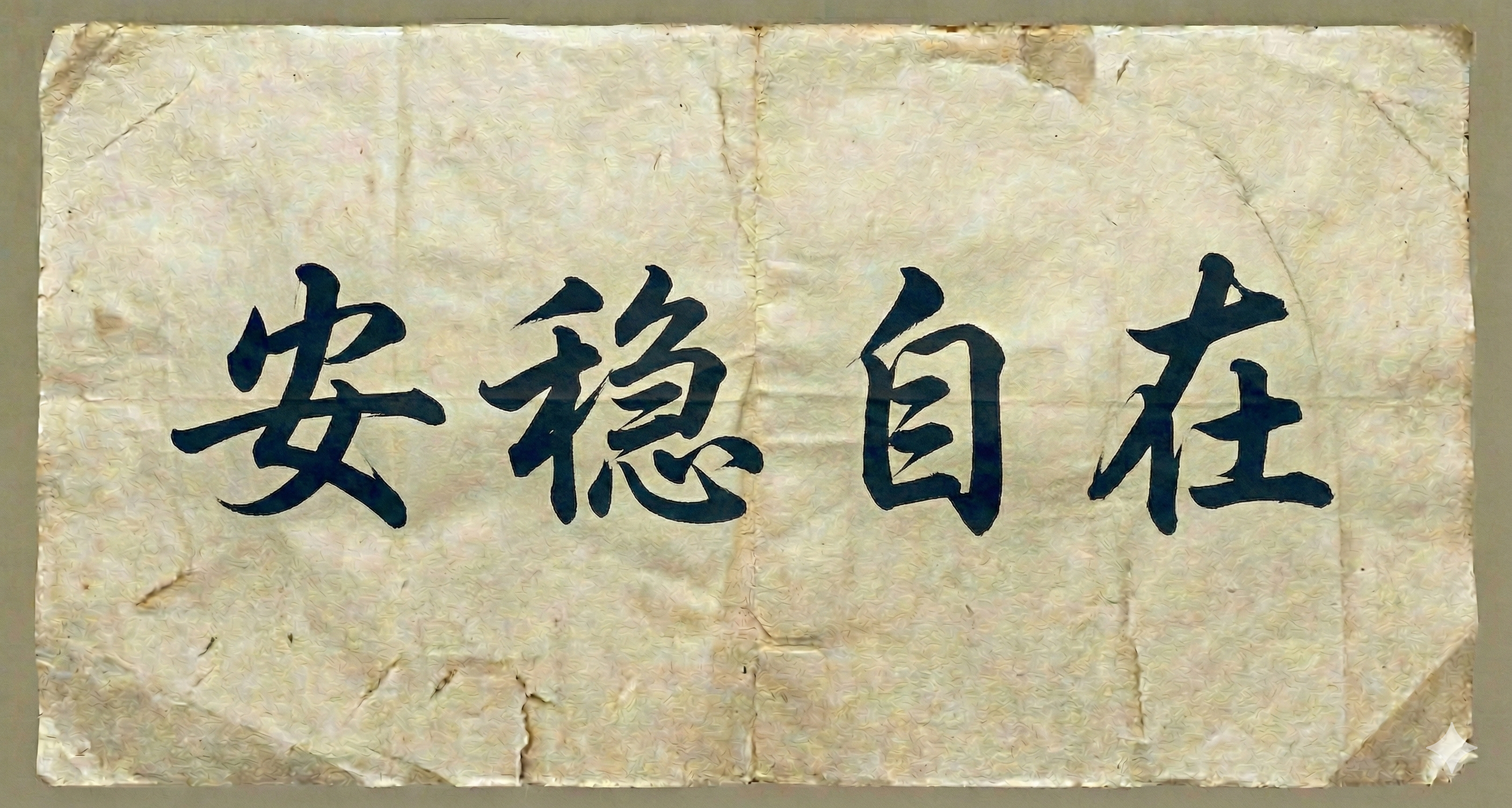
Image Healing: Guided Mandala Viewing - Lesson 177
Choose a mandala with a simple structure and a stable center.
Silently count to five breaths to complete one viewing session.
Once you've finished watching, naturally look away.
A mandala is not about drawing something, but about observing what you are doing and practicing safe completion within a limited timeframe.
The theme of this mandala is "brief yet complete," symbolizing that a stay does not need to be long to be stable.
◉ One gaze is sufficient; no repetition is required.

Lesson 177: Draw your 5-minute stop map
①Draw a place on paper where you would like to practice (such as the entrance to a shopping mall).
②Mark the locations you are willing to stand in: the doorway, the side, or a seat at a distance.
③Write down the observation points for "the first minute", "the second to third minute", and "the fourth to fifth minute".
Let your body see that 5 minutes is not about forcing yourself, but about having a structure, rhythm, and process.
Please log in before submitting your drawings and feelings.
○ 177. 5-minute stop - log guidance
- Where did I choose to practice for 5 minutes? Why did I choose this location?
- Which minute was the most difficult during today's rest? What were your physical reactions? Intensity range: 0-10?
- Was there any minute when the price started to drop? From where did the drop begin?
- How can I affirm myself? Write a reinforcing sentence: "I stayed in discomfort today."“
- Which minute do you want to practice more consistently next time? Set a small adjustment point.
Please log in to use.
Five minutes is the range in which the body most easily learns to be stable. When you can stop, the urge to run away will gradually dissipate.
 EN
EN  ZH
ZH  ES
ES  FR
FR  JA
JA