

Lesson 179: Ground-based Training: Using the Body to Perceive "I'm Still Here"“
Duration:70 minutes
Topic Introduction:
The most common experiences of spatial anxiety are "feeling like your body is floating", "unable to stand steadily", and "feeling like you are being pulled away".
The goal of ground-based training is not relaxation, but to allow the body to rediscover its senses:
I have weight, I have a place, and I am still here.
When the soles of the feet, legs, and core reconnect to the ground, the sense of security transforms from an abstract concept into an experiential reality.
Lesson 179: Ground-based training using the body to perceive "I am still here" (Click to listen to the reading and view the content)
In the recovery process from panic disorder and spatial anxiety, many people are not most afraid of a specific situation, but rather a sudden feeling of detachment from reality, as if their consciousness is drifting away and their body is out of control. Lesson 179, Grounding Training, is designed to address this sense of detachment by allowing you to constantly reassure yourself through bodily sensations that you are still there. Grounding is not about forcing yourself to calm down, but about bringing your attention away from an overactive thought system and back to the sensory experience of the present moment. The first step in the training is weight perception. You need to consciously feel the contact between your body and the ground, such as the pressure of your feet on the floor, the support of your hips against the seat of a chair, or the tactile sensation of your back against a support. This real and continuous pressure will send stabilizing signals to the nervous system. The second step is boundary confirmation. Use your body contours to confirm your presence. You can gently press your arms or legs to feel the boundary between your skin and muscles, allowing your brain to re-receive the information that your body is still intact. The third step is rhythm synchronization. Through slow and natural movements, such as slight swaying or rhythmic steps, realign your body's rhythm with the current environment. It is important to understand that grounding is not a one-time technique, but a way of being that can be invoked at any time. When you start using these perceptions early in the onset of discomfort, your brain will not quickly slip into uncontrolled associations. With repeated practice, you'll find that even when your heart rate increases or tension rises, your body can still maintain a connection. This connection itself weakens the spread of fear. True security isn't a mental guarantee, but rather comes from the constant presence signals your body sends you. When you repeatedly confirm through your senses that you are still here, the world becomes concrete and bearable again.
▲ AI Interaction: Describe your most frequent feeling of "drifting away"“
Tell the AI: What are the three most typical feelings of instability you experience in space?
Is it feeling unsteady on the feet, weak in the legs, lightheaded, empty in the chest, and unfocused, or is it "feeling like you're not in your body"?
The system will generate a personalized one for you.
“"Three-point ground-based regression strategy"”It can be used for immediate implementation in any scenario.
○ Sound rhythm and reconnection of body weight
For some, grounding requires a "rhythm" to bring attention back from the head to the lower body.
Listening to a steady, rhythmic track, your body will naturally follow the rhythm and sink back to your feet.
Let's transform "I will drift away" into "I can stand firmly on the ground".
Herbal Tea - Warm Oregano Lemon Drink
Recommended reasons:Oregano has a "grounding" feel, while lemon slightly improves clarity, helping the body return from a daze to the present moment.
How to drink:Sip slowly and let the temperature become the bridge connecting you to the ground.
○ Stable Dietary Therapy: Pumpkin and Red Bean Porridge (ID179)
During ground-based training, the body needs warm and substantial nourishment to reinforce a sense of presence. The creamy texture of pumpkin provides a sense of grounding, while the slow release of energy from red beans helps the body establish sustained stability. This porridge is suitable for consumption after training, allowing the body to feel reassured by its warmth.
Body connection
Existence confirmed
Open Recipe
◉ Japanese Food Therapy: Pumpkin and Red Bean Porridge (ID 49)
This is a nourishing porridge inspired by the traditional Japanese dish "Itoko-ni" (brother's stew). Golden, soft Japanese pumpkin is simmered with pink, tender red beans (Azuki), creating a warm and appealing dish. For those with sensitive stomachs who experience slowed bowel movements due to anxiety, suffer from frequent constipation, but are hesitant to take strong laxatives, this porridge is the perfect natural remedy. Its natural sweetness relaxes the intestines, bringing a long-awaited sense of ease.
Gentle bowel cleansing Replenish energy Improve constipation
I. Recommended Dietary Therapy and Reasons
Recommended dishes:Pumpkin and red bean porridge (ID 49)
Recommended reasons:Pumpkin is rich in pectin and beta-carotene, which can protect the gastric mucosa and promote ulcer healing; red beans are rich in saponins and insoluble dietary fiber, which can gently stimulate intestinal peristalsis and eliminate dampness. Unlike coarse-fiber vegetables that "scrape away oil," the fibers in these two ingredients are soft and gentle, and will not damage the delicate intestinal wall. This porridge can provide "warm energy" to help the intestines restore their self-detoxification function.
2. Recipe and Method
Recipe (1–2 servings):
- 1/2 cup of short-grain white rice (approximately 75g)
- Japanese squash (Kabocha) 100g
- Cooked red beans (boiled red beans, unsweetened) 30–50g
- 600ml of clean water
- A pinch of salt (crucial, brings out the sweetness).
- (Optional) Small pieces of rice cake (to increase satiety)
practice:
- Prepare red beans:If using dried beans, they need to be cooked until soft in advance (since the porridge cooking time is short, it is recommended to use commercially available unsweetened water to cook red beans or cook them in advance for later use).
- Preparing the pumpkin:Remove the seeds from the pumpkin and cut it into small pieces about 2 cm in size. If you have a very weak stomach, it is recommended to peel the pumpkin; however, you can keep some of the green skin for nutritional purposes.
- Cooking porridge:Put the rinsed rice and water into a pot, bring to a boil over high heat, then simmer over low heat for 20 minutes.
- Add ingredients:When the rice grains have opened up, add pumpkin chunks and cooked red beans.
- Cook together:Continue simmering over low heat for 10–15 minutes, until the pumpkin softens and even partially dissolves into the porridge, giving it a golden-yellow color.
- Seasoning:Sprinkle a little salt before taking it off the heat.Notice:Salt brings out the natural sweetness of pumpkin and red beans, so there's no need to add sugar.
3. Small rituals for body and mind
Watching the originally clear rice soup in the pot gradually turn into a warm golden yellow by the pumpkin, you can feel this "abundant" visual energy.
The unique aroma of red beans gives one a sense of grounded security.
With each bite, savor the creamy texture of the pumpkin, telling yourself, "My body is being gently nourished and invigorated."“
4. Dietary Therapy Experience Record
- Record whether you felt a warm, full feeling in your abdomen after eating (rather than bloating).
- Observe whether bowel movements become smoother and less strenuous on the second day.
- Pay attention to whether this natural sweetness satisfies your sweet tooth, thereby reducing emotional eating.
V. Instructional Videos (approximately 3–5 minutes)
◉ Video Title:Pumpkin and Red Bean Porridge: A warm and comforting porridge that your gut will love.
6. Precautions
- Red bean taboos:Red beans have a strong diuretic effect, so people who urinate frequently should not eat large quantities at dinner. Also, be sure to cook them until very soft; undercooked red beans are difficult to digest and can cause bloating.
- Seasoning principles:This porridge is savory-sweet, with salt as the main flavor and the sweetness coming from the ingredients themselves. Adding sugar would turn it into a dessert, which is more likely to cause phlegm and dampness.
- Pumpkin skin:Pumpkin skin is quite hard, so please be sure to peel it if you are giving it to the elderly or someone recovering from gastroenteritis.
hint:This dietary therapy is often used in Japan during the winter solstice, symbolizing the acquisition of vitality to resist the cold. It is very suitable for improving constipation in people with a weak and cold constitution.
○·Chinese Calligraphy·Regular Script·Lesson 179 Writing Practice
The topic of this lesson:The existence is confirmed by a stable structure.
In-depth analysis:
Grounded training emphasizes the certainty of existence, and regular script is a form of writing that emphasizes structural stability and clear positioning. The tactile sensation of each stroke clearly landing on the paper helps the brain re-experience the certainty of being here.
Writing Instructions:
This lesson focuses on practicing the weight of each stroke. When starting a stroke, let the pen tip land steadily, feeling the friction between the pen tip and the paper. Don't rush to lift the pen; each stroke should be completed completely.
Written words:
Go with the flow
Motivational words:
If you have the earth's center beneath your feet, you won't drift.
Writing Tips:
When writing the character 境, pay attention to the supporting role of the earth radical, so that the upper structure stands firmly and you feel the body being supported.
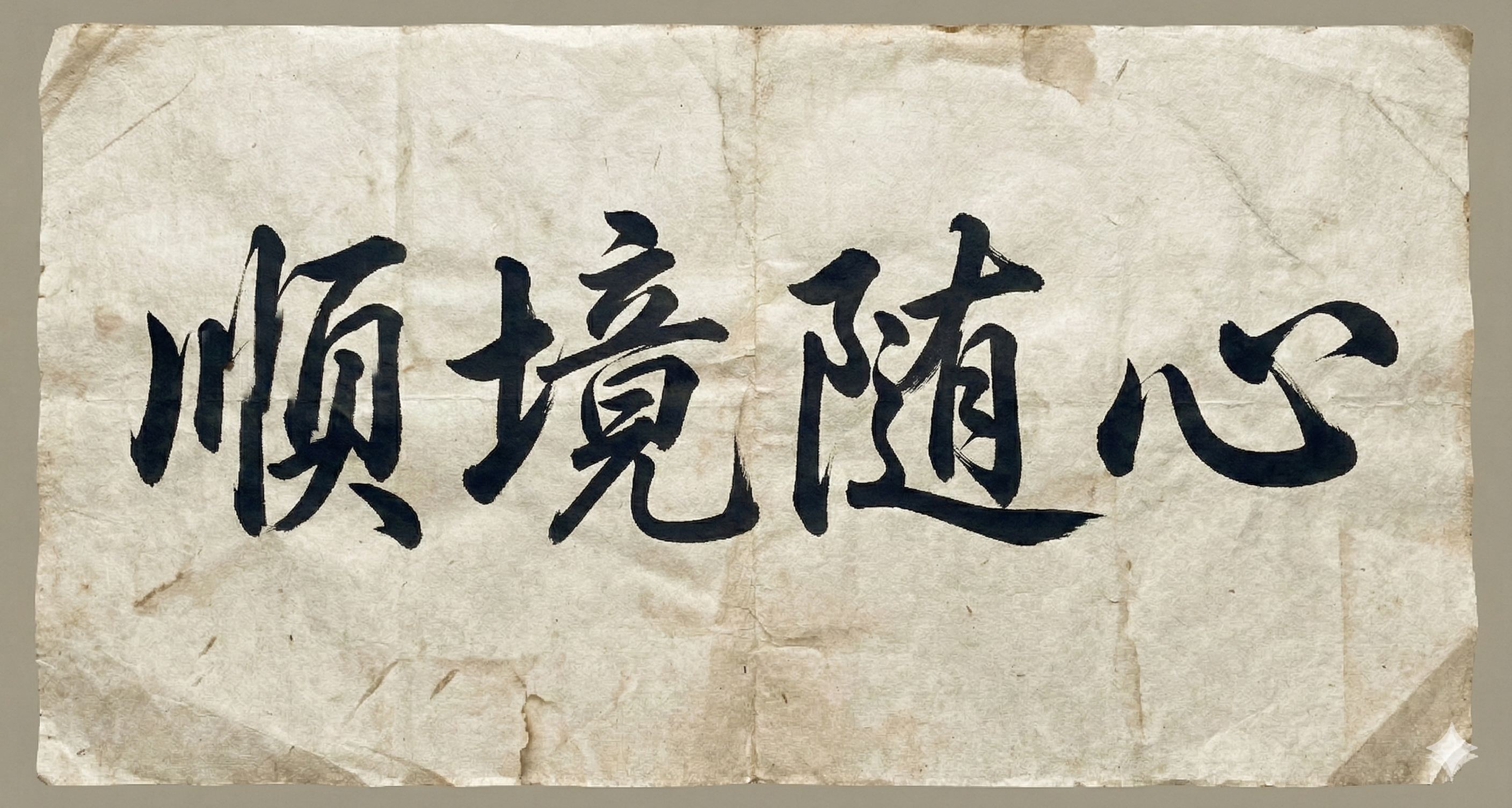
Image Healing: Guided Mandala Viewing - Lesson 179
Choose a mandala with a thick center and clear lines.
Let your gaze slowly move along the lines.
Feel your gaze and body stabilize at the same time.
Mandala is not about drawing something, but about observing what you are doing and practicing a continuous affirmation of your physical existence.
The theme of this mandala is "Anchoring of Being," which symbolizes bringing oneself firmly back to the present moment through perception.
◉ One gaze is sufficient; no repetition is required.

Lesson 179: Draw Your "Map"“
①Draw the outline of your foot or an abstract area under your feet.
②Draw three extending lines under your feet: front, back, and side, symbolizing that you have a place in space.
③Write a calming phrase, such as: "I stand on the earth, and the earth receives me."“
Please log in before submitting your drawings and feelings.
○ 179. Ground-based training: Log-guided approach
- In which scenario did I most easily experience a sense of detachment today? Describe your physical state at that time.
- When practicing grounding, which part of my body first regains sensation? (Sole of feet, legs, breathing...)
- How much did my sense of "body here" improve after training? (0–10)
- Here's a method that worked today for "getting back to where you are."
- Write a short phrase to prepare for tomorrow's practice.
Please log in to use.
Grounding allows the body to regain weight and position; you are no longer floating in fear, but firmly standing in your present moment.
 EN
EN  ZH
ZH  ES
ES  FR
FR  JA
JA