

Lesson 181: The "Safety Anchoring" Technique for Sudden Anxiety
Duration:70 minutes
Topic Introduction:
The most prominent characteristics of sudden anxiety are "sudden" and "intense," like being pulled into a vortex that you cannot control.
However, physical tension does not indicate real danger, but rather that an overreaction alarm system is being rapidly activated.
This lesson focuses on "safety anchoring"—when anxiety suddenly rises, it helps you steadily bring your attention back to the present moment and find a physical anchor that you can rely on.
It's not about eliminating anxiety, but about preventing it from overwhelming you.
Lesson 181: Safety Anchoring Techniques for Sudden Anxiety, Click to listen to the reading, watch the content.
In the instant of a sudden anxiety or panic reaction, many people instinctively try to escape or quickly resolve the symptoms, but often the more they try, the more out of control they become. Lesson 181's safety anchoring technique isn't about fighting anxiety, but about establishing a stable psychological anchor point amidst chaos. Safety anchoring refers to using a clear and perceptible element to reorient the nervous system during waves of anxiety. When anxiety strikes, the brain quickly detaches from the present moment and enters a state of catastrophic prediction, while the body simultaneously loses coordination. The first key to anchoring is returning to the concrete, not the abstract. You need to choose an anchor point that is always available, such as a physical sensation, a fixed action, a calming phrase, or a visual focus. This anchor point itself doesn't need to provide comfort; its purpose is to confirm that you are still in reality. The second key is singular, not multiple. Trying multiple techniques simultaneously during a sudden anxiety attack will only exacerbate the chaos. A clear and repetitive anchoring behavior is needed to gradually calm the nervous system. The third key point is prior familiarity. Safety anchoring isn't a technique you come up with on the spot; it needs to be practiced repeatedly in a stable state so that the body develops a conditioned reflex. When you automatically initiate the anchoring action during a peak of anxiety, the brain receives a strong signal that the danger is not out of control. It's important to emphasize that anchoring doesn't make anxiety disappear instantly, but rather prevents it from escalating indefinitely. As you successfully anchor repeatedly in unexpected situations, your brain's trust in anxiety decreases, and you gradually shift from fearing anxiety itself to believing in your ability to cope. True security isn't the absence of fluctuations, but rather knowing what you can hold onto amidst those fluctuations.
▲ AI Interaction: Describe the moment you most recently experienced a sudden bout of anxiety.
Tell the AI: How did the anxiety suddenly arise? Was it on the road, in a shopping mall, in a car, in a meeting, or upon waking up?
AI will generate a document for you.“"Personal Safety Anchoring Chart"”,include:
① The first part of your body to tense up
② The most effective current attention anchor
③ Stable actions that can be performed immediately
○ Sound buffer: pulls your thoughts back from the whirlpool to a straight line.
When anxiety suddenly rises, sound is the fastest way to connect with the body's rhythm.
Let your ears "hear" the stabilization first, then let your body follow.
You don't need to relax, you just need to keep the rhythm more consistent than chaotic.
Herbal Tea - Lavender Chamomile Tranquilizing Tea
Recommended reasons:Lavender stabilizes nerves, while chamomile naturally slows down breathing, making it the most effective combination for sudden anxiety.
How to drink:When holding the cup, pay attention to the temperature of your palm; let temperature be your first "safety anchor."
○ Stable Dietary Therapy: Mediterranean Roasted Vegetables (Briam) (ID181)
During periods of sudden anxiety and nervous imbalance, the body needs robust and reliable nourishment. Mediterranean roasted vegetables, made with olive oil and slow-roasted to release stable energy, along with the rich texture of various root vegetables, help the body return to the present moment. This nourishing dish is suitable for consumption after anxiety, aiding the body in transitioning from alertness to stability.
neural stabilization
Emergency Response
Open Recipe
◉ Greece – Mediterranean Diet: Olive Oil Stewed Vegetables (Briam) (ID 181)
Briam is a classic summer stew on Greek family tables, often referred to as a "Greek oven-baked dish." Unlike typical roasted vegetables that aim for crispness, Briam emphasizes the harmonious blending of ingredients. Through a long, low-temperature slow roasting process, a generous amount of olive oil slowly "stews" the potatoes, zucchini, and onions until they melt in your mouth. For those experiencing abnormal stomach acid secretion due to anxiety and difficulty digesting raw salads, this warm, soft dish, rich in healthy oils, is the perfect soothing choice for those with a sensitive stomach.
Deep Nourishment Repairing nerves Gastrointestinal friendly
I. Recommended Dietary Therapy and Reasons
Recommended dishes:Briam (Greek olive oil stewed vegetables)
Recommended reasons:
1. Oil nourishment:The key to this dish isn't "baking," but rather "stewing" with olive oil. A high dose of extra virgin olive oil provides powerful anti-inflammatory polyphenols that soothe a dry gut and offer a stable energy source for the brain.
2. Extremely high absorption rate:When vegetables are cooked for a long time, their cell walls are broken down, making it easier for the lycopene and fat-soluble vitamins to be absorbed by a weakened body in a state of anxiety.
3. Emotionally stable:Potatoes provide mild carbohydrates that help synthesize serotonin, bringing a sense of emotional calm.
2. Recipe and Method
Recipe (Serves 2–3):
- 2–3 potatoes (thinly sliced)
- Two zucchini (sliced into thin rounds)
- 1 purple onion (sliced or ringed)
- 3–4 cloves of garlic (sliced)
- 400g of chopped tomatoes (canned or fresh, ripe)
- Core essence:1/2 cup extra virgin olive oil (about 100ml, don't be stingy, this is key)
- 1 tablespoon of dried oregano
- Sea salt and black pepper to taste
- (Optional) Sprinkle with Feta cheese before baking.
practice:
- Preheating:Preheat oven to 200°C (400°F).
- Preparing the ingredients:Cut all vegetables into slices about 3–5 mm thick. It’s important to keep them all the same thickness so they cook through at the same time.
- mix:In a large bowl, combine all the sliced vegetables, garlic, and chopped tomatoes. Pour in the remaining half cup of olive oil, and sprinkle with oregano, salt, and black pepper. Toss with your hands, making sure each vegetable is coated with the oil and sauce.
- Project distribution:Pour the mixed vegetables into a baking pan (preferably a shallow, large baking pan), spread them out evenly, and try not to pile them too thickly.
- Slow roasting:First, cover with aluminum foil and bake for 45 minutes (to allow the steam to soften the vegetables); then uncover the foil and bake for another 30–45 minutes, until the surface is golden brown, excess moisture has evaporated, and only clear olive oil is left sizzling.
3. Small rituals for body and mind
Slow eating practice:This dish requires nearly 1.5 hours to cook. Use this time to practice the "art of waiting," enjoying the warm aroma of mixed herbs and roasted onions wafting from the oven. Tell yourself, "Good things are worth waiting for, and so is my recovery."“
Dipping experience:When eating, dip a piece of whole-wheat bread into the golden-red broth at the bottom of the plate. As it enters your mouth, feel the warm, smooth liquid flowing down your esophagus, and imagine it using golden light to heal the inflammation in your body.
4. Dietary Therapy Experience Record
- Record whether your stomach feels a special "comfort" after eating, rather than a burden caused by greasiness.
- Observe whether this soft and chewy texture makes you unconsciously slow down your eating speed.
- Notice whether your mind feels smoother, less "dry," or less tense after consuming plenty of healthy fats.
V. Instructional Videos (approximately 3–5 minutes)
◉ Video Title:Briam – Greek "Healing" Oven Dishes
6. Precautions
- Fear of oil shortages:Many anxious people have a fear of "fat." Rest assured, this recipe uses olive oil that hasn't been heated to its smoking point, an excellent anti-inflammatory agent. If there's too little oil, this dish will become shriveled roasted vegetables, losing its therapeutic benefits.
- Cutting tips:Potatoes take longer to cook than zucchini, so potato slices should be cut slightly thinner than zucchini slices, or potatoes can be placed at the bottom and soaked in the broth.
- Serving temperature:Briam in Greece is typically eaten warm or at room temperature, not scalding hot. Letting it sit for 20 minutes to allow the flavors to meld before eating yields the best taste.
hint:This is a typical "slow food" dish, and it is recommended to make it when you have plenty of time on the weekend. You can make a larger batch at once, and it will still taste delicious when reheated the next day after being refrigerated.
○ Gothic script - Lesson 181 writing exercises
In-depth analysis:
Sudden anxiety makes people most prone to feelings of exposure and vulnerability. The dense, vertical structure of medieval Gothic fonts, resembling city walls, is a response to this sense of loss of control. The black density of the Textura font creates a sense of protection for the nervous system on both visual and motor levels.When you write these closely spaced vertical lines, you are not opening yourself up to the outside world, but building a strong and secure inner fortress for yourself.
Writing Skills (Advanced Version):
- The Fence effect:The vertical strokes arranged like a fence suggest that external stimuli are blocked from the shape of the character.
- Quadrata (diamond facet):The clear, sharp angles at the beginning and end of strokes symbolize firm boundaries and a refusal to intrude.
- Extremely stable (Stability):All the vertical strokes fall straight down, making the body feel as still as a mountain.
- Compactness:Compression of letter spacing symbolizes energy being drawn in rather than dissipated.
- Mechanical repetition:Like a printing press, repeated writing uses order to suppress chaos.

Image Healing: Guided Mandala Viewing - Lesson 181
Choose a mandala with a thick central design and dense structure.
Focus your gaze on the repeating pattern.
Experience the sense of security that visual order brings.
Mandala drawing is not about drawing something, but about observing what you are doing. What you are practicing in observing is how to quickly anchor yourself in the face of sudden anxiety.
The theme of this lesson's mandala is the inner fortress, symbolizing that even amidst external turmoil, you remain firmly surrounded.
◉ One gaze is sufficient; no repetition is required.
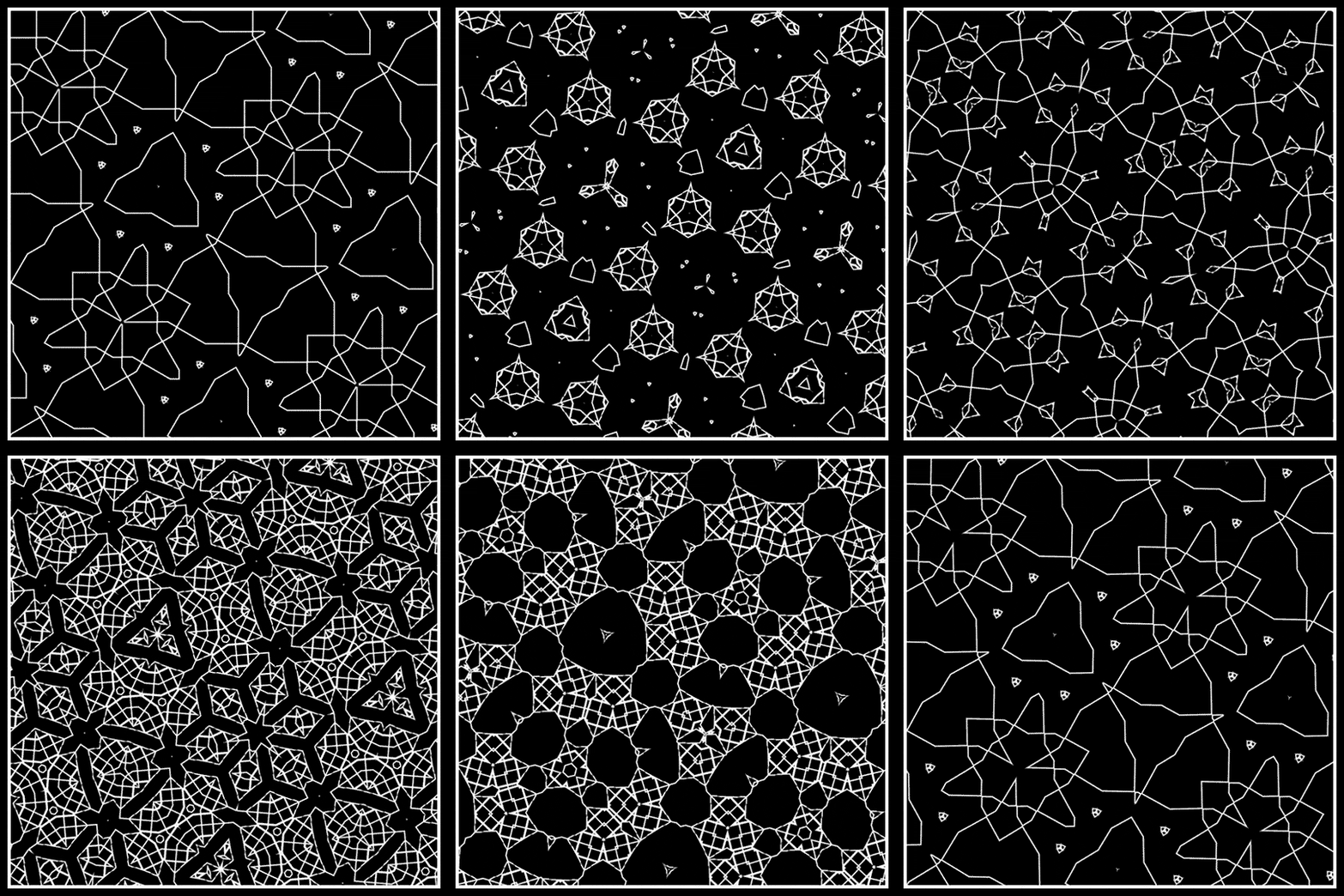
Lesson 181: Draw Your "Safety Anchor Point"“
①Draw a stable square or circle in the center of the paper to represent your core safety point.
②Draw 3 to 5 wavy lines on the outer side to symbolize the external stimulus that causes sudden anxiety.
③Use color to mark the places you want to "bring your attention back".
Please log in before submitting your drawings and feelings.
○ 181. Anchoring Sudden Anxiety: Journal-Guided Approach
- When was my most recent bout of anxiety? What was the strongest feeling I had at that time?
- At that moment, what did I most wish for to steady me? (Physical touch, sound, visuals...)
- Of the "safety anchoring" concepts I learned today, which one is best suited for me? Why?
- Which action would I be willing to try next time anxiety arises?
- Write down a sentence you would like to say to yourself when anxiety strikes.
Please log in to use.
Anxiety may arise suddenly, but you are not without support; as long as you find your anchor, you can stand firm even when the wind blows.
 EN
EN  ZH
ZH  ES
ES  FR
FR  JA
JA