

Lesson 195: The Role and Boundaries of Partners or Family Members in Practice
Duration:70 minutes
Topic Introduction:
Many people with spatial anxiety rely on their partners or family members for a sense of security during the initial stages of outdoor training.
Having a coach can make you more willing to take the first step, but it can also allow "dependence" to quietly replace "autonomy".
This lesson will help you understand the best role of a companion, the pitfalls to avoid, and how to establish a safe yet progressively independent training rhythm.
○ Three core principles of safe training sessions
- ① Stay by your side, instead of pulling you along:The sparring partner provides a sense of presence, but does not dominate or make decisions for you.
- ② Provide rhythm, not stress relief:The role of a training partner is to stabilize the environment, not to "cure your discomfort".
- ③ Gradually fade out, rather than accompanying indefinitely:The goal of companionship is to "help you become independent," not to "help you rely on someone forever."
Lesson 195: The Role and Boundaries of a Partner or Family Member in Practice (Click to listen to the reading and view the content)
In the later stages of anxiety and exposure exercises, many people naturally bring in the companionship of a partner or family member as a support resource. If used properly, this companionship can enhance a sense of security and help sustain the practice; however, if roles and boundaries are blurred, it may weaken the recovery effect or even increase dependence. Understanding the true function of companionship is the core of this course. The first role of the companion is to provide a stabilizing environment, not to protect. The companion's presence should be like part of the environment, not a rescuer ready to intervene at any moment. Only when you know the other person won't immediately intervene will your brain truly learn self-regulation. The second role is to witness, not to evaluate. The companion doesn't need to constantly ask about feelings or judge progress; these behaviors will draw attention back to the symptoms themselves and increase self-monitoring. Quiet companionship is itself the most effective support. The third key is clear boundaries. Companionship doesn't mean deciding the route, time, or whether to withdraw for you; all choices of advancement or retreat should be made by yourself. Otherwise, exposure will quietly transform into attachment exercises. The fourth key point is to gradually withdraw from the companionship role. Companionship should be a transition, not a long-term commitment. It can progress from full-time accompaniment to partial accompaniment, and then to appearing only at the beginning or end, allowing the nervous system to gradually adapt to completing the exercise independently. It's important to understand that true security isn't about having someone by your side, but about remaining the sole agent of your actions even when someone is present. When a training relationship is properly structured, it strengthens, rather than weakens, your capabilities. The goal of recovery isn't to always have someone with you, but to know that you can accomplish things even alone. When you practice independence with companionship, your mind relearns to trust yourself instead of clinging to others. This shift marks the beginning of a mature stage of recovery.
○ AI Interaction: What type of training relationship do you have?
Click to interact and answer three questions: "When do I rely on my training partner the most?"“
“"What do I expect from them?" "What am I afraid of when they leave?"”
AI will help you understand the dynamic patterns between you and your training partner and provide adjustment suggestions.
○ Voice Exercise: The Shared Rhythm of the Companion and the Companion
If two people practice together, they can listen to a light, steady rhythm together and move in the same breathing frequency.
This avoids the sparring partner "over-pushing" or "over-protecting," creating a more natural synchronized rhythm.
○ Western Herbal Healing Tea - Peppermint Tea
Recommended drinks:Peppermint Tea
Recommended reasons:Menthol has a refreshing and invigorating effect, antispasmodic properties, and can relieve stress-induced bloating and abdominal pain.
practice:Steep 3–5 grams of dried mint or fresh leaves in boiling water at 100°C for 5 minutes.
○ Stable Dietary Therapy - Lemon Baked Potatoes (ID195)
During practice phases involving adjusting relationships and boundaries, the body needs simple and reliable nourishment. Lemon baked potatoes, with their familiar texture and stable energy, provide a sense of groundedness, symbolizing the balance between companionship and independence. This nourishing dish is suitable to eat after a sparring session or independent practice to help the body confirm that the rhythm has been established.
Boundary Establishment
Autonomous recovery
Open Recipe
◉ Greece – Mediterranean Diet: Greek Lemon Potatoes (Patates Lemonates) (ID 195)
If you've ever tasted authentic Greek potatoes, you'll be amazed by their "creamy" texture. This dish is the soul of a Greek family's Sunday meal. It uses plenty of lemon juice, olive oil, and water to create a "sauna" in the oven, allowing the potatoes to first absorb the flavors through boiling, and then bake until crisp. For those craving security and feeling empty and anxious, this is the ultimate "grounding food," bringing deep satisfaction and comfort.
Root healing Emotional comfort acid-base balance
I. Recommended Dietary Therapy and Reasons
Recommended dishes:Greek Lemon Roasted Potatoes
Recommended reasons:
1. Serotonin boosters:Potatoes are a high-quality carbohydrate. Adequate carbohydrate intake helps tryptophan enter the brain, promoting the synthesis of serotonin (the "happy hormone"), making it a natural anti-anxiety agent.
2. Adrenal support:Lemons are rich in vitamin C, which directly supports adrenal function and helps the body metabolize cortisol (a stress hormone).
3. It's not just oil, it's medicine:This dish uses a generous amount of extra virgin olive oil. During baking, the oil emulsifies with lemon juice, forming a sauce-like substance that lubricates dry intestines and nourishes the nervous system.
2. Recipe and Method
Recipe (Serves 2–3):
- 3–4 yellow-skinned potatoes (Yukon Gold or Dutch potatoes) (cut into large wedge-shaped pieces)
- Marinade (Gold Liquid):
- 1/2 cup extra virgin olive oil (don't skimp, this is key)
- 1/2 cup fresh lemon juice (about 2 lemons)
- 1/2 cup water or chicken broth
- 3 cloves of garlic (crushed into a paste)
- 1 tablespoon of dried oregano
- Sea salt and black pepper to taste
- (Secret Recipe) 1 teaspoon of semolina (optional, for added crispness)
practice:
- Cut into pieces:Peel the potatoes and cut them into thick chunks about the size of lemon wedges. Don't cut them too small, or they will melt when baked.
- Emulsified sauce (key):In a large bowl, combine oil, lemon juice, water, minced garlic, oregano, and salt. Whisk vigorously until the oil and water are combined and the mixture becomes an opaque yellow emulsion.
- Bathing:Pour the potatoes into a baking pan (preferably a deep one) and pour in the sauce.Key points:The liquid should cover half the height of the potatoes. Greek potatoes are "boiled," not dry-baked.
- Steaming:Preheat oven to 200°C. Cover with aluminum foil and seal tightly. Bake for 40 minutes. This step allows the potatoes to absorb the juices and become soft.
- Crispy:Remove the foil. Return the baking tray to the oven and continue baking for 30–40 minutes, or until the moisture has evaporated, leaving only clear oil, and the edges of the potatoes are caramelized. Turn them carefully once halfway through.
3. Small rituals for body and mind
Lemon smell:The moment you squeeze the lemon juice is when the dish is at its freshest. Close your eyes, squeeze hard, and imagine you're squeezing out the grogginess and sourness from your brain. All that's left is clarity.
Acceptance and waiting:This dish requires a long baking time of nearly 1.5 hours. While waiting, I practice "delayed gratification" by inhaling the gradually intensifying aromas of garlic and lemon that fill the house. Good things (emotional stability) need time to "stew" out.
4. Dietary Therapy Experience Record
- Observe the melt-in-your-mouth texture of the potato; does it remind you of the feeling of being cared for as a child (comfort food)?
- The recipe records how the sourness of the lemon neutralizes the heaviness of the potato starch, making this main dish not greasy at all, but rather very appetizing.
- Pay attention to the satisfying feeling of fullness after eating; does it help you sleep better that night?
V. Instructional Videos (approximately 3–5 minutes)
◉ Video Title:Crispy on the outside and tender on the inside: The secret of Greek potatoes – "boil then bake".
6. Precautions
- Potato varieties:Please use yellow-skinned, waxy potatoes (such as Yukon Gold). Do not use the starchy potatoes specifically for mashed potatoes (Russet), as they will fall apart and turn into a paste during this long cooking process.
- Liquid volume:If you find the water has dried out when you remove the foil, add a little hot water. Potatoes need to be kept moist to become soft and tender. The final step is to add the oil for baking.
- About garlic:Garlic tends to turn bitter when exposed to high temperatures for extended periods. Therefore, it's recommended to dissolve minced garlic in water or add whole cloves of garlic with the skin on, squeezing them out before eating for better flavor.
hint:This dish is the perfect complement to Lesson 186, "Herb-Roasted Chicken." In fact, Greeks often roast chicken and potatoes together on a plate, letting the potatoes absorb the chicken oil—it's an absolute delight.
○ Suggestions for Chinese Calligraphy and Seal Carving Practice - Lesson 195
The seal carving exercises in this lesson are designed to strengthen the ability to maintain sovereignty in relational settings. Companionship should not lead to direction but rather become the background.
- Introduction to the characteristics of seal carving:
This lesson emphasizes maintaining focus and self-control. The fact that the blade's path doesn't deviate due to external interference symbolizes maintaining inner resolve even with the support of others. - Writing words and seals:
Shunjitang - Psychological Intention:
The inscription of Shunji Hall is a way to train oneself to adapt to relationships without losing one's own position, allowing one's sense of security to return to the center of oneself. - Knife skills:
Practice steady entry and exit, with the opening and closing of the blade completed by yourself, and all advance and retreat choices decided by yourself. - Emotional transformation:
Transform your concerns about dependence into trust in your own rhythms.
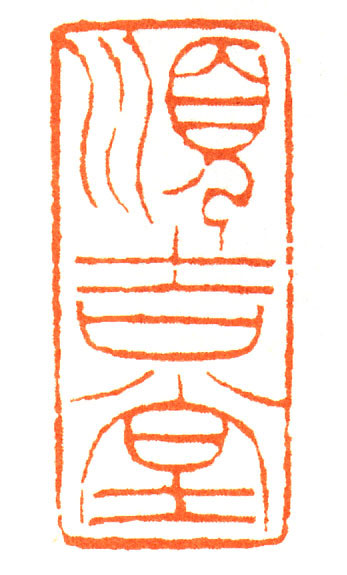
Image Healing: Guided Mandala Viewing - Lesson 195
Choose a mandala with a stable center and a soft outer circle.
Focus your gaze on the center and then slowly expand it.
Feel the presence of companionship, but don't occupy the central position.
Mandala is not about drawing something, but about observing. In observing, you practice self-placement in relationships.
The theme of this mandala is "Stability in Coexistence," symbolizing that companionship and independence can coexist.
◉ One gaze is sufficient; no repetition is required.

Lesson 195: Draw Your "Practice Partner Boundaries Chart"“
① Sense of distance between two people:
Draw two dots on a piece of paper to represent you and your training partner, and then connect them with 3-4 lines to symbolize "the support I need".
Then, a slight gap is left between the dots to indicate that "I and the other party are still two independent systems".
Let the image be presented: support its presence, but reserve space.
② Role differentiation:
Draw a soft outer circle around your dot to represent your rhythm;
Draw another outer circle for the sparring partners to represent their support methods.
Using colors to distinguish between "the part I am responsible for" and "the part the other party is responsible for" allows you to see clearly that a training partner is not a substitute, but an accompaniment.
③ Independent path:
Draw 2-3 lines extending outward from your dot, representing the independent steps you are willing to take in the future.
Write a sentence at the end of each line, such as "I can take three steps first" or "I can decide my own pace."
The purpose of the image is to make you feel that independence is not about leaving, but about growing.
Please log in before submitting your drawings and feelings.
○ 195. Training Partner Relationship - Log Guidance
- In which aspect of the training session did I rely most on my sparring partner today? And why?
- How do I want my sparring partner to support me, rather than taking on my burdens?
- What's the next small "independent action" I'd be willing to try? (For example, walking for 10 seconds first)
Please log in to use.
The meaning of companionship is not to replace your strength, but to allow you to gradually grow your own feet in a safe environment.
 EN
EN  ZH
ZH  ES
ES  FR
FR  JA
JA