

Lesson 202: Redefining "Safety" and "Companionship"“
Duration:70 minutes
Topic Introduction:Many people's sense of security is based on relying on others and avoiding loneliness. However, true, deep security comes from being present with oneself and establishing stable relationship boundaries. This lesson will help you reflect on your attachment style and reframe the relationship between "me and me" and "me and others" to create a freer and healthier definition of companionship.
○ Misunderstandings in companionship and directions for repair
- Misconception 1:I feel safe only when “someone is by my side”.
- Misconception 2:Self-care does not equal companionship; it must come from an outsider.
- Repair direction:Learn to "become a stable other" and relax your obsession with external responses.
Lesson 202: Redefining Safety and Companionship, Click to listen to the reading, View the content
In the recovery phase from separation anxiety and relationship insecurity, many people gradually find that their understanding of safety and companionship needs to be recalibrated. In the past, you might have equated safety with having someone around, and considered companionship the sole source of anxiety relief; once alone or without others, your inner stability would quickly crumble. Redefining safety doesn't negate the value of companionship, but rather shifts the source of safety from a singular external factor to a combination of internal and external factors. The first layer of safety is predictability. When you know how things begin and end, your nervous system becomes less alert, even when no one is around. The second layer is self-responsiveness. When discomfort arises, whether you know how to soothe yourself instead of immediately seeking external validation determines whether safety can be carried. The third layer is resilience in relationships. True companionship isn't about constant presence, but about maintaining a psychological connection even when apart. When you can feel the continuity of the relationship in your heart, separation is no longer equated with danger. The key to reinterpreting companionship is moving from dependence to co-existence. Dependence requires others to assume your stability, while co-existence allows for independence while supporting each other. The fourth key point is practicing autonomy in companionship. Even when someone is around, you should still decide the pace, route, and choices; this prevents companionship from evolving into a new form of safety behavior. The fifth stage is practicing short periods of companionship without companionship. The definition of safety changes as you repeatedly prove that you can accomplish tasks even alone. It's important to understand that safety isn't a state but a capability that can be repeatedly reinforced through experience. When you internalize a sense of security, companionship transforms from a necessity into a bonus. Truly mature relationships aren't about mutual rescue but about walking hand-in-hand on your own stable paths.
▲ AI Interaction: What do you understand by “security”?
Security does not only come from the presence of others, but can also be redefined within oneself.
When you think of "companionship", you might as well think of your warm memories and stable rhythm.
Accompaniment can be a familiar song or a breathing exercise.
Safety can actually be created by yourself gently.
Click the button below to explore with AI how you have built a sense of security in the past and try to design a freer companionship model.
○ Redefine “safety” and “companionship” · Music guidance
Safety doesn't just come from the presence of others; it can also come from within. Start building your own "inner companionship."
Prepare a "going home song" and play it when you need to calm down so that your body can remember this signal.
Use your breathing to coordinate with the four-beat rhythm: inhale for four beats, pause for two beats, exhale for four beats, pause for two beats. It is easier to stick to it if you coordinate with the music.
When the song ends, remind yourself: I am here to accompany myself. This is also called "being seen well."
○ Herbal Tea· Ginseng Honey Tea
Recommended drinks:Ginseng Honey Tea
Recommended reasons:Before self-talk and repair exercises, it helps to enhance awareness and inner stability.
practice:Boil 3g of ginseng for 10 minutes. When it is warm, add 1 spoon of honey, stir well and drink.
○ Stable Dietary Therapy: Astragalus Jujube Porridge (ID202)
During the phase of re-establishing safe and supportive boundaries, the body needs gentle, sustained support. Astragalus and red date porridge, through its slow, nourishing approach, strengthens inner resilience, symbolizing that a sense of security can be cultivated over time. This nourishing dish is suitable for consumption after solitary practice or relationship adjustments, helping the body confirm that stability is being internalized.
Relationship and companionship
Intrinsic stability
Open Recipe
◉ Chinese Food Therapy: Astragalus and Jujube Porridge (ID 202)
In Traditional Chinese Medicine (TCM), "Qi" is the driving force of life. When a person is anxious for a long time, they often shift from "excitement" to "weakness," manifesting as reluctance to speak, heaviness in the body, and susceptibility to colds—this is called "Qi deficiency." Astragalus is known as the "king of Qi-tonifying herbs," and when combined with the sweet and warm properties of jujubes, it can revitalize this depleted energy. This bowl of porridge is more than just food; it's a gentle, upward-lifting force that helps support your weary body.
Tonify Qi and Raise Yang Improve fatigue Enhance immunity
I. Recommended Dietary Therapy and Reasons
Recommended dishes:Astragalus & Jujube Porridge
Recommended reasons:
1. Boosting psychological energy:Astragalus has the effect of "raising yang". For low mood and slow thinking (feeling like your brain can't work) caused by depression or anxiety, astragalus can help qi and blood flow upward and nourish the brain.
2. To calm the nerves, first replenish the blood:Red dates are an excellent food for replenishing qi and blood, and calming the mind. Sufficient qi and blood can bring peace of mind and effectively relieve difficulty falling asleep caused by palpitations and shortness of breath.
3. Build a defensive wall:Traditional Chinese medicine believes that astragalus can strengthen the exterior. People with anxiety often have lower immunity and are more susceptible to colds and flu. This porridge can act as a shield to enhance the body's defenses.
2. Recipe and Method
Recipe (Serves 2):
- Raw astragalus (sliced) 15–20g (available at pharmacies, a key ingredient)
- 3-5 large red dates (pitted)
- Rice (japonica rice) 80g
- 1000ml of clean water
- (Optional) A small piece of dried tangerine peel (to prevent excessive qi replenishment that could cause bloating)
practice:
- Decoction extraction (key step):Astragalus has a woody root and stem, and its taste is extremely poor when eaten directly. Wash the astragalus slices, put them in a pot, add water, bring to a boil, then simmer for 20 minutes.
- Remove the residue:Remove the astragalus residue, keeping only the yellow medicinal broth. This broth will be the base for cooking porridge (or you can put the astragalus in a non-woven fabric spice bag, cook it with the rice, and then remove it at the end).
- Processing red dates:Wash the red dates.Be sure to checkTraditional Chinese medicine believes that jujube pits are dry and hot, so after removing the pits, only the nourishing flesh is left.
- Cook together:Add the washed rice and pitted red dates to the astragalus root water. Bring to a boil over high heat.
- Slow cooking:Simmer over the lowest heat for 30–40 minutes, until the rice grains have opened up and the porridge has become thick and slightly yellow (the color of astragalus).
- Seasoning:Red dates are naturally sweet and usually do not require added sugar. If you prefer them sweeter, you can add a little brown sugar.
3. Small rituals for body and mind
Breathing in the scent of herbs:While boiling astragalus root water, a faint smell of beans and earth will fill the kitchen. This is the unique "earthly energy" of astragalus root. Take a deep breath of this aroma and imagine it filling the empty corners of your body.
Coreless metaphor:When you remove the pits from the dates, visualize that you are removing the "heat" and "hardness" from your heart, leaving only softness and nourishment.
4. Dietary Therapy Experience Record
- After drinking the porridge, pay attention to whether your previously cold hands and feet begin to warm up, and whether you feel a slight sweat and a sense of well-being.
- Record the changes in energy levels during the afternoon to see if there are fewer "cliff-like" moments of fatigue than usual.
- Observe whether your voice sounds more confident than before (a strong voice comes from sufficient breath).
V. Instructional Videos (approximately 3–5 minutes)
◉ Video Title:What to do if you feel weak and listless? A bowl of astragalus porridge can replenish your energy and spirit.
6. Precautions
- Contraindicated for colds:If you have a cold or fever (due to external pathogens)Never drink itAstragalus porridge. Because astragalus is a "closing door" medicine, it can trap pathogens inside the body and prevent them from leaving (closing the door to keep the enemy inside).
- Use with caution if you have yin deficiency and excessive fire.If you frequently experience dry mouth, hot palms, and irritability (indicating a "heat" condition rather than a "deficiency" condition), astragalus may exacerbate the heat. Please consult a doctor or try drinking lily porridge instead.
- Astragalus selection:For daily health maintenance, please buy "raw astragalus," which has a strong effect in replenishing qi; "roasted astragalus" (honey-processed) is more focused on replenishing qi and has a sweeter taste. Both are acceptable.
hint:This porridge is suitable for breakfast. As the saying goes, "Eating astragalus in the morning is like soaking snow in soup," it can support your energy consumption throughout the day.
○ Chinese Calligraphy: Clerical Script Writing Practice: Lesson 202
By reinterpreting the relationship between security and companionship through writing, stability shifts from the external to the internal.
Written words:
Heshun Ankang
Pre-writing advice:
Before writing, sit quietly for a moment, take three deep breaths to feel the support of your body, and then slowly begin writing in the clerical script.
Writing Tips:
The horizontal strokes of the clerical script are expansive, while the vertical strokes are subtle, making it suitable for expressing a gentle and lasting sense of security. When writing in harmony, the horizontal strokes can be slightly longer, symbolizing the flow in relationships. When writing about peace and well-being, the strokes should be restrained at the end, reminding us of safety and ultimately returning to ourselves. Each stroke is an exercise in finding a balance between companionship and independence.
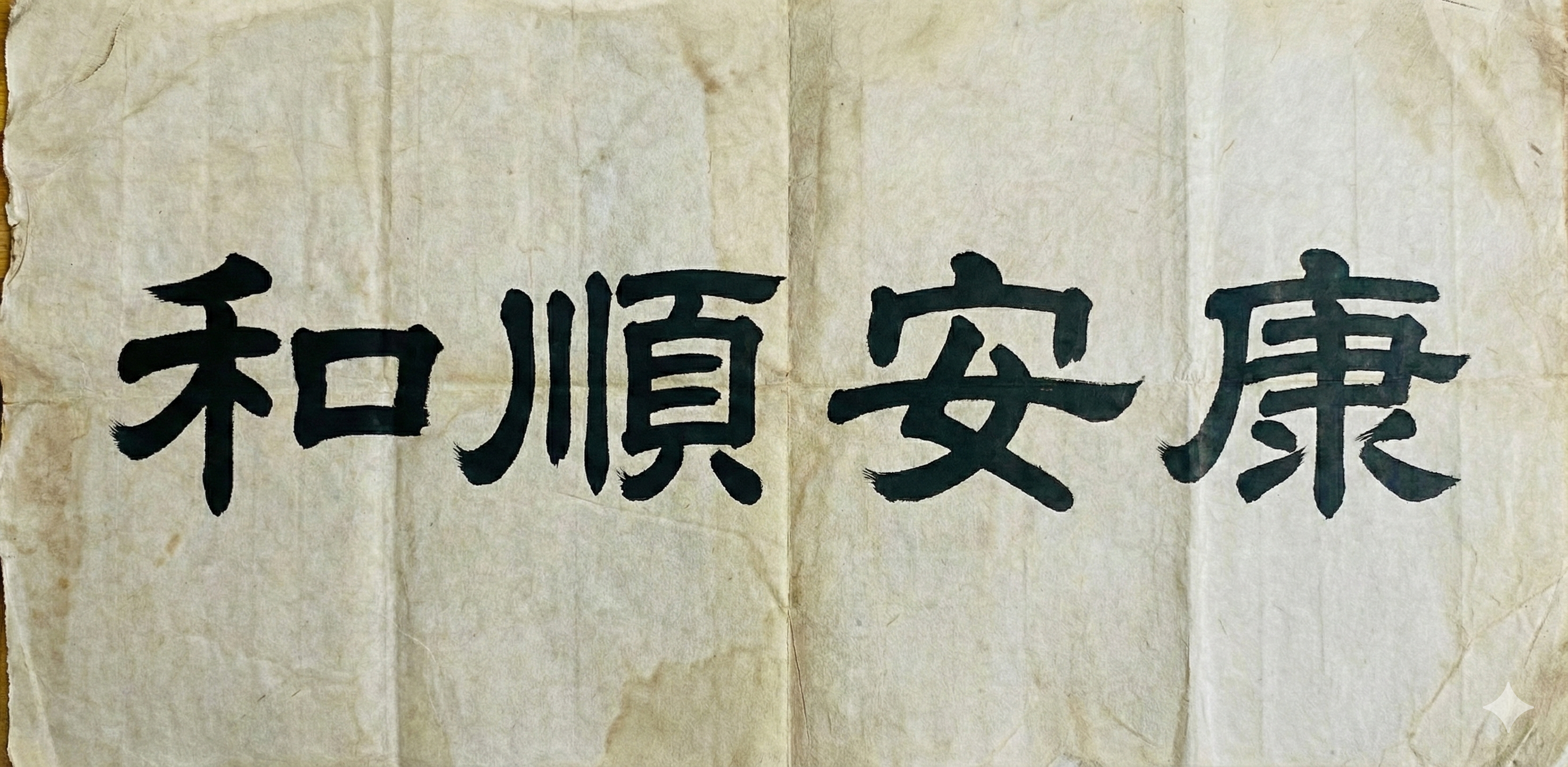
Image Healing: Guided Mandala Viewing - Lesson 202
Choose a mandala with a stable center and a gentle outer circle.
Let your gaze linger on the center before slowly expanding it outwards.
Feel the presence of companionship without it occupying the core.
A mandala is not about drawing something, but about observing what you are doing and practicing safety and presence in that observation.
The theme of this lesson's mandala is a symbol of stability, safety, and companionship that can be carried and shared.
◉ One gaze is sufficient; no repetition is required.

Lesson 202: Redefining "Safety" and "Companionship"“
Objective: To distinguish the different sources of "security" and "continuous companionship".
Steps: Draw two small islands: one named "Companionship with Others" and the other named "Self-Stable." Connect them with a bridge, and write on the bridge behaviors that maintain connection rather than dependence.
Please log in before submitting your drawings and feelings.
○ 32. Redefine "safety" and "companionship" log guidance suggestions
① Write down my old definition of safety (someone must be around, responsive, and available) and how it made me more anxious. Give it a gentle goodbye.
② Write a new definition: Safety can also come from an internal rhythm, predictable schedules, available tools, and people you can connect with.
③ Take stock of "portable companions": photos, voice messages, text messages, scents, words of encouragement. How can these still accompany me when I leave?
④ Design two “alternative companionship plans”: for example, set a fixed time to report safety + read a soothing message; or focus on your feet + give yourself a hug.
⑤ Try some self-accompanying today: spend 3–5 minutes alone, observing the ups and downs of your body and recording the natural decline of your anxiety curve.
⑥ Write a commitment: "I will let others know when I need them, and I will take care of myself when they are not around."
Please log in to use.
The essence of companionship is not "others not leaving", but "I am willing to stand with myself". This is the safest place to start.
 EN
EN  ZH
ZH  ES
ES  FR
FR  JA
JA