

Duration:70 minutes
Topic Introduction:When others can't always respond to us, can we become the "power to stabilize ourselves"? This course will guide you to build a stable and sustainable self-support system - not relying on control, not indulging in loneliness, but creating an inner care network that "can always rely on yourself."
○ Lack of support system and alternatives
- Emotional collapse dependence:When faced with pressure, they expect immediate external rescue.
- Inner emptiness:Feeling empty and overwhelmed when alone.
- Alternative Path:Establish an "internal multi-point support system" such as writing, sound, painting, body memory, etc.
Lesson 204: Developing a Self-Support System (Click to listen to the reading, view the content)
After separation anxiety and relationship dependence gradually loosen, what truly needs to be built is a stable and sustainable self-support system. Self-support is not about bearing burdens alone, but about knowing how to take care of yourself when external support is unavailable or absent. Many people repeatedly relapse into anxiety not because of a lack of ability, but because their support structure is too singular. Once that support is removed, the system becomes unbalanced. The first step in cultivating a self-support system is to identify your existing resources, not to create them out of thin air. Breathing rhythms, body movements, visual anchors, and regular routines are all existing supports that have simply been overlooked in the past. The second key is to make support a process, not a temporary remedy. When discomfort arises, do you have a fixed sequence, such as stopping, breathing, locating, and then acting? This process significantly reduces panic. The third key point is multi-channel support, not single-channel support. Don't rely on one method for stability; instead, prepare multiple entry points at the physical, emotional, and behavioral levels so that even if one channel fails, the system won't collapse. The fourth stage is to embed support into daily life, not just use it when anxious. Short daily exercises like standing, walking, writing, or journaling strengthen the nervous system even when things are calm. The fifth key is to distinguish between support and control. Support helps you keep going, while control demands that feelings disappear immediately. When you stop demanding perfection and stability, it's easier to maintain long-term balance. It's important to understand that a self-support system isn't a list of skills, but a relationship—your relationship with yourself. As you use this system repeatedly in times of discomfort and find yourself able to persevere, trust will naturally form. True stability isn't the absence of storms, but learning how to navigate them. Once this system is established, it becomes the foundation for all your future stages, allowing actions to stem from inner order rather than external conditions.
▲ AI interaction: Are you willing to build your own "emotional support network"?
The self-support system is like a safe fortress in your heart.
You can write down words of encouragement to yourself or keep a "peace of mind journal."
When anxiety comes, open it and feel the companionship that the words provide.
This is an ongoing healing gift you give yourself.
Click the button below to work with AI to draw your own self-support structure diagram, establishing a complete loop from awareness, soothing to motivation.
○ Cultivate self-support system · Music guidance
Self-support is like a playlist: a calming song, a courage song, a farewell song, and a sleep song, each with its own function.
Assign a song to each triggering situation, and the song will be a clear reminder of "I can do something."
Record encouraging quotes into short audios, combine them with melodies, and make them your private encouragement.
When a checklist is used repeatedly, a sense of security is memorized by the brain, like a familiar route home.
○ Herbal Tea· Ginseng Lemon Tea
Recommended drinks:Ginseng lemon tea
Recommended reasons:Refreshing and clearing the mind, suitable for daily use to support awareness and focus before practice.
practice:Boil 3g of ginseng slices in water for 10 minutes. After cooling, add half a lemon and honey to make a drink.
○ Stable Dietary Therapy: White Hyacinth Bean Coix Seed Porridge (ID204)
During the phase of building a self-support system, the body needs gentle and long-term nourishment. White lentils and Job's tears provide sustained, non-stimulating energy, symbolizing stable support that can be made a daily habit. This dietary therapy is suitable for consumption after practice or during calm periods to help the body internalize the sense of support as part of the overall experience.
Everyday Embedded
Long-term stability
Open Recipe
◉ Chinese Food Therapy: White Hyacinth Bean and Job's Tears Porridge (ID 204)
Traditional Chinese medicine often says, "Excessive dampness leads to a hundred diseases." Anxiety is not just an emotional issue; it is often accompanied by a feeling of heaviness and turbidity in the body—dizziness, sluggish limbs, and persistent fatigue even after plenty of sleep. This porridge uses white lentils, known as the "grain of the spleen," and Job's tears, the "king of dampness removal." One is responsible for strengthening the spleen and resolving dampness, while the other is responsible for promoting urination and eliminating dampness. Together, they gently expel excess water and turbidity from the body, leaving the body and mind refreshed.
Strengthen the spleen and eliminate dampness Relieve fatigue Clearing heat and draining pus
I. Recommended Dietary Therapy and Reasons
Recommended dishes:Hyacinth Bean & Coix Seed Porridge for Removing Dampness
Recommended reasons:
1. Natural dehumidifier:White hyacinth beans are known as the "grain of the spleen," as they can eliminate dampness without harming the body's vital energy; Job's tears (coix seed) can promote diuresis and eliminate dampness. The combination of the two can effectively resolve "dampness trapping the spleen" caused by anxiety, and improve the state of feeling heavy-headed, light-footed, and lethargic.
2. Improve gut environment:Many people with anxiety experience symptoms such as loose stools or sticky, unsatisfactory bowel movements. White hyacinth beans have excellent antidiarrheal properties and can regulate intestinal function, helping to restore normal bowel movements.
3. Clearing heat and detoxifying:Job's tears are slightly cooling and can clear heat and drain pus. For people who suffer from recurring acne and oily skin due to stress, this porridge can purify the skin from the inside out.
2. Recipe and Method
Recipe (Serves 2):
- White hyacinth beans (stir-fried white hyacinth beans are even better) 30g (must be soaked in advance)
- Job's tears (Coix seed) 30g
- 50g of rice (japonica rice) (rice nourishes the stomach and neutralizes the cooling properties of Job's tears)
- 1200ml of clean water
- (Optional) 1 small piece of dried tangerine peel (to regulate qi and prevent bloating from beans)
practice:
- Soaking (mandatory step):White hyacinth beans are extremely hard, and Job's tears are also difficult to cook until soft.mustSoak in clean water for 3–4 hours beforehand, or even overnight.
- Stir-frying (optional but recommended):If you have a weak spleen and stomach (feeling cold, having diarrhea), it is recommended to stir-fry raw Job's tears in a dry pan over low heat until they turn slightly yellow. This can reduce their cold nature and enhance their spleen-strengthening effect.
- Cook the beans first:Add water to a clay pot, then add the soaked white kidney beans. Bring to a boil over high heat, then reduce to medium-low heat and simmer for 20 minutes.
- Cook together:Add Job's tears, rice, and dried tangerine peel. Bring to a boil again over high heat.
- Slow cooking:Turn the heat to the lowest setting, cover, and simmer for 40–50 minutes.
- Status check:Make sure to cook the white kidney beans until they are soft and tender.Completely mushy and bloomingIt has a soft, powdery texture and no beany taste. The broth is milky white.
3. Small rituals for body and mind
Stale air is expelled:The soup made from Job's tears is milky white and cloudy. When drinking the soup, imagine that this bowl of porridge is replacing the cloudy liquid in your body, sweeping away your accumulated negative emotions and bodily waste like sweeping the floor.
Chewing awareness:Cooked white kidney beans have a very smooth and creamy texture. Chew them slowly, savoring the subtle aroma of the beans. Tell yourself, "My digestive system is becoming stronger; I am capable of overcoming life's difficulties."“
4. Dietary Therapy Experience Record
- Record whether the heaviness in the body is reduced and whether it is easier to wake up in the morning after drinking this porridge for 3 consecutive days.
- Observe the shape of the stool; whether it changes from being unformed to more normal (this is a sign of successful removal of dampness).
- Pay attention to your tongue coating. If it was previously thick and greasy (a white layer), observe whether it is thinning.
V. Instructional Videos (approximately 3–5 minutes)
◉ Video Title:Feeling groggy and unable to wake up? A bowl of porridge can help expel dampness.
6. Precautions
- Poison warning:White hyacinth beans contain lectins.Eating raw or undercooked food can cause nausea, vomiting, and poisoning.When cooking porridge, it is essential to cook it long enough until it is soft and tender with no hard center to ensure its safety.
- Use with caution if you have insufficient body fluids.Job's tears have a strong diuretic effect. If you not only don't have dampness, but also experience dry mouth and throat, constipation, or yin deficiency with excessive internal heat, please eat less or avoid Job's tears to prevent further depletion of body fluids.
- Use with caution during pregnancy:Raw Job's tears have a stimulating effect on the uterus, so pregnant women are advised to avoid eating them in early pregnancy, or consult a doctor before eating only roasted Job's tears.
hint:For people with weak spleen and stomach, it is recommended to buy "stir-fried white hyacinth beans" from the pharmacy. They are slightly yellow in color, have a better effect on strengthening the spleen and stopping diarrhea, and have less of a beany smell.
○ Chinese Calligraphy: Clerical Script Writing Practice: Lesson 204
By writing, one can translate a sense of support into bodily rhythms.
Written words:
Proceed steadily
Pre-writing advice:
Before writing, sit quietly for a moment, take three deep breaths, and feel the support of your feet and the seat. Then slowly begin writing in the clerical script.
Writing Tips:
The horizontal strokes of the clerical script are expansive, while the vertical strokes are restrained, making it suitable for expressing the power of steady progress. When writing steadily, the strokes are composed, symbolizing an inner fulcrum; when writing forward, the spacing between lines is slightly widened, reminding us that the action can be sustained without being hasty. Each stroke is building a reliable structure for oneself.
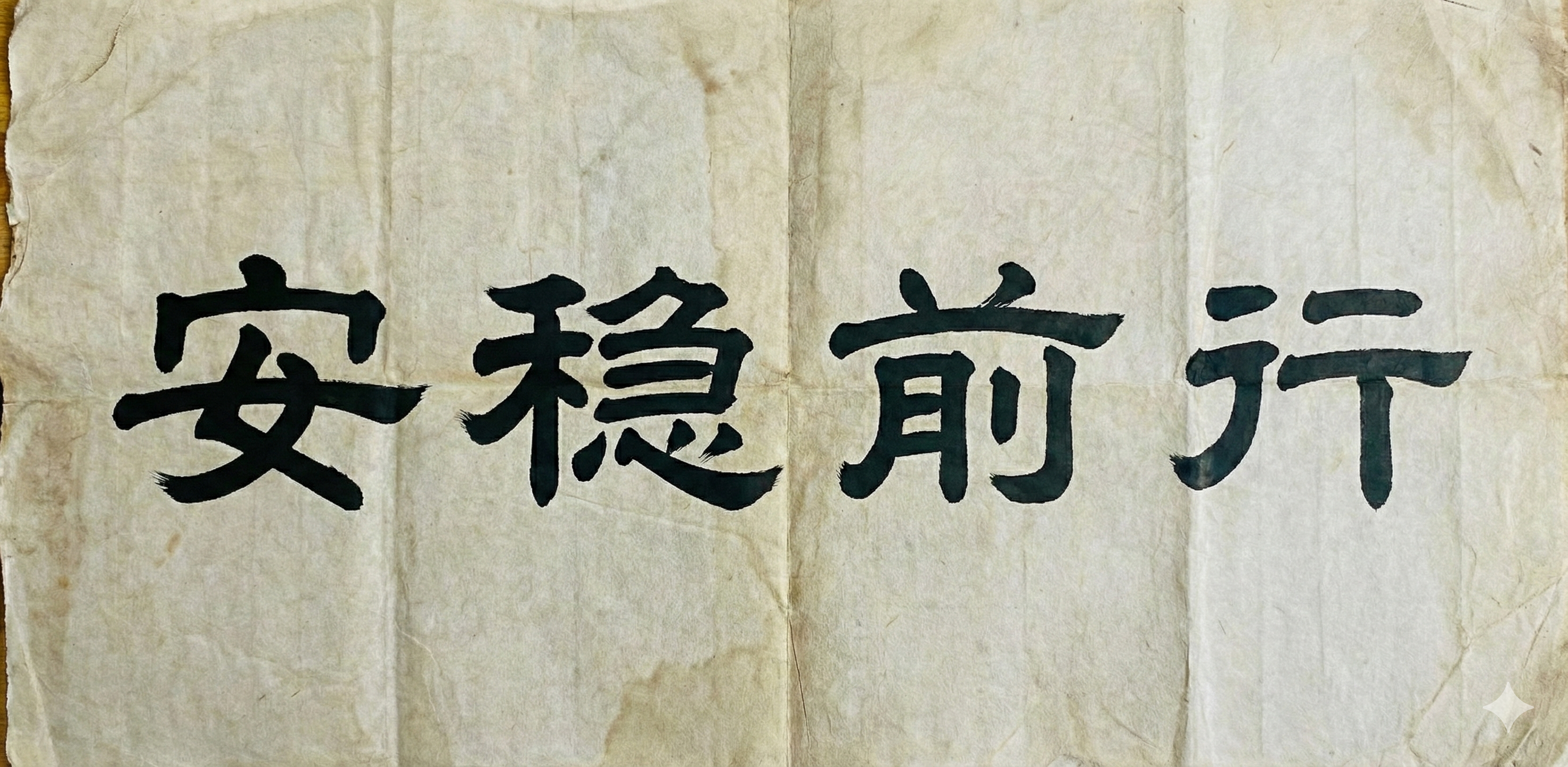
Image Healing: Guided Mandala Viewing - Lesson 204
Choose a mandala with a stable center and a clear path.
Let your gaze slowly follow the path and then return to the center.
The senses support system persists in the background.
Mandala drawing is not about drawing something, but about observing. In observing, you practice the coexistence of stability and progress.
The theme of this lesson's mandala is a symbol of steady progress, where self-support is forming a long-term foundation.
◉ One gaze is sufficient; no repetition is required.

Lesson 204: Developing a Self-Support System
Objective: To establish diverse sources of emotional support, rather than relying on a single object.
Steps: Draw a "support network diagram". Center is you, and draw dots representing friends, interests, communities, nature, etc. around you. Connect them with lines to symbolize the diversity of security sources.
Please log in before submitting your drawings and feelings.
○ 34. Cultivate self-support system log guidance suggestions
① Draw a support map for myself: internal (breathing, body anchors, gentle statements) and external (friends, family, counseling, community). Write at least three items for each.
② Create daily anchors: a one-minute stretch in the morning, a glass of water at noon, a walk in the evening, and turning off your screen at night. Let this rhythm become a stable harbor.
③ Prepare a "low mood pack": a song, a piece of writing, a warm drink, a reminder. They are like small lamps, lighting up one by one.
④ Practice asking for help: Write down a gentle line of words (“I feel a little uneasy. Can you listen to me for two minutes?”) and record your feelings during a real practice.
⑤ Self-praise list: What little things did I accomplish today? Save them as fuel for tomorrow.
⑥ Write a postcard to your future self: When loneliness comes, how will I take care of you first? Post this promise somewhere you can easily see it.
Please log in to use.
True support isn't about who's by your side, but about being able to summon your most powerful self when you need it.
 EN
EN  ZH
ZH  ES
ES  FR
FR  JA
JA