

Lesson 207: The Psychological Mechanisms of Separation Anxiety
Duration:70 minutes
Topic Introduction:
Separation anxiety is not a sign of strong dependency, but rather a deep-seated reaction of the safety system.
When the brain perceives certain people, places, or objects as "stable sources," the body quickly enters a state of high alert whenever there is distance, change, separation, or uncertainty.
This lesson will analyze the three core mechanisms behind separation anxiety: activation of the attachment system, threat assessment of loss of contact, and its relationship with tolerance to solitude, laying the foundation for subsequent conditioning and exposure exercises.
○ Three major psychological mechanisms of separation anxiety
- ① Activation of the dependent system:
When a significant other leaves, the brain's attachment system activates an instinctive program to "reclaim security."
This is not dependence, but rather the innate human need for connection. When the attachment system feels that the "chain is loosening," the body will exhibit reactions such as anxiety, tension, and increased heart rate. - ② Threat assessment of loss of contact:
When separated, the brain tends to automatically predict the worst-case scenario: Will something bad happen? Will no one be able to help me?
This "fear of being out of contact" causes the body to misjudge the risk, interpreting a short separation as a potential danger, thus escalating anxiety. - ③ Reduced tolerance for solitude:
Avoiding facing uncertainty alone for a long time will make the brain more dependent on external sources of stability.
When people lack experience in self-regulation, their anxiety response is amplified when they are alone, quiet, or in an environment where they cannot contact others.
Lesson 207: The Psychological Mechanisms of Separation Anxiety (Click to listen to the reading and view the content)
Separation anxiety, at the psychological level, is not a single emotion but a response mechanism comprised of the attachment system, the vigilance system, and cognitive interpretation. When a significant other is about to leave or become temporarily unreachable, the brain quickly assesses whether the source of safety is interrupted. If safety in early experiences primarily relied on external factors, this assessment is easily amplified. The attachment system is activated first; its function is to encourage closeness for care, but in adult situations, this manifests as intense anxiety, tracking, or clinging impulses. Subsequently, the vigilance system intervenes, interpreting this anxiety as a potential threat, triggering increased heart rate, muscle tension, and a sense of urgency. The third stage is cognitive interpretation. When the brain attempts to understand this intense feeling, it easily generates catastrophic thoughts, such as "I will lose control," "The relationship will break down," or "I cannot be alone." These interpretations, in turn, reinforce vigilance, creating a cycle. The first step in understanding the mechanism is to distinguish between emotion and prediction. Emotion is real, but prediction is not necessarily accurate. When you shift your attention from imagined consequences back to the present fact of separation, vigilance decreases. The second key is identifying triggers. Separation anxiety is often activated when specific cues appear, such as farewell statements, time points, or environmental changes. Identifying these cues in advance allows for earlier initiation of self-regulation. The third key point is reconstructing safety representations. By repeatedly experiencing the ability to reliably perform actions even after brief separations, the brain updates its internal models, recognizing that separation does not equate to danger. The fourth stage is integrating attachment and autonomy. Psychological maturity is not about eliminating attachment, but about allowing it to no longer monopolize the source of security. As internal regulatory abilities strengthen, the attachment system naturally degrades. It's important to understand that separation anxiety is not a defect, but rather the manifestation of an overly responsible security system that hasn't been updated. When you understand and gently reshape these mechanisms, anxiety will gradually recede from its dominant position into the background. The real change is not clinging to it, but knowing that you can remain at peace and move forward even when separated.
AI Interaction: Where does your separation anxiety come from?
Answer these three questions: "Whom am I most afraid of being separated from?", "What am I most worried about after we're separated?", and "How much time can I tolerate being alone?"“
The system will help you create a "personal separation anxiety structure diagram" and provide micro-adjustment strategies that can immediately reduce tension.
○ Voice Regulation: "Stable Breathing" During Separation“
Separation anxiety is often accompanied by chest tightness, rapid breathing, and premature heartbeat.
By combining a steady rhythmic sound with diaphragmatic breathing for 3–4 minutes, allow your body to first memorize:
“"I can adjust on my own, instead of having to rely on the other person."”
○ Eastern Healing Tea: Chrysanthemum and Goji Berry Tea
Recommended drinks:Chrysanthemum and wolfberry tea
Recommended reasons:This traditional Chinese herbal beverage clears heat and detoxifies, relieves eye fatigue, and calms the mind. Chrysanthemum alleviates emotional headaches and dry eyes, while goji berries nourish the liver and kidneys, clear internal heat toxins, and relieve anxiety and stress.
practice:Steep one spoonful each of chrysanthemum and goji berries in hot water for 5–10 minutes. Drink 1–2 cups daily, suitable for prolonged screen time or periods of high stress.
○ Stable Dietary Therapy - Longan Lotus Seed Porridge (ID207)
During the stage of understanding the mechanisms of separation anxiety and making internal adjustments, the body needs gentle and calming nourishment. Longan and lotus seeds help stabilize the mind, support sleep, and help emotions subside. This dietary therapy is suitable for consumption after separation exercises or during emotional fluctuations to help the nervous system complete its reset.
Psychological Mechanism
Inner stability
Open Recipe
◉ Chinese Food Therapy: Longan and Lotus Seed Porridge (ID 207)
Traditional Chinese medicine believes that "excessive thinking injures the spleen and depletes the heart's blood." A typical characteristic of anxiety in modern people is a "restless brain"—thinking during the day and dreaming at night. Longan (dried longan pulp) is a divine fruit, specifically nourishing the blood of the heart and spleen; lotus seeds can clear the mind and invigorate the spleen. The combination of the two can replenish the energy consumed by excessive thinking and bring the wandering mind back to its proper place, making it a natural "soothing sweet soup."
Nourish the heart and spleen Nourishes blood and calms the mind Improve forgetfulness
I. Recommended Dietary Therapy and Reasons
Recommended dishes:Longan & Lotus Seed Porridge
Recommended reasons:
1. Brainpower Booster:Longan pulp is rich in glucose, sucrose, and iron, which can quickly replenish brain energy. It has an excellent restorative effect on dizziness and memory loss (forgetfulness) caused by excessive mental work.
2. Sleep Guardian:This porridge is a famous remedy for insomnia caused by deficiency of both the heart and spleen. Lotus seeds can harmonize the heart and kidneys, while longan can nourish the heart blood. When the blood is sufficient, the heart is at peace; when the heart is at peace, the mind is calm, and one can naturally sleep well.
3. Gentle and nourishing:Unlike the bitter and cold nature of medicine, this food therapy is warm in nature and sweet in taste, with an excellent texture. It can help anxious people relieve tension unconsciously while enjoying the food.
2. Recipe and Method
Recipe (1–2 servings):
- Dried longan pulp (15–20g, approximately 10–15 pieces)
- 20g dried lotus seeds (cores removed)
- 80g of rice (or glutinous rice)
- 1000ml of clean water
- (Optional) 3 red dates (for synergistic blood replenishment)
practice:
- Prepare lotus seeds:Dried lotus seeds are hard, so it is recommended to soak them for 1 hour beforehand.Notice:If you are looking to calm your nerves and help you sleep, it is recommended to use lotus seeds with the core removed, because although the lotus seed core clears heat, it is too bitter; if you have excessive heart fire (red tongue tip, bitter taste in mouth), you can keep the lotus seed core.
- Cleaning:Simply rinse the dried longan pulp to remove any dust; do not soak it for too long to avoid losing its sugar content.
- Put it in the pot:Add water to a clay pot, then add the soaked lotus seeds and washed rice (glutinous rice has a stickier texture, while regular rice is better for the stomach). Bring to a boil over high heat.
- Cook together:After the water boils, turn to low heat and simmer for 20 minutes.
- Add longan:Add the dried longan pulp (and red dates). The dried longan pulp should not be cooked for too long, otherwise it will lose its chewiness and taste sour. Continue to simmer over low heat for 15–20 minutes.
- ending:Cook until the lotus seeds are soft, tender, and have split open, and the porridge is a bright red and thick. Longan is naturally sweet, so sugar is usually not needed.
3. Small rituals for body and mind
Taste the sweetness:The sweetness of longan is rich and deep. As you chew the longan flesh, feel the fruity aroma explode in your mouth. Tell yourself, "Life may be full of bitter challenges, but I can still savor this certain sweetness."“
Strip away distractions:Just like removing the core from a lotus seed, imagine that when you're drinking porridge, you're peeling away all the bitter and tangled thoughts in your heart, leaving only completeness and peace.
4. Dietary Therapy Experience Record
- Pay attention to whether the feeling of rapid heartbeat (palpitation) subsides after drinking the porridge.
- Record your dreams that night, noting whether you had fewer chaotic dreams than usual, and whether your sleep depth increased.
- Observe your complexion the next day; long-term consumption will make your pale complexion rosy and radiant.
V. Instructional Videos (approximately 3–5 minutes)
◉ Video Title:What should I eat to prevent insomnia and excessive dreaming? A bowl of longan and lotus seed porridge will help you sleep soundly all night.
6. Precautions
- Those with internal heat and dampness should avoid:Longan is warming in nature and can easily cause internal heat. If you have a yellow, greasy tongue coating, dry mouth, bitter taste, acne, or constipation,Do not eatThis porridge, otherwise it would only make things worse.
- Use with caution during pregnancy:Although longan is good for replenishing blood, Traditional Chinese Medicine believes that pregnant women often have "yin deficiency and internal heat," and consuming large amounts of longan may cause fetal restlessness. Please consult a doctor.
- Diabetics should consume with caution:Longan has a very high sugar content, so people with high blood sugar should eat less or avoid it altogether.
hint:This is a "brain-boosting porridge." Students can enjoy it as a late-night snack before exams or working professionals can use it while rushing to complete projects. It can replenish brainpower and prevent insomnia caused by stress.
○ Chinese Calligraphy: Clerical Script Writing Practice: Lesson 207
Through writing, the understanding of separation is transformed into an inner space.
Written words:
A broad mind leads to a broad path
Pre-writing advice:
Before writing, sit quietly for a moment, take three deep breaths to feel your chest relax and your shoulders and back sink, and then slowly begin writing in the clerical script.
Writing Tips:
The horizontal strokes of clerical script are expansive, while the vertical strokes are restrained, making it suitable for expressing the feeling of open space. When writing with a broad mind, the horizontal strokes can be slightly longer, symbolizing inner capacity; when writing with a wide path, the line spacing should be expanded to remind that there is more than one choice. Each stroke is an exercise in transforming alertness into understanding.
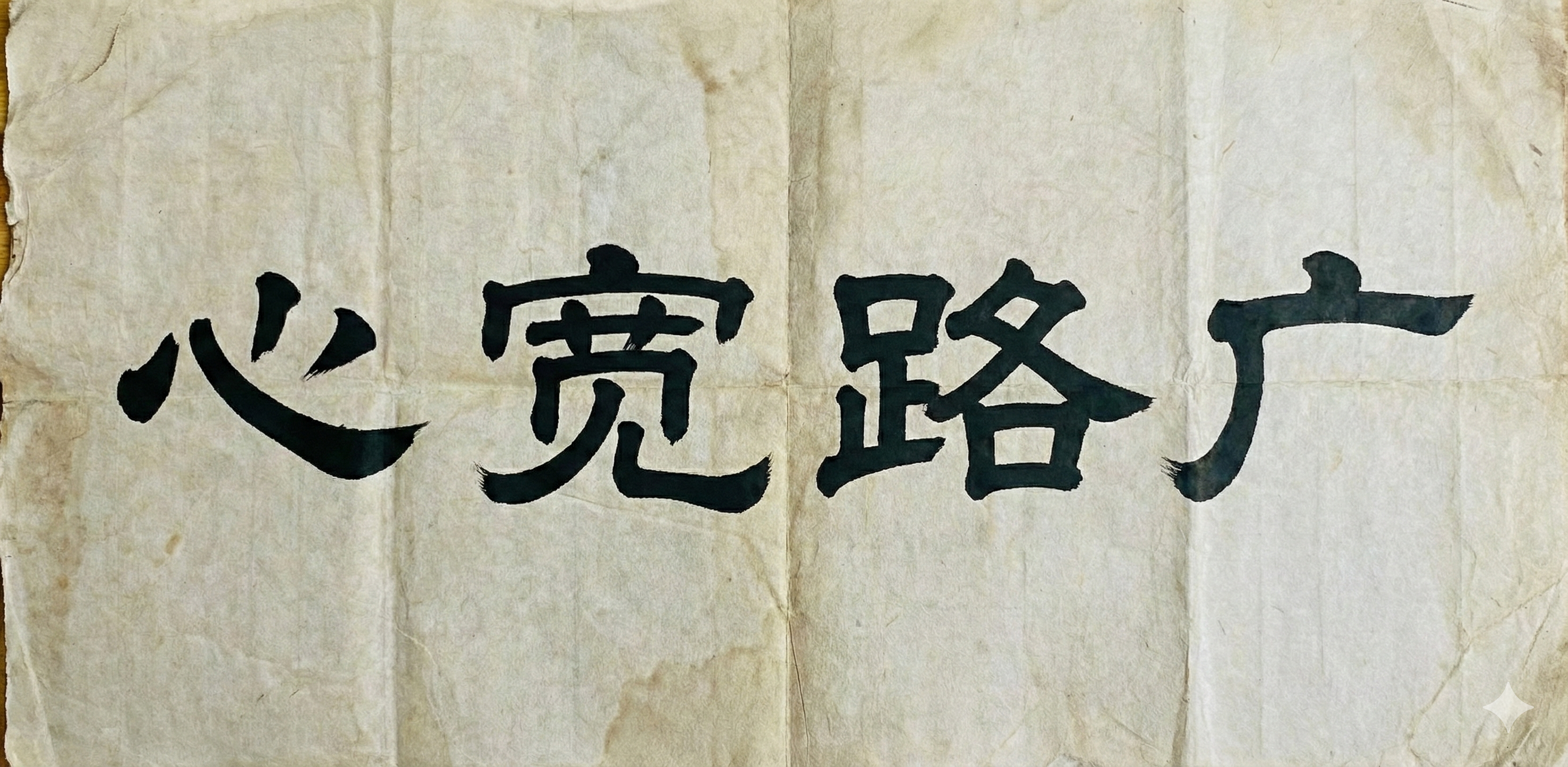
Image Healing: Guided Mandala Viewing - Lesson 207
Choose a mandala with a stable center and an outer circle that gradually expands.
Let your gaze slowly expand outward from the center.
Feel the space opened up by understanding and inclusion.
Mandala drawing is not about drawing something, but about observing. In observing, you practice moving from contraction to expansion.
The theme of this lesson's mandala is an open circle, symbolizing that separation is no longer equivalent to loss.
◉ One gaze is sufficient; no repetition is required.

Lesson 207: Draw your "Separation-Security" structure diagram
① Central safety point:
Draw a circle in the center of the paper that symbolizes yourself, and use color to express a feeling of stability, warmth, or groundedness.
This represents "my inner core of security".
Draw a few soft radiating lines around the circle to represent "my ability to stay connected with the world."
Let your body learn: security doesn't come from others, but from your ability to stay calm and collected.
② Separation distance layer:
Draw 3-4 concentric circles around the central circle, each gradually expanding, to symbolize different distances of separation (such as 5 minutes, 1 hour, or a whole day).
Write down your typical reaction for each level, such as nervous, worried, calm, or waiting.
Let images help the brain see that distance is not a danger, but a state that can be layered and understood.
③ Safety loop diagram:
Draw a flexible loop outside the concentric circles, symbolizing "I can stop on the outer circle for a while and then return to the center."
Write down your methods for stabilizing yourself next to the line, such as breathing, tactile anchoring, and self-talk.
Let the image symbolize a fact: even from a distance, I can find my way back to myself.
Please log in before submitting your drawings and feelings.
○ 207. Log Guidance
-
When "leaving or separating" occurs, what physical and emotional reactions do I experience?
Is it fear of being abandoned, fear of losing contact, fear of not being able to cope alone, or the triggering of old memories? Write down the most obvious triggers to help your brain see the real source of your fear. -
What is one small but practical thing I can do today to improve my sense of security?
For example, practice steady breathing for one minute, write down a self-comforting phrase, or allow yourself to remain still for 30 seconds when you are alone. Record the physical changes that occur from this small action. -
When separation occurs next time, will I be willing to endure an extra 5–10 seconds of solitude?
If I were to choose, which stabilizing technique would I like to use during these 5–10 seconds?
Anchoring your breath, grounding your feet, touching objects, or whispering to yourself? Write down your planned "small steps forward" in your journal.
Please log in to use.
Separation does not equate to danger, and your sense of security does not need to depend on others; it can gradually grow within yourself.
 EN
EN  ZH
ZH  ES
ES  FR
FR  JA
JA