

Lesson 212: Fear of Being Alone and the Experience of "Emotional Emptiness"
Duration:70 minutes
Topic Introduction:
Many people with separation anxiety experience a feeling of being "emptied" or "falling into a void" when they are alone.
This isn't being overly sentimental; rather, it's a temporary loss of regulatory sources for the nervous system when there's a lack of external emotional feedback.
“A sense of emptiness is often accompanied by: feeling empty inside, feeling cold in the body, having blurred thoughts, and a decreased sense of existence.
This lesson will help you understand the physiological and psychological roots of this experience and learn how to build self-soothing and existential support when you are alone.
Why does being alone cause one to fall into an "empty void"?
- The person has a strong habit of relying on the other person to regulate their emotions.They have long relied on external voices to maintain stability, and their self-regulation ability has not been fully developed.
- When alone, the "brain echo" weakens:Without dialogue and interaction, the internal support system will temporarily slow down.
- The body loses its sense of "someone is here":When lacking companionship, the nervous system will automatically increase its alertness.
Lesson 212: Fear of Being Alone and the Experience of Emotional Emptiness (Click to listen to the reading and view the content)
Fear of being alone is not the same as disliking quiet; rather, it's an emotional emptiness that arises when external stimuli or relational responses are lacking. When the environment becomes quiet, when there's no interaction, and when attention is no longer drawn, an inner feeling of emptiness and helplessness arises, as if emotions have suddenly lost their anchor. This experience isn't true emptiness, but rather a reaction to a temporary failure of the system that has long been regulating emotions externally. Many people immediately seek out their phone or the presence of others when alone, not because loneliness itself is unbearable, but because of a misunderstanding of this emptiness. The first layer of the psychological mechanism is stimulus withdrawal. When external input decreases, the brain temporarily loses familiar regulatory pathways, resulting in discomfort. The second layer is meaning-filling. The emptiness is quickly interpreted as boredom, worthlessness, or abandonment; these judgments amplify anxiety. The third layer is the escape impulse. To avoid this feeling, individuals quickly seek something to fill the void, but this also blocks the brain's opportunity to learn that solitude can be bearable. The key to understanding this experience is distinguishing emptiness from danger. Emotional emptiness is not a problem, but a space; it tells you that your emotions are waiting for new internal connections. The second key point is allowing for brief respite. When you don't rush to fill the void but allow it to exist for a moment, the nervous system gradually adapts to this low-stimulation state. The third stage involves introducing gentle self-connection, such as feeling your breath, writing, or moving slowly, allowing your inner self to respond rather than relying on external factors. The fourth key is reshaping the experience of solitude. As you repeatedly complete these steps in solitude, emptiness transforms into tranquility and even a source of creativity. It's important to understand that fearing solitude doesn't mean you're incapable of independence, but rather that you haven't yet established a stable companionship with yourself. As this companionship gradually forms, solitude will no longer be empty but a state of being that can be chosen.
▲ AI Interaction: Analyzing My "Vacuum Trigger Points"“
Tell the AI:
“What is the most painful moment for me when I'm alone?”
It helps you break down: triggering clues → physical reaction → emotional state → self-care methods.
It helps you understand the structure of emptiness, rather than seeing it as failure or collapse.
○ Fear of being alone and "emotional emptiness" · Music guidance
An overly vigilant brain finds it hard to be "quiet," yet it desperately craves a moment of security when it's off guard.
Choose a soothing, rhythmically stable instrumental piece, letting the notes gently envelop you like background music, rather than intensely occupying your attention.
When listening, there is no need to analyze the melody; simply let your attention move back and forth between "the sound itself" and "how your body feels at this moment."
When you find yourself mentally rehearsing all sorts of possible scenarios, simply bring your attention back to the note you're hearing right now.
Let music be a gentle vessel, letting your alert system know that there are times when it's okay to take a short break.
○ Eastern Healing Tea: Goji Berry and Chrysanthemum Tea
Recommended drinks:Goji Berry Chrysanthemum Tea
Recommended reasons:This classic herbal tea is good for the liver and eyes, and nourishes the liver and kidneys. Goji berries boost immunity, while chrysanthemum clears heat and detoxifies, relieving physical discomfort and eye fatigue caused by anxiety and stress.
practice:Steep 1 teaspoon of goji berries and a few chrysanthemum flowers in hot water for 5–10 minutes, then add honey. Drink 1–2 times daily.
○ Stable Dietary Therapy - Pear Oatmeal Porridge (ID212)
During the period of learning solitude and finding peace in emotional emptiness, the body needs gentle and soothing nourishment. Pear and oatmeal porridge, with its soft texture and stable energy, helps the nervous system adapt to a low-stimulation state. This nourishing dish is suitable for consumption after practicing solitude, reinforcing the body's memory of gentle companionship.
Emotional emptiness
Inner companionship
Open Recipe
◉ Chinese Food Therapy: Pear and Oatmeal Porridge (ID 212)
Traditional Chinese medicine believes that "dryness leads to dryness." Anxiety is often accompanied by "dryness and heat" in the body, manifesting as dry mouth and tongue, a feeling of something stuck in the throat (globus hystericus), and dry, cracked skin. Pears, white in color, enter the lungs, are cool in nature, and are juicy, making them excellent for nourishing yin and moisturizing dryness. Paired with oatmeal, which is rich in dietary fiber, it not only clears heat toxins from the intestines but also provides a lasting feeling of fullness, allowing the body to restore balance in a light and refreshing way.
Moisturizes the lungs and relieves cough Clears heat and reduces fire Relieve constipation and detoxify
I. Recommended Dietary Therapy and Reasons
Recommended dishes:Snow Pear & Oatmeal Porridge
Recommended reasons:
1. Respiratory humidifier:Pears are rich in water and glycosides, which can dilute respiratory mucus and relieve dry cough and throat tightness caused by tension.
2. Mood stabilizers:Oatmeal is rich in B vitamins and complex carbohydrates, which can promote serotonin secretion and has natural stress-relieving and calming effects.
3. Intestinal cleanser:The pectin in pears, combined with the insoluble fiber in oats, can act like a sponge to absorb oil and toxins in the intestines, thus resolving constipation caused by internal heat.
2. Recipe and Method
Recipe (1–2 servings):
- One pear (or crown pear) (juicy variety)
- Instant oatmeal (or quick-cooking oatmeal) 50g
- 600–800ml of clean water
- (Optional) A little rock sugar (pears are sweet on their own, so this is not necessary)
- (Optional) A few goji berries (for garnish)
practice:
- Processing pears:Wash the pear, peel and core it, and cut it into small cubes about 1cm in size.Secret:Don't throw away pear peels! Pear peels are even better at moisturizing the lungs and clearing heat than the flesh.
- Boiled pear water:Add water to a pot, then add diced pears and washed pear peels (remove after cooking). Bring to a boil over high heat, then reduce to medium-low heat and simmer for 10 minutes, until the pear flesh becomes translucent and the pear juice becomes sweet.
- Pork skin:Use chopsticks to pick out and discard the pear peel.
- Oatmeal:Pour in the rolled oats. If using quick-cook oats, cook for another 3–5 minutes; if using instant oats, cook for 1 minute and then turn off the heat.
- Braising:After turning off the heat, let it sit for 2 minutes to allow the oats to fully absorb the pear juice and become soft, sticky, and glutinous.
- Seasoning:Sprinkle in goji berries. If it's not sweet enough, add a little rock sugar and stir until dissolved.
3. Small rituals for body and mind
A refreshing breath:When you're cooking pears, the steam carries a sweet, fruity aroma. Stand by the pot, close your eyes, take a deep breath, and imagine that the moist steam is nourishing your parched lungs.
Swallowing awareness:Cooked pear flesh has a melt-in-your-mouth, grainy texture (stone cells), while oats are smooth and creamy. Feel the cool sensation of these two textures sliding down your throat, taking away all the heat.
4. Dietary Therapy Experience Record
- After drinking the porridge, notice whether the "smoking" feeling in your throat has subsided and whether your voice has become clearer.
- Observe whether bowel movements become smoother; pears and oats usually have an immediate effect on relieving constipation.
- Record your mood changes; does the subtle sweetness calm you down from your irritability?
V. Instructional Videos (approximately 3–5 minutes)
◉ Video Title:Dry throat, constipation? Make a bowl of "moisturizing elixir" in just 5 minutes!“
6. Precautions
- Those with weak spleen and stomach should consume with caution:Pears are cooling in nature. If you usually get diarrhea or have cold hands and feet after eating cold foods, it's recommended to add two pears when cooking this porridge.GingerAlternatively, you can boil it with the skin on for a longer time to reduce its cold nature.
- Eat less during menstruation:Women should avoid eating pears during their menstrual period (especially those prone to menstrual cramps), or they should eat a small amount after cooking them.
- Oatmeal selection:It is recommended to choose pure oatmeal that only lists "oatmeal" as an ingredient. Avoid buying "oatmeal" with added creamer and saccharin, as these will increase the burden on your body.
hint:This is an excellent "goodnight porridge" or "weight-loss breakfast." It is low in calories and high in water content, leaving you feeling light and refreshed after eating it.
○ Suggestions for Modern Calligraphy Writing Practice
The topic of this lesson:Building Self-Companionship in the Blank
In-depth analysis:
Emotional emptiness is not a gap that needs to be filled, but a space where one can find peace.
Modern calligraphy, with its emphasis on blank space, flow, and rhythm, is perfectly suited to conveying this experience.
When you allow lines to emerge slowly on the paper and leave blank spaces instead of rushing to finish, your brain learns that blank spaces are safe.
The writing process is an exercise in maintaining connection even in a state of no stimulation.
Writing Techniques (Solo Version):
- Open Space Flow:Intentionally increase the spacing between characters to make the white space an integral part of the structure.
- Slow Entry:Pause for one second before each stroke to train yourself not to rush into action in the blank space.
- Gentle Closure:The finishing strokes do not deliberately emphasize a sense of completion, symbolizing that solitude does not need to be filled.
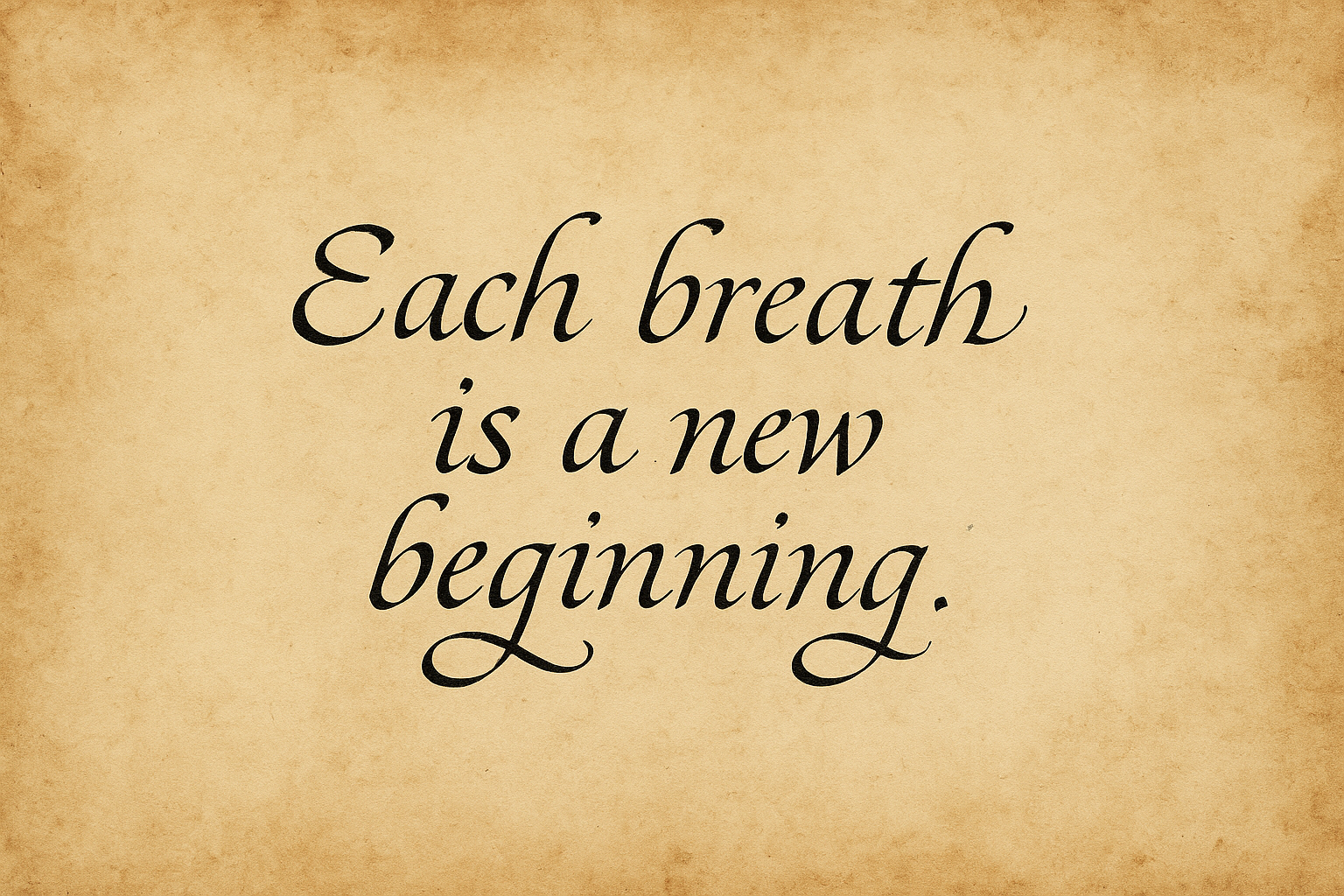
Image Healing: Guided Mandala Viewing - Lesson 212
Choose a mandala with a large proportion of blank space.
Let your gaze linger on the blank area.
Feelings can exist without needing to be filled.
A mandala is not about drawing something, but about observing; it's about practicing being with the blank space while observing.
The theme of this lesson's mandala is the ring of emptiness, symbolizing that solitude is no longer equivalent to nothingness.
◉ One gaze is sufficient; no repetition is required.

Lesson 212: Draw Your "Solitude Peace Map"“
① Void area:
Draw a slightly empty or hazy area in the center of the paper to represent the "emptiness" of being alone.
② Supporting points:
Draw 3–5 small shapes (stones, flames, leaves, points of light) around the cavity to symbolize “the inner resources I can rely on.”
③ Connecting wires:
Connect these support points with slow, soft lines to form a structure that says "I am still supported," allowing painting to become a reweaving of your sense of self-sufficiency when you are alone.
Please log in before submitting your drawings and feelings.
○ 212. Log Guidance
- What is the moment I fear most about being alone? What happens to my body in that moment?
- What details make me feel "I'm still here"? (touch, light, sound, movement)
- What do I hope my future experiences of being alone will be like? Can I start doing something small today?
Please log in to use.
Being alone is not about disappearing, but about having the opportunity to rediscover yourself.
 EN
EN  ZH
ZH  ES
ES  FR
FR  JA
JA