

Lesson 222: Rebuilding the Belief that "Leaving = Being Abandoned"
Duration:70 minutes
Topic Introduction:One of the core pain points of insecure attachment is the deep-seated belief that "leaving equals abandonment." This belief is triggered whenever the other person leaves your sight, pauses communication, focuses on themselves, or is busy for a period of time, leading to anxiety, speculation, and panic. This lesson will guide you to understand the source of this belief and practice redefining the meaning of "leaving" in a safer and more authentic way.
Why does a "small departure" make you feel extremely dangerous?
- Traces of early experiences:If you have experienced neglect, disappearance, or unstable care, your system will naturally perceive "leaving" as a threat.
- Over-vigilance of the nervous system:Over time, the brain learns that "as long as you leave, you are prepared to cause harm."
- The core needs of the relationship are amplified:The more one craves security, the harder it is for them to bear any form of distance.
Lesson 222: Rebuilding the Belief that Leaving Equals Abandonment (Click to listen to the reading, view the content)
The belief that leaving is equivalent to abandonment is one of the core and most stubborn beliefs in separation anxiety. It doesn't originate from the current relationship but often forms from early experiences. When the departure of a significant other lacks explanation, reassurance, or return, the brain associates leaving with loss. Subsequently, every temporary separation without response or physical separation is automatically interpreted as danger by this old system. This belief cannot be eliminated through persuasion but needs to be revised at the experiential level. The first step is to recognize that this is a belief, not a fact. Leaving is an action, while abandonment is an explanation; the two are not necessarily linked. The second key is to identify triggering scenarios, such as the other person ending a call, going out, or becoming emotionally detached. When these scenarios occur, the body often enters a state of tension before reason. The third stage is to allow emotions to exist without immediate action. When anxiety arises, pause questioning for explanations or confirmations, and focus attention back on the body, allowing the system a chance to self-regulate. The fourth key point is to establish a new internal narrative, such as "we are separated at this moment, but the relationship still exists," shifting the language from absolute to temporary. The fifth stage is to accumulate counter-evidence. Every reunion after separation, every unbroken relationship after no contact, provides the brain with new data. The sixth key is to distinguish between the past and the present. Remind yourself that your current relationship is capable of communication and repair, no longer the uncontrollable situation of childhood. It's important to understand that a change in belief doesn't happen instantly but gradually through repeated safe experiences. When leaving no longer automatically triggers feelings of abandonment, inner space is released, and trust in the relationship naturally grows. True security comes from knowing that even if others temporarily leave, you won't be erased from our lives.
▲ AI Interaction: What truly causes you pain is "meaning," not "leaving."“
What you're afraid of isn't "being temporarily not by my side".
What you are afraid of is:
“Will he never come back?”
“"Am I not worthy of being retained?"”
This is a wound from the past, not the truth of the present.
We will practice together:
Even if the other person leaves for a while, you are still whole, needed, and worthy of love.
Leaving ≠ breaking
Leaving ≠ abandoning
Leaving is simply a natural part of any healthy relationship.
Click the button below to let AI help you rewrite the meaning of "leaving".
Play some calming music to help you maintain your inner rhythm during moments of "distance".
As the music continues, you'll find it easier to discern that leaving doesn't mean you've been forgotten.
○ Eastern Healing Tea: Longan and Red Date Tea
Recommended drinks:Longan and red date tea
Recommended reasons:It has a warming and calming effect, making it suitable for drinking when you feel insecure. It helps to warm up your body and make your heart more stable.
practice:Soak 3 longans and 3 red dates in hot water for 10 minutes.
○ Stable Dietary Therapy: Roasted Figs With Honey (ID222)
During the process of repairing abandoned beliefs, the body needs gentle and soothing nourishment. Figs and honey symbolize the experience of being softly received, helping the body unfold from tension. This nourishing dish is suitable for consumption after completing a separation exercise or after an emotional setback, reinforcing the feeling of being treated kindly.
Separation and Repair
Security Integration
Open Recipe
◉ Roman Dietary Therapy: Roasted Figs with Honey (ID 222)
In ancient Rome, figs were considered the "fruit of life," symbolizing abundance, stability, and the body's resilience. Naturally sweet and moistening, they nourish the body without being cloying. When prolonged stress, lack of sleep, or emotional exhaustion leave one feeling internally dehydrated, lightly roasted figs, combined with a small amount of honey, can gently replenish energy, soothe the nervous system, and restore the body to a safe and nourished state.
Moisturize and nourish the intestines Gentle energy replenishment Emotional soothing
I. Recommended Dietary Therapy and Reasons
Recommended dishes:Roasted figs with honey
Recommended reasons:
1. Gentle and non-irritating:Figs are rich in natural pectin and minerals, and are easier to digest when lightly roasted, making them suitable for people with sensitive stomachs after anxiety.
2. Restorative sweetness:The sweetness of honey differs from that of refined sugar; it doesn't create dramatic fluctuations but rather provides a continuous and gentle sense of stability.
3. Nervous system friendly:The sweet and warm combination can send a signal to the brain that "safety and replenishment are complete," which helps with relaxation and falling asleep.
2. Recipe and Method
Recipe (1–2 servings):
- 4–6 fresh figs (ripe but not mushy)
- 1–2 teaspoons of honey
- A few drops of olive oil (optional, Roman style)
- (Optional) A small amount of chopped walnuts or almonds
- (Optional) A very small amount of cinnamon powder
practice:
- Preheating:Preheat the oven to 180°C.
- Processing figs:Wash it, cut it in half, and place it on a heat-resistant baking tray with the cut side facing up.
- Light baking:Drizzle a little olive oil on the surface and bake in the oven for 10–15 minutes, until the flesh is soft and the edges are slightly caramelized.
- Add honey:After baking, drizzle with honey while still warm, and sprinkle with a small amount of chopped nuts or very light cinnamon powder.
- Ready to eat:It is best eaten warm.
3. Small rituals for body and mind
Sweet and smooth confirmed:The first bite doesn't require analyzing nutrition or effects; just feel the sensation of being "nourishd."
Safety circuit:I silently confirm to myself: I don't need to be on guard now, nor do I need to prove anything; I am being taken care of.
4. Dietary Therapy Experience Record
- Record whether you feel warm, relaxed, or sleepy after eating.
- Observe whether bowel movements become smoother and whether the feeling of dryness is reduced.
- Pay attention to whether your mood is more relaxed in the evening.
V. Instructional Videos (approximately 3–5 minutes)
◉ Video Title:A sweet treat that won't leave you feeling guilty: Roman-style roasted figs
6. Precautions
- Sugar control:Although honey is mild, it should not be consumed in excess; just a little is enough.
- Use with caution during diarrhea:Figs are good for bowel movements, but should be discontinued if you have diarrhea.
- It does not replace a regular meal:This is a comforting snack, not a main meal.
hint:If intended for evening consumption, it is recommended to reduce the amount of honey used to promote sleep.
○ Suggestions for Chinese Calligraphy and Seal Carving Practice - Lesson 222
The seal carving exercises in this lesson aim to reshape the automatic connection between leaving and being abandoned. Through the process of steady, slow carving, the brain experiences that even with intervals in movement, continuity can still be maintained.
- Introduction to the characteristics of seal carving:
Seal carving emphasizes judgment and commitment. Each stroke must be made after confirming the position, which corresponds to recognizing the facts first rather than being led astray by old beliefs when separation is triggered. - Written words:
Chivalrous spirit and Zen mind - Psychological Intention:
To cultivate chivalry and Zen-like mindset involves training one's inner self to possess both steadfastness and stability. Chivalry symbolizes the ability to stand firm against the feeling of abandonment, while Zen-like mindset symbolizes maintaining clarity and non-attachment amidst separation. - Knife skills:
The approach is slow and steady. The knife is first inserted lightly, then steadily advanced, pausing briefly at the turning point to symbolize not reacting hastily when facing departure. - Emotional transformation:
Transform the panic triggered by leaving into a judgment of the direction of the lines, and bring emotions back from being out of control to being in control.
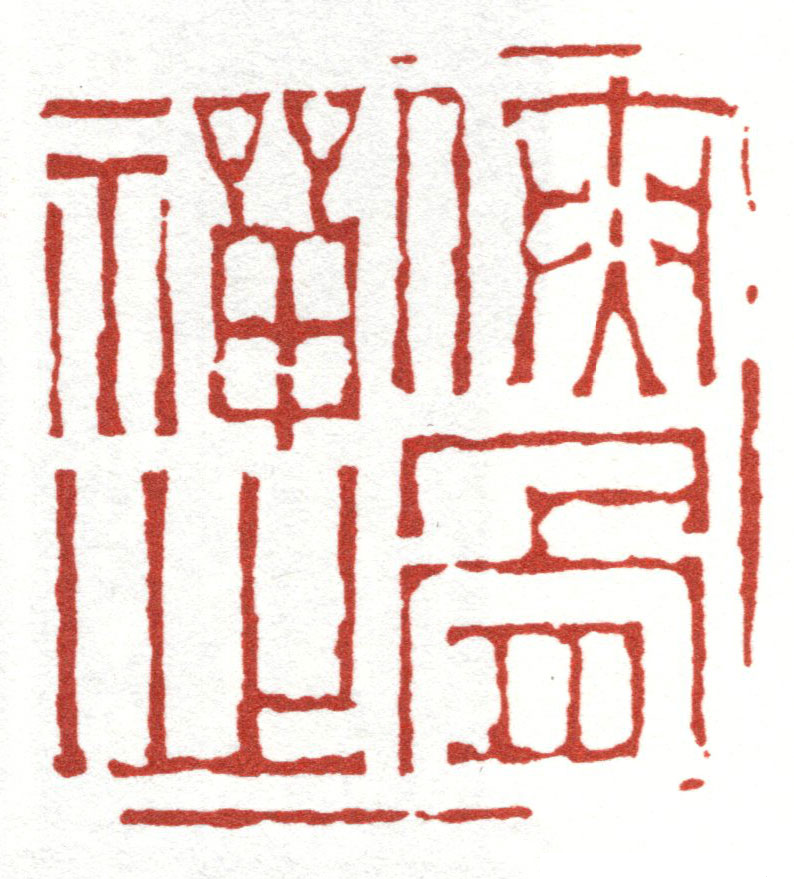
Image Healing: Guided Mandala Viewing - Lesson 222
Choose a mandala with a stable center and space around the outer edge.
Let your gaze slowly move between the center and the outer edge.
Feeling apart does not mean losing.
A mandala is not about drawing something, but about observing what you are doing. It's about leaving behind what you are still carrying.
The theme of this lesson's mandala is the ring of separation and continuation, symbolizing the coexistence of separation and continuity in a relationship.
◉ One gaze is sufficient; no repetition is required.

Lesson 222: Rewriting the Meaning of "Leaving"
Objective: To transform the old belief that "leaving = being abandoned" into a more realistic understanding through visualization.
Steps: Write "Leave" in the center of the paper. Draw the old meaning on the left (e.g., being abandoned, not needed, broken relationship). Draw the new meaning on the right (e.g., space, breathing, rhythm, independence). Connect the left and right sides with a soft line, symbolizing that you are moving from old beliefs to new interpretations.
Please log in before submitting your drawings and feelings.
○ 222. Log guidance suggestions for reshaping the meaning of "leaving".
① What form of "departure" did you experience today? (Physical distance, information gap, reduced focus)
② What is your original automatic response?
③ If this is an old belief, where does it come from? (Experience, relationships, upbringing)
④ Have you tried to give it new meaning? How did you do it?
⑤ Record a new sentence about leaving.
⑥ In which context will we practice the new interpretation tomorrow? How will we assess success?
Please log in to use.
Leaving is not the end, but a way for the relationship to breathe. The more you can remain whole in distance, the freer your heart will be.
 EN
EN  ZH
ZH  ES
ES  FR
FR  JA
JA