

Lesson 225: The Five Senses Anchoring Method for Self-Soothing
Duration:70 minutes
Topic Introduction:When anxiety, panic, or separation triggers occur, the brain rushes to future worries or past traumas, causing you to "leave the present." Sense Anchoring is a quick soothing technique that brings the brain back to the "present," pulling you from emotional turmoil back to your actual physical sensations through awareness of sight, hearing, touch, smell, and taste. This course will guide you through a step-by-step practice, allowing your body to become your most reliable source of stability.
How does the five senses anchoring method help the body return to safety?
- Visual (Look):Stable lines, colors, and light and shadow prevent the brain from making excessive associations.
- Hearing:A gentle rhythm can reduce the overactivity of the sympathetic nervous system.
- Touch:Touching a real object shifts the body's focus from "fear" to "presence".
- Smell:Taste can directly affect the limbic system, making it the fastest channel for regulating emotions.
- Taste:A small, warm bite can activate the body's "soothing mode".
Lesson 225: The Five Senses Anchoring Method for Self-Soothing (Click to listen to the reading, view the content)
When anxiety or separation anxiety arises, many people try to suppress their emotions with thought, only to find that the more they think, the more confused they become. The five-sense anchoring method for self-soothing doesn't rely on persuasion, but rather directly uses bodily senses to bring the nervous system back to the present moment. The core of this method is to reaffirm to the brain that the present moment is safe. The first step is understanding that anxiety is essentially a time dislocation; the body mistakenly perceives danger, and the role of five-sense anchoring is to refocus attention on the real environment. The second key is visual anchoring. Slowly observe five concrete things around you—their colors, shapes, or light and shadow—to shift the brain from internal imagination back to external reality. The third stage is auditory anchoring. Identify four different sounds, regardless of distance or intensity; the focus is on listening, not judging. The fourth key point is tactile anchoring. Feel three points of physical contact, such as the ground under your feet, clothing against your skin, or the warmth of your hands; this tactile information directly soothes the nervous system. The fifth stage is olfactory anchoring. Seek out two scents, even just the faint smell of air or the familiar taste of food, to connect memories with a sense of security. The sixth stage is gustatory anchoring. Even the lingering taste in your mouth is enough to remind the body that you are in the present moment. It's important to understand that sensory anchoring isn't about shifting attention, but rather returning to reality. When you repeatedly achieve this return during emotional peaks, your brain gradually reduces its reliance on catastrophic imaginings. True self-soothing isn't about denying feelings, but about letting your body know you're there and can take care of it. When the five senses become anchors, inner stability becomes readily available.
▲ AI Interaction: Your body is always more honest and safer than your emotions.
Anxiety propels you toward the future.
Trauma makes you fall back to the past.
The five senses can bring you back to the "present".
When you see an object, hear a sound, or feel the warmth of your palm...
You then returned to your own body.
You don't need to calm down completely right away.
You just need to find yourself step by step.
Click the button below to let AI help you create your own "Sensory Comfort Checklist".
In exercises that anchor the five senses, music is often the easiest way to activate a calming force.
Please choose a track with a consistent rhythm and a gentle melody, aligning your body with your voice.
○ Eastern Healing Tea - Honeysuckle and Chrysanthemum Scented Drink
Recommended drinks:Honeysuckle Chrysanthemum Drink
Recommended reasons:It calms the mind, relaxes, and reduces body heat, making it suitable for drinking when experiencing emotional fluctuations or anxiety, helping the body to go from "tense" to "relaxed".
practice:Simply soak a small handful of honeysuckle and 3 chrysanthemum flowers in hot water for 5 minutes.
○ Stable Dietary Therapy: Wine-Braised Vegetables (ID225)
During the practice of soothing the five senses, the body needs gentle and multi-layered nourishment. Red wine braised vegetables activate multiple senses through aroma, taste, and temperature, helping the body return to the present moment. This nourishing dish is suitable for consumption after emotional fluctuations to enhance the experience of anchoring the five senses.
self-soothing
Neural stability
Open Recipe
◉ Roman Dietary Therapy: Wine-Braised Vegetables (ID 225)
In ancient Rome, small amounts of wine were not only consumed as beverages but also frequently used in cooking. During heating, the alcohol evaporates, leaving behind the structured texture of fruit acids and tannins, making vegetables easier to soften and their flavors more concentrated. This wine-braised vegetable dish is not a stimulating "wine dish," but rather a gentle stew that allows the body to slowly relax and lower its defenses. When emotions are chronically tense, internally repressed, and appetite is low, this "opening" cooking method can help the nervous system return from a contracted state to a fluid state.
Promote relaxation Gentle and smooth Restore appetite
I. Recommended Dietary Therapy and Reasons
Recommended dishes:Wine-Braised Vegetables
Recommended reasons:
1. Help to "relax inner tension":A small amount of alcoholic acid leaves a gentle tension after stewing, which can stimulate the taste buds without being overly exciting.
2. Vegetables are easier to absorb:Stewing can reduce the roughness of fiber, making it suitable for people whose gastrointestinal function is weak after anxiety.
3. Restoring the pleasure of eating:For those who have long suffered from a lack of appetite or poor appetite, this is a gentle, restorative dish that can awaken their appetite.
2. Recipe and Method
Recipe (Serves 2):
- 1 carrot (cut into chunks)
- 1 zucchini (cut into thick slices)
- 1/2 eggplant (cut into chunks)
- 1/2 onion (sliced)
- 120–150ml dry red wine
- 200ml of water or vegetable broth
- 1 tablespoon olive oil
- A small amount of salt
- (Optional) A small amount of thyme/bay leaves
practice:
- Remove from heat:Add olive oil to a pan and sauté the onions over low heat until they are soft and translucent.
- Add vegetables:Add carrots, zucchini, and eggplant, and stir-fry gently for 2–3 minutes.
- Pour in the wine:Add red wine and simmer over low heat for 3–5 minutes to allow the alcohol to evaporate fully.
- Slow cook:Add water or broth and herbs, cover and simmer over low heat for 20–30 minutes, or until the vegetables are tender but not mushy.
- Seasoning:Add a small amount of salt before serving to maintain a mild flavor.
3. Small rituals for body and mind
Scent development:Before eating, smell the aroma of the stewed food to let your body know that "it's time to relax."
Eat slowly:Take each bite slowly, feeling the vegetables gradually soften in your mouth, symbolizing the relaxation of inner tension.
4. Dietary Therapy Experience Record
- Record whether you feel more comfortable or breathe more deeply after eating.
- Observe whether there is a feeling of "relief" after the meal.
- Pay attention to whether you fall asleep more easily that night.
V. Instructional Videos (approximately 3–5 minutes)
◉ Video Title:The aroma of wine is not intoxicating: a pot of vegetables that relaxes the body.
6. Precautions
- Alcohol-sensitive individuals:Make sure to simmer thoroughly until the alcohol evaporates, or use grape juice with a small amount of apple cider vinegar instead.
- Liver function problems:It is not recommended to frequently consume food cooked with alcohol.
- Not seeking intensity:The goal of this dish is to "develop" rather than to stimulate the taste buds.
hint:Pairing it with warm whole-wheat bread or chickpeas creates a more consistent meal.
○ Suggestions for Chinese Calligraphy and Seal Carving Practice - Lesson 225
The seal carving practice in this lesson is designed to repair the separation between mind and body, allowing sensation and action to re-coordinate.
- Introduction to the characteristics of seal carving:
Seal carving requires simultaneous perception of the eyes, hands, and heart; each stroke demands complete presence and is highly suitable for training the integration of the five senses. - Written words:
The heart and body are enemies - Psychological Intention:
Carving the idea that the mind and body are enemies is about recognizing the inner conflict caused by long-term neglect of bodily sensations and using carving to bring the mind back to the body. - Knife skills:
Simultaneously feel the pressure of your fingers, the tactile sensation of the blade, and the visual position while wielding the knife to train sensory consistency. - Emotional transformation:
Transforming floating anxiety into tangible sensations allows the mind and body to stand on the same side again.

Image Healing: Guided Mandala Viewing - Lesson 225
Choose a mandala with rich details and distinct layers.
Let your gaze linger on different details one by one.
The five senses are awakened one by one.
Mandala is not about drawing something, but about observing what you are doing and practicing returning to the present moment.
The mandala theme of this lesson is the present moment ring, symbolizing that the senses become a safe anchor.
◉ One gaze is sufficient; no repetition is required.
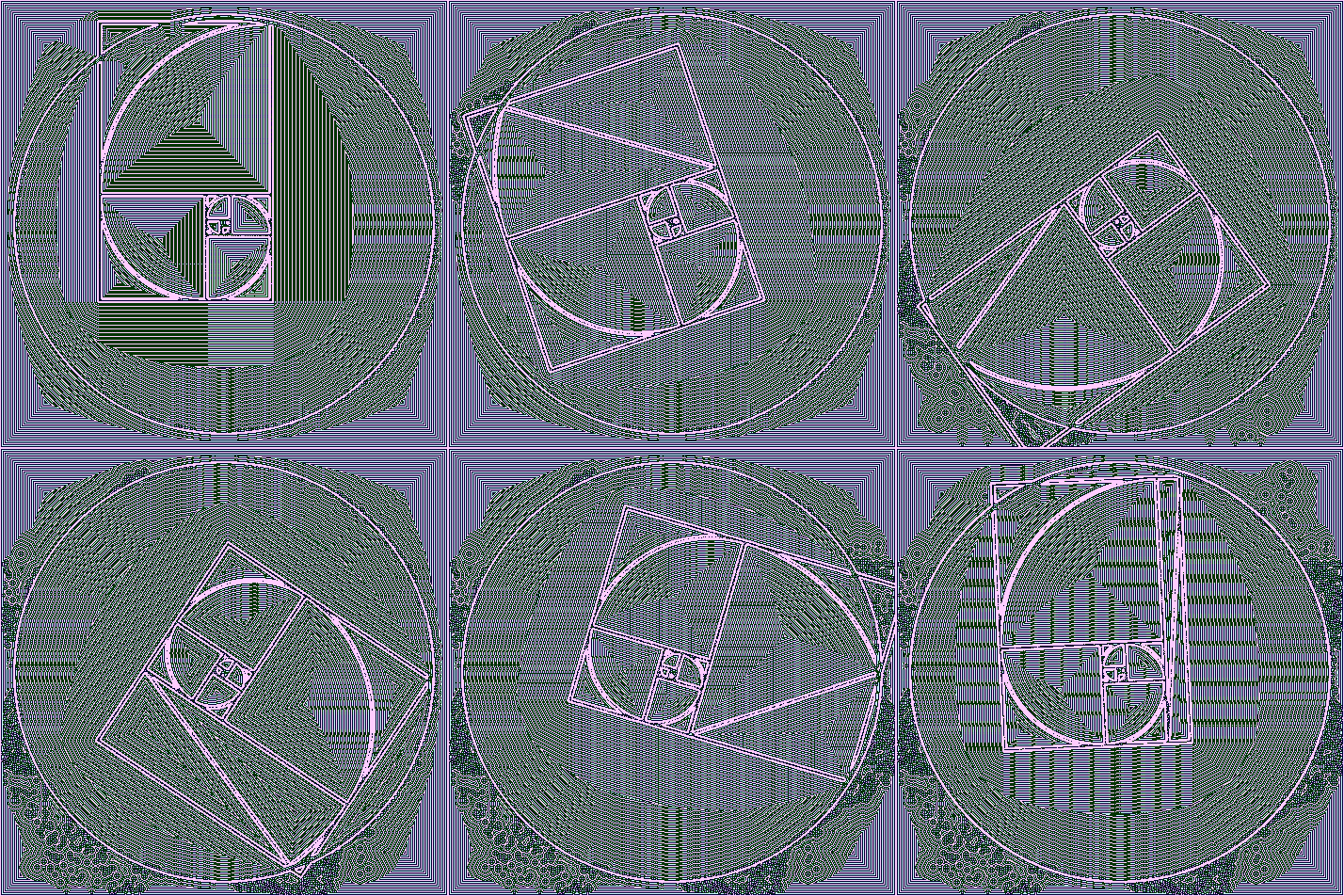
Lesson 225: My "Five Senses Soothing Checklist"“
Objective: To prepare you with a readily available "five senses toolbox" to address future anxieties and triggers.
Steps: Draw a five-pointed star and write a sense (sight/hearing/touch/smell/taste) on each point. For each sense, write down three things that bring you peace (e.g., "seeing soft light," "hearing white noise," "touching a warm cup," "smelling lemon," "drinking a small sip of hot soup"). Connect the five-pointed stars to form a central circle, symbolizing "I can use my five senses to find myself again."
Please log in before submitting your drawings and feelings.
○ 225. Suggestions for Guiding the Five Senses Soothing Journal
① Which sense did you practice soothing today? (Sight/Hearing/Touch/Smell/Taste)
② Does this feeling help you "return to the present"? How?
③ Which of the five senses is most suitable for you? Which is the most difficult?
④ Write down one genuine feeling that occurred to you during the process of settling down.
⑤ Record a moment when "successful sensory experiences bring you stability".
⑥ In what context will you use the five senses anchoring method tomorrow? What are the criteria for success?
Please log in to use.
Your five senses are the gentlest way your body can "come back" to you. Once you learn to anchor yourself with your senses, anxiety will no longer be able to take you away.
 EN
EN  ZH
ZH  ES
ES  FR
FR  JA
JA