

Lesson 226: Exercises on Signals of "My Presence" in Relationships
Duration:70 minutes
Topic Introduction:
When you feel anxious, unseen, ignored, or afraid of losing something in a relationship, there is often a silent cry from within—"I'm still here, can you see me?"“
This need is not dependence, but a fundamental need for "affirmation of existence." This course will guide you through physical, emotional, and behavioral exercises to practice sending clear, non-anxious "I exist" signals, making relationships more stable and preventing you from feeling lost within them.
Why does "my existence" become a source of anxiety?
- Neglected experiences in childhood:If a child is neglected in childhood, the brain will continuously seek "whether my existence is seen" in close relationships.
- Insufficient self-worth:They rely on external responses to confirm whether they are needed.
- Role imbalance in relationships:Excessive pandering and concessions weaken one's sense of presence.
- Blurred self-boundaries:In relationships, the voice of "I" is lost, leaving only "we".
Lesson 226: Signals of My Presence in Relationships (Practice, click to listen to the reading, view the content)
People who feel insecure in relationships often don't lack love, but rather a clear and stable sense of presence. When their partner is busy, silent, or emotionally withdrawn, an inner question quickly arises: am I still in their world? This anxiety doesn't necessarily require the other person to change, but rather you need to learn to identify and establish your own presence signals. Presence signals aren't about constant attention, but about confirming that you are perceptible in the relationship. The first step is understanding that presence doesn't come from frequent confirmation, but from stable, visible traces of interaction. The second key is distinguishing between explicit and implicit signals. Explicit signals include responsive communication and actions, while implicit signals are the consistent understanding and routines in the relationship, such as regular contact or the other person remembering your preferences. The third stage is identifying the types of signals you over-rely on. Many people only value immediate responses while ignoring long-term, stable cues, which amplifies anxiety. The fourth key point is establishing your own presence signals. Make commitments by expressing feelings or maintaining personal rhythms to ensure your presence is always felt in the relationship. The fifth stage is proactively reviewing existing signals when insecurity arises, rather than immediately seeking new confirmation. The sixth key is allowing for gaps in the relationship. A sense of presence doesn't vanish with brief silence; rather, it becomes more solid when not repeatedly tested. What's important to understand is that true presence isn't about constantly trying to prove it, but about consistently being there. When you gradually shift the source of your sense of presence from the other person's immediate reactions back to the relationship itself and your own actions, anxiety will significantly decrease. You'll find that even in quiet moments, you are still in the relationship and being supported.
▲ AI Interaction: Your existence doesn't need anyone else to prove it.
You think you are seeking a response from the other person.
But what you really need is a sense of security:
“I am here, I am real, I have weight, I am seen.”
This is not due to excessive demand.
This is you taking back your sense of "presence" from the outside world.
The more you see yourself
The less you need others to determine your value.
Click the button below to practice your "presence confirmation method" with AI.
When you're unsure if you're "seen," music can help you reconnect with your body and feel present again.
Synchronizing melody with your breath is the simplest "exercise of self-existence".
○ Eastern Healing Tea: Hawthorn and Red Date Tea
Recommended drinks:Hawthorn and jujube tea
Recommended reasons:Hawthorn soothes the qi and red dates replenish blood, making the body feel more "weighty" and helping you maintain center and energy when practicing presence.
practice:Soak 2-3 hawthorn slices and 3 red dates in hot water for 10 minutes.
○ Herbed Roman Fish (ID226) - A Stable and Nourishing Diet
During the practice of establishing presence and stable interaction, the body needs clear yet gentle nourishment. Herb-infused romaine fish stew brings a light yet lasting satisfaction, symbolizing an understated yet authentic presence in relationships. This nourishing dish is suitable for consumption after emotional processing or relationship practice.
Relational security
Stable connection
Open Recipe
◉ Roman Dietary Therapy: Herbed Roman Fish (ID 226)
In the ancient Roman diet, fish was considered an important source of protein that was "light yet not greasy." Unlike heavy meat dishes, fish is easy to digest and light, yet it can steadily provide the nutrients needed for repair. When anxiety, overexertion, or prolonged stress leaves one feeling exhausted and listless, this Roman herb-baked fish, with olive oil and herbs at its core, can help the body restore strength and order without stimulating the nervous system.
Gentle energy replenishment Repair stamina Reduce fatigue
I. Recommended Dietary Therapy and Reasons
Recommended dishes:Herbed Roman Fish
Recommended reasons:
1. Light burden protein:Fish is easier to digest than red meat, making it suitable for people who have a poor appetite after anxiety or feel tired after eating.
2. The calming effect of herbs:Herbs such as thyme and rosemary are traditionally believed to help "dispel stagnation" and restore fluidity to the body from a state of lethargy.
3. Stability of olive oil:Healthy fats help with nutrient absorption without causing significant fluctuations in blood sugar and mood.
2. Recipe and Method
Recipe (1–2 servings):
- One white-fleshed fish or two fillets (cod, sea bass, sea bream, etc.)
- 1–1.5 tablespoons olive oil
- 2–3 slices of lemon (optional)
- 1 clove of garlic (crushed, optional)
- A small amount of thyme/rosemary (fresh or dried).
- A small amount of salt
- A pinch of black pepper (optional)
practice:
- Preheating:Preheat the oven to 180°C.
- Preparing the fish:Wash and dry the fish, then lightly sprinkle a small amount of salt on the surface.
- Seasoning:Gently rub olive oil, herbs, and garlic onto the fish, then top with lemon slices.
- bake:Bake in the oven for 12–18 minutes (depending on the thickness of the fish), until the fish is just cooked through and can be easily separated from the meat.
- Let stand:Let it sit for 2 minutes after baking before eating to allow the aroma and oils to blend properly.
3. Small rituals for body and mind
Aroma confirmed:Smell the herbs and olive oil before eating to make your body aware that this is a "safe and nourishing" meal.
Rhythm Return:Slowly chew the delicate texture of the fish, reminding yourself that you don't need to exert yourself, and that recovery can be gentle.
4. Dietary Therapy Experience Record
- Record whether you feel your energy gradually returning rather than feeling tired after eating.
- Observe whether the brain is clearer and there is no drowsiness after eating.
- Pay attention to your overall energy level on the day or the following day.
V. Instructional Videos (approximately 3–5 minutes)
◉ Video Title:How a fish gently replenishes its energy.
6. Precautions
- Avoid over-seasoning:Excessive spiciness or thick sauces will ruin the "restorative" nature of this dish.
- Extremely weak gastrointestinal tract period:You can reduce the amount of garlic and herbs, keeping only olive oil and a small amount of salt.
- Do not overheat:Overcooked fish will become dry, which will increase the burden on digestion.
hint:It can be paired with a small amount of cooked vegetables or chickpeas to form a stable and complete meal.
○ Suggestions for Chinese Calligraphy and Seal Carving Practice - Lesson 226
The seal carving exercises in this lesson are designed to solidify your inner sense of presence so that you don't disappear in relationships because of other people's reactions.
- Introduction to the characteristics of seal carving:
Seal carving emphasizes a focused mind and precise knife work, with clear lines symbolizing maintaining a clear sense of one's place in relationships. - Written words:
My heart is as blue as a lotus in the world - Psychological Intention:
To inscribe the color of a lotus in the world is to train oneself not to lose one's clarity due to the turbidity of the outside world, and to maintain a quiet and steadfast existence in relationships. - Knife skills:
The knife moves evenly and steadily, each stroke completed independently, symbolizing existence without needing proof, only continuity. - Emotional transformation:
Transform ignored fears into the power of self-soothing, allowing a sense of existence to arise from within.
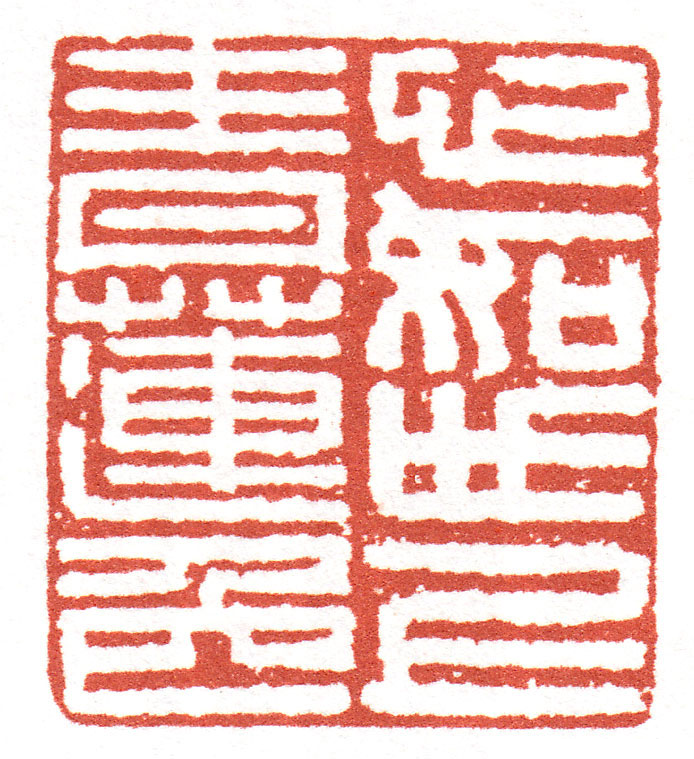
Image Healing: Guided Mandala Viewing - Lesson 226
Choose a mandala with a clear center and tranquil layers.
Keep your gaze focused on the center and then slowly expand it outwards.
Feeling existence requires no fanfare.
A mandala is not about drawing something, but about observing. In observing, you practice finding peace within relationships.
The theme of this lesson's mandala is the "circle of purity," symbolizing the natural manifestation of one's presence.
◉ One gaze is sufficient; no repetition is required.

Lesson 226: My "Presence Signal Diagram"“
Objective: To train you to visually identify your location and boundaries.
Steps: Draw a circle to represent "me". Around the circle, write down the signals you are willing to let others see (e.g., gentle expression, boundaries, real needs, composure). Draw another layer of space outside the circle and write down the parts you are afraid others will see (e.g., vulnerability, insecurity, worry). Finally, write "My existential wish for today" at the center of the circle, symbolizing that you are practicing standing in relationships as a more complete version of yourself.
Please log in before submitting your drawings and feelings.
○ 226. Guiding Practice of Presence Journal
① At what moment today did you feel like "I don't exist"?
② What did you do at that time? How did your body react?
③ Have you tried to send a signal that "I exist"? What is it?
④ If not, what are you most afraid of?
⑤ Write a sentence about your understanding or insight into "existence" today.
⑥ In which situation would you like to practice "I am here" tomorrow? What are the criteria for success?
Please log in to use.
You don't need to become better, more, or more perfect to be seen. Your very existence deserves to be seen gently by the world.
 EN
EN  ZH
ZH  ES
ES  FR
FR  JA
JA