

Lesson 238: Breathing and Grounding During Peak Anxiety
Duration:70 minutes
Topic Introduction:
When anxiety reaches its peak, the body often feels like it's being pushed to the edge of a cliff: rapid heartbeat, shallow breathing, cold hands and feet, tightness in the chest, floating consciousness, and racing thoughts.
The most effective approach at this point is not to think, but to get the body back on the ground.
Breathing exercises and grounding can help you return from the alarm system to the present moment, from being out of control to being in control.
This lesson will help you regain your balance in the most chaotic moments, preventing anxiety from pulling you away.
Why does the brain fail during periods of peak anxiety?
- Decreased prefrontal cortex function:The brain regions responsible for rational thinking will be temporarily shut down.
- The body enters combat-or-flight mode:Your body will prioritize "survival" over "thinking".
- Feeling pulled away from the present:My consciousness was adrift, my chest felt empty, as if I wasn't even in my own body.
- Automatic thought take over the mind:The brain automatically generates information that "danger is happening".
- The more you try to suppress it, the more it will rebound.The lower your sense of control, the more likely anxiety will rebound.
Lesson 238: Breathing and Grounding During Peak Anxiety (Click to listen to the reading and view the content)
When anxiety peaks, the brain quickly detaches from the present moment and enters a state of catastrophic prediction. The body then experiences shallow breathing, a rapid heartbeat, numbness in the limbs, or a loss of reality. This is not because danger is imminent, but rather because the nervous system has entered an over-alert state. The goal of breathing and grounding is not to suppress anxiety, but to bring you back to your body and reality. The first step is to stop fighting the symptoms and tell yourself, "I am experiencing an anxiety peak, but I am safe right now." The second key is to adjust your breathing rhythm, prioritizing longer exhalations, such as inhaling for four counts and exhaling for six counts, allowing the parasympathetic nervous system to take over. The third stage is to incorporate tactile grounding, pressing your feet firmly into the ground to feel the pressure between your shoes and the floor, or touching a table to confirm real boundaries. The fourth key point is visual positioning: look around and name three specific objects you see, shifting your attention from internal scanning to external reality. The fifth stage is body weight training: focus your attention on your pelvis or legs, imagining your weight sinking downwards, allowing your body to regain support. The sixth key is to give the process time; don't rush to judge its effectiveness. The nervous system needs several minutes to subside from the peak. It's important to understand that breathing and grounding are not techniques, but relationships; you are telling your body, "I'm here for you, I'll get through this with you." When you successfully land at the peak time and time again, your brain gradually learns that anxiety can be tolerated without escalating. Stability is not the absence of fluctuations, but rather knowing how to return to the present moment even when fluctuations occur—this is the core ability for recovery.
▲ AI Interaction: Only when your body returns to the ground can your mind return to you.
Anxiety spikes don't mean you did something wrong; it means your body is panicking.
It's not that you can't control it, but that your nervous system has been pushed to its limit.
First, make sure your feet are firmly planted and slow your breathing, then you'll have the strength to face anything.
Your body is not the enemy; it just needs you to bring it back.
Click the button below to practice the "Instant Landing Breathing Technique" with AI.
When anxiety is at its peak, using music to "pull yourself back to your body" can help reduce tension within minutes.
○ Eastern Healing Tea - Hawthorn Sedative Drink
Recommended drinks:Hawthorn + a small amount of goji berries
Recommended reasons:It helps relieve chest tightness and improves a sense of stability in the body.
practice:Steep 2-3 slices of hawthorn and a few goji berries in hot water for 3 minutes.
○ Stable Nutrition - Roman Cheese Pasta (ID238)
After experiencing peak anxiety and physical adjustment, one needs warm and satisfying nourishment. Roman cheese pasta, with its simple recipe, provides grounding energy, symbolizing a return to the body after intense fluctuations. It is suitable for consumption after completing a breathing and grounding exercise to help achieve a sense of integration and stability between mind and body.
Breathing regulation
Ground
Open Recipe
◉ Roman Cuisine: Roman Style Cheese Pasta (ID 238)
In ancient Rome, pasta and cheese were not luxuries, but rather a basic combination providing the body with "predictable energy." Roman-style cheese pasta emphasizes restraint and balance: instead of a thick sauce, it uses a small amount of aged cheese, olive oil, and pasta broth to create a smooth coating. This dish is suitable for moments after physical exertion when a quick and stable replenishment is needed, allowing the body to return to a controlled and grounded state.
Rapid Supply Stabilize emotions Restore physical strength
I. Recommended Dietary Therapy and Reasons
Recommended dishes:Roman Style Cheese Pasta
Recommended reasons:
1. Certainty of pasta:It provides a clear and direct source of energy, reducing the body's hesitation.
2. The rounded wrapping of cheese:A small amount of cheese is enough to bring satisfaction; there's no need for a heavy meal.
3. Simple to make:The steps are clear and easy to complete when you are tired, without adding any psychological burden.
2. Recipe and Method
Recipe (1–2 servings):
- 100g of dried pasta (macaroni or spaghetti)
- 30–40g of mature, firm cheese (shredded, such as Pecorino or Parmesan).
- 1 tablespoon olive oil
- Reserve 3–4 tablespoons of noodle soup.
- A small amount of black pepper
- Add salt to taste (for boiling water).
practice:
- Cooking noodles:Add salt to water in a pot and cook the pasta until al dente, reserving the broth.
- Mix with oil:Drain the pasta and toss it with olive oil while it's still hot.
- Add cheese:After removing from heat, add cheese and a small amount of noodle soup, and quickly stir until a smooth coating is formed.
- Seasoning:Add a small amount of black pepper, and add a small amount of noodle soup if needed.
- Finish:Consume immediately to prevent drying out.
3. Small rituals for body and mind
Sense of certainty:After swallowing the first bite, feel whether your body experiences a sense of relief, as if you've finally eaten a proper meal.
Slow down the pace:Even with noodles, I allow myself to finish them slowly.
4. Dietary Therapy Experience Record
- Record whether physical strength recovers quickly but steadily after eating.
- Observe whether the need for extra snacks decreases.
- Pay attention to whether your emotions are back under control.
V. Instructional Videos (approximately 3–5 minutes)
◉ Video Title:How to quickly stabilize your body from the simplest bowl of noodles
6. Precautions
- Cheese restraint:Excessive intake can increase the burden and affect the recovery rhythm.
- Eat at night:It is recommended to reduce the portion size or cook vegetables together.
- No heavy flavor added:Avoid adding highly stimulating ingredients such as bacon and cream.
hint:For a lighter version, reduce the amount of cheese and increase the amount of soup.
○ Humanist Script of the Italian Renaissance Period · Lesson 238 Writing Exercises
Today's healing phrase:
Moving forward with stability
In-depth analysis:
Peak anxiety can make people feel like they are being pushed forward and lose their balance.
The Humanist Script's clear proportions and stable lower body correspond to a grounded physical experience.
When you write, you are training yourself to stand firm on the baseline while experiencing strong emotions.
Moving forward with stabilityIt reminds you that moving forward doesn't require rushing, but rather taking steady steps.
Writing Techniques (Stable Ground Version):
- Emphasize the downward strokes:A stronger sense of landing symbolizes the body returning to support.
- Stable baseline:Each line is consistent, clearly corresponding to the real-world boundaries.
- Even rhythm:Avoid simulating prolonged breathing by varying the speed.
- Line spacing:Provide a buffer for the nervous system.
- Repeat the writing:Let your body remember that you can still move steadily even at the peak.
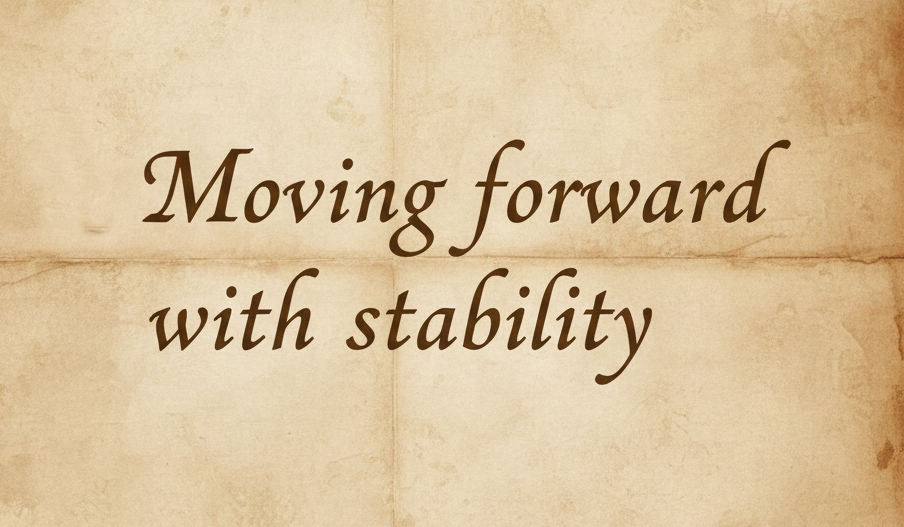
Image Healing: Guided Mandala Viewing - Lesson 238
Choose a mandala with a clear center of gravity and a stable structure.
Let your gaze slowly expand outward from the center.
Feel the support and order that the graphics bring.
Mandala is not about drawing something, but about observing. In observing, you practice landing and settling down from the peak.
The theme of this lesson's mandala is the Wheel of Steady Progress, symbolizing maintaining progress and balance amidst waves of anxiety.
◉ One gaze is sufficient; no repetition is required.

Lesson 238: Grounded "Five Senses Returning to the Body" Drawing Exercise
Objective: To draw attention away from anxiety and back to the body by visualizing the five senses, and to bring control back from a state of being out of control.
step:
① Draw a circle on a piece of paper to represent "my current body".
② Draw five outer circles: sight, hearing, touch, smell, and taste.
③ Write down one real feeling you can perceive at this moment in each circle (e.g., the feel of the chair, the temperature of the air, a sound in the distance).
④ Draw a line back to the center, symbolizing that you are returning from anxiety to your own body.
⑤ Write a calming phrase at the center of the circle: "I am returning to the present moment."
Please log in before submitting your drawings and feelings.
○ 238. Anxiety Peak Landing Log Guidance
① At what moment today did you suddenly feel overwhelmed by anxiety?
② What is your body's first reaction?
③ Which breathing or grounding technique is most effective?
④ Which of the five senses helps you return to the present moment the fastest?
⑤ Write down your own "landing phrase".
Please log in to use.
When you can let your breath bring you back to your body during the peak of anxiety, you have the power to transform chaos into stability.
 EN
EN  ZH
ZH  ES
ES  FR
FR  JA
JA