

Lesson 245: The First Step to Speaking Courageously (Exposing One's External Situation)
Duration:70 minutes
Topic Introduction:To break through the blockage of expression, internal practice alone is not enough. This lesson guides you to begin "controlled external exposure" and design real-life scenarios for safe speaking trials, so that your voice is no longer trapped in imagination but can be truly heard by others.
○ Principles and steps of external situation exposure
- From security to challenges:Start by speaking in a familiar environment, and then gradually expand to unfamiliar social interactions.
- Control variables:Change only one element, such as "crowded" or "strangers," but not both simultaneously.
- Repeat the exercise:Small repetitions throughout the day are more effective than one hard breakthrough.
Lesson 245: The First Step to Speaking Courageously - External Situation Exposure, Click to Listen to the Reading, View Content
The first step to speaking bravely isn't about performing in the most difficult situations, but about allowing your body to re-experience the safety of speaking in manageable external contexts. The core of external exposure isn't performance, but contact. When you're constantly silent and self-protective, your brain categorizes all public expression as high-risk; therefore, the first step must be small and specific. The first stage is choosing a low-assessment environment, such as a brief greeting in a familiar store or saying thank you to a vending machine worker. The focus isn't on the outcome of the exchange, but on completing the act of speaking. The second key is to pre-plan a script; a fixed phrase can significantly reduce uncertainty, preventing the body from generating language on the fly. The third stage is situational grading, progressing from one-time interactions to short back-and-forths, and from familiar to unfamiliar individuals. The fourth point is to allow tension to exist; success isn't measured by whether the tension disappears, but simply by completing the exposure. The fifth stage is post-exposure integration: after speaking, give your body a clear ending signal, such as a deep breath or leaving the area, letting your nervous system know the task is complete. The sixth key is accumulating successful memories; write down each success or mark it in your mind, allowing your brain to gradually update its predictions. It's important to understand that courage isn't the absence of fear, but acting in the face of fear without being deterred by it. When the body repeatedly experiences external speech without it causing danger, language gradually transforms from a threat into a tool, and expression becomes possible again.
▲ AI Interaction: Are you willing to design your own “voice situation map”?
The first step to speaking courageously is often in an external situation.
Choose a situation where you feel relatively safe, such as with someone you trust.
Even if you only say one word, it is a breakthrough.
Please believe: courage grows like this, little by little.
Click the button below to create your "social exposure plan" with AI and practice self-expression starting with one-on-one.
○ The first step to speaking bravely (external situation exposure) · Musical guidance
Choose a "controllable scene + friendly person" and minimize the target: a word or a greeting.
Play the "start-up song" beforehand and the "celebration song" afterward to help the brain form positive connections.
Record the exposure time, the intensity of the feeling, and the success factors, so that you only need to make slight adjustments next time.
Courage is not the absence of fear, but the ability to move forward despite fear.
○ Herbal Tea· Green Tea Jasmine Tea
Recommended drinks:Green tea jasmine tea
Recommended reasons:It refreshes the mind, relieves tension, and helps you stay clear-headed and calm in social situations.
practice:3g green tea and 1g jasmine flowers, brew with hot water for 3 minutes.
○ Stable Dietary Therapy - Green Peas Mint Rice (ID245)
During the exposure practice phase, the body needs refreshing and gentle nourishment. The light and refreshing taste of green pea and mint rice symbolizes the soothing and recovery after speaking for the first time. It's suitable to eat after completing an external speaking practice session to help the mind and body return to balance.
Language Start
Safety Practice
Open Recipe
◉ Indian Ayurvedic Dietary Therapy: Green Bean and Mint Rice (ID 245)
During the hot summer months or in moments of heightened emotion, Ayurveda recommends consuming foods with "cooling" (Sheeta) properties. Peppermint (Pudina) is a natural coolant; it not only physically lowers body temperature but also clears away toxins accumulated in the digestive system and bloodstream. Paired with sweet green beans and plump rice, this vibrant green dish instantly calms the mind and leaves even your breath with a refreshing aroma.
Cooling and reducing internal heat Soothe stomach acid Fresh breath
I. Recommended Dietary Therapy and Reasons
Recommended dishes:Pudina Rice with Green Peas
Recommended reasons:
1. Natural refrigerants:Peppermint contains menthol, which acts directly on the body's thermoregulatory center to produce a cooling sensation. It has an immediate relieving effect on heartburn, dry mouth, and bitter taste caused by Pitta imbalance.
2. Calming the fire of emotions:Excessive liver fire can lead to irritability. Green foods correspond to the liver, and the aroma of mint can soothe the liver and relieve stagnation, helping to transform the energy of "anger" into "clear thinking."
3. Refreshing and non-greasy:Unlike other heavily spiced Indian dishes, this dish typically uses fennel instead of spicy cumin or chili, resulting in a refreshing flavor that is perfect for those suffering from a poor appetite during the hot summer months.
2. Recipe and Method
Recipe (Serves 2):
- 1 cup of Basmati long-grain rice (washed and soaked)
- 1/2 cup sweet green peas
- Mint sauce ingredients:
- A large handful of fresh mint leaves (leaves only)
– A few fresh cilantro leaves (to balance the flavor)
– 1 tablespoon of shredded coconut (to enhance the milky flavor, optional)
– 1 small slice of ginger (to aid digestion) - spices:1 teaspoon of fennel seeds, 1 bay leaf
- 1 tablespoon of ghee or coconut oil
- 1 teaspoon lemon juice (keep it green)
practice:
- Preparing the mint sauce (the key step):Place mint leaves, cilantro, shredded coconut, and ginger into a blender, add a little water, and blend into a smooth, bright green liquid.
- Sauté:Heat the ghee in a pot. Add fennel seeds (note that it is fennel, not cumin, fennel is more cooling) and bay leaves and sauté until fragrant.
- Stir-fried sauce:Pour in the prepared mint sauce and stir-fry over medium-low heat for 1–2 minutes to remove the raw taste and bring out the aroma.
- Add ingredients:Add the green peas and drained rice, and gently stir-fry until the rice grains are lightly green.
- Simmering:Pour in water (about 1.5 cups), salt, and lemon juice. Bring to a boil over high heat, then reduce to low heat, cover, and simmer for 15 minutes.
- forming:Turn off the heat and let it sit for 5 minutes. When you open the lid, a cool steam will waft out. Stir it with a rice paddle and it's ready to serve.
3. Small rituals for body and mind
Green Breathing:While cooking, take a deep breath of mint. Close your eyes and imagine yourself standing on a grassy field by a waterfall. Inhale the cool, green energy, and exhale the fiery red energy within your body.
Mindful eating:Feel the coolness of mint bloom on your tongue, sliding down your esophagus into your stomach. Tell yourself, "My body is cooling down, and my mind is becoming peaceful."“
4. Dietary Therapy Experience Record
- Record how your stomach feels after a meal. Is the usual burning or heaviness gone, replaced by a refreshing comfort?
- Observe your breath; mint rice is a natural breath freshener, leaving a lingering fragrance in your mouth after eating.
- Pay attention to your mood in the afternoon. Are you more patient than usual and less easily annoyed by trivial matters?
V. Instructional Videos (approximately 3–5 minutes)
◉ Video Title:Lose your appetite in summer? A bowl of mint and green bean rice that's "built-in air conditioning" will do the trick.
6. Precautions
- Do not add chili:The purpose of this dish is to "cool down." Please try not to add red chili peppers or too much black pepper, so as not to overpower the cooling effect of the mint.
- Peppermint dosage:Mint leaves shrink significantly when heated, so you need a generous amount of fresh leaves (a large handful), otherwise the flavor won't be strong enough.
- Use with caution if you have a cold stomach.If you already have a cold stomach or diarrhea (high Vata), it is recommended to add more ginger or eat it with a cup of hot ginger tea to balance the cooling effect.
hint:This dish is a vibrant green, very pleasing to the eye. In India, it's often eaten with yogurt (Raita), which is also a cooling food, creating a double cooling combination.
○ Suggestions for Practicing Clerical Script in Chinese Calligraphy - Lesson 245
Written words:
Cultivating both blessings and wisdom
In-depth analysis:
Speaking in external situations requires both courage and wisdom.
The stable structure and flowing horizontal strokes of the clerical script are very suitable for training to maintain a firm footing under pressure.
When you write down the words "cultivating both blessings and wisdom" stroke by stroke, you are reminding yourself that action and awareness can coexist.
True progress comes from steady practice rather than a single breakthrough.
Writing skills (externally exposed version):
- Horizontal strokes move steadily:The training remained stable under external observation.
- Center of gravity downward:Enhance the body's sense of landing.
- Clearly define the start and end dates:Make sure every attempt has a complete ending.
- Breathing synchronization:As you write, exhale to relieve tension.
- Repeat the writing:Strengthen the body memory of daring to speak.
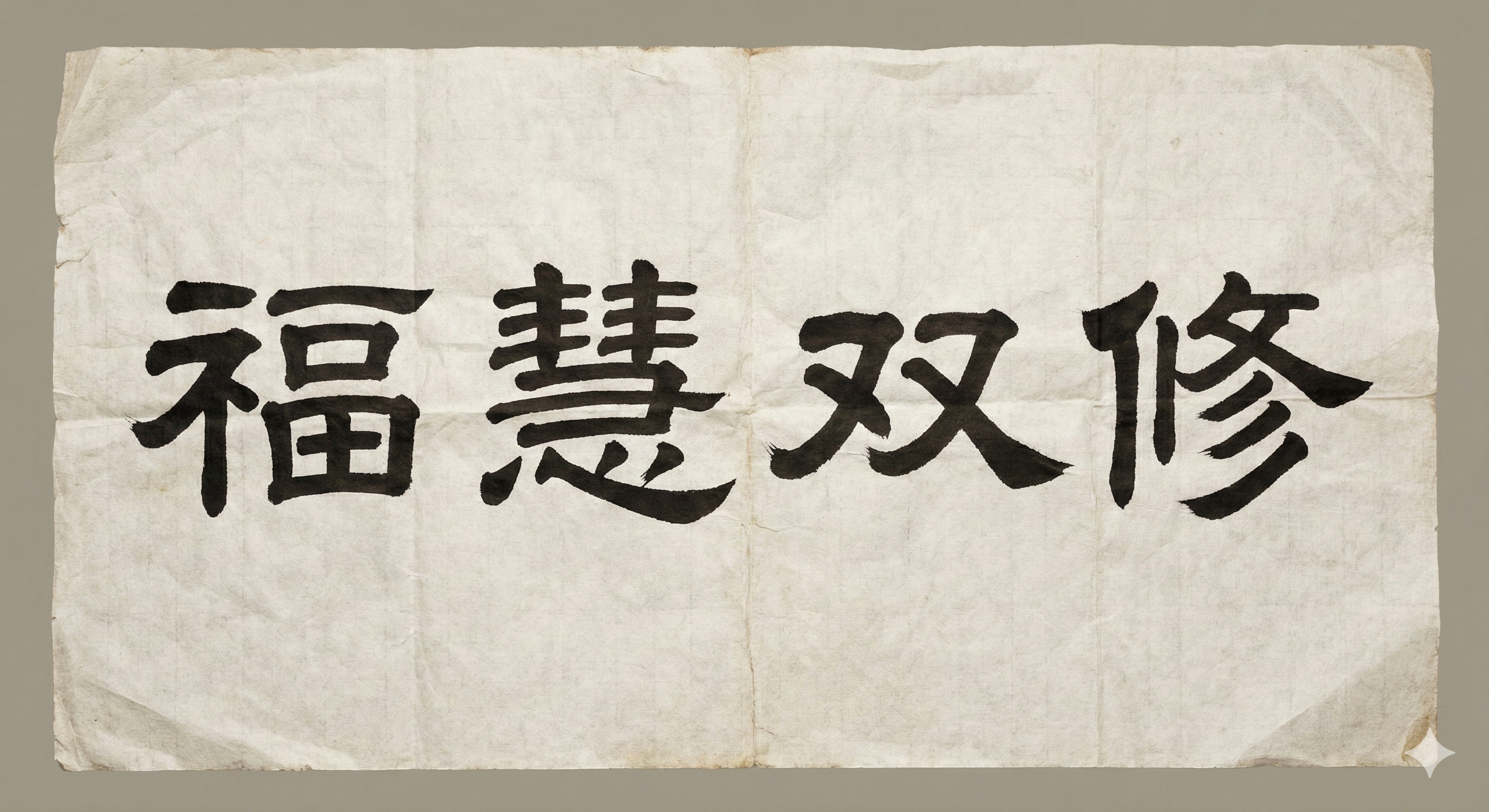
Image Healing: Guided Mandala Viewing - Lesson 245
Choose a mandala with a stable center and an outer circle that gradually expands.
Let your gaze slowly move from the inside out.
Feel the transition from inner preparation to external action.
A mandala is not about drawing something, but about observing what you are doing and practicing taking the first step with courage.
The theme of this lesson's mandala is "The Path to Enlightenment," symbolizing the transition from internal preparation to external practice.
◉ One gaze is sufficient; no repetition is required.

Lesson 245: The First Step to Speaking Courageously (Exposing One's External Situation)
Objective: To learn to try "micro-voice" in the outside world and let language step out of the private space.
Steps: Draw five scene circles (doorstep, street corner, shop, school, public space). Inside each circle, write a phrase you can whisper, such as "Thank you," "I'm here," or "May I?" After finishing, draw a halo around the outermost circle, symbolizing the spread of courage.
Please log in before submitting your drawings and feelings.
○ 245. The First Step to Speaking Courageously (External Situation Exposure): Journal-Guided Suggestions
① Choose a gentle, real-life scenario: asking the front desk for the time, ordering a glass of water, saying "thank you/goodbye." Write down the key words in the script first.
② Three steps: Arrive → Observe for 10 seconds and breathe → Say a word or short sentence. Allow for failure, silence, and retrying.
③ Support settings: Bring your "pocket phrases," "gesture pause rights," and "contact numbers." A sense of security gives you the courage to stand up.
④ Fact Gathering: What was the other person's actual reaction? How did it differ from what I imagined? Write down at least one new piece of evidence.
⑤ Transfer and generalization: Move success to similar scenarios (another store, a different time period) to train the brain to feel feasible in more places.
⑥ Gentle summary: What is my proudest moment today? Give yourself a reward: take a five-minute walk, have a warm drink, write a thank you card.
Please log in to use.
Saying your first words is a small step in your life. Even if you feel shaky, it's worth a big encouragement.
 EN
EN  ZH
ZH  ES
ES  FR
FR  JA
JA