

Lesson 266: How to deal with body stiffness and frozen mouth
Duration:70 minutes
Topic Introduction (Overview):
Under the pressure of anxiety, tension, or being watched, the body often enters a "rigid mode": shoulders are raised, chest is locked, jaw is tense, tongue is stiff, lips cannot be opened, and even simple speech becomes difficult.
These reactions are not your fault, but rather the body's "freeze strategy" being activated, an ancient survival mechanism.
This lesson will guide you to understand the principles of body stiffness and mouth freezing, and teach you how to gradually move your body from "frozen" to "movable" and your mouth from "unable to open" to "able to try opening a little bit" through breathing, micro-movements, muscle repositioning, and small-range rhythmic exercises.
The goal is not to speak immediately, but to let the body know:
“I can move a little bit; I am not locked up.”
Lesson 266: What to do when your body is stiff and your mouth is frozen. Click to listen to the reading and view the content.
One particularly frustrating experience during language and social recovery is when you're fully conscious and willing to express yourself, but your body suddenly freezes, your mouth seemingly locked shut. This isn't a sign of weak will or declining ability; it's a momentary freeze response in the nervous system. Freezing isn't a mistake, but a self-protective mechanism under high stress. The first step is to re-understand the meaning of freezing: when the body judges that the current stimulus exceeds its capacity threshold, it chooses to pause rather than continue output—this is protection, not failure. The second step is to avoid fighting the freeze; the more you command yourself to speak quickly or relax, the worse the stiffness will become. The third step is to shift your attention from your mouth to more easily adjustable areas, such as the feeling of ground under your feet or the warmth of your hands, allowing your body to return to a holistic, perceptible state. The fourth step is to use micro-movements to thaw, such as gently rotating your ankles, slowly clenching and releasing your fist, or taking a slow, complete exhale. These actions signal to the nervous system that the danger has decreased. The fifth step is to allow nonverbal responses; during a freeze, you can nod, shake your head, or gesture without forcing yourself to speak, allowing the connection to be maintained. The sixth step is to try very soft sounds or words after the freeze has subsided, rather than immediately returning to full expression. The seventh step is post-incident integration, not blame. Reviewing the trigger points and bodily signals provides clues for future early identification. When you learn to see freezes as signals rather than obstacles, your body will gradually trust you to safely guide it back when stiffness occurs, and your expression will become more stable as a result.
▲ AI Interaction: Freezing is not a failure, but your body protecting you.
Your body isn't rebelling; it's protecting you.
Staying still is a survival mechanism, not cowardice or retreat.
When you learn to soothe it with small gestures, you can regain a sense of "control".
Click the button below to let AI help you identify your body's frozen state and create a micro-movement thawing plan for you.
Choose soft and steady rhythmic music, and let your shoulders and jaw slowly relax with the rhythm.
○ Western Healing Tea: Ginger Chamomile Blend
Recommended reasons:Ginger can improve the body's microcirculation, while chamomile can loosen the jaw and neck tension, making them an ideal combination to combat "freezing".
practice:Soak a few thin slices of ginger and 1.5g of chamomile in hot water for 4 minutes.
○ Stable Dietary Therapy: Bajitian Chicken Soup (ID266)
After experiencing stiffness and freezing reactions, the body often feels internally weak and cold. Chicken soup with Morinda officinalis is known for its warming and stabilizing properties, helping to restore the body's sense of support and security. It is suitable for consumption after exercise or exposure to help the nervous system return to a functional state.
Body thawing
Mild support
Open Recipe
◉ Morinda officinalis chicken soup
Morinda officinalis warms the kidneys and strengthens yang, strengthening the body's vital energy; while chicken nourishes qi and blood, strengthening the spleen and soothing the stomach. This broth is fragrant and refreshing, suitable for those suffering from kidney yang deficiency, qi and blood deficiency, and postpartum conditioning.
Warming the kidneys and strengthening yang Nourishing Qi and blood Strengthens the spleen and nourishes
1. Recommended soups and reasons
Recommended soups:Morinda officinalis chicken soup (ID 102)
Recommended reasons:Warms the kidneys and aids yang, replenishes qi and blood, and enhances physical strength and cold resistance.
2. Recipe and Method
Ingredients (Serves 3–4):
- Half a three-yellow chicken (about 900 g, cut into pieces)
- Morinda officinalis 10 g
- 12 g wolfberry (optional)
- 4 slices of ginger
- 2.5 L of clean water
- 10 ml cooking wine (optional)
- a pinch of salt
practice:
- Blanch the chicken and remove the foam; add water to a casserole, add the chicken, ginger slices (and cooking wine), and simmer for 60–75 minutes.
- Cook the Morinda officinalis and wolfberries for another 8–10 minutes, season and serve.
3. Small rituals for body and mind
Before drinking, rub your palms to warm them up and massage the Mingmen point for 30 seconds.
Take small sips and feel the warmth in your abdomen.
Chilliness and fatigue scores were recorded.
4. Experience Record
- Physical sensation (warmth/fullness/comfort).
- Chill intolerance and physical strength score.
- Record today's soup intake and other dietary combinations.
5. Tutorial Video (approximately 3–6 minutes)
◉ Video Title:Morinda officinalis chicken soup nourishes vital energy and replenishes qi
6. Precautions
- People with yin deficiency and hyperactivity of fire and pregnant women should follow the doctor's advice when using warm and hot medicinal materials.
- People with hyperlipidemia should skim oil and control salt intake.
- People with kidney disease should consult a doctor first.
hint:Diet therapy is daily care and does not replace individualized medical treatment.
○ Suggestions for Chinese Calligraphy and Seal Carving Practice - Lesson 266: Regaining Feelings During Stagnation
The seal carving exercises in this lesson are designed to help you regain a sense of control when your body is frozen or your movements are restricted, allowing your body to experience that you can continue even when you slow down.
- Introduction to the characteristics of seal carving:
Seal carving emphasizes the authentic feedback of the knife's touch. When the knife comes into contact with the stone, resistance and propulsion coexist, which helps to restore the body's perception of power and rhythm. - Written words:
What I like - Psychological Intention:
The experience of carving with a pause and a stroke allows one to find their own rhythm even after a period of stillness. - Knife skills:
When wielding the knife, do not pursue continuous speed. After each cut, pause for a moment to check whether your arm, shoulder, and neck are relaxed. - Emotional transformation:
Transform the feeling of helplessness of "I'm stuck" into the confidence of "I can slowly regain my ability to move".
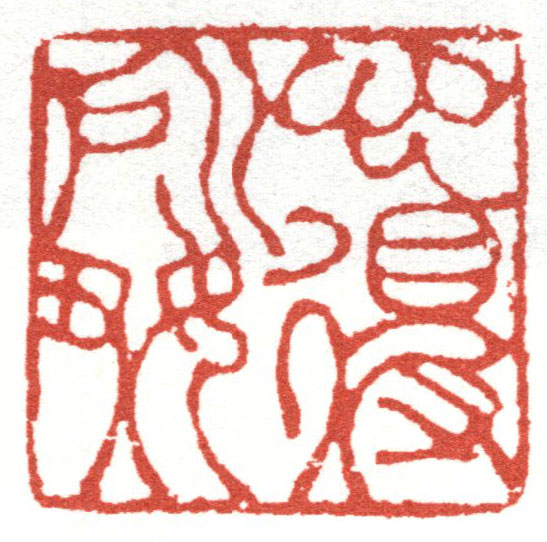
Image Healing: Guided Mandala Viewing - Lesson 266
Choose a mandala with a stable center and thick lines.
Keep your gaze focused on the center until your breathing becomes even.
Then slowly move to the outer circle and feel whether your body is gradually relaxing.
Mandala is not about drawing something, but about observing. In observing, you practice a safe transition from frozen to flowing.
The theme of this lesson's mandala is the recurring heart, symbolizing that when the body is understood and accepted, the flow will reappear.
◉ One gaze is sufficient; no repetition is required.

Lesson 266: Body Thawing Map Sketch
Purpose: To help you understand the parts of your body that are frozen and the path to release them.
step:
① Draw a simple human figure outline.
② Mark the "freezing points" (jaw, collarbone, shoulder, chest, stomach) with a dark color.
③ Connect the arrow to the "loosening action" on the outer circle (open your mouth 0.5cm, lower your shoulders, and gently pronounce the "m" sound).
④ Write a practice goal: "I allow myself to slowly loosen up."“
Please log in before submitting your drawings and feelings.
○ 266. Guided Body Freezing and Unfreezing Log
① What part of your body is the stiffest today?
② Have I noticed the trigger point for the freeze?
③ Which small action helps me relax the most?
④ At what moment today did I successfully open my lips or relax my shoulders?
⑤ What loosening movements would I be willing to try again tomorrow?
Please log in to use.
Freezing the body is not an order, but a temporary protection.
When you learn to gently release it, your voice will return.
 EN
EN  ZH
ZH  ES
ES  FR
FR  JA
JA