

Lesson 274: Reconnecting the Belief that "Speaking = Safety"
Duration:70 minutes
Topic Introduction (Overview):
For many who choose silence or find it difficult to speak, the real difficulty often lies not in language itself, but in the fact that their deep-seated beliefs have been wounded.
“Speaking is unsafe,” “Speaking out will be met with rejection,” and “Expressing your opinions will have consequences.”
These beliefs come from past experiences, are remembered by the body, and automatically trigger a protective response every time someone is about to speak.
The goal of this lesson is not to force you to say more, but to gradually rebuild a completely new experience:
“I can speak slowly; my voice will not pose a danger.”
We will use four pathways—body, image, language, and rhythm—to transform the old belief that "expression equals risk" into a new foundation that "expression equals being allowed and being understood."
Lesson 274: Reconnecting to the Belief that "Speaking = Safety" (Click to listen to the reading, view the content)
In the course of prolonged anxiety or expression difficulties, many people subtly develop the opposite belief: that speaking is unsafe. Perhaps you've been interrupted, rejected, ridiculed, or experienced physical discomfort while speaking; these experiences can cause the nervous system to associate vocalization with danger. Reconnecting the belief that "speaking = safe" isn't about persuasion, but about gradually overwriting old memories with new physical experiences. The first step is to acknowledge the legitimacy of the old belief—it was a protective mechanism that helped you survive at the time, not a mistake. The second step is to distinguish between the past and the present; many dangers no longer exist, but the body is still reacting according to the old map. The third step is to start with very low-risk speaking experiences, such as softly reading a sentence to yourself or making a sound in a completely safe environment, allowing the body to re-experience that speaking has no adverse consequences. The fourth step is to associate a sense of safety with vocalization, consciously pausing for a second after each speech to feel that the body is still intact and breathing is still present. The fifth step is to involve safe figures; when you speak in front of trusted people and are calmly accepted, the brain receives strong updated evidence. The sixth step is to allow for imperfect speaking; when you speak with pauses, slips of the tongue, or soft voices, it is still safe, and the old belief will begin to loosen. The seventh step is repetition, not intensification. Multiple small doses of safe vocalization are more effective than a single, high-difficulty breakthrough. The eighth step is to mark the new experience with language. After practicing, tell yourself, "I just spoke, and it was safe." This shift in belief is not a mental reversal but a rewriting of bodily memory. As you associate speaking with safety each time, you will gradually regain a natural and confident sense of expression.
▲ AI Interaction: Find out where your old beliefs come from
Explore with AI: What is the source of your body's "sense of danger from language"? From whom does it come? From which period?
Click the button below to create your "Expression Security Graph".
○ Music Guidance: A Stable Sound Space
Choose gentle music with a sense of "spatiality" so that your body can experience the sound waves approaching you without hurting you.
Practice method: Close your eyes, breathe gently in your chest along with the melody, and let the music replace the "dangerous memory" as a new sound experience.
○ Western Healing Tea: Vanilla–Apple Warm Soothing Tea
Recommended reasons:The natural sweetness of apples corresponds to "allowance and acceptance," while vanilla brings a "relaxing feeling" and helps you reduce the association of "speaking = tension."
practice:Soak apple slices and half a vanilla bean in hot water for 5 minutes.
○ Stable Dietary Therapy: Lily, Snow Pear, and Tremella Soup (ID274)
During the phase of rebuilding a sense of security, the body needs soothing and calming nourishment. Lily bulbs, snow pears, and white fungus help relieve internal dryness after tension, symbolizing gentle acceptance and recovery. They are suitable for consumption after vocal exercises to help the body remember safety and relaxation.
Voice Reconstruction
Gentle and soothing
Open Recipe
◉ Lily, Pear, Tremella Soup
Lily bulbs moisten the lungs and relieve coughs, Tremella fuciformis nourishes yin and moisturizes, and snow pear clears dryness and promotes fluid production. Cooking these three together creates a refreshing, sweet, and smooth soup, perfect for those suffering from dry coughs, itchy throats, and fluid depletion in autumn and winter.
Moisturizes the lungs and relieves cough Clears dryness and promotes salivation Moisturizes the throat
1. Recommended soups and reasons
Recommended soups:Lily, Pear, and Tremella Soup (ID 88)
Recommended reasons:It moistens the lungs and relieves cough, clears away dryness and promotes salivation, and relieves dry throat and dry cough with little phlegm.
2. Recipe and Method
Ingredients (Serves 3–4):
- 10 g dried Tremella fuciformis (soaked and stems removed)
- 15 g dried lily bulbs (or 80 g fresh lily bulbs)
- 1 pear (core removed and cut into pieces)
- 1.2 L of clean water
- 8 g wolfberry (optional)
- A little rock sugar (optional)
practice:
- Soak the white fungus in advance and tear it into small pieces; wash the lilies and set aside.
- Add water and white fungus to the pot, bring to a boil over high heat, then simmer for 25 minutes.
- Add pears and lily bulbs and cook for another 10–12 minutes.
- Season with a small amount of rock sugar as needed, add wolfberries and simmer for 2 minutes before serving.
3. Small rituals for body and mind
Rinse your mouth with warm water before eating to reduce throat irritation.
Drink slowly with small sips, and feel the refreshing taste as you swallow.
Record the cough frequency and throat comfort of the day.
4. Experience Record
- Physical sensation (refreshing/soothing/stable).
- Throat and breathing comfort.
- Record the ratio of today's soup to other staple foods.
5. Tutorial Video (approximately 3–6 minutes)
◉ Video Title:Lily, pear and tremella soup - refreshing and cough-relieving
6. Precautions
- Those with heavy phlegm and dampness and obvious abdominal distension should reduce the dosage of Tremella fuciformis.
- Diabetics can avoid adding sugar or use sugar substitutes.
- Long-term medication users should follow doctor's advice.
hint:Diet therapy is daily care and does not replace individualized medical treatment.
○ Humanist Script of the Italian Renaissance Period · Lesson 274 Writing Exercises
Today's healing phrase:
Steady steps lead far
In-depth analysis:
“Whether it is safe to speak is not a logical judgment but the result of accumulated physical experience.
Humanist Script’s stable proportions and gentle pace help you focus your attention on the current security structure.
As the writing process continues smoothly, the brain gradually receives a new message: expression can occur in an orderly manner.
The new sense of security comes from repeated experiences of being reassured by the body.
Writing Tips (Safe Reconnection Version):
- Slow writing:Don't put any time pressure on yourself.
- Clear baseline:It symbolizes stability and support.
- Spacing is well-spaced:Leave room for expression.
- Lightly press down on the pen:Reduce physical defenses.
- Stop writing as soon as you finish:Confirmed to be completed and secure.
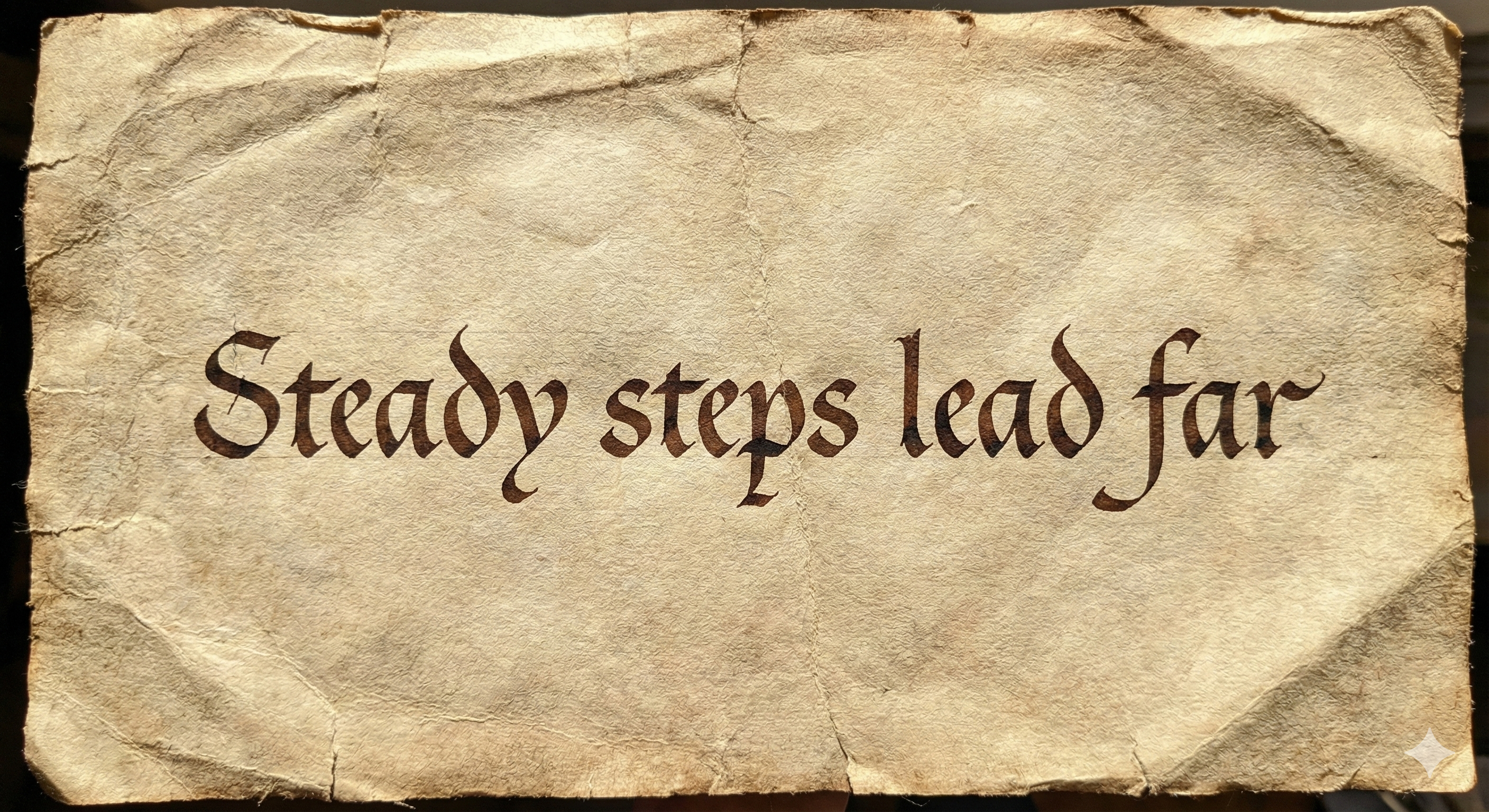
Image Healing: Guided Mandala Viewing - Lesson 274
Choose a mandala with a warm center and clear boundaries.
First, gaze at the center to feel stability.
Slowly observe the outer ring to confirm that you are still safe.
Mandalas are not about drawing something, but about observing. What you practice in observing is reconnecting expression with safety.
The theme of this lesson's mandala is the peace of mind, symbolizing when speaking is once again recognized by the body as safe.
◉ One gaze is sufficient; no repetition is required.

Lesson 274: Expressing a Sense of Security - Drawing Exercises
Purpose:It allows you to visually re-experience the idea that "speaking does not cause harm".
step:
① Draw a small dot: symbolizing the smallest expression of your willingness to begin.
② Draw three soft protective lines on the outer layer: This symbolizes the response you hope the world will give you (slower, gentler, more affirmative).
③ Write a new safety belief on the outermost circle:
“"When I speak, I will be understood."”
Please log in before submitting your drawings and feelings.
○ 274. Log Guidance
① At what moment today did I feel that "expression is dangerous"?
② Does that sense of danger come from the present or from the past?
③ If people in the past couldn't give me security, who can now?
④ What is my belief in establishing a new voice?
⑤ What is a "minimum safe expression" that I can practice tomorrow?
Please log in to use.
Your voice is not a danger. It's just that it wasn't treated gently before. Now, we are building a truly safe home for it.
 EN
EN  ZH
ZH  ES
ES  FR
FR  JA
JA