

Lesson 276: Exploring the Deep-seated Belief of "I'm Afraid of My Voice Being Heard"
Duration:70 minutes
Topic Introduction (Overview):
Many people aren't "unable to speak up," but rather harbor a deep-seated, unspeakable fear:
“When my voice is heard, something bad will happen.”
This may stem from being blamed, ridiculed, interrupted, or rejected in childhood, or from an embarrassing speaking experience.
The goal of this lesson is not to force you to speak immediately, but to help you gently trace back:
Where did your fear begin? How does it protect you now? And how can it gradually dissipate?
You will learn to recognize this belief, engage with it, and give yourself new possibilities.
Lesson 276: Exploring the Deep-seated Belief of "I'm Afraid of My Voice Being Heard" (Click to listen to the reading and view the content)
As language and expression gradually recover, some people find that even with acquired skills, a subtle resistance remains—a fear of being heard. This fear often stems not from the present moment but from earlier experiences. When your voice has drawn criticism, misunderstanding, neglect, or emotional conflict, your body may have learned to equate being heard with danger. Exploring this deep-seated belief is not about tracing details but understanding how it still influences the present. The first step is to distinguish between sound and consequences: you are not afraid of the sound itself, but rather the potential reaction. The second step is to be aware of bodily memories: when you imagine yourself being heard, pay attention to whether your throat, chest, or abdomen contract—these are traces left by past experiences. The third step is to acknowledge that this belief once protected you; silence may have indeed reduced conflict at the time, therefore it deserves respect, not denial. The fourth step is to gently test the new reality: make a small, real sound in a safe environment and observe if any danger actually arises. The fifth step is to distinguish between past power relations and present equality: you are no longer someone without a choice. The sixth step is to relabel the experience with language: after each safe expression, tell yourself, "My voice was heard, and nothing bad happened." The seventh step is to allow the belief to gradually loosen rather than disappear immediately. Changes in deep beliefs require repeated confirmation from the body. The eighth step is to view exploration as understanding rather than correction. When you stop fighting this fear, it will gradually recede into the background. The process of exploring "I'm afraid my voice will be heard" is itself the beginning of regaining the right to express oneself.
▲ AI Interaction: Where does your fear come from? What is it protecting?
You may be afraid of being laughed at, denied, told you are "too slow," "too strange," or misunderstood.
Let AI help you disassemble it:
① What situation does the fear originate from?
② Does it still exist?
③ Is it no longer suitable for your present situation?
Click the button below to explore your "history of sound phobia" with AI.
○ Musical Guidance: Creating a Safe Sound Field for Being Heard
Play warm, gentle music that diffuses like soft light.
Softly utter "hmm," "um," or very light breathing sounds while listening to music.
You are not speaking, you are telling your body:
“"Making a sound will not cause any danger."”
○ Western Healing Tea - Vanilla–Oat Comfort Blend
Recommended reasons:The smoothness of oatmeal and the soothing aroma of vanilla can reduce alertness related to "being heard."
practice:Add a small amount of rolled oats and a small piece of vanilla pod to hot water and soak for 3 minutes. You can add a drop of honey if desired.
○ Stable Dietary Therapy: Chestnut and Yam Porridge (ID276)
After touching upon deep beliefs, the body often needs substantial yet gentle nourishment. The sturdiness of chestnuts and the smoothness of yams help enhance inner support and are suitable for consumption after practice, helping the body maintain a sense of security during exploration.
Sound safety
Internal support
Open Recipe
◉ Chestnut and Yam Porridge
Chestnuts are sweet and yam is glutinous. When cooked with rice, they can strengthen the spleen and kidneys, replenish qi and nourish yin. They are suitable for people with spleen and kidney deficiency, fatigue and poor appetite.
Strengthen the spleen and kidney Tonify Qi and Yin sweet and soft
1. Recommended dishes and reasons
Recommended dishes:Chestnut and Yam Porridge (ID 169)
Recommended reasons:Chestnuts nourish the kidneys and strengthen bones, while yam strengthens the spleen and replenishes qi. They are both nourishing and non-greasy, making them suitable as staple foods for recovery period.
2. Recipe and Method
Ingredients (Serves 2–3):
- 90 g japonica rice
- 120 g chestnut kernels (peeled and cut into small pieces)
- 150 g yam (peeled and diced)
- 10 g wolfberry (optional)
- 1.3 L of clean water
practice:
- [Pretreatment] Peel the chestnuts and cut into small pieces. Peel and dice the yam, then rinse to remove the mucus; wash the japonica rice.
- [Cook] Put the japonica rice and water into the pot, bring to a boil over high heat, then reduce to low heat and cook for 20 minutes. Add the chestnuts and continue cooking for 15 minutes.
- [Add Chinese Yam] Add the diced Chinese Yam and simmer for 10 minutes until the porridge is soft and sticky; add Chinese wolfberry and simmer for 2 minutes before finishing.
- [Complete] Turn off the heat and simmer for 5 minutes to make the porridge softer.
3. Eating rituals
Use small bowls to share the food and chew slowly to enjoy the sweet aroma of chestnuts.
Note whether sleepiness decreases after meals.
Drink until you are 70% full at night.
4. Experience Record
- Physical sensation (refreshing/full/warm).
- Post-meal mental and digestive scores.
- Record portion sizes and daily fruit, vegetable, and whole grain intake.
5. Tutorial Video (approximately 3–6 minutes)
◉ Video Title:Chestnut and Yam Porridge: Strengthens the Spleen and Kidneys
6. Precautions
- People with diabetes should pay attention to the total carbohydrate intake; they can reduce the amount of chestnuts and increase the amount of vegetables in their meals.
- People who are allergic to yam skin should wear gloves when handling it.
hint:Dietary therapy is for daily care and does not replace individualized medical treatment. If you have food allergies or chronic diseases, please consult a doctor/traditional Chinese medicine practitioner first.
○ Humanist Script of the Italian Renaissance - Lesson 276 Writing Exercises
Today's healing phrase:
Wisdom and compassion together
In-depth analysis:
The fear of being heard often stems from an imbalance in old relationships rather than from real danger in the present.
The rational structure and gentle humanistic spirit of Humanist Script help you shift the question of "Should I be heard?" from a fearful judgment to an understanding perspective.
When writing becomes stable, the presence of sound also becomes more secure.
Understanding yourself is the first step to bringing your voice back.
Writing Techniques (Belief Exploration Edition):
- Slow writing:Do not put pressure on inner exploration.
- Clear letter spacing:Symbolizes boundaries and space.
- Cursive restraint:Segmented interpretation is allowed.
- Baseline stable:It reminds you to be in the present moment.
- Stop writing as soon as you finish:Exploration doesn't need to be excessive.
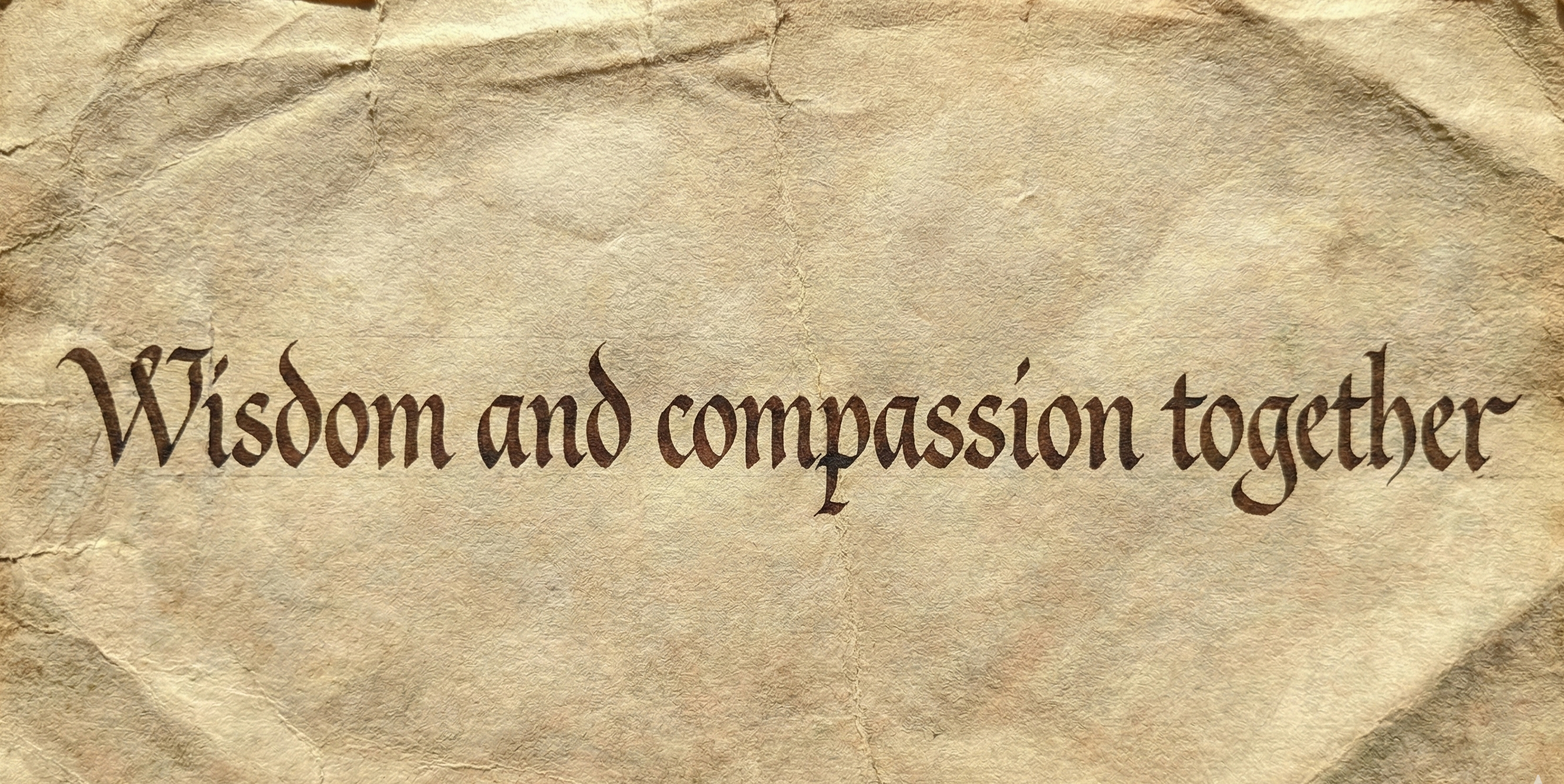
Image Healing: Guided Mandala Viewing - Lesson 276
Choose a mandala with a clear center and a soft outer circle.
First, gaze at the center and feel your presence.
Then slowly expand your gaze outwards.
Mandala is not about drawing something, but about observing. In observing, you practice letting existence be seen and still be safe.
The theme of this mandala is the heart that is heard, symbolizing that the inner self remains stable even when sound appears.
◉ One gaze is sufficient; no repetition is required.

Lesson 276: Fear of Sound - Drawing Exercise
Purpose:Understanding the origins and transformations of "fear of being heard" through visual means.
step:
① Draw a "sound line", from thin to thick, to symbolize the sound from soft to loud.
② Draw a symbol next to the sound line that represents your worry (e.g., big eyes, a laughing symbol, a question mark).
③ Draw a new line with a softer color to symbolize a new auditory experience.
④ Write a supporting sentence:
“I am redefining being heard.”
Please log in before submitting your drawings and feelings.
○ 276. Log Guidance
① Why do I feel afraid of being "heard"?
② What am I most afraid of others hearing about me? (voice? tone? pauses? content?)
③ Is this fear from the present or the past?
④ If the sound is heard, what is the most likely outcome?
⑤ What new belief do I hope to give myself?
Please log in to use.
Your voice is not a danger; it simply hasn't been safely seen yet. Let this lesson be a small step in reclaiming your voice's sovereignty.
 EN
EN  ZH
ZH  ES
ES  FR
FR  JA
JA