

Lesson 29: How to determine if "I need in-person professional support or emergency intervention"“
Duration:70 minutes
Topic Introduction:
Sometimes, self-help exercises and online support are insufficient, requiring professional offline assistance or emergency intervention to ensure safety. This course will help you distinguish between situations that can be gradually improved through daily adjustments and psychological courses, and those that fall under the category of "prioritizing safety and life," requiring immediate contact with a psychiatrist, psychologist, or emergency system. It's not meant to scare you, but rather to establish a clear set of "safety red lines" for you.
○ When to consider in-person professional support and emergency intervention
- Daily functions are severely impaired:For several weeks, they were unable to work, study, or take care of themselves (e.g., they were almost unable to get out of bed, had difficulty taking a bath, or had irregular eating habits).
- Emotions are in an extreme state for a long period of time:Almost every day, there are intense moments of despair, persistent crying, and uncontrollable outbursts of anxiety or anger.
- Having thoughts or plans of self-harm or suicide:If thoughts such as "life is meaningless" or "it would be better to disappear" arise, especially when accompanied by specific plans or preparations, seek help from professionals or the emergency system immediately.
- A significant change in the sense of reality occurs:If you hear sounds that others cannot hear, see things that do not exist, or strongly suspect that everyone around you is trying to harm you, you should seek medical evaluation as soon as possible.
- Physical symptoms suggest that the condition may be life-threatening:If symptoms such as chest pain, difficulty breathing, confusion, sudden extreme palpitations, or stroke-like symptoms are suspected, they should be treated as emergency cases.
- You or someone close to you feels that things are "out of their control":When multiple attempts fail to improve the situation and the sense of security rapidly declines, providing offline support is a responsible act rather than a sign of failure.
Lesson 29: How to Determine if "I Need In-Person Professional Support or Emergency Intervention" 🎧 Click to watch/listen to the reading
In the midst of chronic anxiety, many people repeatedly hesitate over one question: **Am I already so severely affected that I need in-person professional help?** On the one hand, they worry about "overreacting," and on the other hand, they fear missing the crucial opportunity to seek help. Clearly knowing when to seek professional support is itself an important form of self-protection. First and foremost, it's crucial to understand that **seeking professional help does not equate to failure or loss of control.** Psychological support, like physical medical care, is tiered. Help isn't only for those who "can't take it anymore." The key isn't whether your condition is "severe enough," but whether your current state has exceeded your ability to cope alone. Several signs indicate that you need to **consider in-person professional support as soon as possible**. First, anxiety or related symptoms have **persisted for weeks to months** and significantly impact daily functioning, such as inability to work, study, or socialize, or a prolonged disruption to your basic life rhythm. Second, you've tried various self-regulation methods, but the symptoms have not only failed to improve but have actually worsened in frequency or intensity. Third, anxiety begins to coexist with significant depression, numbness, and emotional exhaustion, causing you to continuously lose interest and motivation in life. There are also situations that warrant a **higher priority professional evaluation**. For example, anxiety accompanied by frequent panic attacks, severe insomnia, significant eating disorders, or intense physical symptoms, repeatedly triggering the fear of "Am I going to get into trouble?" This doesn't necessarily mean danger is imminent, but it indicates the nervous system is under high-risk stress. The following situations fall under the category of **requiring immediate emergency medical attention or support**: If you experience persistent self-harming thoughts, clear suicidal ideation, or feel you may be losing control of your behavior; if you feel extremely hopeless, confused, and unable to ensure your own safety;
If anxiety or fear is accompanied by significant altered consciousness, extreme behaviors, or loss of reality, prioritize safety in these moments, rather than continuing to make judgments alone. Many people fear being labeled once they seek help. However, the core purpose of professional support is **assessment, stabilization, and pain relief**, not to draw conclusions. Even a simple assessment can help you better understand your situation, rather than bearing it alone in uncertainty. You can think of it this way: when you start seriously considering "Do I need help?", you are already taking responsibility for yourself. Deciding whether to seek help is not based on how hard you can push yourself, but on **risk, persistence, and degree of functional impairment**. True self-care isn't always about enduring it. Sometimes, it's about acknowledging: "I need someone to walk this path with me."
▲ AI Interaction: When you're hesitating about "whether to go to the hospital or see a professional"
Hesitation is normal; many people worry, "Am I overreacting?"
But safety should always be the top priority.
You can start by asking yourself three questions: Has my condition noticeably worsened recently? Am I struggling to maintain a basic standard of living? Have I developed dangerous thoughts or behaviors?
If the answer tends to be "yes," then seeking help is a responsible choice.
You don't need to wait until you "completely break down" before seeking medical help.
Click the button below to help AI analyze your current situation and get an initial assessment of whether it's appropriate to contact offline professional support as soon as possible.
When thinking about questions like "should I go to the hospital?", I often feel very tense.
Music can provide a brief respite, allowing you to return to your breath and body before making a decision.
Let the melody keep you company for a while, not to avoid making a decision, but to face the choice with a clearer and gentler mindset.
When you are a little more settled, it is easier to make decisions that are beneficial to yourself.
○ Eastern Healing Tea - Pu-erh Ripe Tea
Recommended drinks:Pu-erh ripe tea
Recommended reasons:Pu-erh ripe tea is warm and smooth in nature, with a full-bodied tea soup that provides a sense of stability. It is suitable for drinking when weighing whether to seek offline help, helping you to calm your mind.
practice:Take 5 grams of ripe Pu-erh tea, rinse it once with 95℃ water, then brew it again. Let it steep for 30 seconds before drinking. It is recommended to sip slowly and give yourself a moment to pause when your emotions are fluctuating.
○ Pumpkin Tofu Bowl
Pumpkin is rich in vitamins and dietary fiber, and when combined with the plant protein in tofu, it can provide gentle and stable energy during periods of mood swings. It's simple to prepare and has a soft texture, making it a perfect "eaten bowl" when you're feeling down but still want to take care of yourself, a reminder that you deserve to be cared for.
Stable energy
Take care of your health
/home2/lzxwhemy/public_html/arttao_org/wp-content/uploads/cookbook1/pumpkin-tofu-warm-bowl-21.html○ Humanist Script of the Italian Renaissance Period · Lesson 29 Writing Exercises
Today's healing phrase:
Body and mind in peace
In-depth analysis:
When anxiety exceeds the brain's self-regulation capacity, the brain often tries to bear it alone.
The rationality and sense of order in Humanist Script help you transform "asking for help" from shame into judgment.
Needing professional support does not mean failure.
Writing Skills (Advanced Version):
- The characters are well-formed:It symbolizes rational decision-making.
- Write slowly:Avoid impulsive judgments.
- Clear strokes:Corresponding to real-world boundaries.
- Avoid excessive writing:Emphasis is placed on steps and judgment.
- Stay after completion:Feel safe.
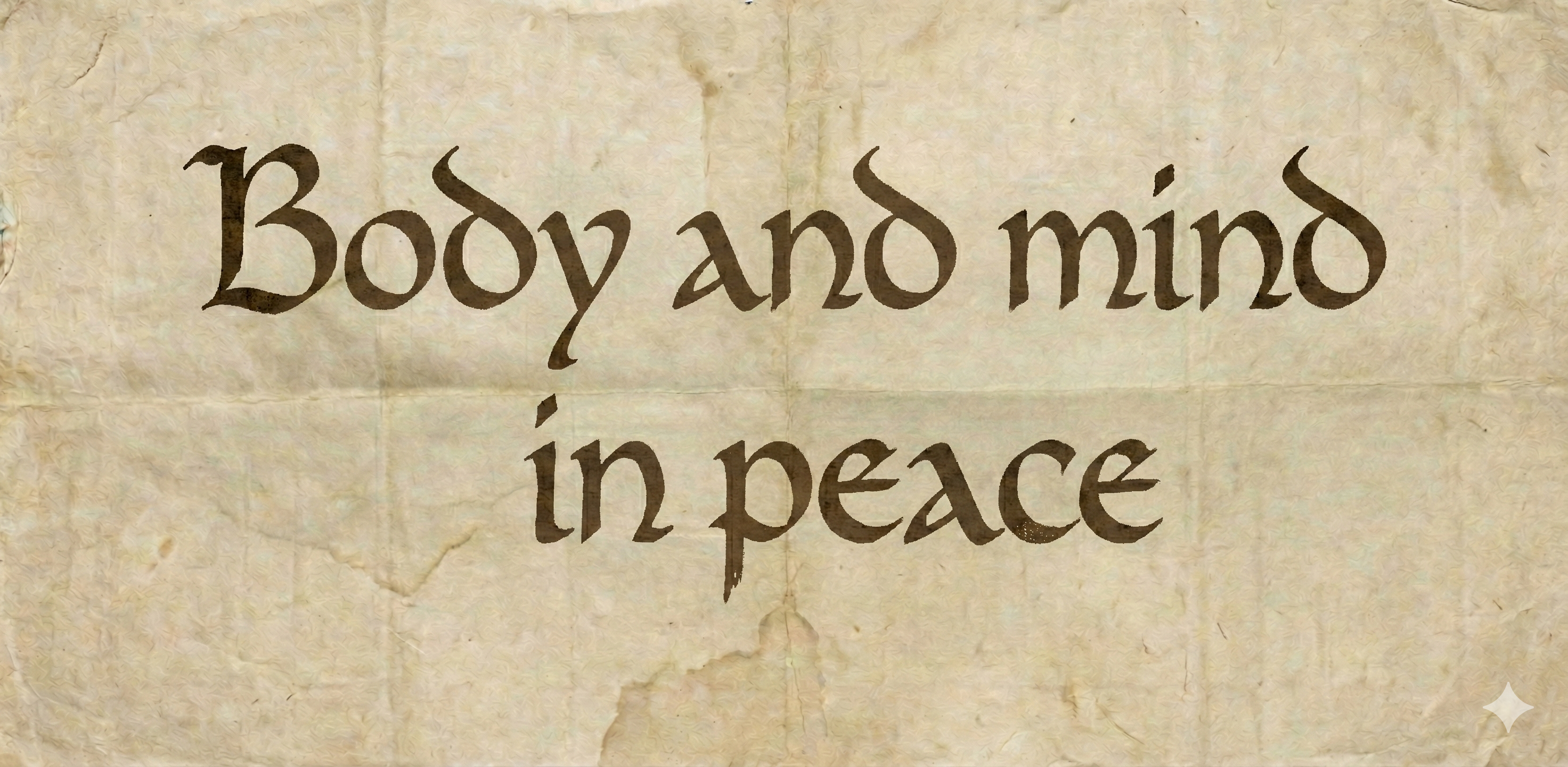
Image Healing: Mandala Stability Guidance 29
Imagine the center of the circle as a "safe haven," symbolizing a hospital, clinic, or trusted professional support. The outer ring represents your current emotions: confusion, fear, hesitation, exhaustion. As you gaze at the center, allow yourself to feel that it is a place where you can temporarily unload your burdens, receive evaluation and care, not a place for judgment. With each breath, you move closer to this safe haven.
The hierarchical structure of a mandala can help the brain understand that the transition from chaos to stability is gradual. When you feel lost and unsure of which way to go, gazing at this image can help remind you that "there are still people who can help you through this."
◉ Please stare and watch twice.

Lesson 29: Draw Your "Safety Net"“
Objective: To help you visually see what other support resources are available besides yourself, and under what circumstances they can be used.
Steps: Draw a symbol representing "yourself" in the center of the paper, and draw several layers of "safety net" outwards: the first layer could be family and trusted friends; the second layer could be a therapist, family doctor, or psychiatric clinic; the third layer could be an emergency room, crisis intervention hotline, etc. Use different colors to label "people you can contact regularly" and "resources you need to contact quickly in an emergency." After completion, write a reminder in a corner of the paper: When I assess that my safety may be threatened, I can prioritize safety rather than hesitating about whether it's too extreme.
Please log in before submitting your drawings and feelings.
○ 29. Suggestions for Offline Support and Emergency Diagnosis Log Guidance
① Reflect on the recent period and see if your sleep, eating, work, or study functions have significantly declined. Briefly write down three specific examples.
② Record whether you have recently had thoughts such as "life is meaningless" or "it would be better to disappear". If so, please honestly write down the frequency and intensity (0-10).
③ Write down your biggest concern right now: is it emotional instability, physical symptoms, or safety risks?
④ List the offline resources you can contact in your area (hospital departments, clinics, psychological counseling institutions, trusted people, etc.).
⑤ Write down three concerns you have about asking for help, and three possible benefits.
⑥ Describe a specific action you would be willing to take if needed, such as: "If I have strong thoughts of self-harm or suicide again, I will immediately contact the emergency room or local emergency number and inform a trusted friend or family member."“
Please log in to use.
Determining whether in-person or emergency support is needed is itself a sign of prioritizing life. When you're willing to think ahead and seek help early for your safety, you're already taking serious steps to protect yourself.
 EN
EN  ZH
ZH  ES
ES  FR
FR  JA
JA