

Lesson 293: The Stabilizing Effects of Nutrition, Sleep, and Exercise
Duration:70 minutes
Topic Introduction (Overview):
In major depressive disorder, the stability of the brain and emotional system does not solely depend on mental exercises or thinking training, but is deeply rooted in three fundamental abilities:
Nutrition, sleep, and exercise.
When these three factors are imbalanced, the brain's chemical balance, neurotransmitter regulation, and autonomic nervous system rhythm will be affected, making it easier for emotions to get out of control, mental breakdowns to occur, and thoughts to fall into a negative cycle.
Irregular eating habits can weaken energy supply, keeping the nervous system in a "low-energy mode";
Sleep deprivation can make the mood regulation system less flexible;
Lack of physical activity prevents stress from being released, making it easier for anxiety and depression to accumulate in the body.
This lesson will help you understand:
How nutrition becomes "the raw material for emotions";
How sleep allows the brain to reorganize and regain its resilience;
How exercise helps metabolize stress and improve energy stability.
When you begin to fix these three fundamental aspects, you will find:
Emotional fluctuations will no longer get out of control, and vitality will gradually return to the body.
Lesson 293: The Stabilizing Effects of Nutrition, Sleep, and Exercise (Click to listen to the audio and view the content)
During the long recovery process, many people focus on emotions and thoughts, neglecting the three most stable and sustainable pillars: nutrition, sleep, and exercise. These don't create immediate emotional highs, but they provide a continuous safety net for the nervous system. The first step is understanding that stability isn't passion, but predictability. When the body knows it will be fed, rested, and gently active each day, the alert system gradually relaxes. The second step is understanding the role of nutrition. Regular meals and a balance of basal protein, complex carbohydrates, and fats can reduce mood swings caused by blood sugar fluctuations, providing the brain with stable energy. The third step is understanding the core role of sleep. Sleep isn't just about "lying still," but a crucial period for the brain to reorganize emotions and memories; consistent sleep and wake-up times are more important than the length of sleep. The fourth step is understanding the purpose of exercise. Exercise isn't about consumption, but regulation. Light, regular activity promotes neurotransmitter balance and helps release stress naturally. The fifth step is avoiding extreme strategies. Excessive dieting, revenge sleeping, or high-intensity exercise all increase the burden on the system. The sixth step is establishing minimum standards—versions that can be achieved even during low periods, such as a hot meal, a walk, or a regular bedtime. The seventh step is to view these three elements as the "floor" of emotions; they don't solve all problems, but they prevent the state from continuing to decline. The eighth step is a long-term perspective: only when the body is functioning stably can psychological adjustment occur. Stability is not a compromise, but the most reliable force in the recovery process.
▲ AI Interaction: Is my basic physical and mental state stable now?
Enter your recent diet, sleep, and exercise patterns (e.g., irregular sleep schedule, loss of appetite, restless sleep, lack of motivation to exercise). AI will then help you:
① Assess the current state of your "basal regulatory system" (low energy/chaotic/tense).
② Identify the key factors leading to the imbalance.
③ Provide an executable "stability triangle repair plan".“
④ Develop a 24-hour schedule that suits you.
○ Music-guided light exercise rhythms to help restore rhythm
Choose music with a clear rhythm, distinct dynamics, and a relaxed feel, allowing your body to naturally follow the beat.
practise:
With each inhale, slightly raise your shoulders; with each exhale, lower your shoulders.
Using music to bring the body back from "stagnation" to "micro-movement" is the first step in rebuilding the energy system.
○ Western Healing Tea: Oatstraw & Lemon Balm Balance Tea
Recommended reasons:Oat grass replenishes the nervous system's tolerance, while lemon balm regulates anxiety and tension, restoring a gentle and stable rhythm to energy, mood, and sleep.
practice:Steep 2g of oat grass and a pinch of lemon balm for 6 minutes.
○ Stable Dietary Therapy: Angelica, Ginger, and Mutton Soup (ID293)
During the stage of establishing nutritional and lifestyle stability, the body needs warm and supportive nourishment. Angelica and ginger are warming and invigorating, while mutton provides sustained energy, making them suitable for helping the body return to a stable state when feeling tired or cold.
Sleep support
Gentle exercise
Open Recipe
◉ Angelica and Ginger Mutton Soup
Angelica nourishes and invigorates blood circulation, ginger warms the middle and dispels cold, and mutton replenishes Qi and blood. This clear, spicy soup is suitable for those suffering from cold hands and feet, abdominal pain caused by menstrual cramps, and Qi and blood deficiency.
Warming the middle and replenishing blood Dispel cold and relieve pain Replenishing Qi and tonifying deficiency
1. Recommended soups and reasons
Recommended soups:Angelica, Ginger and Lamb Soup (ID 101)
Recommended reasons:Warms the middle and dispels cold, replenishes blood and nourishes the body, relieves cold pain and fatigue.
2. Recipe and Method
Ingredients (Serves 3–4):
- 500 g mutton (pieces)
- Angelica 10 g
- 6–8 slices of ginger
- 15 ml rice wine/cooking wine (optional)
- 2.2 L of clean water
- a pinch of salt
practice:
- Blanch the lamb to remove the fishy smell. Add water to a casserole, add the lamb, ginger slices, and wine, bring to a boil over high heat, then simmer for 60 minutes.
- Add the angelica and continue cooking for 8–10 minutes. Season with a small amount of salt.
3. Small rituals for body and mind
Apply heat to your lower abdomen for 1 minute before eating.
Drink slowly while hot.
Record hand and foot temperature and abdominal comfort.
4. Experience Record
- Physical sensation (warmth/fullness/comfort).
- Chill intolerance and physical strength score.
- Record today's soup intake and other dietary combinations.
5. Tutorial Video (approximately 3–6 minutes)
◉ Video Title:Angelica, ginger and mutton soup: warming and dispelling cold
6. Precautions
- For patients with heavy menstruation, the dosage of angelica should be reduced.
- Those with fever or internal heat should postpone it.
- People with high uric acid should control the frequency of eating red meat.
hint:Diet therapy is daily care and does not replace individualized medical treatment.
○ Modern Calligraphy · Lesson 293 Writing Practice Suggestions
In-depth analysis:
A stable daily rhythm requires physical involvement, not just conscious control.
Modern art calligraphy emphasizesOrder in motionThe lines have direction, but are not rigid; the movements have rhythm, but are not tense.
When you let the lines extend and retract naturally, you are also practicing distributing energy just right.
This corresponds to the core principles of nutrition, sleep, and exercise: consistency, gentleness, and repeatability.
Writing Skills (Advanced Version):
- Uniform rhythm:Maintaining a steady pen-writing speed symbolizes the predictability of one's daily routine.
- Line return:After extending, naturally return to the baseline, practicing the control and release of energy.
- Balance:Avoid inconsistent intensity and maintain a balance between diet and exercise.
- Breath coordination:With each stroke of the pen and each breath, let your body's rhythm participate in the writing process.
- Consistency (repetition)Start with small amounts each day to build long-term stability.
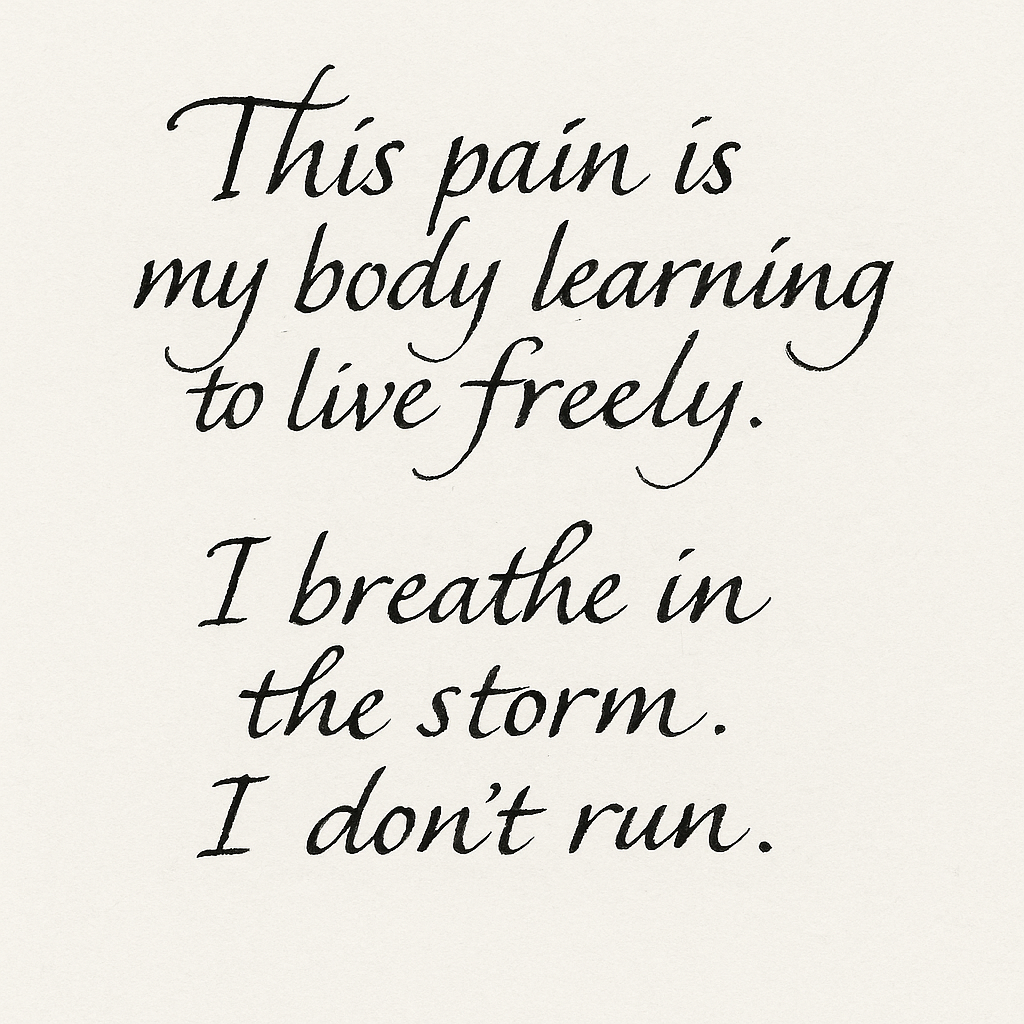
Image Healing: Guided Mandala Viewing - Lesson 293
Choose a mandala with clear rhythm and distinct layers.
Let your gaze flow through the graphic in sequence.
Experience how stability is formed through repetition.
Mandala drawing is not about drawing something, but about observing. In observing, you practice returning your mind and body to a sustainable and stable rhythm.
The mandala theme for this lesson is the circle of homeostasis, symbolizing how the everyday foundation provides continuous support for healing.
◉ One gaze is sufficient; no repetition is required.

Lesson 293: Stable Triangle Drawing Exercises (Nutrition, Sleep, Exercise)
Purpose:It allows you to clearly see which aspects of your life need the highest priority for repair.
step:
① Draw an equilateral triangle on a piece of paper, and write "Nutrition", "Sleep" and "Exercise" on the three sides respectively.
② Mark your current status in each corner (e.g., 3/10, 5/10).
③ Fill in the inside of the triangle with color—the lighter the color, the less stable it is.
④ Find the weakest corner and write down a "small repair action" next to it.
⑤ Place the triangle in a place you see every day to remind yourself to make up for it little by little.
Please log in before submitting your drawings and feelings.
○ 293. Log Guidance
① Where does my energy come from today? (Diet/Sleep/Exercise)
② Which option makes me feel most stable? Which option makes me feel most confused?
③ What physical signals remind me that I "need to rest or replenish" today?
④ What is something I'm willing to make a small adjustment for myself?
⑤ What would it be like if I could be a little more stable tomorrow?
Please log in to use.
Only when the basal rhythm is stable can emotions truly recover.
 EN
EN  ZH
ZH  ES
ES  FR
FR  JA
JA