

Lesson 310: Dealing with a sense of meaninglessness and existential emptiness
Duration:70 minutes
Topic Introduction (Overview):
One of the most confusing, deepest, and most difficult-to-explain experiences during a period of depression is the feeling of "meaninglessness" and "emptiness".
You might think:
“"Life feels like it has no direction."”
“"It's not worth it at all."”
“"I feel like I've lost touch with the world."”
“"Even though nothing happened to me, I feel like I've been hollowed out."”
This experience is neither "overthinking" nor "being pretentious."
Rather, it is a form of "self-shutdown protection" after the nervous system has been fatigued for a long time.
When emotions, stress, expectations, and pain accumulate excessively, the brain reduces its response to pleasure, goals, and motivation.
It allows you to temporarily retreat from the "edge of being crushed"—that's why it doesn't feel meaningful.
Recovery is not about forcing yourself to "find meaning".
Instead, it allows the body, a sense of security, and small interests to reappear;
A sense of meaning doesn't come from thinking, but rather from being **gradually "re-felt**".
It's not that you're meaningless, but rather that your system hasn't recovered to the point where you can perceive meaning.
The feeling of meaninglessness is not the end, but a pause before healing.
Lesson 310: Dealing with Meaninglessness and Existential Emptiness (Click to listen, read/view content)
Feelings of meaninglessness and existential emptiness are not signs of laziness or negativity, but often arise after prolonged stress, emotional exhaustion, or significant changes. When existing goals, roles, or value systems temporarily lose their effectiveness, the brain enters a state of disorientation. You may feel that everything is meaningless, lack motivation, and even experience a sense of emptiness about the future. This experience doesn't indicate a problem with your life, but rather a reminder that the old support structures are no longer sufficient to support you in the present. The first step in dealing with meaninglessness is to stop forcibly searching for meaning. Many people rush to ask themselves what they are living for when emptiness arises, but this questioning only exacerbates anxiety. A gentler approach is to allow meaning to be temporarily absent and focus your attention back on the tangible experiences of the present moment. The second step is to return to concrete and subtle feelings of existence. Existential emptiness is often accompanied by abstract thinking, and bodily experiences can help you ground yourself again—for example, feeling the weight of your feet on the ground, the temperature of food, and the rhythm of your breathing. These don't provide immediate answers, but they help you feel present again. The third step is to rebuild loose connections with values. Meaning doesn't necessarily come from grand goals; it can also come from small actions that align with your values, such as taking care of your body, maintaining honesty, and minimizing harm. When actions are aligned with your inner orientation, the emptiness will gradually ease. The fourth step is accepting the phased changes in meaning. The meaning in life is not established all at once, but rather is a continuous process of generation and adjustment. When you stop demanding that you understand everything immediately, and instead allow meaning to slowly emerge through experience, existential tension will significantly ease. Remember, emptiness is not the end, but a transitional phase back to authenticity.
▲ AI Interaction: What does my "emptiness" tell me?
Enter your recent feelings of emptiness, meaninglessness, or powerlessness, and AI will help you:
① Identify the physiological and psychological sources of emptiness
② Analyze whether you are currently in an "emotional shutdown period" or a "period of heightened sensitivity."“
③ Provides a three-step approach that can be started immediately: "micro-interest - micro-connection - micro-action".
④ Help you create a "pathway for the rediscovery of meaning"“
○ Audio - Guided Exercise: "Recovery is not about forcing yourself to 'find meaning'"
Before using the audio, please prepare a piece of paper.
When anxious thoughts arise, write them down and whisper, "I see you, but I'm not making a decision right now."“
Teach your brain to distinguish between "thinking" and "doing".
○ Chinese Tea Drinks - Anji White Tea: A Calming and Relaxing Tea
Recommended reasons:Anji white tea is refreshing and mild, and rich in amino acids, which can help enhance mild feelings of pleasure and mental clarity.
Suitable for those who feel "completely lost" or "lacking energy," helping you regain a sense of awareness of the world when you're numb.
practice:Take 1 teaspoon of Anji white tea, steep in 85°C hot water for 3–4 minutes, and drink 1–2 cups daily.
○ Stable Dietary Therapy - French Onion Soup (ID310)
When experiencing a sense of meaninglessness and inner emptiness, the body needs warm and comforting nourishment. French onion soup, simmered for a long time, releases a mellow and profound flavor, symbolizing the patient rebuilding of a sense of existence. This soup is suitable for consumption when feeling down or experiencing inner emptiness, allowing the body to feel supported in its warmth and providing a quiet space for the regeneration of meaning.
Inner Return
Warm support
Open Recipe
◉ French Naturopathic Diet · Onion Soup
Caramelized onions are slow-cooked in broth for a rich, mild broth. Add toasted bread and a drizzle of cheese for a warming and satisfying broth. Rich in antioxidants and sulfides, this soup supports immunity and circulation.
Antioxidant Warm-up and comfort Classic French
1. Recommended dishes and reasons
Recommended dishes:French Onion Soup (Caramelized Onions + Broth + Bread + Cheese)
Recommended reasons:Slow-frying releases sweetness and aroma, and it has depth even with less salt; adding a small amount of cheese makes it more satisfying.
2. Recipe and Method
Recipe (serves 2-3):
- 3–4 onions (thinly sliced)
- Butter or olive oil 15 g/ml
- 50 ml dry white wine (optional)
- 800 ml beef/vegetable broth
- 4–6 baguette slices
- Gruyère/Emmenthaler 60–80 g
- 3 g salt, a pinch of black pepper
practice:
- Sauté onions in oil over low heat for 25–30 minutes until caramelized.
- Add wine until dry, then add broth and simmer on low heat for 15 minutes.
- Put bread slices and cheese in a bowl, pour soup over it and toast until the surface is golden brown.
3. Small rituals for body and mind
Practice patience and focus when sautéing onions.
Hold the bowl and inhale the steam three times to slow your heart rate.
Write a word of comfort after the meal.
4. Dietary Therapy Experience Record
- Saltiness and satisfaction ratings.
- How long does body warmth last?
- Pairing with bread/salad.
5. Tutorial Video (approximately 4–8 minutes)
◉ Video Title:French Onion Soup · Slow Cooker and Patience
6. Precautions
- Those who are allergic to dairy products should reduce the amount or switch to vegetarian cheese.
- Reduce cheese and salt for low sodium options.
- Those who are sensitive to or have no tolerance for alcohol can skip the step of adding alcohol.
hint:Dietary therapy is part of daily care and should not replace individualized medical treatment. If discomfort persists, please seek professional advice.
○ Chinese Calligraphy - Clerical Script - Lesson 310 Writing Practice Suggestions
Written words:Returning to one's true self and keeping to one's simplicity
In-depth analysis:
When the mind is filled with emptiness, it's easy to seek explanations and conclusions again. The simplicity and stability of clerical script helps to draw attention away from speculation and back to the present action. Writing to return to simplicity is practicing returning to an unadorned state; writing with a sense of restraint and unpretentiousness is experiencing the tranquility of not being in a hurry to express or prove anything. Through writing, the body completes a return before the mind.
Key points for writing:
- Thick strokes:Maintain stable lines to give the feel a real sense of presence.
- Slow down:Don't set a deadline for yourself; let the writing unfold naturally.
- Lowering the center of gravity:Pay attention to the lower structure of the character; it helps to ground the inner meaning.
- Overall coherence:Pay attention to the correspondence between words, and appreciate the continuity rather than the break.






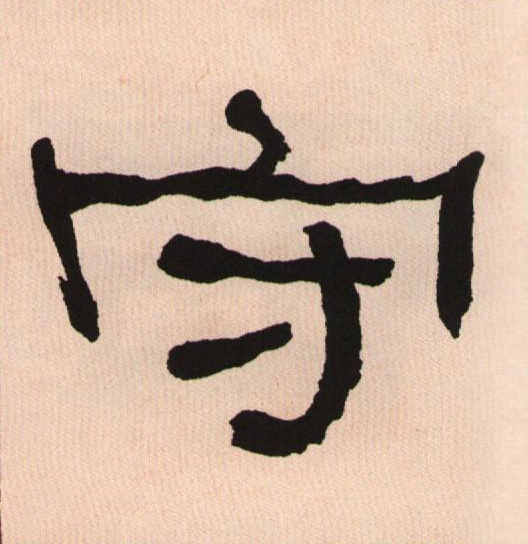

Image Healing: Guided Mandala Viewing 310
Please choose a set of mandala images with warm tones and gradual layers to view. First, focus your attention on the center, feeling the present moment. Then, move your gaze outward along the patterns, without searching for meaning; simply observe. When you allow the images to exist without interpretation, your inner self will gradually let go of the pressure to find meaning.
The varying levels of a mandala can help the brain remain stable amidst uncertainty, allowing a sense of presence to gradually return through observation.
◉ Gaze at the mandala twice, while taking deep breaths.

Lesson 310: Draw the "shape of the hollow" and the "path of the firelight".“
Purpose:Make the abstract concept of "emptiness" concrete, and then draw a small path for it to "return to meaning".
step:
① Draw the "emptiness" in your heart on paper: Is it black? Gray? Transparent? Does it have a shape?
② Draw a few thin rays around the hole to symbolize the connection to the real world:
-- sound
-- temperature
-- Light
-- people
— A smile or a word
③ Let these rays of light slowly move closer to the center.
④ Write down the following sentence:
Meaning doesn't need me to search for it; it will slowly return in the connection.
Please log in before submitting your drawings and feelings.
○ 310. Log Guidance
① When did my sense of emptiness begin?
② What is it trying to protect me from? Exhaustion? Stress? Disappointment? Pain?
③ Did I feel the vitality of 1% today? Where was it?
④ What are some "small, meaningful actions" that I'm willing to try? (Even 1 minute is acceptable)
⑤ Write a sentence: I allow myself to slowly rediscover meaning, without forcing myself.
Please log in to use.
Meaning hasn't disappeared; it's on its way back.
 EN
EN  ZH
ZH  ES
ES  FR
FR  JA
JA